
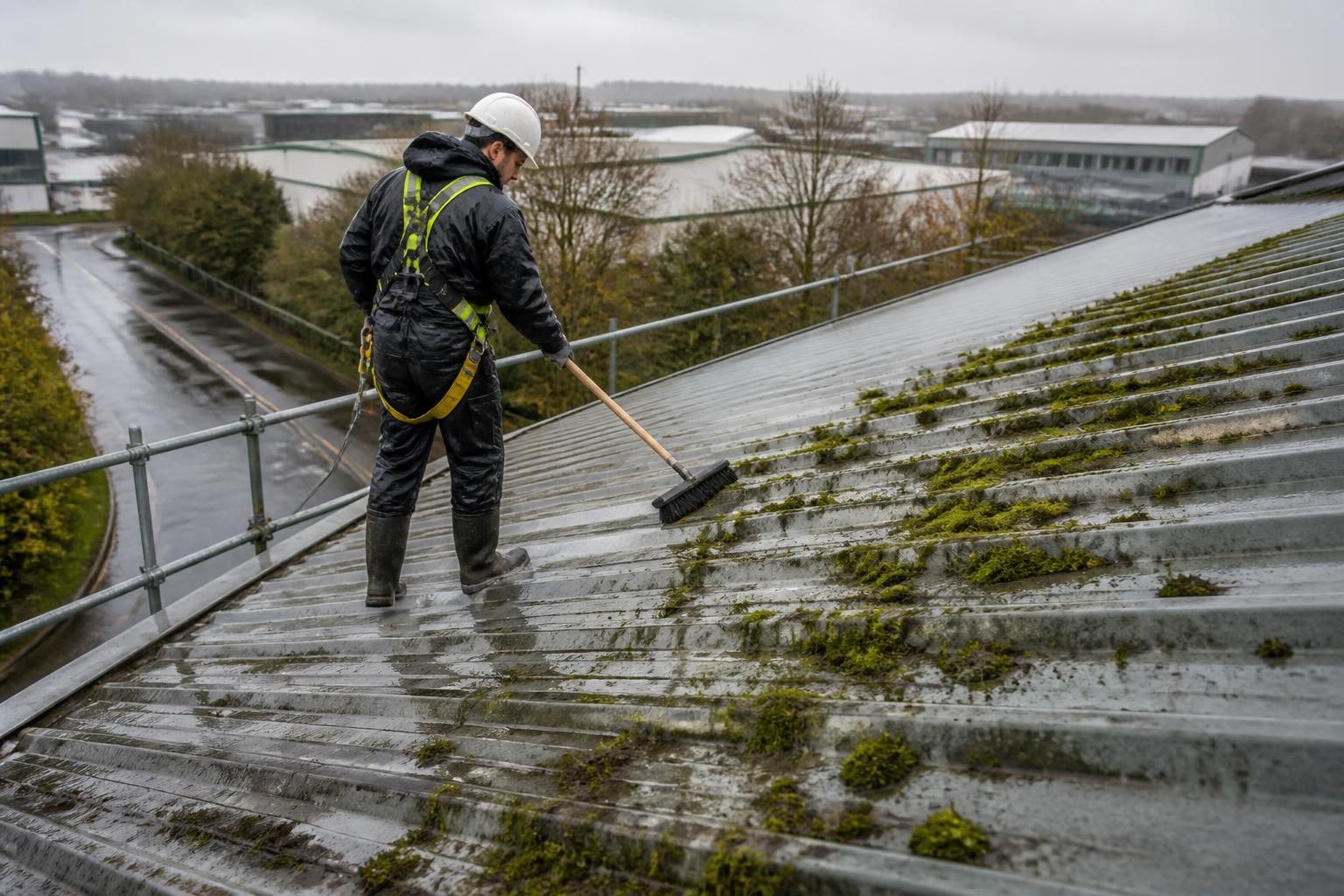
How do local weather conditions influence the choice of moss removal techniques for my roof?
Local weather conditions affect both the safest moss removal method and the timing of the work. In Birmingham’s damp, rainy climate, low-pressure cleaning followed by an appropriate biocidal treatment is often preferable, while work should be planned for a dry period and avoided during frost, heavy rain or when tiles are saturated.
Local weather conditions determine which moss removal technique is safest, how well treatments will work and when the roof should be cleaned. In Birmingham and across the West Midlands, frequent rainfall, high humidity, shaded roof areas and occasional frost generally favour gentle physical removal followed by a suitable biocidal treatment, rather than aggressive pressure washing. The roof should be allowed to dry and work should be postponed during heavy rain, frost, strong winds or when tiles are saturated.
Rainfall and saturated tiles
Persistent rain keeps moss, algae and lichen moist and firmly attached to the tile surface. It also leaves roof coverings heavier and more slippery, increasing the risk of falls and making controlled work more difficult. Water running across the roof can dilute a cleaning or biocidal product before it has sufficient contact time, while rainfall immediately afterwards can carry loosened material and treatment residue into gutters, drains and surrounding areas.
Where possible, moss removal should therefore be scheduled during a settled, dry period. A contractor can remove the bulk of the moss by hand or with soft scraping tools, collect the debris and then apply a treatment when the roof surface is suitably dry. The work may need to be divided into stages if changing weather prevents treatment on the same day.
Why low-pressure cleaning is often preferable
Wet, weathered roof tiles can be more vulnerable to surface erosion, cracking and displacement. High-pressure washing may strip the tile finish, force water beneath laps and flashings, damage pointing or disturb fragile areas around roof penetrations. It can also spread moss fragments across the roof and adjacent property.
Low-pressure rinsing, controlled soft washing or careful manual removal is usually more appropriate for conventional roof tiles, particularly where the roof is older or has already suffered from weathering. The exact approach depends on the tile material, its condition, the roof pitch and the amount of growth. Pressure should never be selected simply because it removes moss quickly; it must be low enough to clean without damaging the covering or allowing water into the roof structure.
Humidity, shade and recurring growth
Birmingham’s damp conditions can allow moss to return, especially on north-facing slopes, beneath trees and on roofs with limited sunlight. Nearby vegetation can retain moisture and drop organic matter onto the tiles, while poor drainage or blocked gutters may keep lower roof areas wet.
Physical removal deals with the visible growth, but it may not remove all spores and fine biological residue. A compatible biocidal treatment can help control remaining growth and delay regrowth when applied in accordance with the product instructions and suitable weather conditions. Treatments are not a substitute for repairs or improved drainage: damaged tiles, blocked gutters, overhanging branches and persistent shade should also be addressed where appropriate.
Frost and cold weather
Moss removal should not normally be carried out when frost is present or when freezing conditions are expected. Ice makes access hazardous and can cause moisture within cracks, porous tiles or joints to expand. Cleaning water and treatment solutions may also freeze on the roof, preventing even application and increasing the risk of surface damage.
After a frost, the roof needs time to thaw and dry fully before inspection or cleaning. A contractor should pay particular attention to cracked tiles, loose ridge or verge components and deteriorated mortar, as these defects can become more vulnerable during cold weather and should be recorded before work begins.
Wind and access conditions
Strong or gusty wind affects both safety and cleaning control. It can make roof access equipment unstable, blow spray away from the intended surface and carry debris or treatment mist towards windows, vehicles, neighbouring property and watercourses. Work should be paused when wind prevents safe access, accurate application or effective containment of debris.
Where access equipment is required, the ground conditions also matter. Rain can soften soil and reduce stability for towers, mobile elevated work platforms or other equipment. A suitable assessment should consider the roof, the access route, overhead obstructions, nearby public areas and the need to protect the building while debris is removed.
Temperature and treatment performance
Biocidal products have specific application requirements, including acceptable surface conditions, contact time and restrictions relating to rain or temperature. Cold, damp weather can slow the action of a treatment, while direct sun or rapidly drying surfaces may cause uneven coverage. Product instructions must be followed rather than applying a stronger solution to compensate for unsuitable conditions.
Roof cleaning should be arranged around the forecast, not just the day’s conditions. The contractor should allow a suitable dry period after application and monitor for changes in rain, wind and frost. If conditions deteriorate, postponing the treatment is safer and more effective than proceeding with a diluted or poorly controlled application.
Seasonal timing
There is no single best month for every roof, because local exposure and the roof’s condition are also important. Spring and autumn can provide useful cleaning opportunities, but both seasons may bring rainfall, high humidity and falling leaves. Summer can offer better drying conditions, although prolonged dry weather may increase dust and make surrounding surfaces more sensitive to spray or runoff. Winter is generally less suitable where frost, short daylight hours and persistent wet weather limit safe access.
The ideal timing is a dry, calm spell in which the roof can be inspected, cleaned, treated and checked without rushing. Forecasts should be considered alongside the microclimate of the property: a roof beneath trees or on a shaded elevation may remain damp after nearby exposed areas have dried.
Protecting the building and surrounding environment
Weather affects how cleaning water, moss debris and treatment residues move from the roof. Before work starts, gutters and downpipes should be assessed, drain outlets protected where necessary and loose debris collected rather than allowed to enter the drainage system. Windows, doors, wall finishes, plants, vehicles and paved areas may require protection, particularly in windy conditions.
Runoff should be controlled in accordance with the product instructions and applicable environmental requirements. Cleaning solutions should not be allowed to enter surface-water drains or ponds, and rinsing should be managed so that contaminated debris and residues can be collected and disposed of responsibly. These controls are important even during dry weather because later rainfall can wash remaining material from surrounding surfaces.
How conditions influence the final choice
- Light moss growth on sound tiles: manual removal with gentle rinsing may be sufficient, followed by a compatible treatment if appropriate.
- Heavy growth in a damp or shaded location: controlled scraping and low-pressure cleaning, with careful debris collection and a suitable biocidal treatment, is often more appropriate than forceful washing.
- Older, porous or damaged tiles: the lowest-impact method should be used after an inspection, and repairs may need to take priority over cleaning.
- Cold, wet or windy conditions: postpone work if access, treatment performance, runoff control or protection of surrounding areas cannot be maintained.
- Roofs near trees, public walkways or sensitive drainage areas: use additional containment and schedule the work when wind and rainfall will not spread debris or residues.
Weather is only one part of the assessment. The tile type, roof age, pitch, previous repairs, moss depth and condition of gutters must also be considered before selecting a technique. A site inspection can identify whether the roof needs gentle surface cleaning, localised treatment, repair work or simply improved drainage and vegetation management. In Birmingham’s variable climate, choosing a dry and stable working window and matching the method to the roof’s condition provides better protection than applying the same cleaning process in every season.
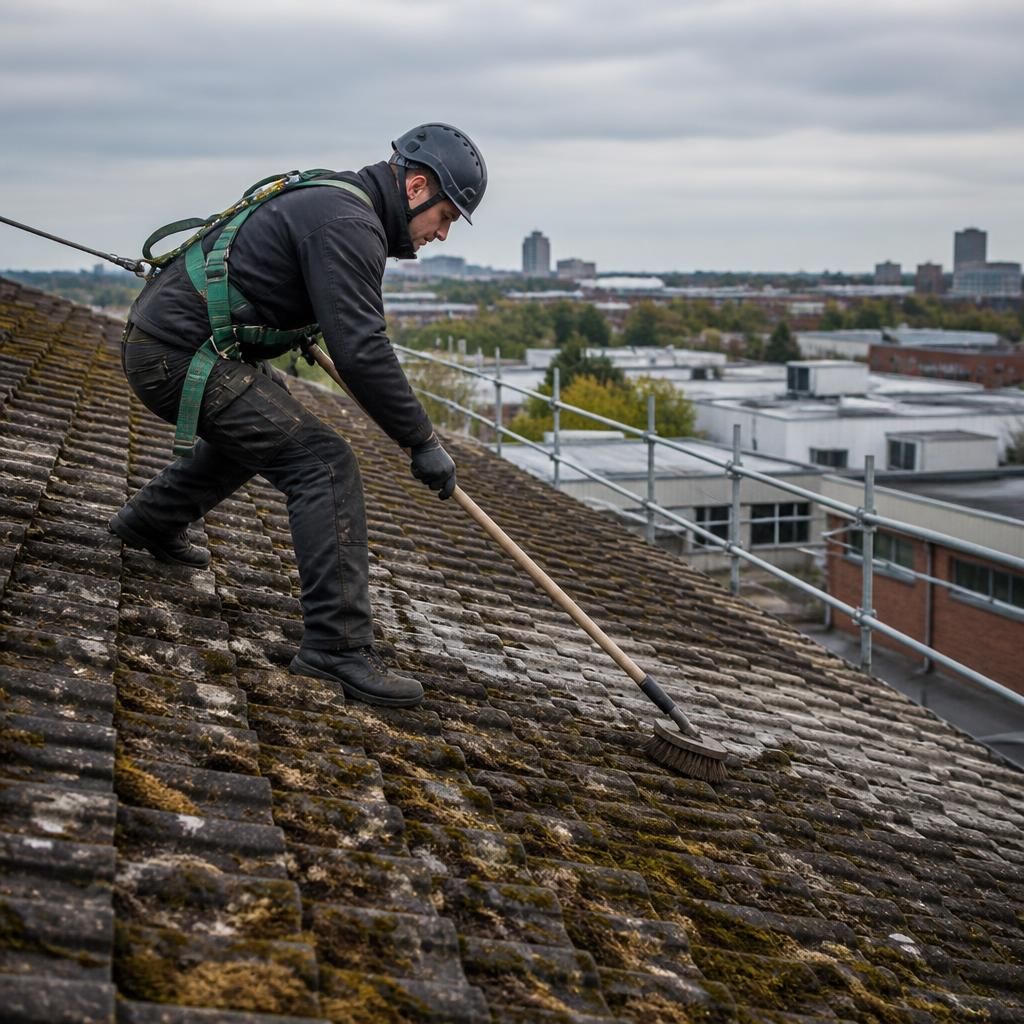
In Birmingham’s damp and changeable weather, roof moss removal should be planned around a dry, calm period rather than carried out during or immediately after heavy rain. Dry tiles provide safer access, allow moss and debris to be collected more effectively, and give any compatible biocidal treatment enough contact time to work without being diluted or washed away.
Frost, strong winds and saturated roof coverings are also reasons to postpone the work. Ice can make tiles and access equipment hazardous, while wind can spread debris, spray and treatment residue towards windows, vehicles, plants or drainage areas. For most sound roof tiles, controlled manual removal or low-pressure cleaning is preferable to aggressive washing, particularly where persistent damp has made the tiles porous or weathered.
The roof should be inspected again after cleaning to check for cracked tiles, loose pointing, blocked gutters or areas that remain shaded and wet. Addressing these conditions helps reduce recurring moss growth and ensures the chosen cleaning method is suited to the roof’s actual condition.