
Can moss removal from roof tiles be a DIY project, or is professional help necessary?
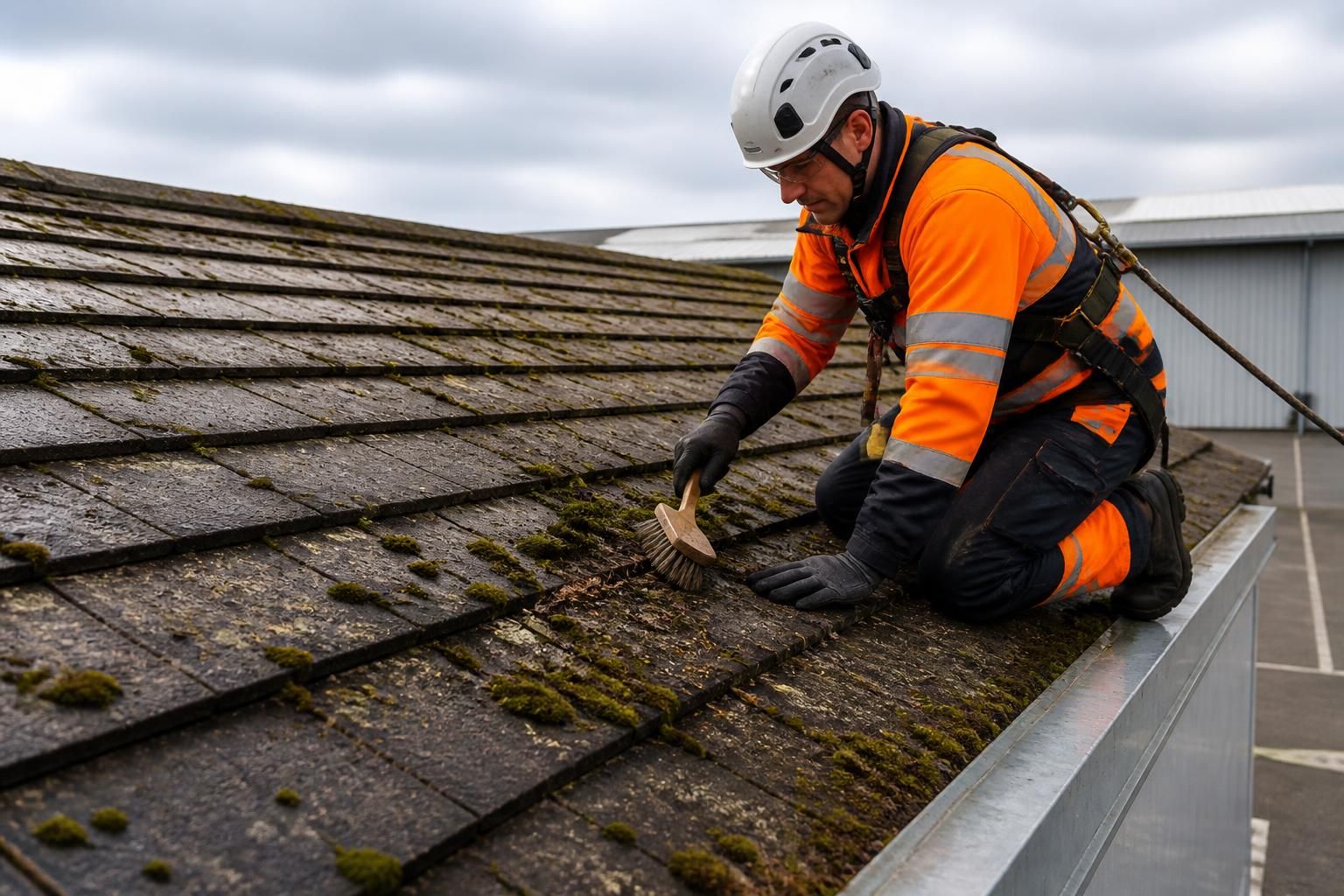
Moss removal from roof tiles can be a DIY task on a low, safely accessible roof with sound tiles, but professional help is usually necessary where the roof is high, steep, fragile, heavily affected or difficult to access. Incorrect scraping, pressure washing or chemical use can damage tiles, dislodge coverings and create safety risks, so a professional assessment is the safer option in those circumstances.
Moss removal from roof tiles can be suitable as a DIY task only where the roof is low, gently pitched, safely accessible and covered with sound, stable tiles. Professional help is necessary when the roof is high, steep, fragile, heavily moss-covered or difficult to reach, because working at height and cleaning incorrectly can cause serious injury, tile damage, leaks and property damage.
The main issue is not simply whether moss can be removed. It is whether the roof can be inspected and cleaned without placing people, tiles, roof coverings, gutters or surrounding surfaces at unnecessary risk. Moss often retains moisture and can hide cracked, loose or deteriorating tiles. Walking on the roof or using unsuitable equipment may make existing defects worse.
When DIY removal may be reasonable
A homeowner may be able to deal with a small amount of moss where all of the following apply:
- The roof is low enough to inspect and work on safely from suitable access equipment or, preferably, from a safe position without stepping on the tiles.
- The roof has a shallow or moderate pitch and is not slippery, fragile or visibly unstable.
- The tiles are in good condition, with no obvious cracking, looseness, delamination or missing sections.
- The affected area is limited and does not extend across difficult edges, valleys, ridges, roof lights or complex sections.
- There is no need to work near overhead cables, fragile conservatory roofs or areas where falling debris could injure people or damage property.
- The person carrying out the work understands how to use access equipment and follow work-at-height precautions.
Even in these circumstances, removal should be gentle. Loose moss can usually be lifted with a soft brush or suitable hand tool, working down the slope rather than forcing material beneath the tiles. Debris should be collected rather than allowed to enter gutters or downpipes. Tiles should not be levered, twisted or used as footholds.
When professional help is the safer option
Professional roof cleaning is strongly recommended where the roof is steep, high, extensive or difficult to access. It is also appropriate when moss has formed a thick layer, roots have entered joints, water is backing up behind growth, or the roof has not been maintained for a long period.
Specialist assistance is particularly important for roofs with:
- Older, weathered, brittle or hand-made tiles.
- Slate, fragile coverings or coatings that may be damaged by abrasion.
- Complex valleys, hips, ridges, dormers or roof-mounted equipment.
- Loose tiles, damaged pointing, failing underlay or signs of water ingress.
- Limited access for ladders, towers or other suitable equipment.
- Nearby public areas, parked vehicles, entrances or neighbouring properties that could be affected by falling moss or cleaning runoff.
A professional contractor can assess the roof before cleaning, identify defects and select a method suited to the tile material and level of growth. Depending on the roof, this may involve controlled manual removal, low-pressure rinsing, steam cleaning or an appropriate treatment to limit regrowth. The objective should be to remove moss without stripping protective surfaces, forcing water beneath the tiles or loosening the covering.
Why pressure washing is often unsuitable
Using a domestic or high-pressure washer on roof tiles can remove surface finishes, erode older materials and drive water beneath laps, flashings and ridge details. It can also dislodge tiles and spread contaminated runoff across walls, paths and planting. Pressure washing is not automatically appropriate simply because it removes visible moss quickly; the pressure, nozzle, direction and distance must be controlled for the specific roof.
Chemical treatments also require care. A product that is unsuitable for the tile material can stain or degrade the surface, while runoff may harm plants, soil, drainage systems or aquatic environments. Treatments should be selected and applied in accordance with the product instructions, with suitable measures to control overspray and runoff.
What a professional assessment should cover
- The roof covering, age, condition and likely weak points.
- The pitch, height, access arrangements and need for edge protection.
- The extent and type of moss, including growth around joints and drainage routes.
- Potential defects that should be repaired before or after cleaning.
- Protection for gutters, walls, windows, paving, vehicles, planting and neighbouring areas.
- The least aggressive effective cleaning method and how waste and runoff will be managed.
Do not start a DIY project if the roof is wet, icy, windy or visibly unstable. Do not climb onto tiles that are covered by thick moss, and do not assume a ladder alone provides adequate protection. If inspection from ground level suggests damaged tiles, blocked drainage, damp inside the building or extensive growth, arrange a professional assessment instead.
For a small, accessible area on a sound roof, careful low-level removal may be manageable. For most larger or higher roofs, professional help is the prudent choice because safe access, tile preservation and environmental control are as important as removing the moss itself.
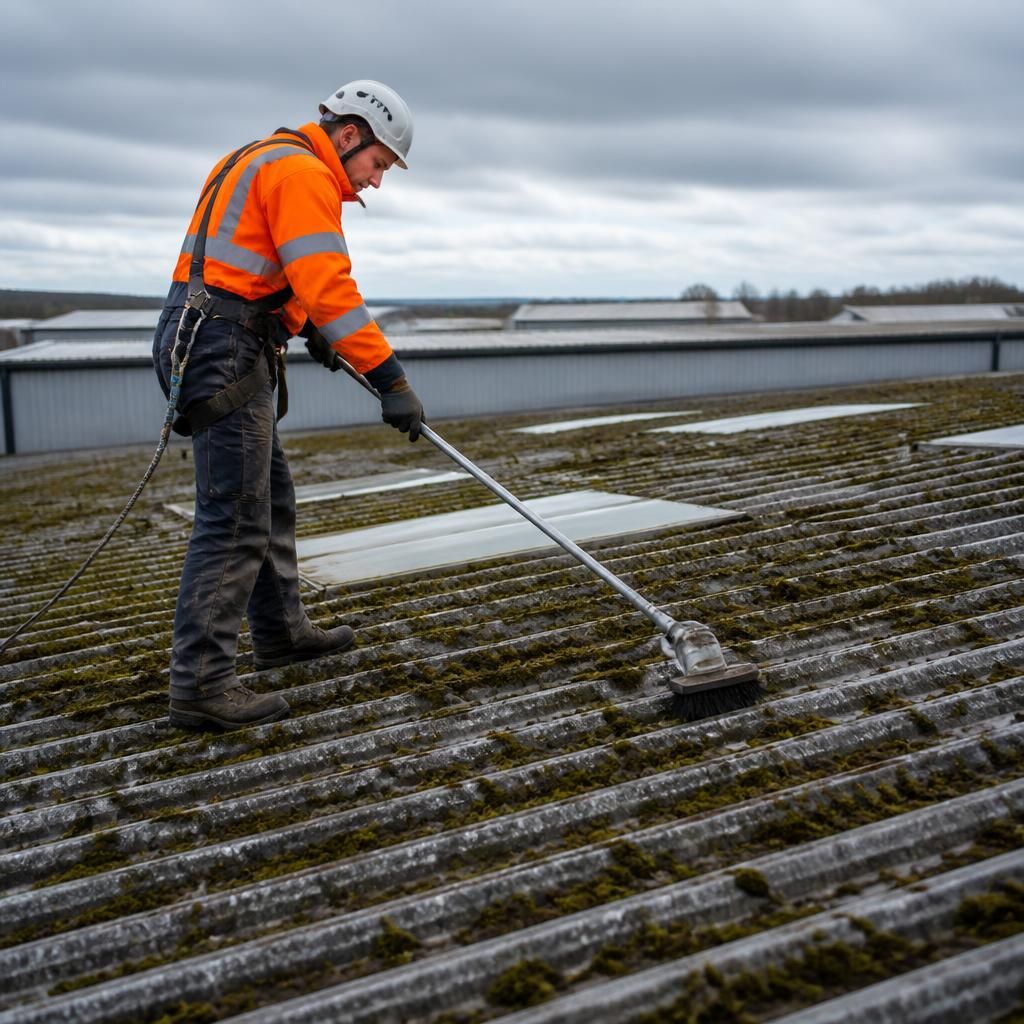
DIY moss removal is only appropriate when the roof is low, gently pitched, in good condition and safely accessible without walking on slippery or fragile tiles. Removing a small amount of loose growth from a safe position may be manageable, provided debris is controlled and the tiles are not scraped, levered or disturbed.
Professional help is necessary for high, steep, heavily covered or difficult-to-access roofs, and where tiles are old, cracked, loose or coated. A trained contractor can assess the roof, select a suitable low-impact method and control falling debris, runoff and access risks. Domestic pressure washers should not be used without specialist assessment, as they can damage tile surfaces and force water beneath the roof covering.