
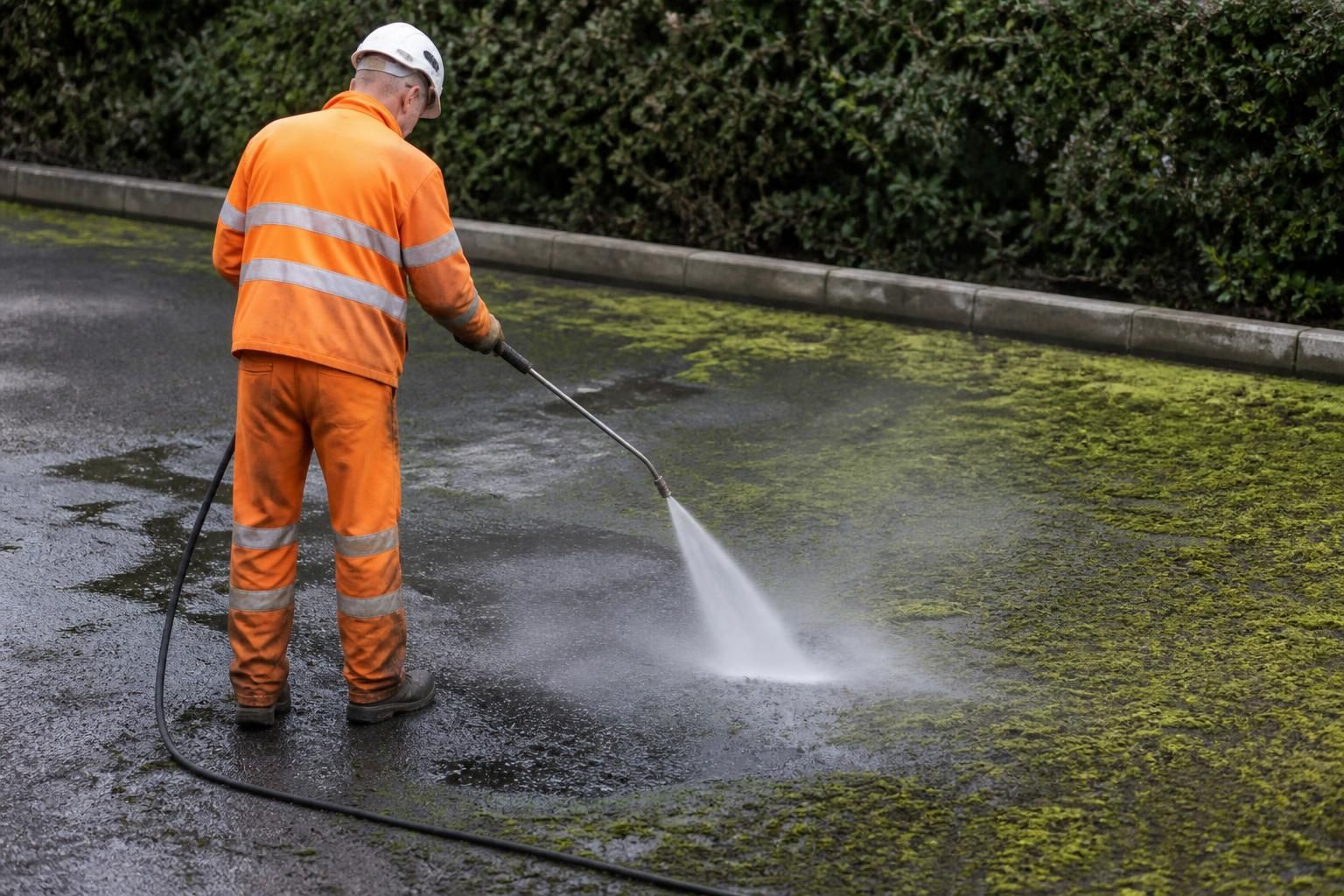
What specific solutions are used in soft washing to ensure effective moss removal from tarmac?
Soft washing moss from tarmac typically uses a diluted, surface-appropriate biocidal treatment—often based on quaternary ammonium compounds—to kill moss and loosen its growth without aggressive pressure. The solution is applied at low pressure, allowed to dwell, then rinsed or left to weather away according to the product instructions, with careful control of run-off.
Soft washing moss from tarmac usually involves a diluted, surface-compatible biocidal solution rather than high-pressure water. Quaternary ammonium compounds are commonly used because they kill moss at the root, help loosen its attachment and continue working after application. The solution is applied at low pressure, allowed to dwell in accordance with the manufacturer’s instructions, and then rinsed or left to weather away where the product permits.
The most suitable treatment depends on the condition of the tarmac, the thickness of the moss and the surrounding environment. A professional assessment should consider whether the surface is aged, freshly laid, heavily weathered, repaired or covered by line markings. Tarmac contains bitumen and can be affected by overly aggressive chemicals, prolonged soaking, heat or unsuitable solvents, so a product intended for paved external surfaces should be selected.
- Quaternary ammonium biocides: These are widely used for moss, algae and other organic growth. They are generally applied in a controlled dilution and can be effective without the need for aggressive pressure. Some formulations are designed to remain active on the surface after the visible growth has been removed, helping to address residual spores.
- Biocidal surfactant blends: A surfactant improves wetting, allowing the treatment to spread across uneven tarmac and penetrate the moss mat more effectively. It can also help lift organic residue during the subsequent low-pressure rinse. The surfactant must be compatible with the biocide and the paved surface.
- Chlorine-based treatments: Diluted sodium hypochlorite may be used in some exterior cleaning applications, particularly where moss is mixed with algae or staining. It requires careful control because it can affect nearby vegetation, painted markings, metals, drainage systems and some tarmac finishes. It should not be selected automatically, and run-off must be contained and managed responsibly.
- Peroxide or oxygen-based formulations: These may be suitable where a lower-residue treatment is preferred, subject to the product’s stated use and effectiveness against the growth present. They still require correct handling, dwell time and protection of adjacent surfaces.
Soft washing is not simply a matter of spraying a chemical and applying water. Loose moss is normally removed first using suitable manual tools or controlled agitation. The biocidal solution is then applied evenly at low pressure, with particular attention to joints, edges and shaded areas where moss tends to retain moisture. After the prescribed dwell period, the surface may be rinsed at a pressure that removes residue without dislodging aggregate or damaging the bitumen binder.
Thick or established moss may need more than one treatment. A chemical solution can kill the growth, but it may not immediately remove a dense layer or organic staining. Trying to compensate with excessive pressure can strip the surface, expose aggregate and accelerate deterioration. Allowing the treatment to work, followed by controlled removal, is usually safer for tarmac than relying on a forceful jet.
Before wider application, the chosen solution should be tested in an inconspicuous area. The test should check for changes in colour, surface texture, line markings, nearby kerbs and drainage behaviour. The operative should also review the product label and safety data sheet, including required personal protective equipment, dilution, contact time, storage and disposal requirements. Different products must not be mixed unless the manufacturer specifically confirms that this is safe.
Run-off control is an essential part of the treatment. Moss-cleaning solutions should be kept away from planted areas, open water, storm drains and sensitive building materials wherever possible. Drains may need to be protected or temporarily isolated, and any collected residue should be handled in accordance with site and environmental requirements. On commercial premises, work should also be planned around pedestrians, vehicles and access routes while the surface is wet.
For most tarmac surfaces, the preferred approach is a properly diluted, non-solvent biocidal treatment with a compatible wetting agent, low-pressure application and controlled rinsing. The exact formulation should be chosen after inspecting the surface rather than applying a standard chemical to every site. This approach removes active moss while reducing the risk of bitumen damage, loose aggregate, faded markings and uncontrolled chemical run-off.
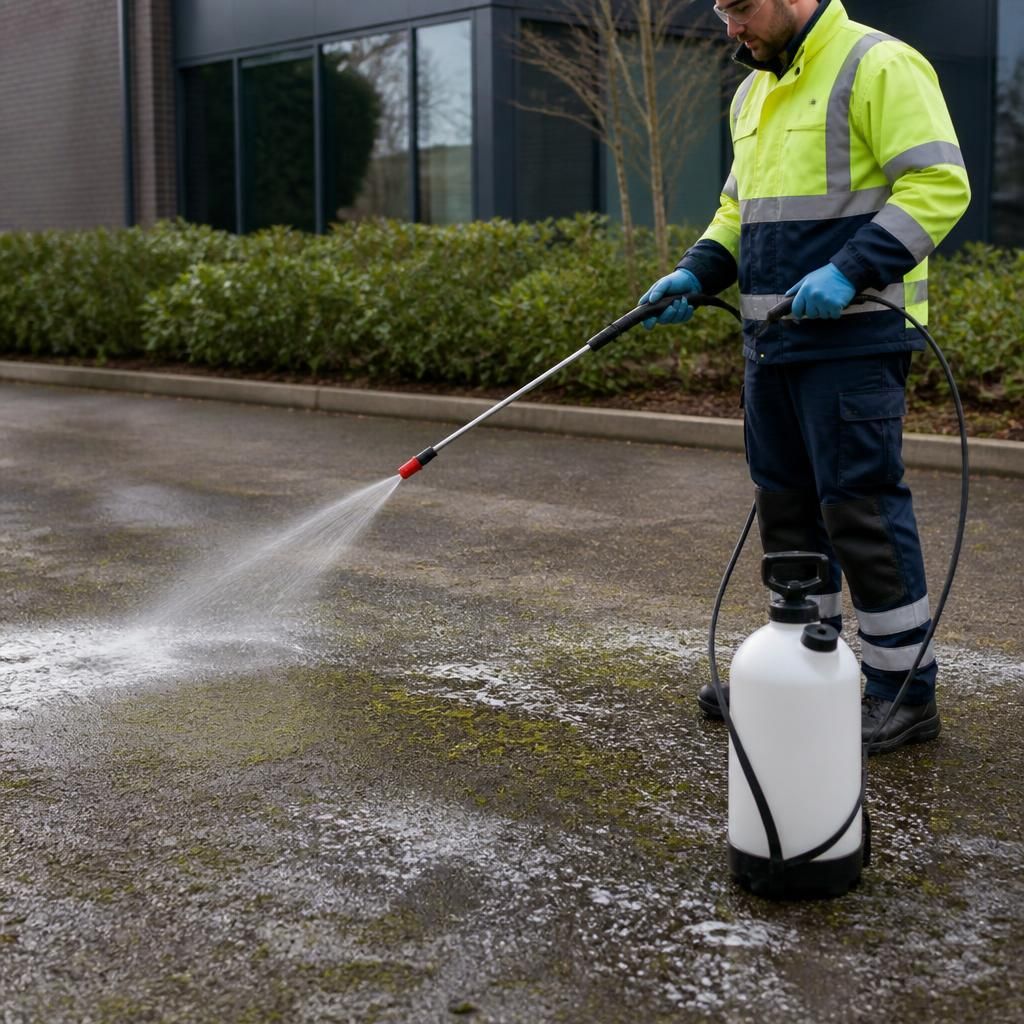
Soft washing for tarmac commonly uses a diluted, non-solvent biocidal solution, often based on quaternary ammonium compounds, to kill moss and weaken its attachment without relying on damaging high pressure. A compatible surfactant may be added to help the treatment spread evenly across the surface and penetrate the moss mat.
The solution is applied at low pressure and left for the manufacturer’s specified dwell time before loose growth is removed and the area is rinsed in a controlled manner. The product must be suitable for bitumen-bound surfaces, with precautions taken around vegetation, drainage systems, vehicles and painted line markings.