
What safety precautions are necessary when cleaning moss from tarmac?
When cleaning moss from tarmac, carry out a site risk assessment, wear suitable PPE, control access to the work area and use cleaning methods that avoid excessive pressure or chemical damage. Protect drainage systems, manage wastewater and check the surface and surrounding areas before, during and after treatment.
Safe moss removal from tarmac requires a documented site risk assessment, suitable personal protective equipment, controlled access, careful equipment selection and proper management of water and treatment products. Moss makes the surface slippery, while pressure, chemicals, vehicles and contaminated run-off can create additional risks to people, the tarmac and the surrounding environment.
Complete a site assessment before starting
- Inspect the tarmac for loose aggregate, cracks, potholes, worn areas, previous repairs and damaged edges. Moss can conceal defects that may become more apparent during cleaning.
- Identify pedestrians, vehicles, delivery routes, nearby buildings, doors, windows, electrical equipment, planted areas and drainage points.
- Check whether the surface is on a slope or contains steps, ramps or access routes where water and loosened moss could increase the risk of slipping.
- Confirm the location of underground services and avoid placing hoses or equipment where they could create trip hazards.
- Review the product safety data for any detergent, biocide or soft-washing solution before use. The assessment should cover storage, dilution, application, first aid and spill response.
Control access to the work area
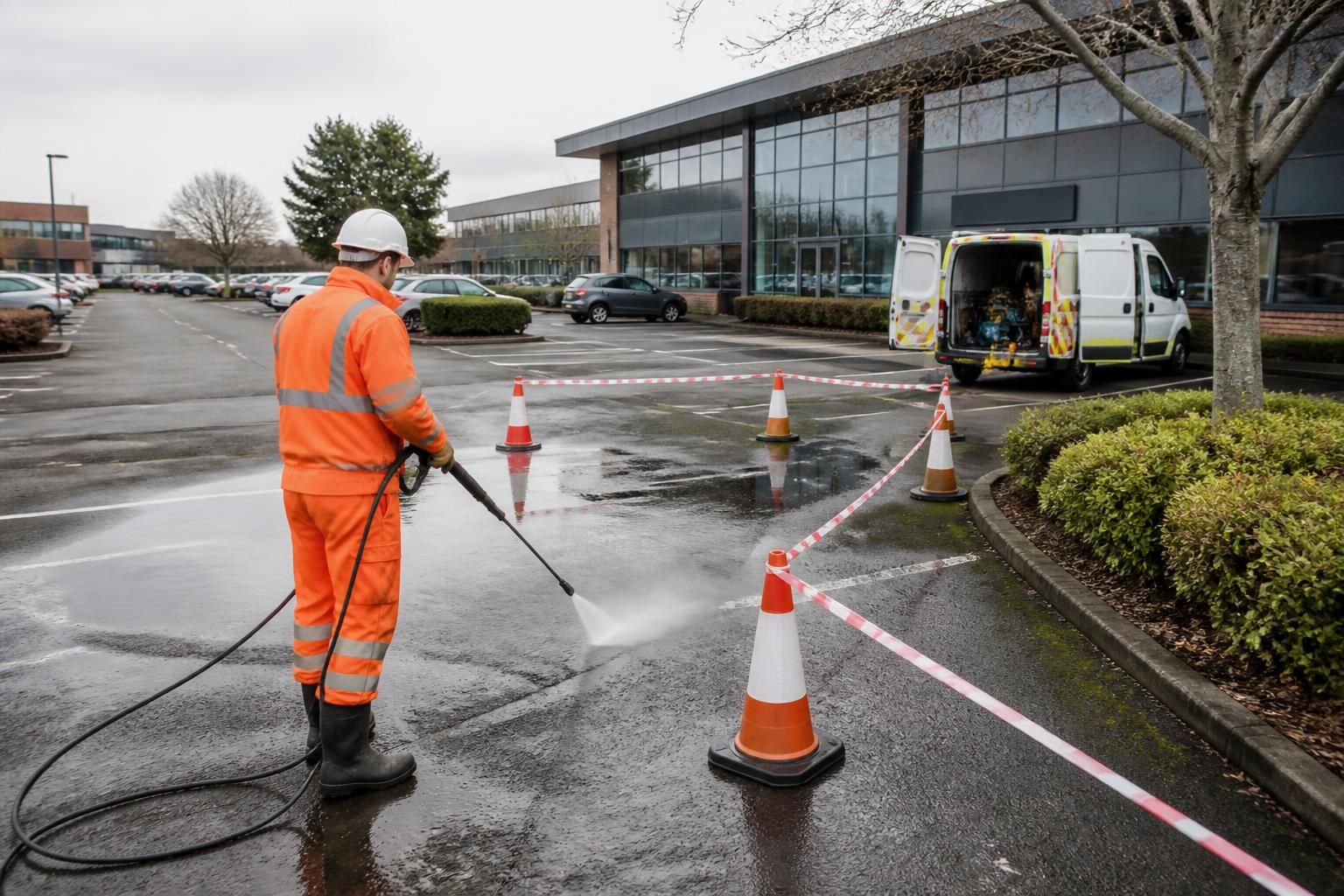
Keep pedestrians and vehicles away from the cleaning zone. Use suitable barriers, cones and warning signs, and coordinate the work around deliveries, staff movements and public access. Do not rely on a warning sign alone where the surface is wet or equipment is operating. A trained person should monitor access on busy commercial sites, car parks and public areas.
Plan a safe route for hoses and power cables, keeping them away from walkways, access doors and vehicle lanes. Where they must cross a route, use appropriate covers or reposition them. Park cleaning vehicles and pressure-washing equipment where they cannot be struck by traffic or obstruct emergency access.
Wear appropriate PPE
The exact PPE depends on the cleaning method and the products being used, but it will usually include slip-resistant safety footwear, protective gloves, eye protection and suitable workwear. When spraying or using products that may create mist, face and respiratory protection may also be required in line with the product assessment and manufacturer’s instructions. Hearing protection may be necessary when operating high-powered equipment for prolonged periods.
Gloves and protective clothing should be compatible with the cleaning chemicals in use. Replace contaminated or damaged PPE promptly, and wash hands thoroughly after handling moss, wastewater or treatment products. PPE does not replace safe working practices, ventilation and access control.
Use pressure carefully
Excessive pressure or an unsuitable nozzle can strip the binder, dislodge aggregate, enlarge cracks and damage repaired areas. Start with the least aggressive setting that can remove the moss, test it in an inconspicuous area and adjust the pressure, nozzle and working distance as necessary.
- Keep the lance moving rather than concentrating the jet on one spot.
- Avoid directing water into cracks, joints, drainage channels or the edges of the tarmac.
- Use a controlled angle and working distance instead of holding the nozzle close to the surface.
- Do not use rotary or high-impact equipment on fragile, aged or poorly bonded areas without confirming that the surface can tolerate it.
- Remove loosened moss progressively so that it does not accumulate and create a further slip hazard.
Steam cleaning or low-pressure soft washing may be more suitable where the surface is weathered or close to sensitive structures. The method should be selected after inspecting the tarmac rather than applying the same pressure to every area.
Handle cleaning products responsibly
Only use products approved for the intended surface and follow the manufacturer’s instructions for dilution, application, contact time and rinsing. Never mix different chemicals unless the manufacturer specifically permits it, as incompatible products can release hazardous fumes or create dangerous reactions.
Apply treatments in a controlled manner to prevent drift onto vehicles, façades, signage, plants and nearby watercourses. Protect vulnerable surfaces where necessary, but ensure coverings do not create trip hazards or trap chemicals against building materials. Keep containers labelled, closed and secured, and store them away from heat, ignition sources and unauthorised access.
Do not apply chemical treatments during unsuitable weather. Wind can carry spray beyond the work area, while rain can spread products into drains and reduce control over the treatment. Follow the product instructions and stop work if conditions make safe application or containment impractical.
Protect drainage and manage wastewater
Prevent moss, slurry, detergent and biocidal residues from entering surface-water drains, streams or other watercourses. Before cleaning, identify which drains receive run-off and use suitable drain protection or temporary containment where appropriate. Do not block drainage in a way that causes flooding or creates a new hazard.
Collect solid moss and sediment rather than washing it into drainage systems. Where wastewater requires recovery or controlled disposal, use suitable wet-vacuum equipment, containment and disposal arrangements. Follow the relevant site procedures and product requirements, particularly where treatment chemicals have been used. Any spill should be contained promptly and reported through the agreed emergency process.
Check equipment and working conditions
- Inspect hoses, trigger guns, lances, couplings, electrical leads and guards before use.
- Use equipment only as intended and ensure operators understand its controls and emergency shut-off procedure.
- Keep electrical connections dry and use suitable protection for outdoor conditions.
- Do not point a pressure lance at people, animals, glazing, electrical installations or unsecured objects.
- Maintain a stable stance and avoid working from unstable steps, walls or improvised platforms.
- Stop work during lightning, high winds, poor visibility or conditions that make the surface or access equipment unsafe.
Where cleaning involves roofs, elevated façades or difficult-to-reach areas, use properly selected access equipment and follow the applicable inspection, harness and rescue requirements. Do not substitute a pressure-washing lance for safe access arrangements.
Complete a final inspection
After cleaning, check that all visible moss, slurry and treatment residues have been removed and that drains are clear. Inspect the tarmac for exposed aggregate, loosened edges, scouring or other changes, and record any pre-existing or newly identified defects. Remove barriers only when the surface is sufficiently clean and safe for normal use.
Allow the area to dry where practicable and provide clear information about any residual treatment, restricted access or maintenance required. If the tarmac remains unusually slippery after cleaning, investigate remaining organic matter, residue, poor drainage or surface deterioration rather than simply applying more pressure or chemical.
For large car parks, industrial yards and public areas, the safest approach is a planned method statement covering the equipment, chemicals, traffic management, drainage protection, emergency arrangements and inspection process. This provides a consistent control framework and helps ensure that moss is removed without creating avoidable risks to people, property or the tarmac itself.
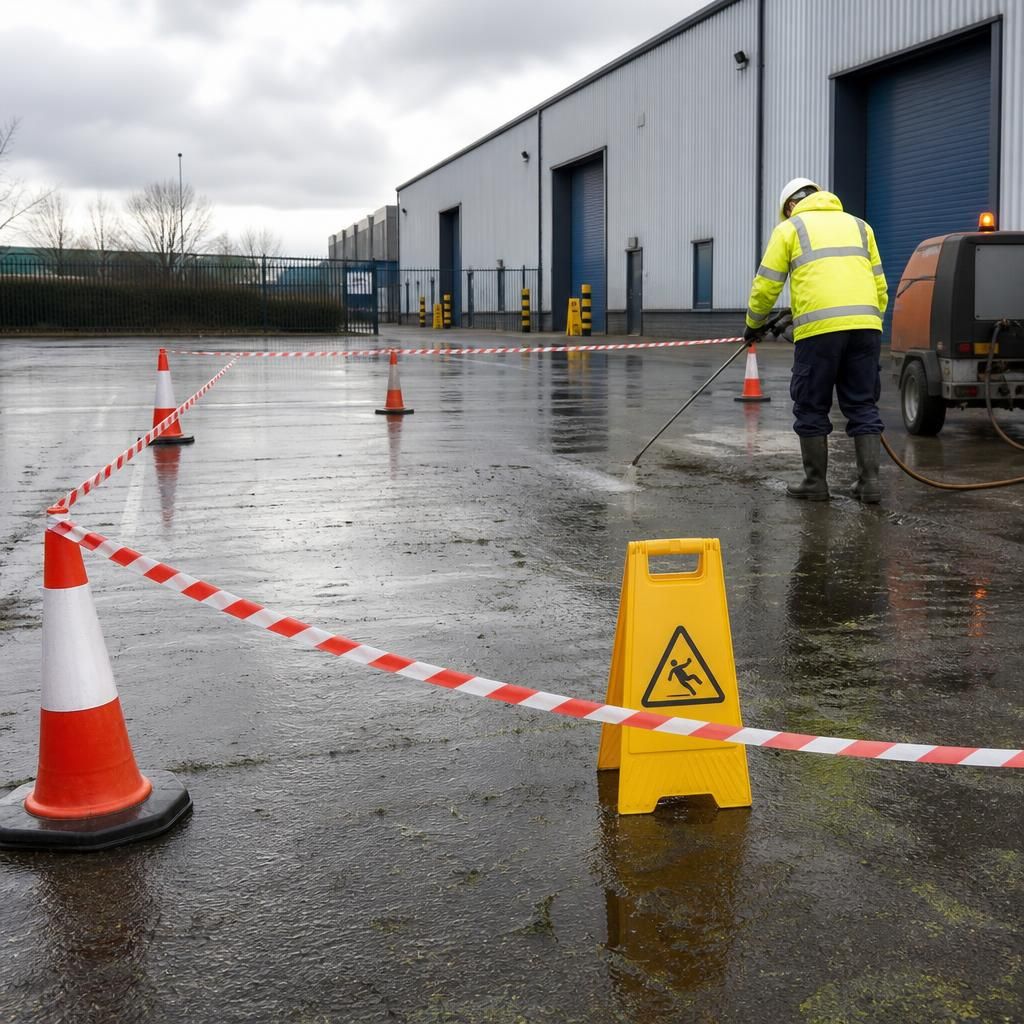
Controlling access is a critical safety precaution when cleaning moss from tarmac because loosened moss, water and cleaning residues can make the surface slippery. Use cones, barriers and clear warning signs to keep pedestrians, staff and vehicles away from the work area until the surface has been cleaned and is safe to use.
- Plan cleaning around deliveries, vehicle movements and public access.
- Keep hoses, cables and equipment out of walkways and emergency routes.
- Remove loosened moss as work progresses rather than allowing it to accumulate.
- Do not remove barriers until the tarmac has been inspected and, where practicable, has dried.