
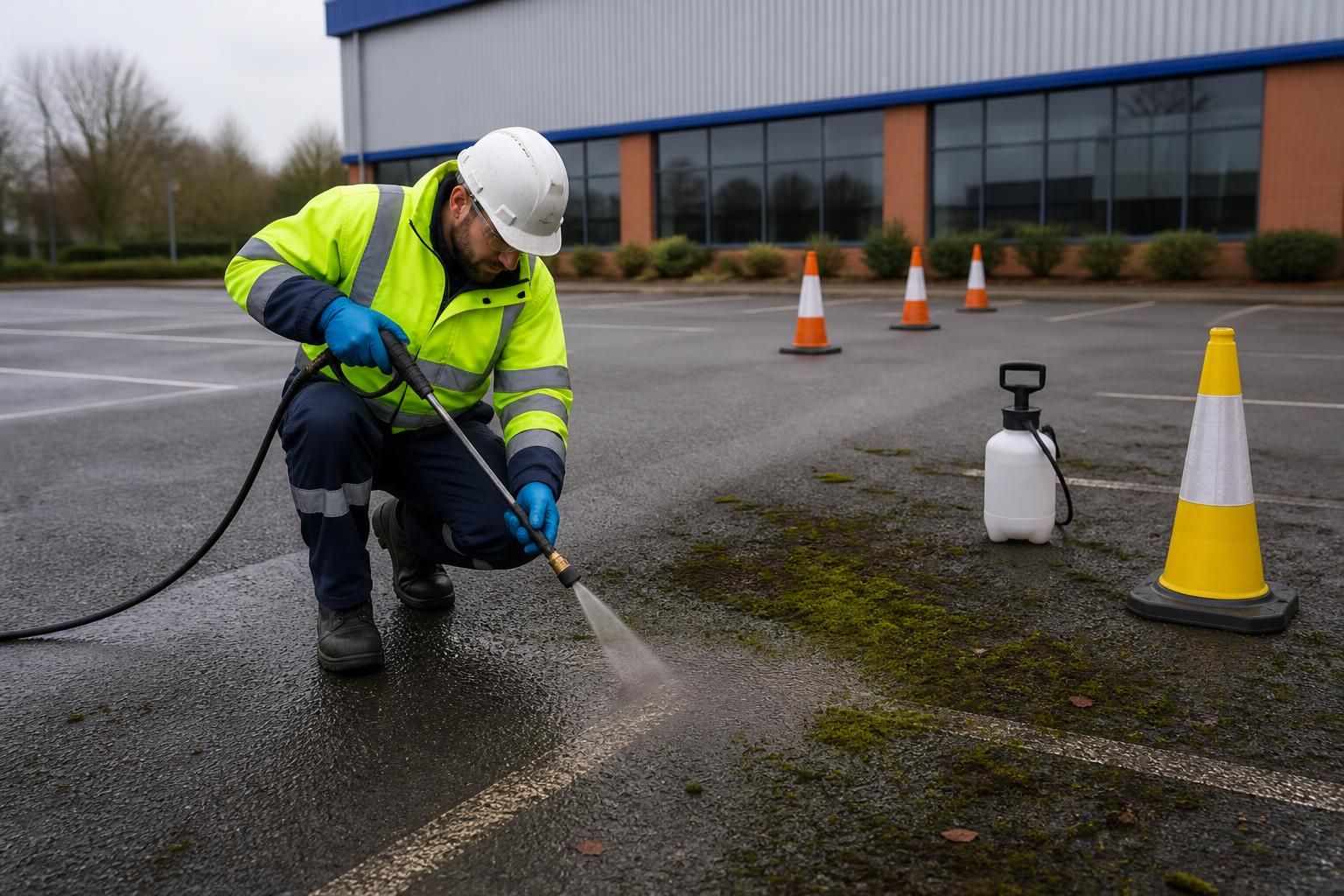
What safety measures should be implemented during moss removal from tarmac to prevent surface damage?
Before removing moss from tarmac, inspect the surface for cracks, loose aggregate, previous repairs and drainage issues, then test the chosen method on an inconspicuous area. Use controlled low-pressure cleaning or a suitable soft-wash treatment, avoid aggressive rotary action and harsh chemicals, protect surrounding surfaces, manage runoff and use appropriate access equipment and PPE to prevent both surface damage and slip hazards.
The safest way to remove moss from tarmac is to combine a pre-cleaning inspection, a small test area, controlled low-pressure cleaning and a tarmac-compatible treatment. Avoid aggressive rotary cleaning, concentrated jetting and harsh chemicals, as these can loosen aggregate, mark the binder, worsen existing defects and leave the surface vulnerable to further deterioration.
Inspect the tarmac before starting. Identify cracks, potholes, fretting, loose chippings, worn areas, previous repairs, raised edges and joints before any water or treatment is applied. Moss can conceal defects, so the surface should be checked once debris has been cleared where necessary. Pay particular attention to areas around drainage channels, kerbs and ironwork, where water may collect and where moss is often most established.
The condition of the surface should determine the cleaning method. Sound, well-bound tarmac may tolerate carefully controlled washing, while aged, porous or friable surfacing requires a gentler approach. Loose aggregate should not be cleaned with force, and damaged areas may need repair rather than further mechanical treatment. Record existing defects so that the cleaning process is not mistaken for the cause of pre-existing damage.
Test the proposed method first. Apply the selected treatment and cleaning process to a small, inconspicuous section. Check for changes in colour, surface texture, aggregate stability and chemical reaction after the product has had suitable contact time and has been rinsed. This test should reflect the actual equipment, nozzle, dilution and working method intended for the wider area. If the tarmac softens, discolours, sheds aggregate or remains stained, the method should be changed before work continues.
Use controlled water pressure rather than maximum pressure. A suitable pressure setting, fan nozzle and working distance should be selected for the condition of the tarmac. The operator should keep the lance moving and avoid holding the jet in one place, directing it into cracks or forcing water beneath damaged edges. Narrow pencil jets, harsh rotary action and repeated passes over the same area increase the risk of stripping the bituminous binder or dislodging aggregate. Where possible, remove loosened moss with a stiff, non-metallic brush or controlled rinsing before increasing the intensity of cleaning.
Pressure washing should not be used as the only method where moss has penetrated damaged or porous areas. A compatible biocidal or soft-wash treatment can help break down organic growth with less mechanical force, provided it is suitable for tarmac and used in accordance with the product instructions. The treatment must be correctly diluted, applied evenly and given an appropriate dwell time. It should not be allowed to dry on the surface unless the product instructions specifically permit this.
Choose chemicals carefully. Avoid strong acids, solvents, corrosive products and unapproved weed-killing substances that may attack the binder, affect nearby materials or create a pollution risk. Check the product safety data and technical information before use, including its compatibility with bituminous surfaces, required dilution, contact time, storage and disposal requirements. A COSHH assessment should be completed where applicable, and operatives should follow the control measures specified for the product.
Protect surrounding property before applying water or treatment. Cover or isolate sensitive walls, painted surfaces, timber, signage, vehicles, planting, electrical equipment and drainage fittings where they could be affected by spray or runoff. Avoid allowing treated water to enter surface-water drains unless this is permitted and properly controlled. Runoff should be contained, diverted or collected in line with the site risk assessment and applicable environmental requirements.
Control access throughout the work. Moss, treatment solution and rinse water can make tarmac extremely slippery. Establish an exclusion zone using suitable signs and barriers, and keep pedestrians, vehicles and other contractors away from the working area until cleaning is complete and the surface is safe. On commercial sites, agree the work sequence with the site contact so that entrances, fire routes, loading areas and accessible routes remain controlled or are temporarily closed.
Work should be planned around weather and surface conditions. Heavy rain can spread treatment and contaminated runoff beyond the work area, while strong wind can carry spray onto people, vehicles or neighbouring property. Very hot conditions may cause a treatment to dry too quickly, and freezing conditions can create additional slip and surface risks. The tarmac should be allowed to drain and dry before the area is reopened.
Use suitable PPE and equipment. The required protection depends on the treatment and equipment, but may include protective gloves, eye or face protection, waterproof workwear, safety footwear with slip-resistant soles and hearing protection where powered equipment is used. Operators should also use inspected hoses, lances, cables, barriers and access equipment. Work at height must be separately assessed; ladders, mobile towers or powered access should only be used where appropriate, on stable ground and by trained personnel.
Drainage and runoff controls are particularly important on car parks, service yards and large paved areas. Before cleaning, identify the drainage layout and the direction in which water will travel. Remove loose moss without washing it into gullies, and prevent solid debris from blocking channels. Any collected residue, contaminated water or chemical containers should be handled and disposed of according to the site assessment and relevant waste requirements.
After removal, inspect the tarmac again for exposed defects, loose aggregate and areas where moss remains. Rinse only as much as necessary to remove residue, rather than repeatedly washing the surface. Check that drains and access routes are clear, confirm that no chemical residue has been left behind, and reopen the area only when it is clean, stable and adequately dry. A post-cleaning record, including photographs and any defects requiring repair, provides a useful maintenance reference.
For large commercial or industrial areas, the method should be documented in a site-specific risk assessment and method statement. This should cover the tarmac condition, treatment selection, equipment settings, test area, traffic and pedestrian controls, PPE, COSHH requirements, runoff management, emergency arrangements and inspection of the finished surface. These controls help remove moss effectively while reducing the likelihood of physical, chemical, slip and environmental damage.
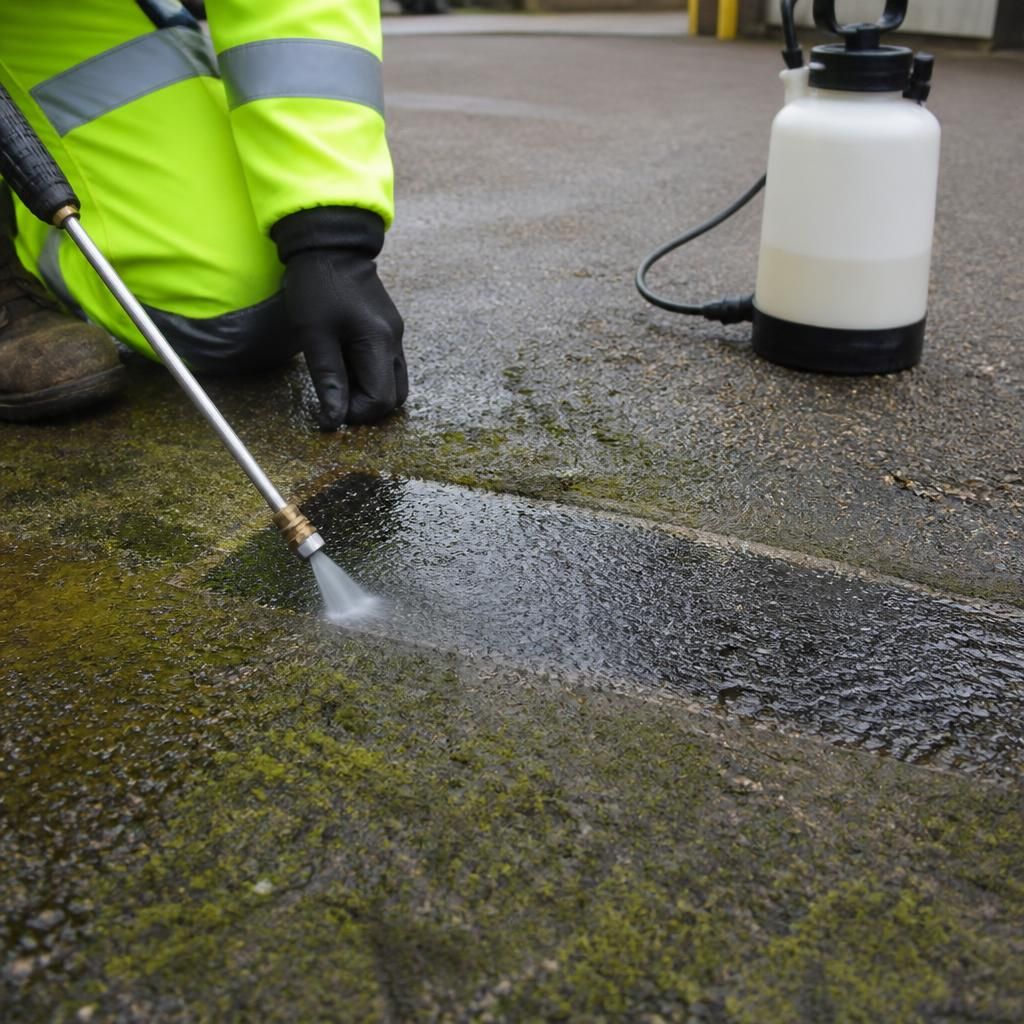
Testing the proposed moss removal method on a small, inconspicuous area is one of the most effective ways to prevent damage to tarmac. It shows whether the pressure, nozzle, brush, treatment and dilution are suitable for the surface before work begins across the full area.
After cleaning and rinsing the test patch, check for colour changes, softened binder, loose aggregate, scuffing or remaining chemical residue. The test should use the same equipment and working method planned for the wider site. If the tarmac becomes unstable or discoloured, stop and select a gentler approach, such as controlled low-pressure rinsing or a tarmac-compatible soft-wash treatment.