
What is the best method to clean moss from tarmac without causing damage?
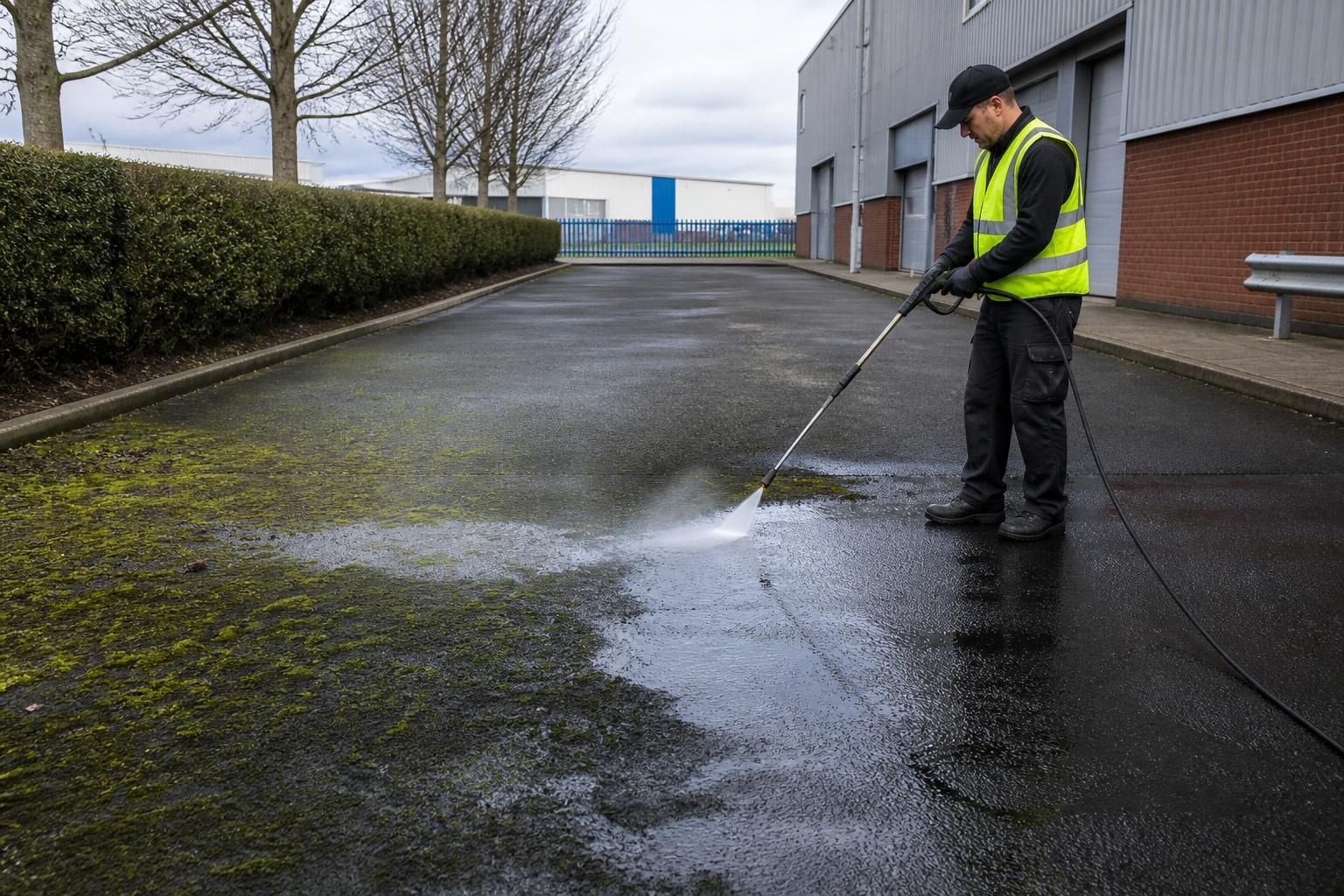
The safest method is a controlled soft wash using a suitable moss-treatment solution, followed by gentle rinsing and careful removal of loosened growth. Avoid aggressive high-pressure jetting, which can strip the tarmac binder, dislodge aggregate and leave the surface more vulnerable to water ingress and regrowth.
The safest and most effective method for removing moss from tarmac without causing damage is a controlled soft-washing process, followed by gentle rinsing and the careful removal of loosened growth. This approach treats the moss rather than relying on force alone. Aggressive pressure washing can strip the bitumen binder, dislodge the surface aggregate, widen existing cracks and leave the tarmac more vulnerable to water penetration and further deterioration.
Before choosing a cleaning method, the tarmac should be assessed carefully. The condition of the surface, the thickness of the moss, the presence of algae or lichen, drainage arrangements and the surrounding buildings all affect the treatment. Older or weathered tarmac usually requires more restraint because its binder may already be brittle or worn. Areas with standing water, open joints, potholes or loose aggregate should be identified before cleaning, as they may need repair rather than intensive washing.
A suitable moss-cleaning process normally includes the following stages:
- Site and surface inspection: Check the tarmac for loose chippings, cracks, failed edges, oil contamination, drainage channels and vulnerable nearby surfaces. Any areas that are already unstable should be excluded from aggressive mechanical cleaning.
- Removal of loose debris: Leaves, soil and loose moss can be swept or lifted away using soft brushes and suitable manual tools. This reduces the amount of material that has to be rinsed across the surface.
- Application of a suitable treatment solution: A professional soft-washing treatment designed for organic growth can be applied evenly to the affected area. The solution should be compatible with bituminous surfaces and used in accordance with the product instructions, site conditions and relevant environmental controls.
- Controlled dwell time: The treatment needs time to break down and kill the moss. It should not be allowed to dry on the tarmac or surrounding materials, particularly in warm, windy conditions. Re-wetting may be necessary where conditions cause the solution to dry too quickly.
- Gentle agitation where required: Once the growth has softened, a soft brush or carefully selected mechanical brush can help release it. The aim is to lift the moss without scouring the surface or removing sound aggregate.
- Low-pressure rinsing: Rinse water should be controlled and directed towards an appropriate collection or drainage point. The pressure should be sufficient to remove residue and loosened growth, but not so high that it cuts into the binder or forces water into cracks.
- Final inspection: The surface should be checked for remaining growth, chemical residue, blocked drainage points and areas where further gentle treatment may be needed.
High-pressure cleaning is not automatically unsuitable, but it must be used with considerable care. A narrow, powerful jet held close to the surface can create visible lines, expose aggregate and remove the darker bituminous material that binds the tarmac together. It can also drive water beneath damaged edges and contribute to debonding or frost-related deterioration. Where pressure equipment is used, a broad spray pattern, appropriate stand-off distance and controlled movement are generally safer than a concentrated jet held in one position.
Manual scraping should also be used selectively. Sharp tools can gouge tarmac, particularly where the surface has softened in warm weather or has already lost some of its binder. Soft-bristled brushes and non-abrasive tools are preferable for most work. If moss is growing through a crack or failed joint, removing the visible growth alone will not resolve the underlying defect. The damaged area should be assessed and repaired where appropriate.
The cleaning solution is an important part of preventing damage. Purpose-made biocidal or moss-treatment products are generally more suitable than improvised mixtures because they are formulated for controlled application and have usage instructions for dilution, contact time and rinsing. Household bleach, strong acids, solvents and unapproved detergent mixtures can discolour surrounding materials, affect vegetation, corrode metalwork or interfere with the bituminous surface. Combining chemicals is particularly unsafe and should be avoided.
A small test area should be treated before work begins across a large car park, access road or other commercial surface. This allows the cleaning team to check how the tarmac, line markings, kerbs and adjacent materials respond. The test should be reviewed after the treatment and rinsing process rather than judged only while the surface is wet, as changes in colour and the condition of the aggregate may be less obvious during cleaning.
Water and chemical control are essential on commercial sites. Moss, treatment residue and dirty rinse water should not be allowed to enter surface-water drains, watercourses, planted areas or neighbouring property without suitable controls. Drainage points may need to be protected or isolated, and runoff may require collection and appropriate disposal. Vehicles, pedestrians, staff and members of the public should be kept away from the active work area until the surface is safe to use and any treatment instructions have been followed.
For large tarmac areas, the best result often comes from dividing the work into manageable sections. This prevents treatment from drying unevenly, keeps rinse water under control and makes it easier to inspect the surface. Car parks and access routes may also need a planned traffic-management arrangement so that vehicles do not cross treated or wet areas before the work is complete.
After moss removal, the surface should be allowed to dry and monitored for regrowth. Moss is more likely to return where tarmac remains shaded, damp, poorly drained or covered by leaf litter and soil. Keeping drainage channels clear, sweeping away organic debris and correcting persistent standing water can extend the time between treatments. Overhanging vegetation may also need management where it prevents the surface from drying.
In summary, soft washing with a compatible moss-treatment solution, controlled dwell time, gentle agitation and low-pressure rinsing provides the best balance between effective cleaning and protection of the tarmac. The method should be adjusted to the age and condition of the surface, with particular care around cracks, loose aggregate, drainage points, line markings and adjacent landscaping. Where the tarmac is badly worn or structurally defective, cleaning should be preceded by a condition assessment so that the process does not disguise or worsen an existing problem.
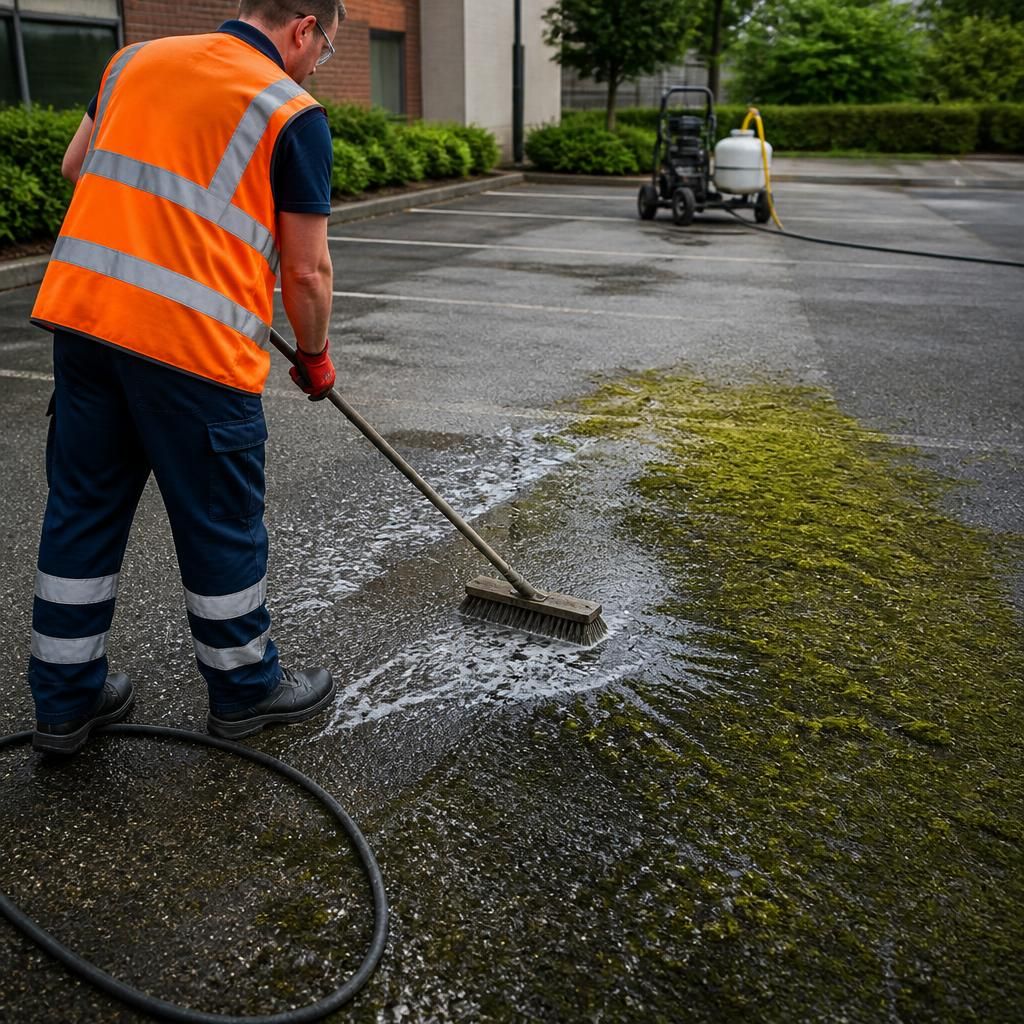
The safest way to clean moss from tarmac is to treat it with a compatible soft-washing solution, allow controlled dwell time, then remove the loosened growth with gentle brushing and low-pressure rinsing. This avoids the surface damage that can result from using a concentrated high-pressure jet, which may strip the bitumen binder or dislodge sound aggregate.
Before cleaning, inspect for cracks, loose chippings, worn areas and blocked drainage. Test the treatment on a small section first, protect nearby vegetation and direct rinse water away from surface-water drains. Once the moss has been removed, keeping the tarmac swept, well drained and free from leaf litter will help reduce regrowth.