
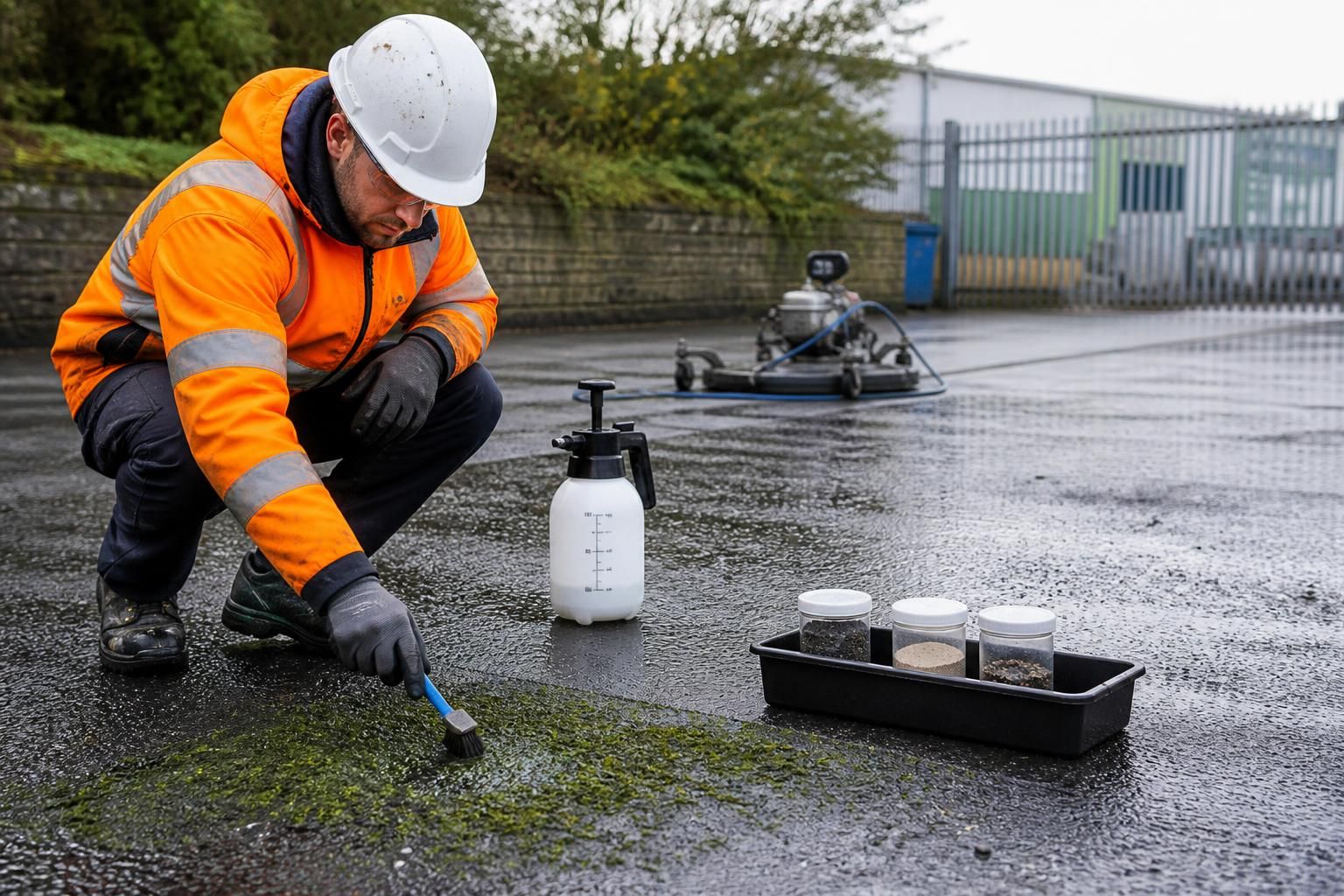
What factors should be considered to determine the most suitable moss cleaning method for a particular tarmac surface?
The most suitable moss cleaning method for a tarmac surface depends on the age and condition of the asphalt, the depth and spread of moss, drainage, surrounding vegetation, access requirements and the risk of disturbing the surface or nearby areas. Light growth may respond to a controlled treatment and gentle rinsing, while established moss or heavily trafficked areas may require carefully managed pressure washing, steam cleaning or a combination of methods.
The most suitable moss cleaning method for a tarmac surface is determined by the condition and age of the asphalt, the extent of moss growth, the surrounding drainage and environment, access constraints, and the level of surface disturbance that can safely be tolerated. Light surface growth may need only a controlled treatment and gentle rinsing, whereas deep-rooted moss, organic build-up and heavily trafficked areas may require a combination of treatment, low-pressure cleaning, steam cleaning or carefully controlled pressure washing.
Assess the condition of the tarmac first. Older or weathered tarmac is more vulnerable to aggregate loss, surface scarring and damage to the bitumen binder. Cracks, loose areas, pothole edges, repaired sections and fretting should be identified before any cleaning begins. Newer, well-bound asphalt may tolerate more mechanical cleaning, but excessive pressure can still strip fine material from the surface or drive water into existing defects. Where the surface is fragile, a chemical treatment followed by gentle rinsing is generally less disruptive than aggressive pressure washing.
The gradient and condition of the surface also matter. Moss often grows where water remains on the tarmac, particularly in shaded areas, along kerb lines and beside buildings. If poor drainage is the underlying cause, cleaning alone will provide only a temporary improvement. The inspection should consider blocked gullies, silted channels, uneven falls and areas where soil or leaf litter collects. Cleaning may need to be coordinated with drain clearance and vegetation management to reduce the conditions that support regrowth.
Consider how established the moss is. A thin film or isolated patches can often be treated without intensive mechanical action. Thick, wet or compacted moss may need to be loosened and removed in stages. Moss that has spread into joints, cracks or porous, weathered areas is more difficult to remove without disturbing the surface. In these situations, the safest approach may be to treat the growth, allow the treatment to work as specified, remove the loosened material with controlled equipment and repeat local treatment where necessary.
The type and amount of other contamination should also influence the choice. Tarmac can hold algae, lichen, soil, leaf debris, oil, tyre marks and general traffic grime alongside moss. A method that is suitable for biological growth may not be appropriate for oil contamination, and strong agitation can spread pollutants into drainage systems. The cleaning plan should therefore distinguish between moss removal and other contaminant removal rather than treating the whole surface with a single unnecessarily harsh process.
Match the method to the surface and site conditions.
- Controlled soft washing can be appropriate for light to moderate biological growth, particularly where the tarmac is aged or close to delicate walls, planting and drainage channels. The solution must be selected and applied in accordance with its intended use, manufacturer’s instructions and site controls. It should not be allowed to dry on unsuitable materials or enter watercourses.
- Low-pressure rinsing or washing can remove treated moss and residue while reducing the risk of loosening aggregate. The pressure, nozzle, distance and water volume should be adjusted to the condition of the asphalt rather than applied as a standard setting across the site.
- Steam cleaning may be useful where heat can help break down biological residue and where reduced chemical use is preferred. It still requires careful control around joints, repairs, soft surfaces, painted markings and drainage points.
- Pressure washing may be suitable for sound, robust tarmac with established contamination, but it should be undertaken in a controlled manner. Excessive pressure, close-range cleaning or repeated passes can damage the binder and expose aggregate.
- Manual removal is valuable around edges, kerbs, drainage features, cracks and sensitive areas where machinery could cause damage or spread debris.
Account for traffic and operational requirements. A car park, access road, loading area or pedestrian route may need a different approach from a lightly used yard. The cleaning method should allow for temporary closures, safe drying time, vehicle movements and the protection of line markings. On high-traffic sites, removing moss may also involve managing slip risk during the work and ensuring that loose debris is not left where it could obstruct drains or create a hazard.
Nearby features can be just as important as the tarmac itself. Buildings, rendered walls, painted surfaces, metalwork, vehicles, planted borders and water-sensitive areas may be affected by overspray, splashback, heat or runoff. The preferred method should minimise these risks through suitable sheeting, controlled application, exclusion zones and collection or diversion of contaminated water where required. The presence of vulnerable vegetation or restricted drainage may make mechanical or steam cleaning more appropriate than chemical treatment, subject to a site assessment.
Access and equipment requirements should be reviewed before work starts. Large areas may require specialist pressure-washing or steam equipment, water supply planning and safe hose management. Restricted courtyards, multi-level car parks and areas beside occupied premises may favour smaller equipment and a staged cleaning plan. Access equipment may be necessary for adjacent façades or roofs, but it should not be introduced onto the tarmac without considering loading, stabilisation and the risk of marking the surface.
A small test area is an important part of selecting the method. It allows the cleaning team to check whether the treatment removes the moss, whether the tarmac sheds aggregate or changes appearance, and whether nearby materials are affected. The test should reflect the most vulnerable part of the site rather than only the cleanest or newest section. The final method can then be adjusted for pressure, dwell time, agitation, rinsing and runoff controls.
Environmental and regulatory considerations should also be included in the decision. The chosen solution, water use, energy demand and disposal arrangements should be proportionate to the contamination. Chemical products must be handled, stored and applied responsibly, with appropriate control of exposure and runoff. Removing the causes of regrowth, such as overhanging vegetation, blocked drainage and accumulated organic debris, can reduce the need for repeated treatments and intensive cleaning.
In practice, the best result usually comes from a site-specific combination rather than one universal technique: inspect the tarmac, identify the moss and associated contamination, test the least disruptive effective method, protect surrounding areas, and finish with suitable rinsing and preventative maintenance. This approach removes the growth while preserving the asphalt, managing safety risks and reducing the likelihood of avoidable repeat work.
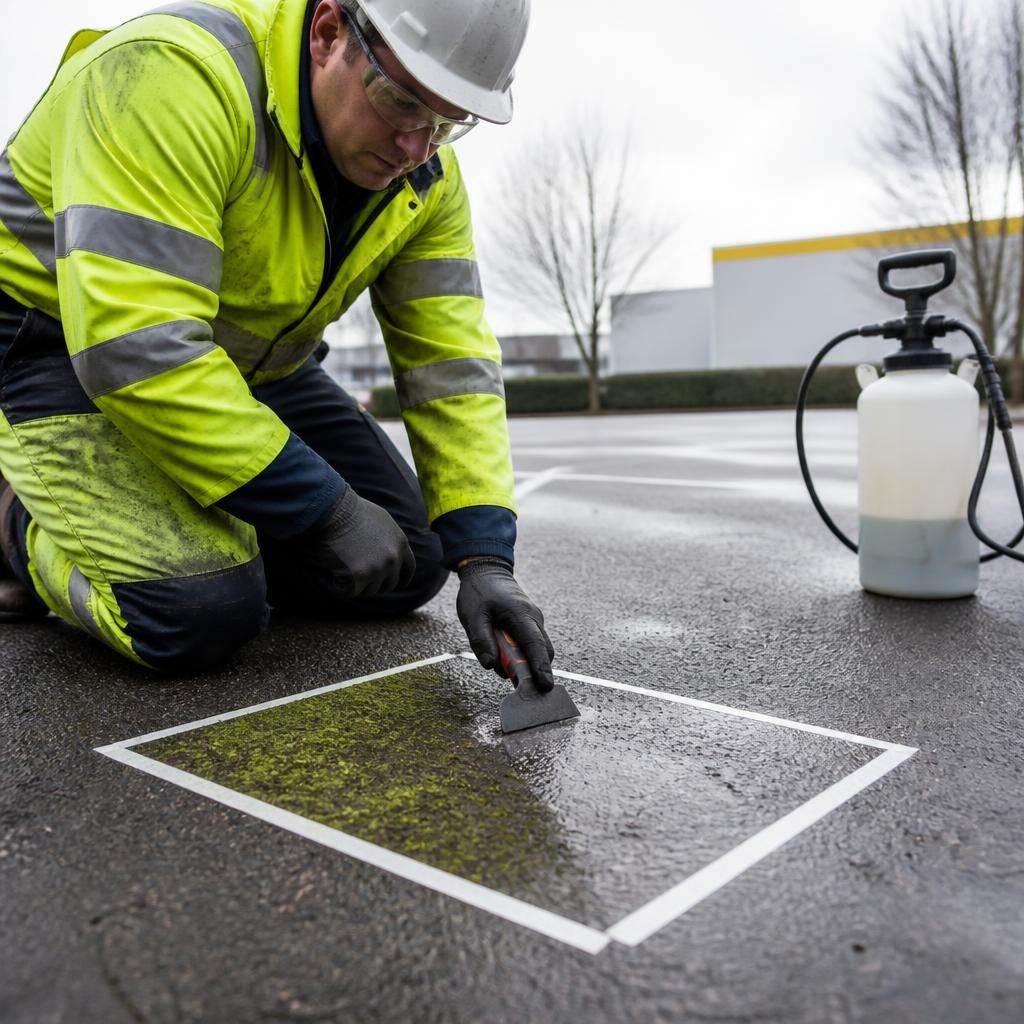
A small test area is the most reliable way to determine whether a moss cleaning method is suitable for a particular tarmac surface. It shows how the asphalt, aggregate and surrounding materials respond before the process is applied across the whole site.
The test should be carried out in a representative, more vulnerable area rather than only on the newest or cleanest section. The cleaning team can assess whether the treatment loosens the moss, whether rinsing removes the residue effectively, and whether the tarmac shows signs of aggregate loss, scarring or colour change. It also helps confirm that nearby walls, kerbs, planting, line markings and drainage points are not being adversely affected.
Results from the test can then be used to refine the solution, dwell time, pressure, nozzle distance, agitation and rinsing method. If the least disruptive approach does not provide adequate removal, a more intensive method can be considered in stages. This site-specific process helps preserve the tarmac while achieving a consistent clean across the areas that need attention.