
What are the cost implications of different moss cleaning methods for tarmac, factoring in both immediate expenses and long-term maintenance needs?
The cost of cleaning moss from tarmac depends on the method, the area’s condition, access requirements and whether follow-up treatment is included. Pressure washing may have a lower immediate cost, while soft washing or biocidal treatment can reduce long-term maintenance by slowing regrowth; the most cost-effective option balances cleaning, surface protection and future visits.
The most cost-effective moss cleaning method for tarmac is not necessarily the one with the lowest initial quotation. Manual removal and pressure washing can appear less expensive at the outset, but may require more preparation, repairs or repeat visits. Soft washing, steam cleaning or a combined clean-and-treatment approach can have a higher immediate cost while reducing regrowth, surface wear and ongoing maintenance. The right comparison should include cleaning, waste removal, treatment, access, repairs and future maintenance rather than the cleaning process alone.
Manual moss removal usually involves scraping, brushing and collecting established moss before the surface is washed or treated. It can be appropriate for delicate, aged or heavily contaminated tarmac where aggressive equipment could loosen the surface. The equipment cost is relatively low, but the work is labour-intensive, particularly across large car parks, paths and service yards. If the moss has penetrated surface defects, manual removal may also expose the need for crack repairs or local resurfacing.
Manual removal on its own may not provide good long-term value. It physically removes visible growth but does not necessarily deal with spores or the damp conditions that support regrowth. A follow-up biocidal treatment and planned inspections may therefore be needed. Its value is greatest when used as part of a controlled preparation process rather than as the only treatment on a large commercial site.
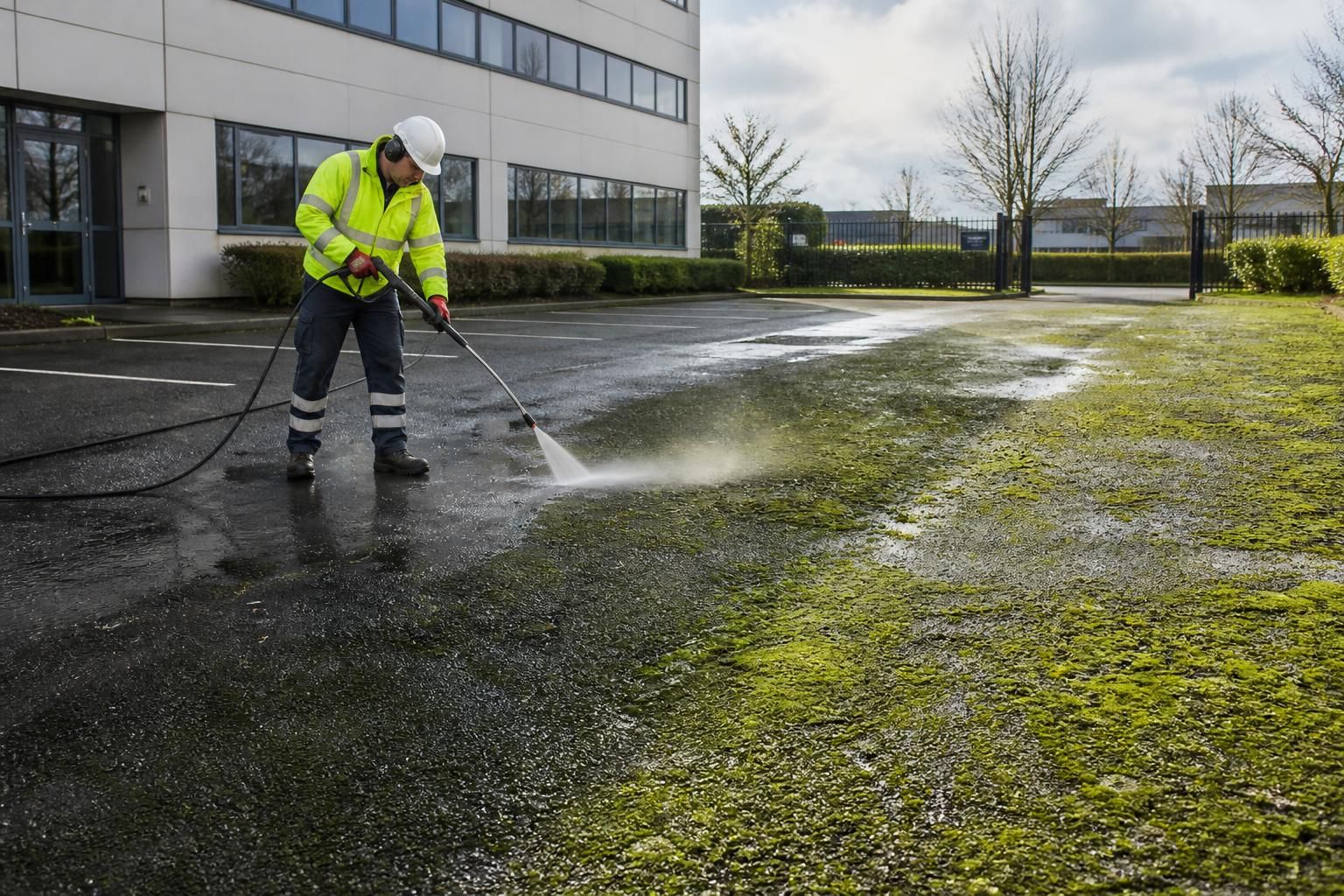
Pressure washing can provide a rapid visual improvement and is often suitable for sound, well-bonded tarmac. Its immediate cost is affected by the size of the area, water supply, drainage, the amount of moss and the need to collect contaminated run-off. It may be efficient on broad surfaces, but excessive pressure, an unsuitable nozzle or poor technique can strip the surface texture, loosen aggregate and worsen existing defects. Any resulting repairs or accelerated deterioration should be included in the long-term cost assessment.
Pressure washing also removes surface contamination without necessarily preventing moss from returning. If no treatment follows, the site may need more frequent cleaning, especially where there is persistent shade, poor drainage, overhanging vegetation or regular organic debris. A lower initial price can therefore become less economical when repeated cleaning and remedial work are taken into account.
Steam cleaning uses controlled heat and comparatively low mechanical force to remove moss, algae and associated organic deposits. It can be useful where protecting the tarmac surface is a priority or where water use and run-off need careful management. The immediate price may be higher because of specialist equipment, slower working rates, operator skill and the need to manage hot water safely. Access, hose runs and the availability of suitable drainage can also affect the quotation.
Steam cleaning may reduce the risk of damage associated with high-pressure cleaning, but it does not remove the need for a preventative treatment in every situation. Where conditions favour regrowth, a suitable follow-up treatment and scheduled maintenance will still influence the overall cost. It is best assessed by the condition of the tarmac and the consequences of surface damage, rather than by the cleaning rate alone.
Soft washing and biocidal treatment use a low-pressure application of an appropriate solution to kill or weaken moss and other organic growth. Loose material may be brushed or rinsed away, while remaining contamination weathers or is removed during a controlled follow-up process. The immediate cost includes solution selection, dilution, application equipment, protection of adjacent areas, dwell time and safe run-off management. Heavier growth may require preparation before the treatment can work effectively.
This method can offer better long-term value where preventing regrowth is important. It is not, however, an instant substitute for physical cleaning in every case. The treatment must be selected for the surface and site conditions, applied in accordance with the product requirements and kept away from sensitive planting, watercourses, vehicles and building materials where necessary. A quotation should make clear whether the price includes a clean, a treatment, a return visit or only the application of a solution.
A combined cleaning and treatment approach is often the most practical option for commercial tarmac. A contractor may first remove heavy moss and deposits using manual methods, controlled pressure or steam, then apply a suitable preventative treatment. This can balance immediate presentation requirements with a reduction in the speed of regrowth. It may cost more than a basic wash, but it can reduce the need for frequent intensive cleaning and help protect the surface from repeated mechanical disturbance.
The main cost factors to examine in any method comparison include:
- Area and layout: large open surfaces are generally more efficient to clean than narrow paths, divided car parks or areas obstructed by vehicles, barriers and street furniture.
- Condition of the moss: light surface growth is quicker to address than thick, established moss with embedded roots and organic debris.
- Condition of the tarmac: cracked, fretted, loose or ageing surfaces require gentler methods and may need repairs before or after cleaning.
- Access and facilities: restricted access, limited water supply, long hose runs, traffic management and the need for access equipment can increase labour and equipment costs.
- Run-off and waste handling: collected moss, dirty water and treatment residues may need to be contained and disposed of responsibly, particularly on commercial or public sites.
- Protection of surrounding areas: kerbs, façades, vehicles, planted areas, drainage channels and entrances may need masking, pre-wetting or additional rinsing.
- Operational requirements: out-of-hours work, phased cleaning and pedestrian or vehicle management can affect the total price.
- Aftercare: inspections, spot treatments, sweeping, leaf clearance and planned re-cleaning should be considered alongside the initial work.
Long-term maintenance costs are largely determined by the site conditions. Shaded areas, standing water, blocked drainage, nearby trees and persistent leaf litter all encourage moss to return. Tarmac that remains damp will generally require more attention than a well-drained, open surface. Cleaning alone cannot correct these causes, so improving drainage, removing organic debris and managing vegetation may provide greater value than simply increasing cleaning frequency.
A maintenance plan should specify the areas to inspect, signs of regrowth, treatment thresholds and the method to be used for any follow-up work. Light growth can often be addressed before it becomes established, avoiding the labour and surface risk associated with heavy pressure washing. Regular sweeping and prompt removal of leaves and soil can also reduce the organic material on which moss develops.
When comparing quotations, check whether each one includes preparation, moss removal, rinsing, biocidal treatment, run-off control, waste removal, protection of adjacent surfaces and a clear aftercare recommendation. Confirm whether repairs are excluded and whether the quoted price covers the whole area or only accessible sections. A specification that separates these items makes it easier to compare methods fairly.
For a commercial or industrial site, the best-value method is the one that meets the required presentation and safety standard without causing avoidable damage or creating excessive repeat work. Sound tarmac with light growth may only need controlled cleaning and preventative treatment. Heavily mossed, shaded or ageing tarmac may justify a gentler combined approach, even where its immediate cost is higher. Assessing the surface, drainage, access and maintenance objectives before work begins provides a more reliable cost decision than choosing solely on the lowest initial price.
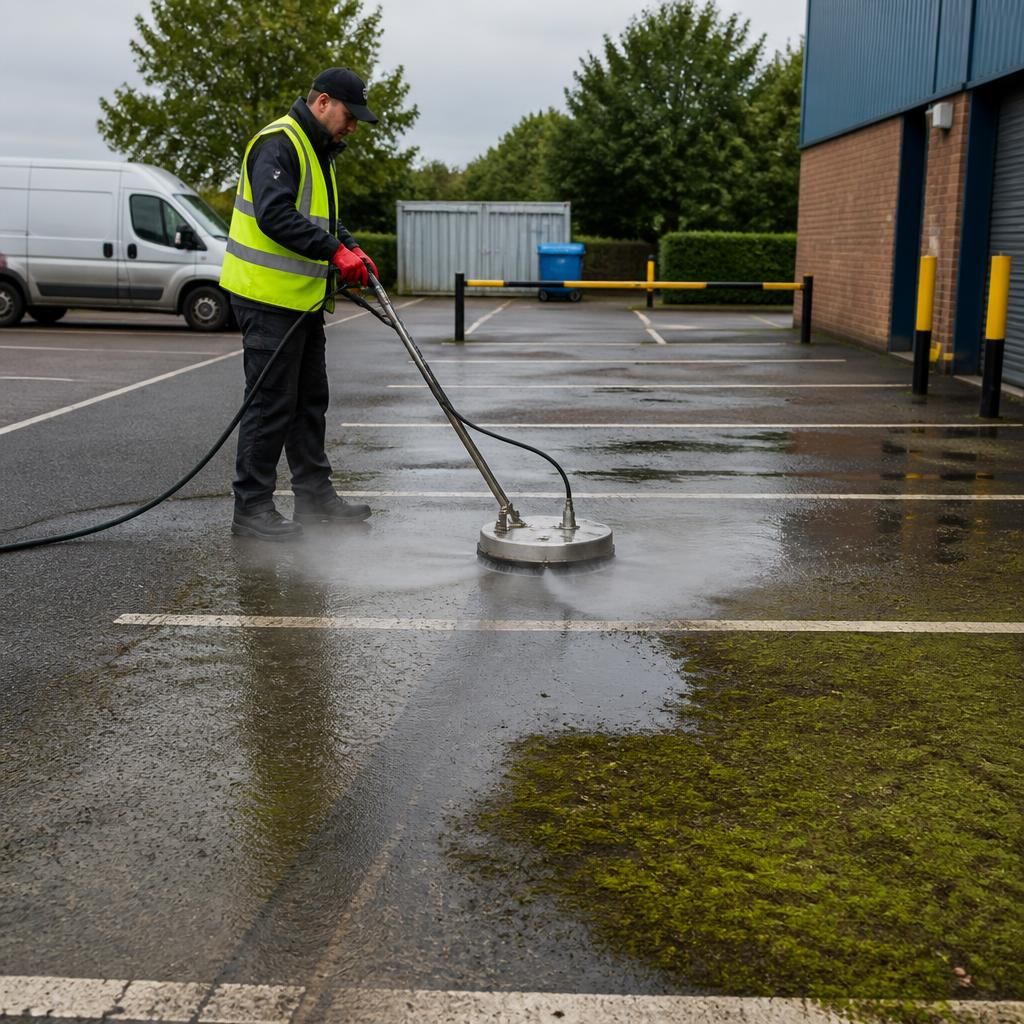
The true cost of moss cleaning on tarmac includes both the initial clean and the maintenance needed to control regrowth. A low-pressure biocidal treatment or steam clean may cost more at the outset than basic pressure washing, but can reduce repeated cleaning and the risk of surface damage where the tarmac is ageing, shaded or poorly drained.
When comparing quotations, check whether they include preparation, moss removal, treatment, run-off control, waste handling and aftercare. The most reliable comparison is the expected cost of maintaining the surface over time, not simply the price of the first visit.