
How often should moss be removed from tarmac to maintain its surface quality?
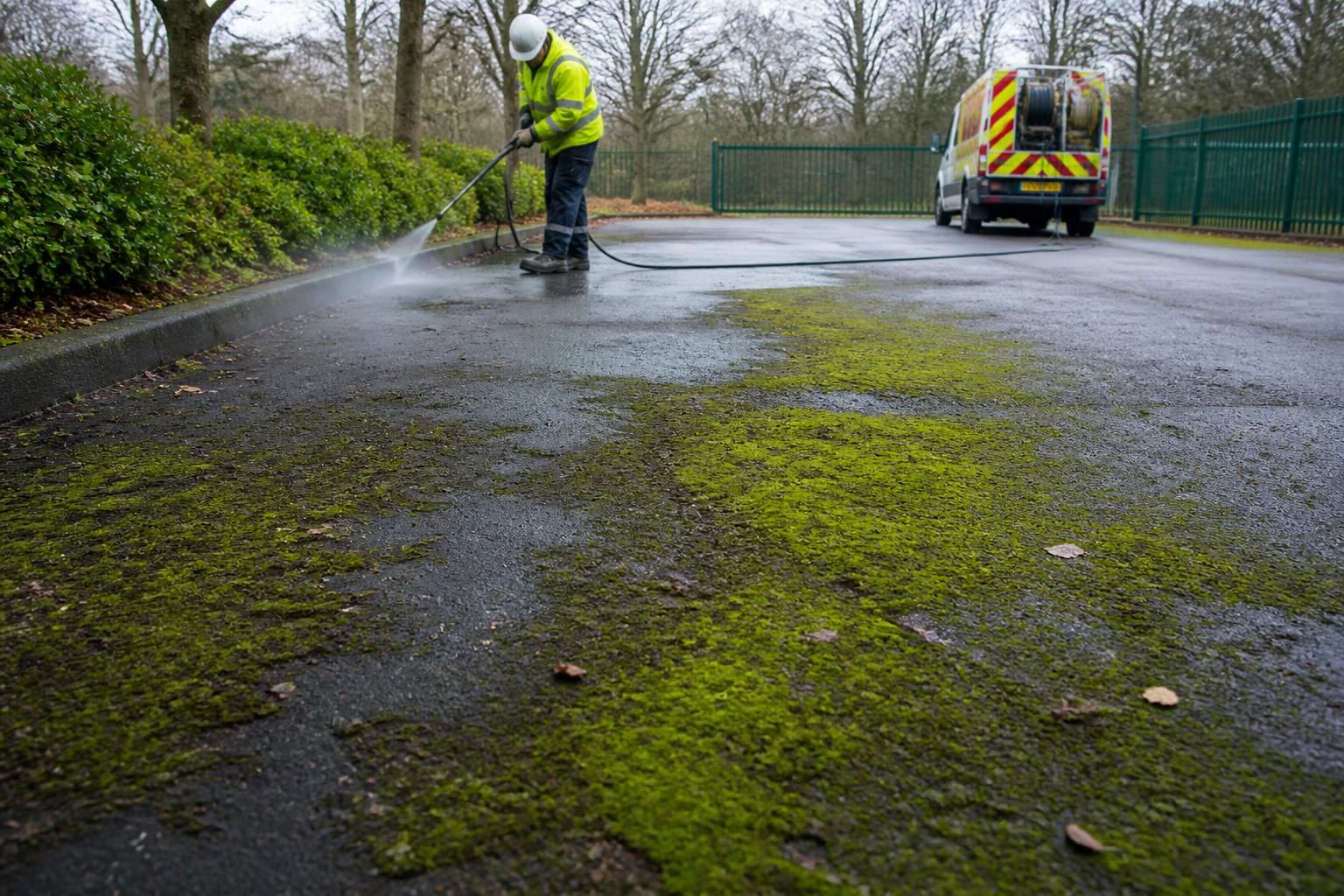
Moss should be removed from tarmac as soon as it becomes established, with the surface inspected at least annually and more frequently where it is shaded, damp or heavily trafficked. Prompt treatment helps preserve the tarmac, reduce slip risk and prevent moss roots and moisture from contributing to surface deterioration.
Moss should be removed from tarmac as soon as it becomes established, rather than left until the surface is heavily covered. As a minimum, inspect tarmac at least annually, with more frequent checks on shaded, damp or heavily trafficked areas. Early removal helps protect the surface, reduce slip risk and prevent moss from retaining moisture against the asphalt.
There is no single timetable that suits every tarmac surface. The appropriate frequency depends on the site’s exposure, drainage, surrounding vegetation, level of use and previous moss growth. A well-drained, open car park may need only periodic treatment, while a shaded footpath beneath trees or beside a building may require inspection several times during the year.
For commercial and industrial sites, moss should form part of the planned external maintenance programme. An annual condition inspection can identify early growth and other issues such as standing water, blocked drainage channels, open joints, surface fretting or areas where the binder is beginning to deteriorate. Where moss returns quickly, the maintenance schedule should be adjusted rather than repeatedly treating the symptom without addressing the underlying cause.
More frequent inspections are advisable where any of the following conditions apply:
- The tarmac remains shaded for much of the day and dries slowly after rain.
- Overhanging trees, dense planting or leaf fall provide organic matter and retain moisture.
- Drainage is restricted, causing water to pond on the surface or collect at the edges.
- The site has heavy pedestrian traffic, where wet moss can create a greater slip hazard.
- Vehicles regularly track mud, soil or plant material onto the tarmac.
- Moss, algae or lichen has previously returned soon after cleaning.
- The surface is older, porous, cracked or worn, allowing moisture and organic matter to collect.
Visible moss is the clearest indication that cleaning is due, but the surface should not be judged by appearance alone. Green discolouration, a slippery film, soft organic deposits and moss gathering in joints or along kerbs can indicate that growth is becoming established. On larger premises, it is useful to record problem areas during inspections so that recurring damp zones can be monitored and treated consistently.
Removing moss promptly is important because established growth can hold moisture against the tarmac and encourage further organic build-up. Its attachment may also make the surface more difficult to clean without disturbing loose aggregate or weakened areas. Moss is not usually the only cause of tarmac deterioration, but it can worsen problems where poor drainage, frost exposure, vehicle loading or existing surface defects are already present.
The cleaning interval should also take account of the condition of the tarmac. Sound, well-bound asphalt can generally tolerate an appropriately selected cleaning process, whereas aged or friable tarmac needs a gentler assessment. Excessive pressure, unsuitable chemicals or aggressive mechanical action may remove surface aggregate, damage edges or drive water into defects. Moss removal should therefore be based on the condition of the surface, not simply on the amount of visible growth.
For most sites, the practical approach is to combine routine inspections with responsive treatment:
- Inspect the tarmac during planned grounds or building maintenance checks.
- Arrange cleaning when moss is first visible or when the surface becomes slippery.
- Check drainage, shading, vegetation and nearby sources of organic debris.
- Use a method suited to the tarmac’s age, strength, texture and surrounding environment.
- Review the area after cleaning and record any locations where regrowth is likely.
Cleaning is often best scheduled when weather conditions allow the surface to dry properly afterwards, subject to the chosen treatment and site requirements. Access, pedestrian management and vehicle movements must also be considered. On an operational car park, walkway or service yard, a planned out-of-hours clean may reduce disruption and allow the area to be inspected before it is returned to use.
Post-cleaning maintenance can extend the period before moss returns. Keeping drainage routes clear, removing leaves and soil, controlling vegetation and correcting persistent ponding all reduce the conditions that support regrowth. However, preventative treatments should be selected carefully. The product, dilution, dwell time and runoff controls must be appropriate for tarmac and the surrounding environment, particularly where surface water drains, planting or public access is nearby.
As a general maintenance guide, arrange at least an annual inspection and bring it forward whenever growth is visible or site conditions change. Shaded, damp or high-use areas may need a planned inspection and treatment cycle more often than open, well-drained surfaces. A site-specific schedule based on observed regrowth is more reliable than applying the same cleaning frequency to every area.
Where moss is extensive, returns quickly or is combined with surface damage, the tarmac should be assessed before cleaning begins. This allows the cleaning method and pressure level to be selected safely, while also identifying drainage or construction issues that need attention. The aim is not simply to remove the visible moss, but to maintain a sound, clean and usable tarmac surface over the long term.
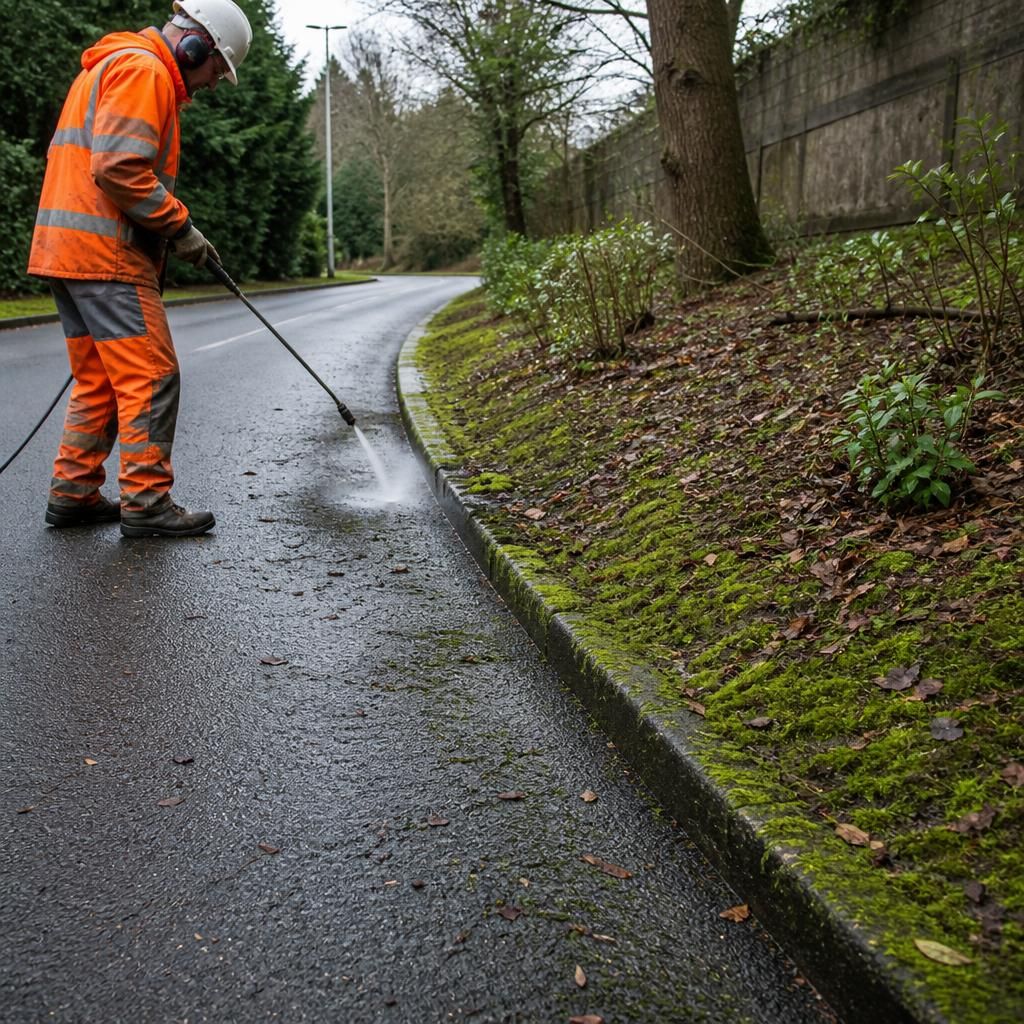
Moss should be removed from tarmac when it becomes established, with the surface inspected at least annually. Shaded, damp or heavily trafficked areas may need checking more often because slow drying, leaf debris and frequent use can encourage faster regrowth and increase slip risk.
A site-specific schedule is more reliable than a fixed cleaning interval. During inspections, check for green film, moss along kerbs and joints, standing water, blocked drainage and worn areas of tarmac. Correcting drainage or vegetation problems alongside moss removal can help maintain the surface and reduce the need for repeated treatment.