
How can I assess the environmental impact of different moss cleaning techniques on tarmac surfaces?
Assess the environmental impact of moss cleaning on tarmac by comparing water use, energy consumption, chemical toxicity, runoff control and the risk of harming surrounding soil or drainage systems. Pressure washing can use substantial water and create contaminated runoff, steam cleaning reduces chemical use but requires energy, while carefully selected soft-washing treatments may have a lower overall impact when correctly diluted, contained and rinsed.
The environmental impact of moss cleaning on tarmac should be assessed across the whole cleaning process, not by looking at the cleaning method alone. Compare water consumption, energy use, chemical selection, runoff control, effects on nearby soil and drainage, waste disposal, the risk of damaging the tarmac and how long the treatment is likely to remain effective. A low-impact approach usually combines targeted mechanical removal with the minimum effective use of water, heat or approved treatment chemicals.
Before selecting a method, inspect the site and record the factors that influence its environmental performance:
- the extent, thickness and location of the moss;
- the condition, age and porosity of the tarmac;
- nearby planting, watercourses, gullies, permeable ground and drainage connections;
- the availability of mains water, captured rainwater or suitable wastewater collection equipment;
- access requirements, including the distance equipment must be transported and whether powered access is needed; and
- whether the surface requires one-off cleaning or a planned maintenance programme.
This establishes a suitable baseline and helps prevent over-cleaning. Treating a lightly affected area with a powerful system can use more water, energy and chemicals than necessary, while aggressive cleaning that shortens the life of the tarmac may create a greater environmental burden through repair or replacement.
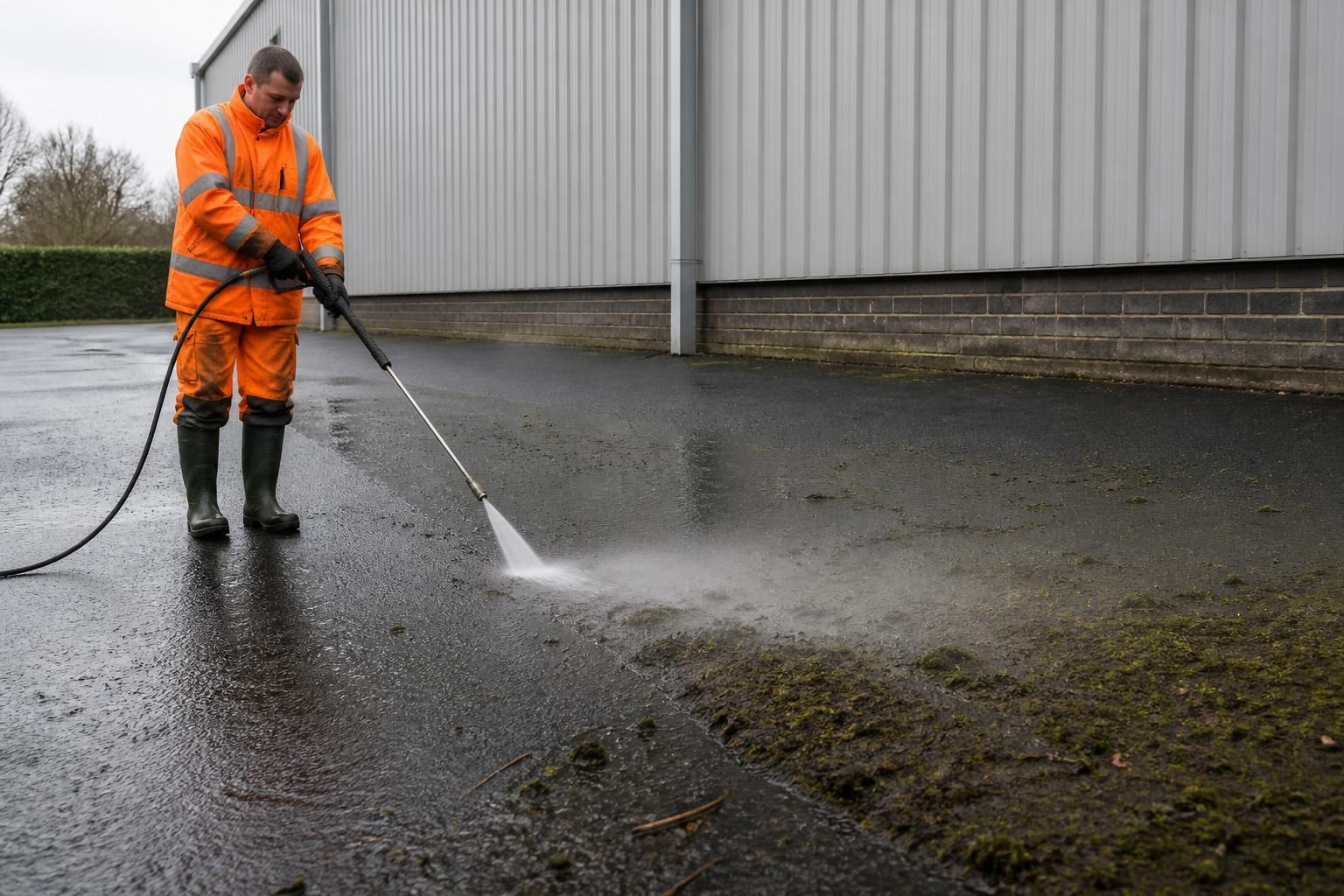
Pressure washing can remove moss quickly, particularly where growth has formed a thick layer. Its environmental impact depends heavily on the pressure, flow rate, cleaning time and whether water is recovered. Water consumption can be substantial, and the resulting runoff may contain moss fragments, sediment, organic matter, oil residues and cleaning products. If this enters a surface-water drain, soil or a watercourse without suitable controls, it may affect drainage infrastructure and the surrounding environment.
Pressure washing can also dislodge aggregate or expose weak areas in worn tarmac. The surface may then weather more quickly and provide conditions for renewed moss growth. To reduce the impact, use the lowest effective pressure, avoid directing the jet into cracks and joints, protect vulnerable edges, and collect or control runoff wherever practical. Dry removal of loose moss before washing can also reduce water use and the amount of contaminated wastewater produced.
Steam cleaning uses heated water and can reduce or eliminate the need for chemical treatment. This may be beneficial where the site is close to planting, public areas or sensitive drainage. However, generating heat requires energy, so its environmental performance depends on the equipment, fuel or electricity source, operating time and distance travelled to the site. Steam cleaning is not automatically the lowest-impact option if the equipment is inefficient or the treatment is repeated unnecessarily.
Steam can be useful for loosening moss and organic deposits with limited mechanical force. It should still be applied carefully to older or damaged tarmac, as excessive heat or prolonged treatment may affect bituminous binders, soften weak areas or disturb existing defects. As with pressure washing, manage the loosened material and wastewater rather than allowing it to migrate into gullies or planted areas.
Soft washing and chemical treatments normally use low-pressure application, which can reduce the risk of surface erosion and often requires less water than high-pressure cleaning. Their environmental impact depends on the active ingredient, concentration, contact time, application rate, weather conditions, overspray controls and disposal of rinsing water. A treatment described as eco-friendly should not be assumed to be harmless: any biocidal or detergent product can affect vegetation, soil organisms or aquatic life if it is misapplied or allowed to enter drainage systems.
Choose products that are suitable for the intended use, follow the manufacturer’s instructions and retain the relevant safety and environmental information. Do not increase the concentration to compensate for poor preparation, unsuitable weather or inadequate dwell time. Prevent spray drift, protect nearby vegetation and keep treated areas away from surface water. Where rinsing is required, plan how the wastewater will be contained, filtered, collected or disposed of in accordance with site requirements and applicable environmental controls.
Manual scraping and brushing can have the lowest direct water and chemical demand for small or lightly affected areas. It may be appropriate as a first stage before a more targeted wash. Its limitations are the labour and time required, the risk of leaving roots or spores behind, and the need to collect the removed moss. If loose material is swept into a drain, the environmental benefit is reduced and blockages may result.
To compare methods consistently, assess each one against the following criteria:
- Water: estimate the water needed for preparation, cleaning and rinsing, and determine whether it can be reduced or recovered.
- Energy: consider electricity or fuel used for pumps, heating, access equipment, transport and wastewater recovery.
- Chemicals: review the product’s purpose, active ingredients, dilution, persistence, toxicity information and risk to non-target organisms.
- Runoff: identify where water will travel and whether moss, sediment, oil or chemicals could reach drains, soil or watercourses.
- Surface protection: consider whether the method could remove aggregate, open cracks or accelerate deterioration.
- Waste: plan the collection and disposal of moss, silt, contaminated filters and any unused product or wastewater.
- Durability: consider how long the result is expected to last and whether the method reduces or increases the need for repeat cleaning.
- Site impact: include noise, access restrictions, vehicle movements, overspray and disruption to staff, visitors and neighbouring properties.
The most useful comparison is therefore based on the complete task. For example, manual removal followed by a controlled low-pressure rinse may be preferable for a small area near planted borders. A carefully managed soft-wash treatment may be suitable for widespread growth where preventing surface damage is the priority, provided the chemical and runoff controls are robust. Steam may be considered where chemical use must be minimised and the energy requirements can be justified. High-pressure washing may be appropriate for durable, open areas when water use and wastewater are properly controlled, but it should not be selected simply because it is quick.
Cleaning frequency also affects the overall environmental result. A method that appears efficient but causes tarmac damage or provides only a short-lived improvement can have a higher whole-life impact than a gentler treatment followed by routine sweeping, improved drainage and removal of shaded, persistently damp conditions. Preventative maintenance should form part of the assessment. Keeping gullies clear, correcting standing water, trimming vegetation that excessively shades the surface and removing organic debris can reduce the amount of intensive cleaning required.
For a commercial or industrial site, document the assessment before work begins. The method statement should identify the selected technique, expected water and chemical use, drainage points, protection for vegetation, runoff controls, equipment requirements and the procedure for dealing with unexpected contamination. After cleaning, inspect the tarmac and surrounding areas for aggregate loss, damaged joints, chemical drift, sediment deposits and blocked drainage. This evidence helps refine future maintenance and demonstrates that environmental considerations were built into the work rather than considered only after cleaning.
In practice, the lowest-impact solution is usually the least aggressive method that achieves the required level of moss removal without damaging the tarmac. Comparing the full process—preparation, cleaning, containment, disposal and future maintenance—provides a more reliable environmental assessment than comparing pressure washing, steam cleaning or chemical treatment in isolation.
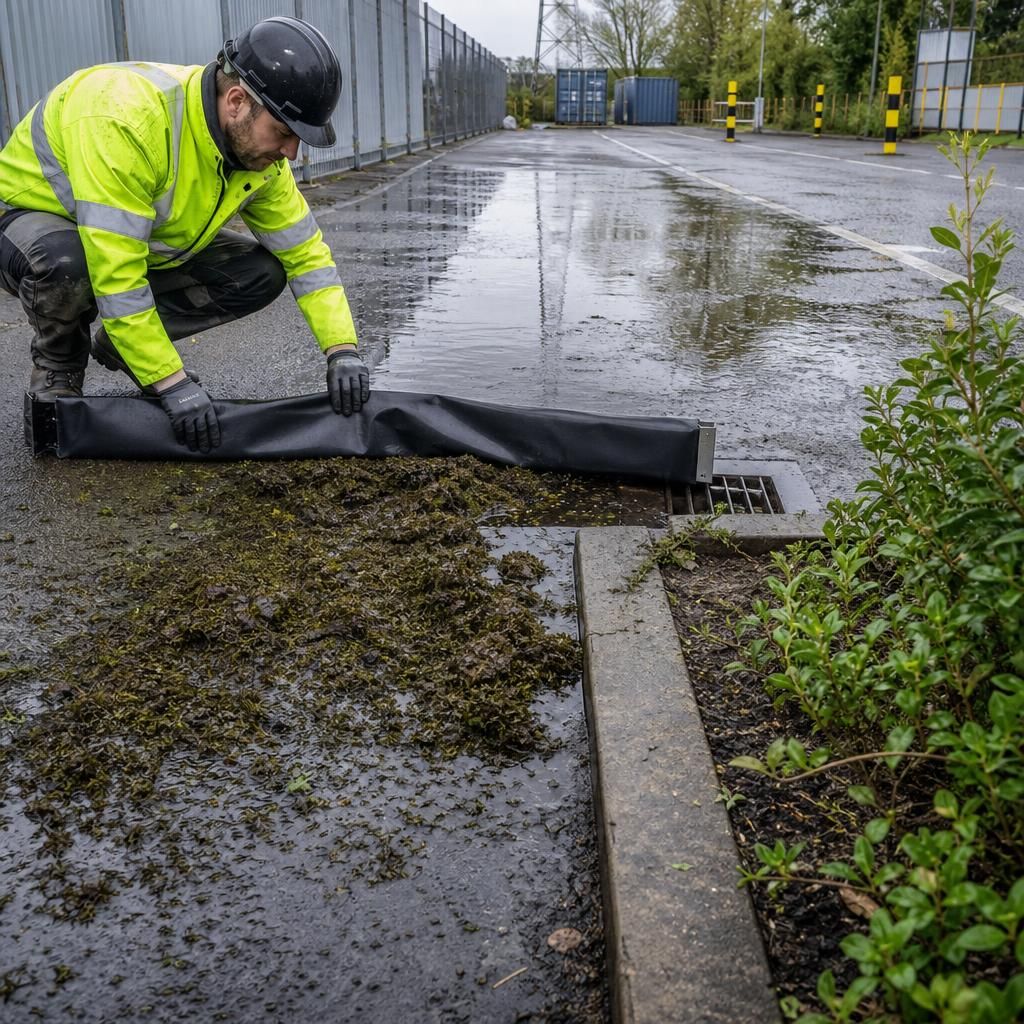
Runoff control is a key part of assessing the environmental impact of moss cleaning on tarmac. Wash water can carry moss fragments, sediment, oil residues and treatment products into gullies, soil or nearby watercourses, so the cleaning method should be judged alongside how wastewater will be contained and managed.
Before work begins, identify drainage routes and protect vulnerable gullies or planted areas. Remove loose moss mechanically where practical, use only the water or treatment required, and collect or filter contaminated runoff in line with the site’s environmental procedures. This can make a greater difference to the overall impact than choosing a method based on water use alone.