
Are there eco-friendly methods to remove moss from tarmac?
Yes. Eco-friendly moss removal from tarmac can combine manual brushing or scraping with controlled low-pressure rinsing and, where necessary, a carefully selected biodegradable treatment applied sparingly to limit chemical use and protect surrounding soil, drains and vegetation.
Yes. The most environmentally responsible way to remove moss from tarmac is usually a staged approach: remove the bulk of the growth mechanically, use the lowest effective water pressure, and apply a carefully selected biodegradable treatment only where it is needed. This reduces chemical use, limits runoff and helps protect the tarmac, surrounding soil, drainage systems and vegetation.
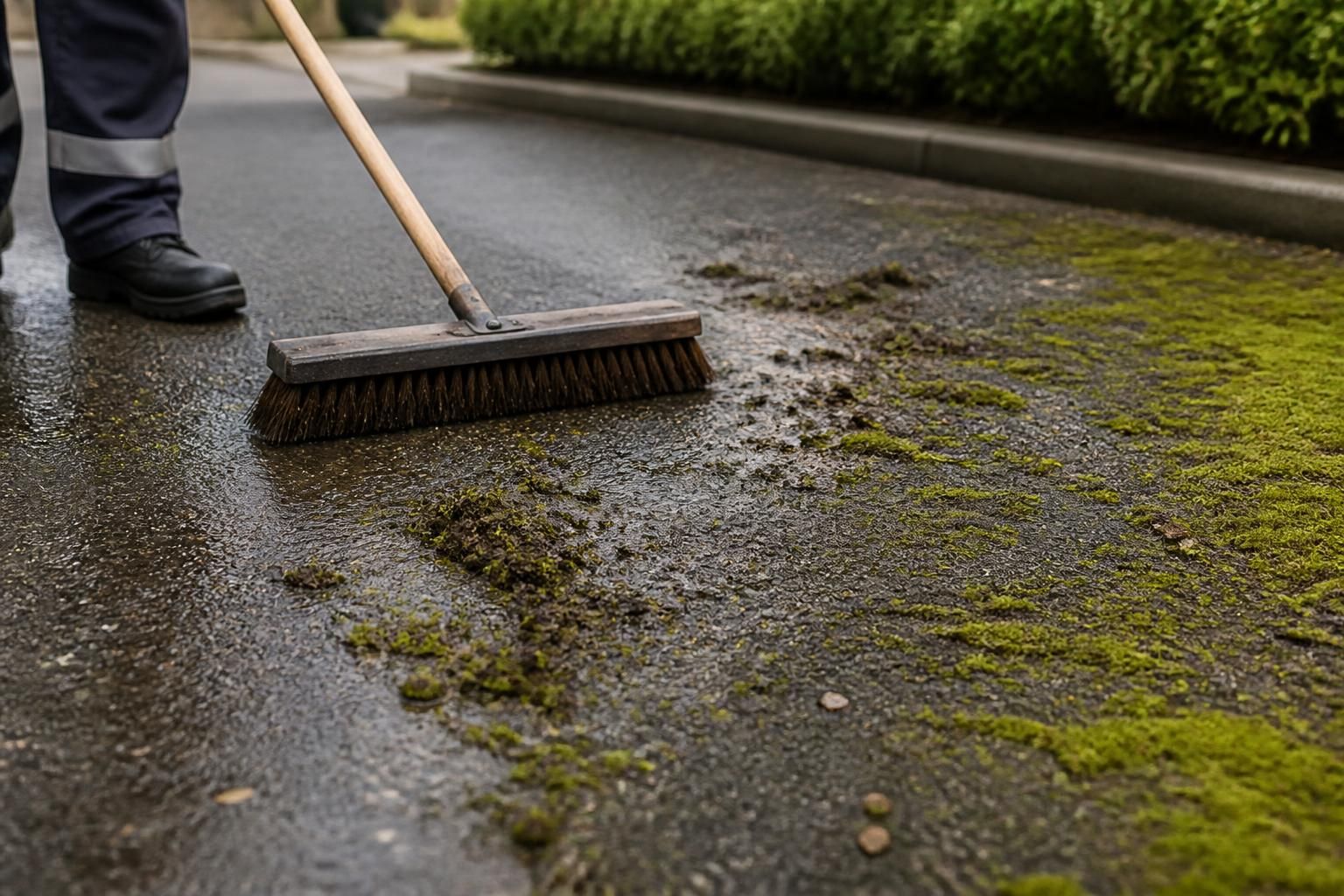
Manual moss removal is often the best starting point, particularly where moss is loose or concentrated in joints and along edges. Stiff brushes, scrapers and suitable mechanical tools can lift the growth without introducing detergents or biocides to the surface. Removed moss should be collected rather than washed into gullies, as organic material can obstruct drainage and may contribute to further growth.
Manual work is not suitable for every surface or every scale of site. Excessive scraping, aggressive wire brushing or unsuitable mechanical equipment can loosen the aggregate, mark the binder or damage worn areas of tarmac. The method should therefore be adjusted to the surface condition, the thickness of the moss and the presence of existing cracks or defects.
Controlled low-pressure rinsing can remove remaining debris after brushing. The pressure should be sufficient to clear the surface but not so high that it strips the tarmac binder, drives water into cracks or displaces jointing material at adjacent paving. Water use can be reduced by treating only affected areas, avoiding repeated passes and collecting or directing runoff responsibly where site conditions allow.
Steam cleaning may be appropriate for some commercial surfaces because it can reduce or avoid the need for chemical treatment. Heated water helps loosen organic growth and surface contamination, while controlled application can be gentler than high-pressure cleaning. It still requires a competent operator: excessive heat, prolonged application or poor control around vulnerable edges can affect certain tarmac surfaces and nearby materials. Steam cleaning also has an energy demand, so its environmental benefit depends on the equipment, the site and the cleaning objective.
Biodegradable moss treatments can be useful when moss has penetrated textured areas, remains attached after mechanical cleaning or is likely to return quickly. A suitable product should be selected for the specific surface and applied at the lowest effective concentration by a trained operator. “Biodegradable” does not mean harmless in every situation. The treatment may still affect aquatic life, soil organisms, planted areas or surface water if it is over-applied or allowed to enter drains.
Before any treatment is used, the operator should identify nearby drains, watercourses, planted borders, trees, grassed areas and vulnerable building materials. Drain covers, temporary barriers or controlled collection may be appropriate, depending on the site. Runoff should never be allowed to flow unchecked into a watercourse, and local drainage requirements must be considered. Product labels, safety data and the site’s environmental controls should guide application and disposal.
For larger commercial or industrial areas, an environmentally responsible cleaning plan should consider more than the cleaning product. Important factors include:
- the extent and thickness of moss and whether it is mixed with algae, dirt or oil;
- the age, condition and porosity of the tarmac;
- the proximity of drains, watercourses, planting and public areas;
- the amount of water and energy required by the chosen method;
- how removed moss, contaminated water and other waste will be contained and disposed of;
- the need to keep pedestrian and vehicle routes safe during cleaning; and
- whether follow-up maintenance can prevent heavy regrowth and reduce future chemical use.
Prevention is also part of an eco-friendly approach. Improving drainage, reducing persistent shade where practical, clearing leaves and organic debris, controlling overhanging vegetation and keeping tarmac free from standing water can make the surface less favourable to moss. Planned inspections and light maintenance are generally preferable to allowing substantial growth to establish before a more intensive treatment is required.
An appropriate method should be tested in an inconspicuous area before the main work begins. This confirms whether the cleaning process removes the moss without exposing loose aggregate, changing the appearance of the tarmac or affecting adjacent surfaces. For commercial sites, the work should also be planned around access requirements, weather conditions and safe segregation of the cleaning area.
In practice, the lowest-impact solution is not always the one using the least product or water in isolation. A method that removes moss thoroughly without damaging the tarmac can extend the surface’s service life and reduce the need for repeat cleaning or repairs. A site-specific assessment is therefore important when choosing between manual removal, low-pressure washing, steam cleaning and a targeted biodegradable treatment.
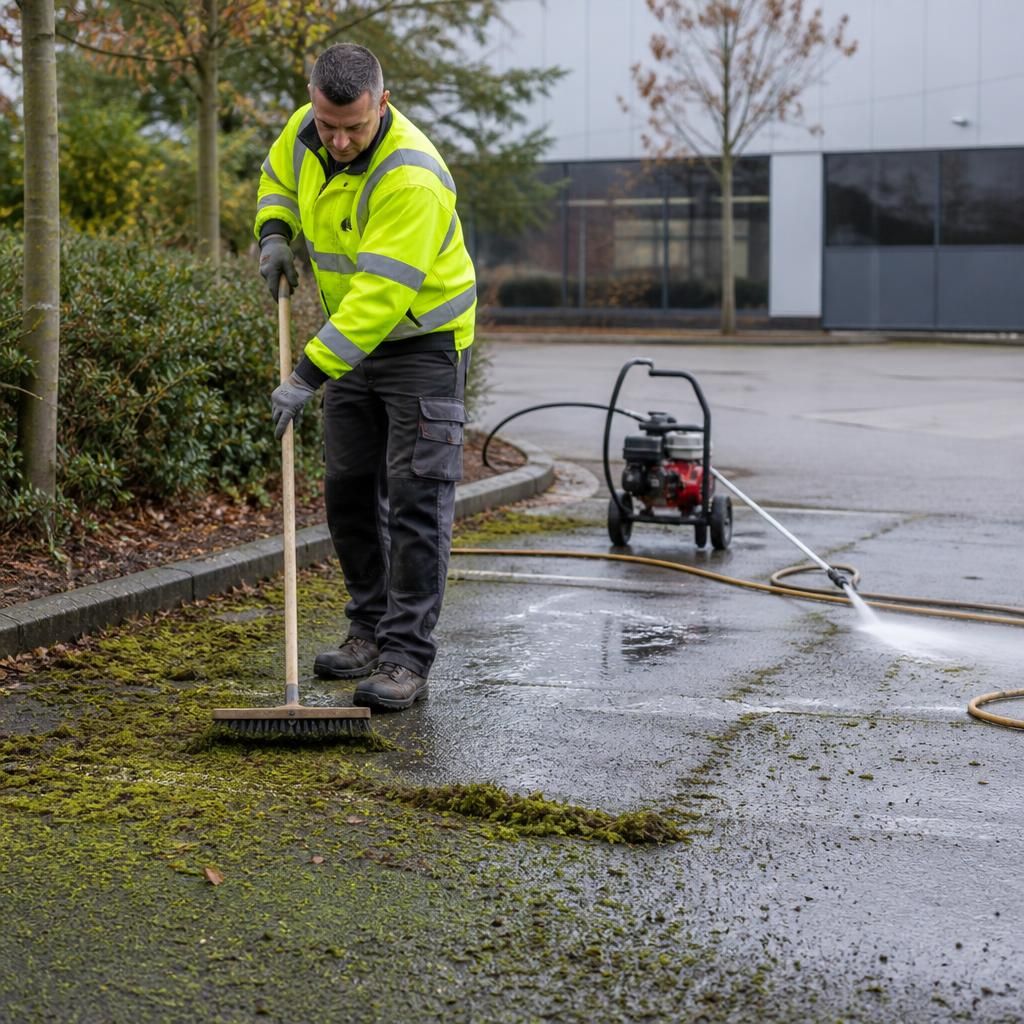
Manual removal followed by controlled low-pressure rinsing is often the lowest-impact way to remove moss from tarmac. Brushing and scraping lift the bulk of the growth without chemicals, while a carefully controlled rinse clears loose residue without stripping the binder or driving water into cracks.
Collected moss should be removed from the site rather than washed into drains. If growth remains firmly attached, a suitable biodegradable treatment may be applied sparingly after checking nearby planting, watercourses and drainage routes. Any treatment still requires responsible handling, as biodegradable products can affect soil organisms and aquatic life if they enter the wrong environment.
Discuss an Eco-Friendly Moss Removal Plan
Contact Encanto Exterior Cleaning to discuss an eco-friendly moss removal plan suited to your tarmac, drainage arrangements and surrounding areas. We can assess the surface and recommend a practical combination of manual removal, controlled rinsing, steam cleaning or targeted treatment.