
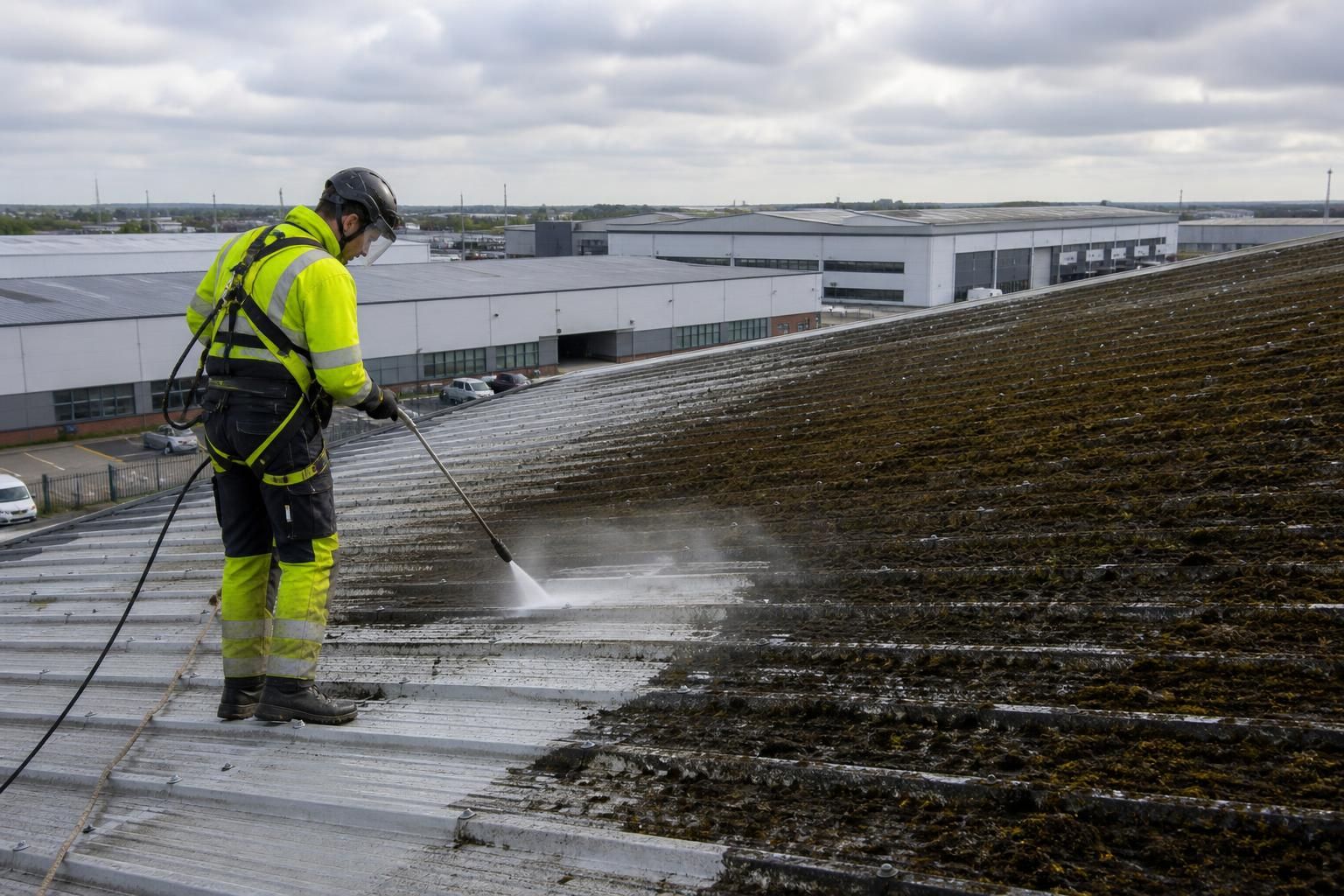
How often should roofs be treated for moss and algae removal?
Roofs should be inspected at least annually and treated for moss and algae when growth is established or beginning to return, rather than to a fixed timetable. The appropriate interval depends on the roofing material, shading, moisture levels, surrounding vegetation and previous treatment, so some roofs need more frequent maintenance than others.
Roofs should be inspected at least annually and treated for moss and algae when growth is established or beginning to return, rather than according to a fixed timetable. The suitable interval depends on the roofing material, shade, moisture, nearby vegetation, roof pitch, local exposure and the effectiveness of any previous treatment. A roof in a damp, shaded location may need attention more frequently than a roof that receives direct sunlight and dries quickly.
Annual inspection does not necessarily mean annual treatment. A professional assessment can identify early staining, algae discolouration, lichen attachment and moss development before growth becomes extensive. If the roof remains clean and the surface is sound, routine monitoring may be all that is required. Treatment is generally more appropriate when growth is visibly returning, retaining moisture, obstructing drainage or beginning to affect the appearance and condition of the roof covering.
Factors that influence treatment frequency include:
- Shade and moisture: Roofs beneath trees or beside taller buildings receive less sunlight and remain damp for longer, creating favourable conditions for moss and algae.
- Surrounding vegetation: Overhanging branches deposit leaves and organic matter, restrict airflow and can increase the amount of moisture held against the roof.
- Roofing material: Some tiles and textured surfaces provide more opportunity for moss and lichen to attach. The correct cleaning and treatment method must be selected to avoid damage.
- Roof pitch and drainage: Low-pitched areas and roofs with blocked or slow-flowing gutters may stay wet for longer, while poor drainage can encourage regrowth.
- Previous cleaning and treatment: A roof that has been thoroughly cleaned and treated may remain clear for longer, although no treatment can prevent all future growth indefinitely.
- Local conditions: Birmingham and the wider West Midlands can experience damp periods, variable temperatures and shaded urban environments, all of which can affect how quickly biological growth returns.
The type of growth also matters. Green algae may initially appear as surface staining, while moss develops into thicker growth that can hold water against tiles and spread towards joints and drainage points. Lichen can attach more firmly and may require a carefully controlled treatment programme. These conditions should be assessed separately rather than treated as identical problems.
After moss or algae has been removed, a suitable biocidal or soft wash treatment may be applied to deal with remaining spores and microscopic growth. The treatment is allowed to work in accordance with the product requirements and site conditions. It is not always necessary, appropriate or safe to use the same approach on every roof, particularly where tiles are aged, fragile, porous or already damaged. High-pressure washing can dislodge coverings, force water beneath tiles or accelerate surface deterioration if used incorrectly.
Signs that a roof may need treatment include:
- Visible moss returning across tile edges, ridges or valleys.
- Green, black or brown algae staining spreading across the roof surface.
- Lichen forming firmly attached pale or crusted patches.
- Moss blocking gutters, valleys or rainwater outlets.
- Organic growth remaining wet for long periods after rainfall.
- Growth extending onto roof-mounted equipment, adjoining surfaces or access routes.
It is usually better to arrange an inspection when early regrowth is noticed than to wait until the roof is heavily covered. Established moss is more difficult to remove safely, can increase the amount of debris entering drainage systems and may make access more complex. However, moss removal should not be used to conceal underlying defects. Cracked tiles, failed pointing, damaged membranes, defective flashing and blocked drainage should be reported and addressed through the appropriate roofing or maintenance contractor.
Ongoing maintenance can extend the period between treatments. Keeping gutters and valleys clear, cutting back overhanging vegetation, improving sunlight and airflow where practical, and checking shaded elevations can all reduce the conditions that support regrowth. Regular inspections are particularly important for commercial, managed or multi-unit properties, where a small drainage issue or neglected elevation can affect several areas of the building.
For commercial premises, the treatment interval should form part of the wider planned maintenance schedule. Roof inspections can be coordinated with façade cleaning, gutter clearance and other external works, reducing disruption and helping property managers maintain consistent records. The inspection should consider access requirements, tenant or public safety, weather conditions, environmental controls and the condition of the roof before any work begins.
In practical terms, arrange a roof inspection at least once a year and request treatment when inspection identifies active or returning growth. A further inspection should also be considered after prolonged damp weather, building works, nearby tree growth or drainage problems. This condition-based approach is more reliable than applying the same treatment interval to every roof and helps ensure that cleaning is carried out when it is genuinely required.
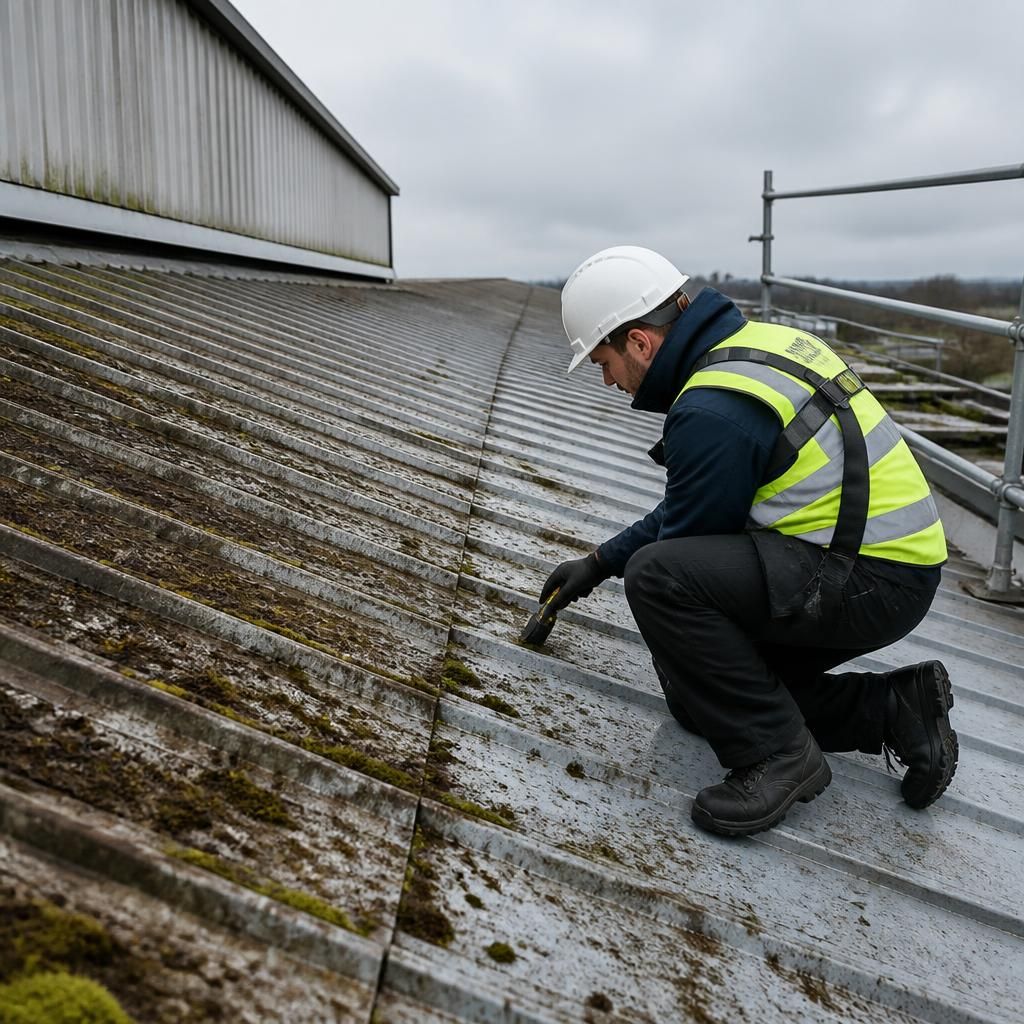
Roof moss and algae treatment should be scheduled according to the roof’s condition, not a fixed annual cycle. Arrange an inspection at least annually, then treat the roof if active growth is returning, retaining moisture or affecting drainage.
Annual inspection does not automatically mean annual treatment. A roof that remains clean and dry may only need monitoring, while a shaded roof beneath trees may require earlier attention. During an inspection, particular attention should be given to moss along tile edges, lichen attachment, algae staining and growth near gutters, valleys or outlets.
After treatment, keep gutters clear and cut back overhanging vegetation where practical. These measures can reduce dampness and help extend the interval before further work is needed. If regrowth appears after prolonged wet weather, building work or drainage problems, arrange an additional inspection rather than waiting for the next planned maintenance visit.