
How long does the moss and algae removal process take?
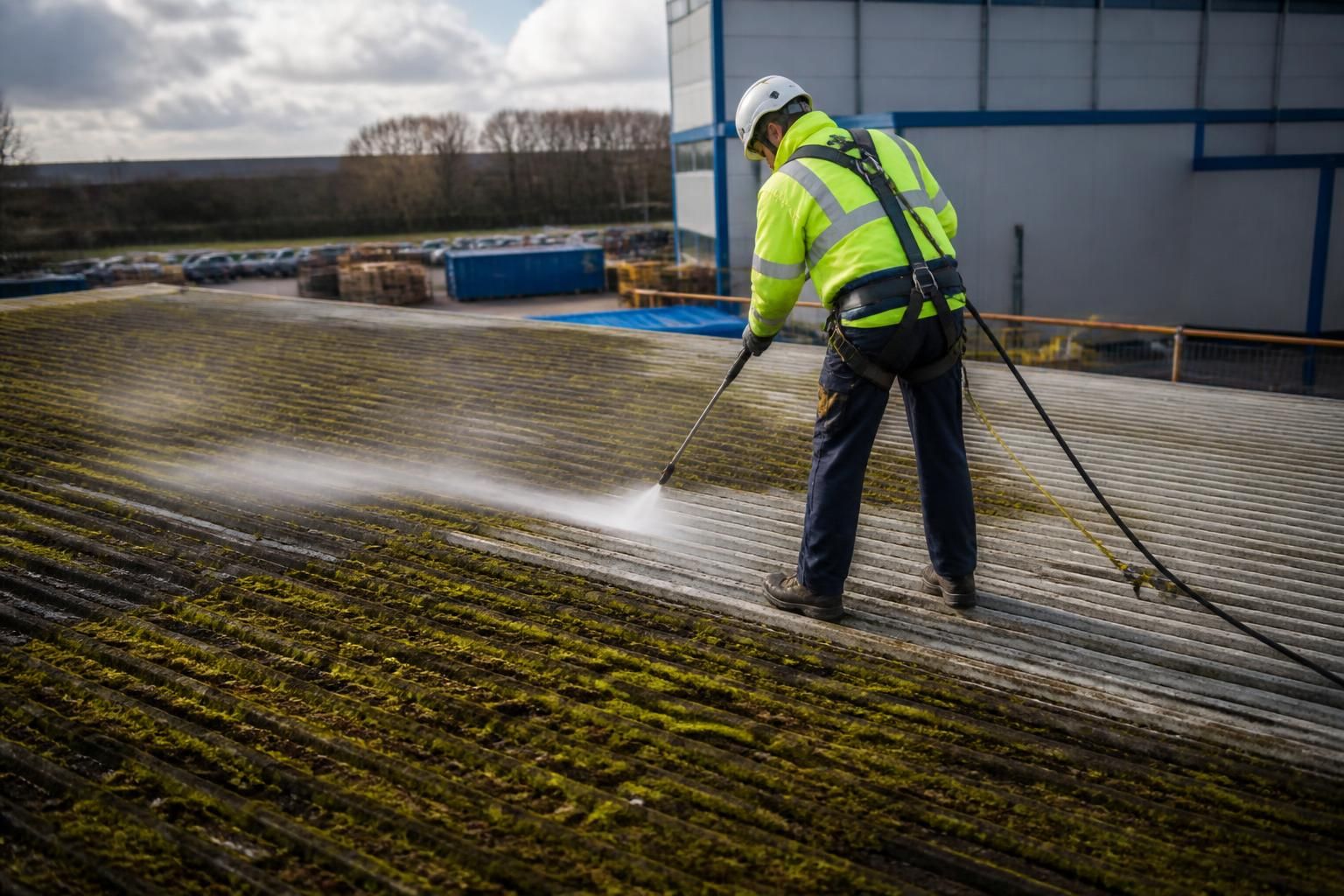
Moss and algae removal can take from part of a day for a small, accessible area to several days for larger roofs, façades or commercial sites. The timescale depends on surface area, access, moss coverage, the chosen cleaning method, weather conditions and whether biocide treatment or follow-up work is required.
Moss and algae removal typically takes from part of a day for a small, accessible area to several days for a large roof, façade or commercial site. The actual timescale depends on the size and condition of the surface, the amount of growth, access requirements, the selected cleaning method, weather conditions and whether a biocidal treatment or follow-up visit is needed.
For most projects, the work is planned in stages rather than treated as a single cleaning operation. A typical process may include:
- Site assessment and preparation: The surface, surrounding areas, drainage, access points and potential hazards are checked before work begins. Planting, vehicles, equipment and vulnerable areas may need protection.
- Removal of established growth: Loose moss is usually scraped or brushed away using controlled methods suited to the surface. Algae, lichen and staining may require low-pressure cleaning, steam cleaning or soft washing.
- Rinsing and inspection: Residue and loosened material are removed, with particular care taken around gutters, drainage channels, joints and surface details.
- Application of treatment: A suitable biocide or preventative treatment may be applied after cleaning. This is intended to deal with remaining organic contamination and slow regrowth, but it may need time to work and may not produce an immediate uniform appearance.
- Completion and making good: Waste is cleared, affected areas are checked and any agreed follow-up work is identified.
A small, straightforward area with clear access may be completed during one visit. A larger roof with heavy moss coverage takes longer because growth must be removed carefully without damaging tiles, membranes, coatings, pointing or drainage components. Where access equipment, edge protection or additional controls are required, preparation and dismantling also form part of the programme.
Commercial and industrial sites often require more planning than domestic-sized areas. Large façades, extensive roof sections, car parks, paths or multiple buildings may be divided into manageable work zones so that entrances, deliveries, tenants and other site activities can continue safely. The programme may therefore extend across several visits, particularly where a site requires a planned maintenance approach rather than one continuous clean.
Weather can affect both the working day and the treatment schedule. Heavy rain may dilute or wash away a treatment before it has had sufficient contact time, while high winds can make roof work, access equipment and controlled application unsafe. Very cold conditions can affect water, surfaces and equipment. Damp weather may also make it harder to assess the final appearance immediately, as some staining and biological discolouration fades progressively after treatment.
The chosen method also influences the duration. Manual removal is controlled and suitable for many delicate or weathered surfaces, but it can be slower where growth is thick. Low-pressure washing can cover broad areas efficiently when the substrate is sound and the equipment can be used safely. Soft washing combines low-pressure application with a cleaning solution and may require dwell time before rinsing. Steam cleaning can be useful for certain hard surfaces and sensitive locations, although access, water supply and the condition of the substrate still affect productivity.
It is important to distinguish between the time spent on site and the time required to see the full result. Physical moss removal can reveal the underlying surface during the visit, but algae, lichen marks and organic staining may continue to fade after treatment. Some surfaces need a follow-up rinse or inspection once they have dried, while heavily affected areas may require additional treatment rather than more aggressive pressure.
Before work starts, the expected duration should be confirmed following an inspection. Useful information includes the approximate surface area, roof or façade material, height, slope, access restrictions, moss coverage, drainage arrangements and any requirement to keep the premises operational. The quotation or method statement should also make clear whether preparation, access equipment, gutter clearance, biocide application, waste removal and follow-up visits are included.
Allowing sufficient time is essential. Rushing moss and algae removal can increase the risk of surface damage, uncontrolled runoff, incomplete treatment and unsafe working conditions. A carefully planned programme may take longer than a basic pressure-washing visit, but it provides better control over the substrate, surrounding property and final result.
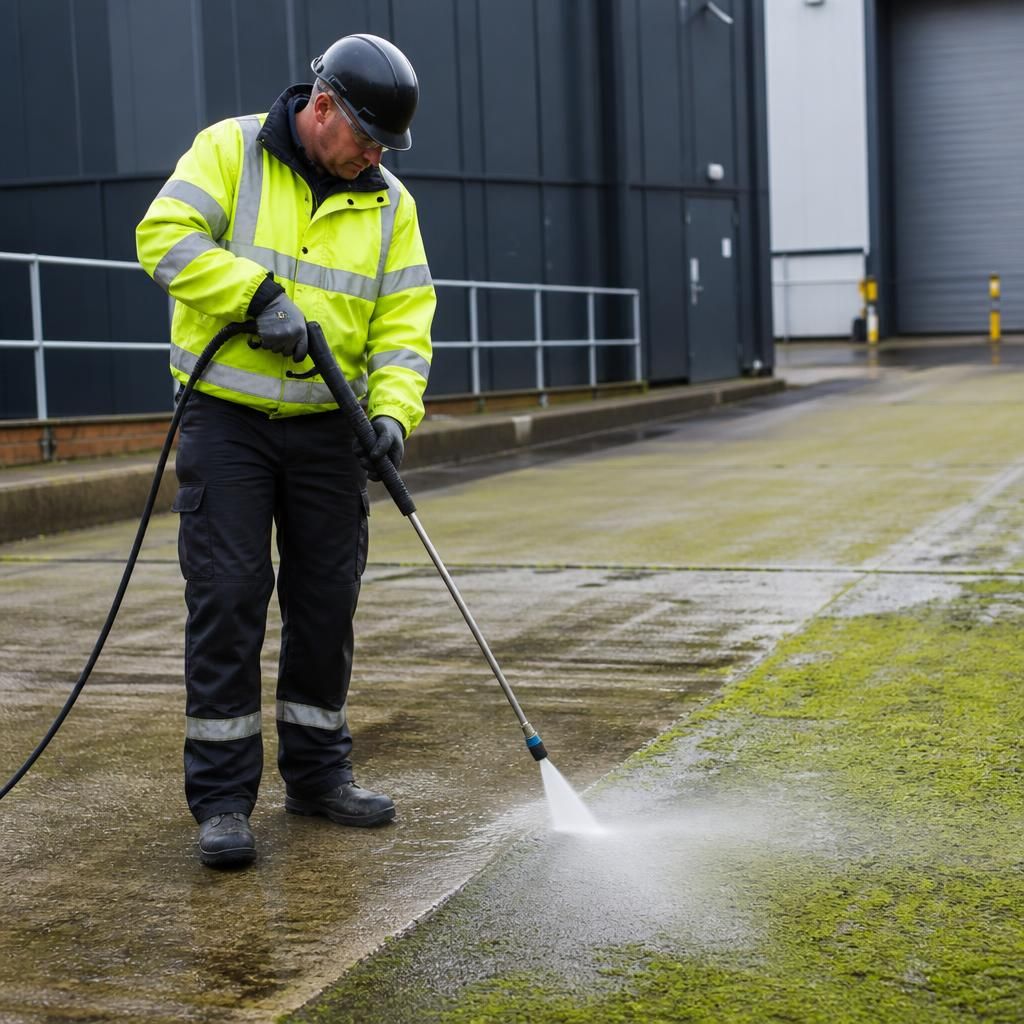
The time spent removing moss and algae is not always the same as the time needed to see the final result. Physical moss removal may be completed during the visit, while algae, lichen and organic staining can continue to fade as the surface dries and the treatment takes effect.
Weather, surface condition and the chosen method all influence this process. A biocidal treatment may require suitable contact time and dry conditions, and rain shortly afterwards can affect its performance. For heavily affected areas, a follow-up inspection or additional treatment may be recommended rather than using excessive pressure during the initial clean.