
How can ongoing maintenance help in preventing moss and algae regrowth on roofing surfaces?
Ongoing roof maintenance helps prevent moss and algae regrowth by identifying damp, shaded areas early, clearing organic debris and keeping gutters and drainage routes free-flowing. Scheduled cleaning and suitable preventative treatments can reduce moisture retention, protect roofing materials and limit the need for more extensive remedial work.
Ongoing roof maintenance prevents moss and algae regrowth by controlling the moisture, shade, debris and surface contamination that allow these organisms to establish. Regular inspections, effective drainage, appropriate cleaning and correctly selected preventative treatments help keep roofing surfaces drier and reduce the need for repeated intensive removal.
Why moss and algae return
Moss thrives where roofing remains damp and collects organic material such as leaves, soil and airborne debris. Algae and lichen can also develop on shaded or north-facing elevations, particularly where water drains slowly or nearby trees restrict airflow and daylight. Once established, these growths retain moisture against the roof surface and may spread to adjacent tiles, slates, membrane edges, copings or cladding.
Removing visible growth without addressing these conditions usually provides only a temporary improvement. Ongoing maintenance is intended to deal with the causes of regrowth as well as the remaining spores and staining.
Key maintenance measures include:
- Planned inspections: Roofs should be checked for early moss, algae and lichen growth, blocked drainage routes, damaged coverings, open joints, failed flashings and areas where water is ponding. Inspections are particularly useful after periods of heavy rain, storms or prolonged damp weather.
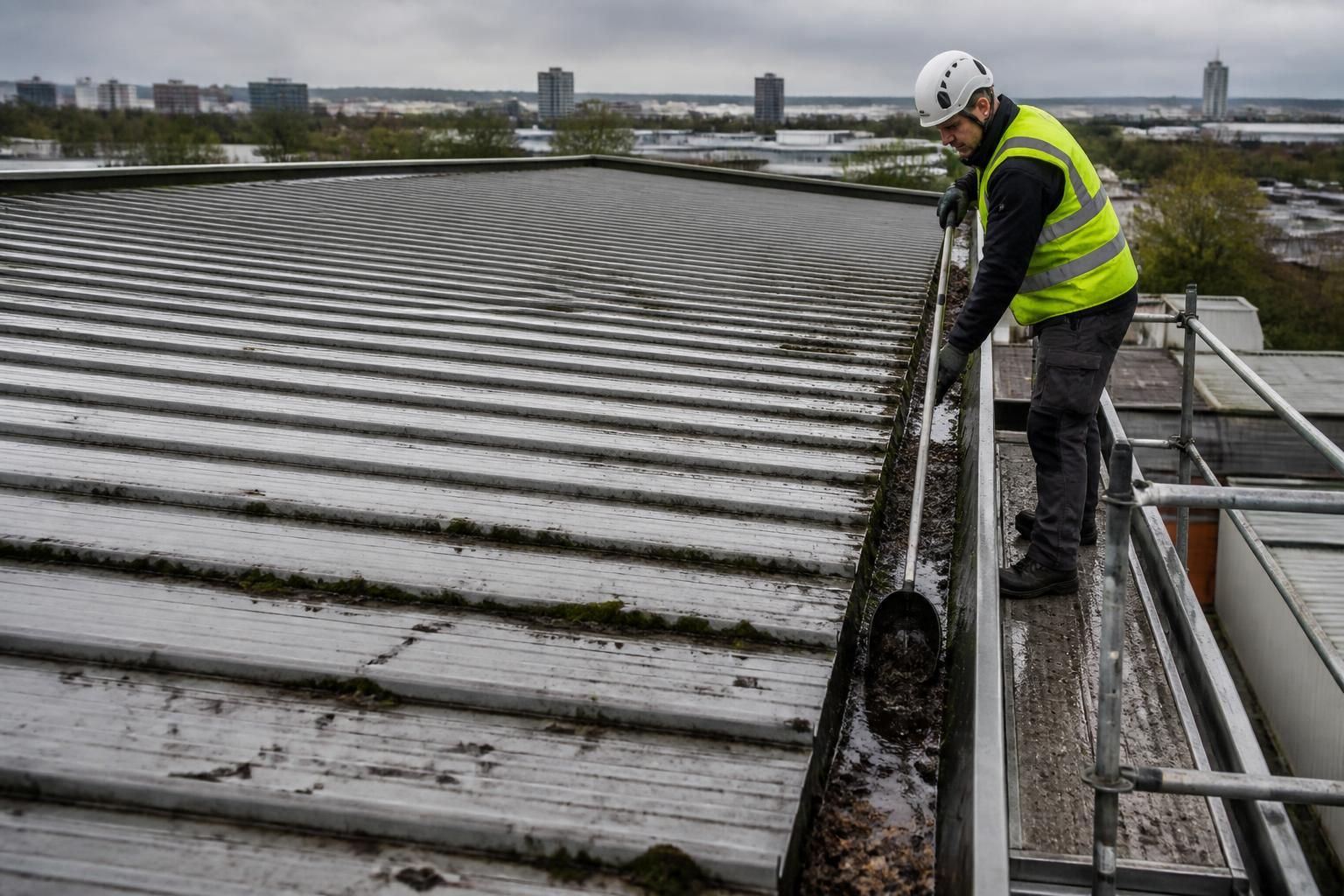
- Debris removal: Leaves, twigs and accumulated organic matter should be cleared from roof valleys, gutters, outlets, parapets and other areas where they retain moisture. This reduces the nutrient source available to moss and helps water leave the roof efficiently.
- Drainage maintenance: Gutters, downpipes, gullies and surface-water outlets need to remain free-flowing. Blockages can cause repeated wetting of roof edges and adjoining walls, creating favourable conditions for regrowth and increasing the risk of water ingress.
- Vegetation management: Overhanging branches can shade the roof and deposit organic debris. Carefully planned pruning, where permitted and safe, can improve light and airflow. Vegetation should not be removed or cut back without considering building regulations, protected trees and the surrounding site.
- Prompt repairs: Broken tiles, displaced slates, deteriorated pointing and defective drainage details can create localised damp areas. Repairing these defects helps prevent moisture being held beneath or between roofing materials.
Scheduled cleaning and treatment
Where moss or algae is already present, the most suitable removal method depends on the roofing material, its condition, the amount of growth and the surrounding environment. Physical removal, low-pressure cleaning, steam cleaning or a soft wash approach may be appropriate in different circumstances. The objective should be to remove contamination without dislodging tiles, damaging protective finishes or forcing water into vulnerable areas.
After removal, a suitable biocidal or preventative treatment may be applied to help break down residual organic matter and slow recolonisation. Treatment selection must take account of the roof covering, manufacturer requirements, nearby drainage systems and the potential impact on plants, watercourses and other surfaces. A treatment is not a substitute for cleaning or repairs, and it cannot prevent regrowth indefinitely where the roof remains persistently shaded, damp or obstructed.
Maintenance visits should therefore assess both the condition of the treatment and the conditions around the roof. If staining or growth begins to reappear, early intervention is generally less disruptive than allowing dense moss mats or extensive lichen to develop.
Maintenance should be adapted to the roof and site
Different roofing materials tolerate cleaning and treatment in different ways. Older tiles, slate, coated metal, concrete products and membrane systems may have varying levels of surface wear, porosity and sensitivity to pressure or chemicals. A sound roof may support a different cleaning plan from one with brittle coverings, failing coatings or known water-ingress problems.
Commercial buildings also require consideration of access arrangements, tenant activity, public areas, plant, vehicles and drainage controls. Maintenance planning should include suitable access equipment, exclusion zones and measures to prevent loosened debris or cleaning solution reaching occupied areas. Roof work should be carried out by trained personnel following an appropriate risk assessment, rather than relying on pressure alone to remove growth.
How often maintenance is needed
There is no single schedule that suits every roof. The appropriate frequency depends on roof pitch and material, surrounding trees, orientation, local exposure, drainage performance, previous growth and the consequences of a blockage or leak. A roof in a shaded location beneath mature trees may need closer monitoring than a clear, well-ventilated roof with good drainage.
A practical maintenance plan normally combines routine visual checks with more detailed inspections and cleaning when conditions indicate a need. Records of previous treatments, repairs, recurring wet areas and drainage defects can help identify patterns and refine the schedule. Maintenance should be brought forward if moss is encroaching on gutters, algae is spreading across large areas, water is not draining correctly or roofing components show signs of movement or deterioration.
Ongoing maintenance cannot guarantee that moss and algae will never return, because spores are naturally present in the environment. It can, however, limit the moisture and debris that support growth, identify defects before they become more serious and extend the period between major cleaning works. For commercial and industrial properties, a documented inspection and maintenance programme also supports safer access planning, clearer budgeting and better protection of the roofing system.
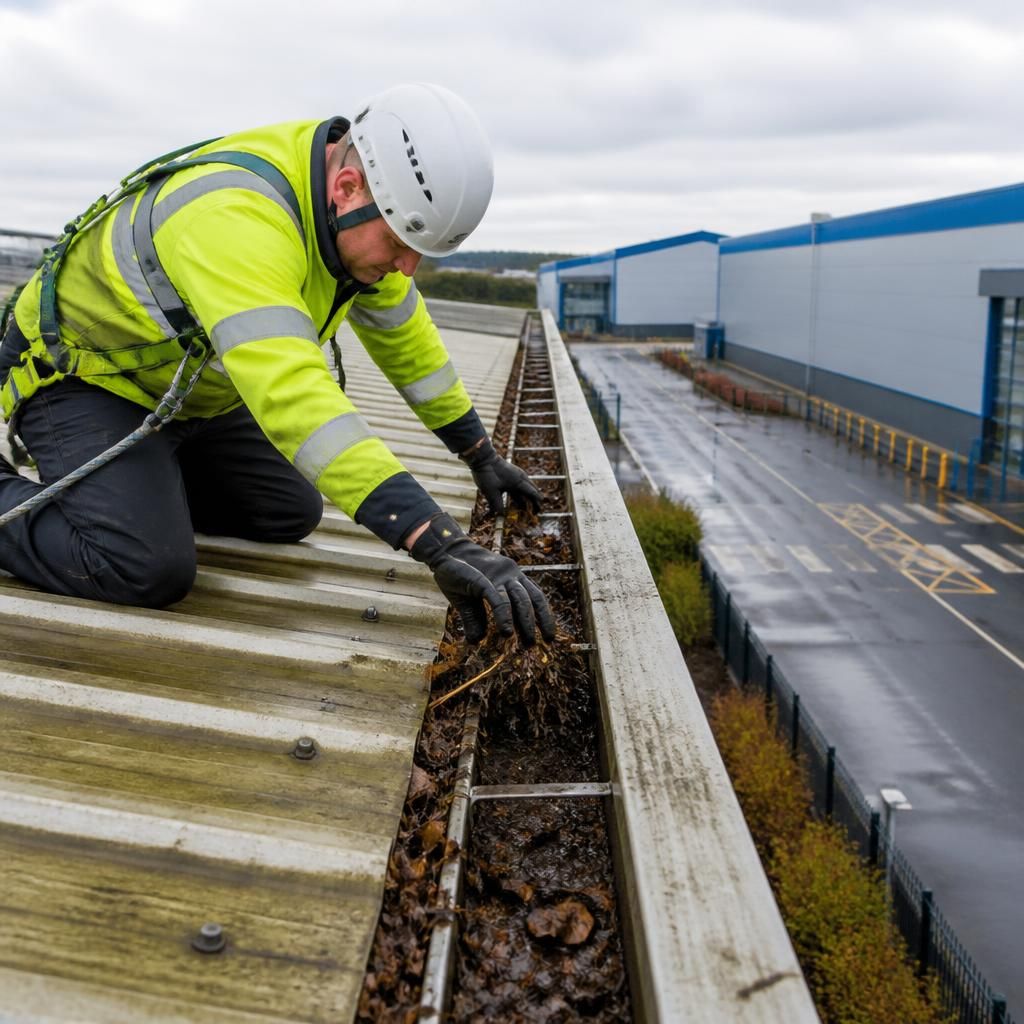
Keeping gutters, valleys and roof drainage routes clear is one of the most effective ways to reduce moss and algae regrowth. When leaves, soil and other debris hold moisture against roofing surfaces, they create the damp conditions these organisms need to establish and spread.
During ongoing maintenance, inspections should check for blocked outlets, ponding water, overhanging vegetation and areas where moss is encroaching on gutters. Clearing debris and correcting drainage defects helps the roof dry more quickly, while suitable pruning can improve light and airflow where this is safe and permitted.
These measures do not prevent regrowth indefinitely, as spores are naturally present, but they reduce the conditions that support it. Regular checks also allow early treatment before growth becomes dense or begins to obstruct drainage.
Arrange ongoing roof maintenance to help prevent moss and algae regrowth
Arrange an ongoing roof maintenance plan with Encanto Exterior Cleaning to monitor moss and algae regrowth, maintain drainage and identify defects early. Contact our team to discuss a suitable inspection, cleaning and preventative treatment schedule for your property.