
What safety precautions are essential during algae and lichen removal on various exterior surfaces?
Essential precautions include assessing the surface and surrounding hazards, isolating the work area, using suitable PPE, controlling water and chemical run-off, and following safe procedures for pressure washing, steam cleaning and work at height. Operators must also select a method that will not damage the substrate, protect nearby people and property, and follow product instructions and site-specific risk assessments.
Safe algae and lichen removal depends on controlling risks to people, the building, the surrounding environment and the surface being cleaned. Essential precautions include a site-specific risk assessment, suitable personal protective equipment, exclusion of the work area, secure access for work at height, careful control of pressure and chemicals, and responsible management of water and contaminated run-off.
Algae and lichen can make roofs, paving, steps and access routes slippery. Removal can also create additional hazards through pressurised water, falling debris, wet surfaces, chemical exposure and splash-back. The correct controls should therefore be selected for the substrate, cleaning method, site layout and weather conditions rather than applying one procedure to every surface.
Complete a site and surface assessment first
- Identify fragile, loose, cracked or delaminating materials before cleaning. Particular care is required around aged masonry, sandstone, roof coverings, coatings, pointing, sealants and poorly bonded render.
- Check for trip hazards, unstable paving, open edges, fragile roof areas, overhead obstructions, traffic routes, pedestrian access and confined spaces.
- Locate electrical equipment, lighting, ventilation openings, doorways, windows, drains and other areas that could be affected by water or cleaning products.
- Determine whether the growth is algae, lichen, moss or a mixture. Different growths may require different treatment and removal methods.
- Review the condition of the surface and agree a small test area where there is any doubt about pressure, dwell time, chemical compatibility or likely colour change.
The findings should be recorded in a task-specific risk assessment and method statement. Where hazardous cleaning products are used, the relevant Control of Substances Hazardous to Health requirements and the product safety data should be followed.
Use appropriate personal protective equipment
Operators should select PPE according to the equipment and treatment being used. This may include waterproof, chemical-resistant gloves, protective footwear with suitable slip resistance, eye or face protection, waterproof clothing and hearing protection when using noisy machinery. Respiratory protection should only be selected following a suitable assessment of airborne hazards and in accordance with the equipment manufacturer’s requirements.
PPE is a final layer of protection, not a substitute for controlling the hazard. Gloves and protective clothing must be suitable for the specific biocide or detergent, and contaminated PPE should be cleaned, stored or disposed of correctly. Operators should also avoid carrying wet contamination from the work area into occupied parts of the premises.
Control access and protect people nearby
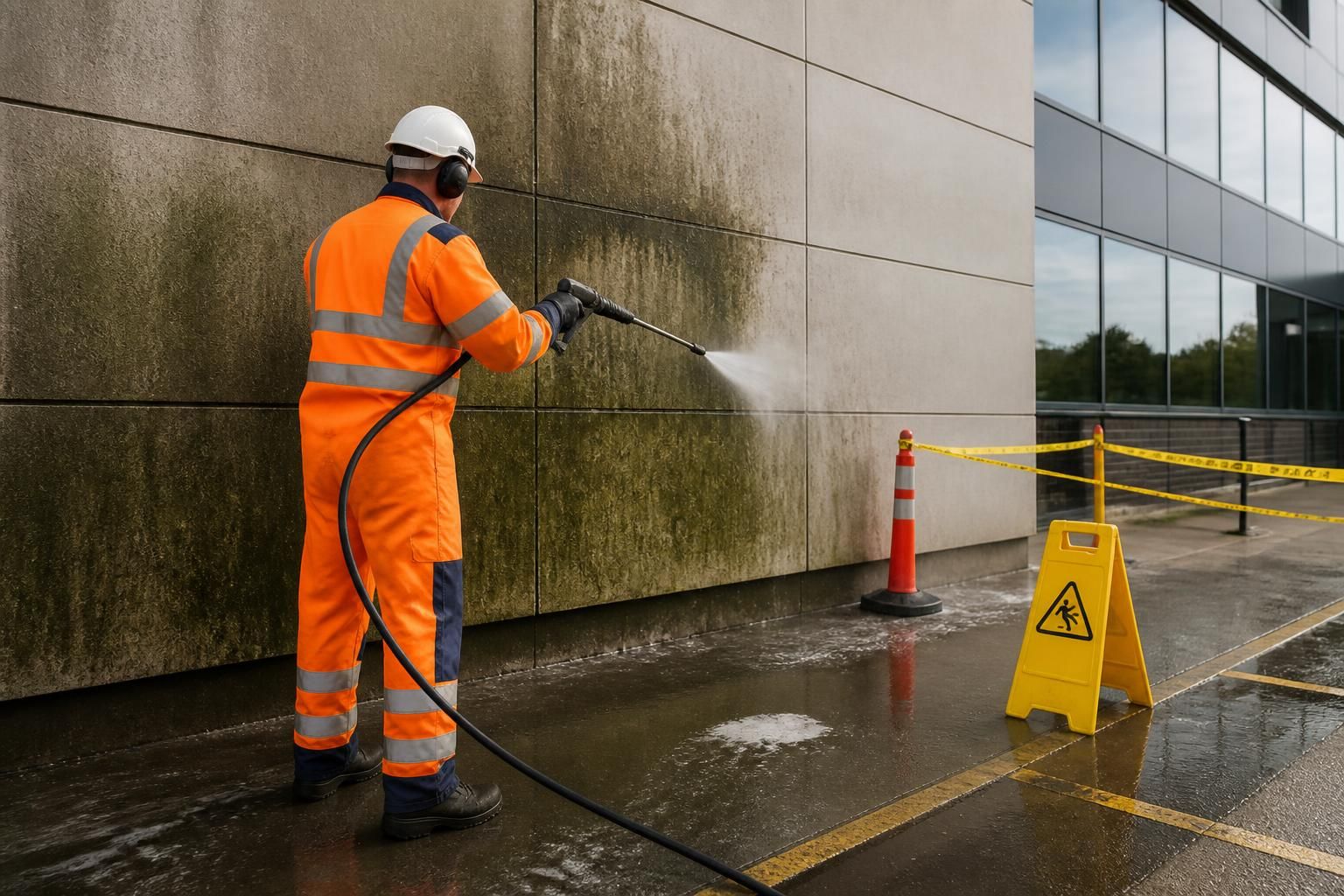
- Establish a clear exclusion zone around the cleaning area and prevent unauthorised access while surfaces are wet or equipment is operating.
- Use appropriate signs, barriers and a banksman where pedestrians, vehicles or deliveries may pass close to the work.
- Coordinate the work with the building occupier so entrances, fire exits, air intakes and vulnerable activities are not put at risk.
- Protect nearby vehicles, glazing, painted surfaces, plants, external fixtures and stored materials from spray, splash and falling debris.
- Never direct pressure-washing spray towards people, animals, open windows, ventilation systems or unprotected electrical components.
Where cleaning takes place in a public or operational area, the work zone may need additional segregation and supervision. The area should remain controlled until the surface has drained and is safe to walk on.
Apply safe work-at-height procedures
Roofs, upper façades, canopies and high-level cladding must be accessed using equipment and systems suitable for the task. A safe system may involve ground-based cleaning, scaffolding, a mobile elevated work platform, a tower or an industrial rope-access arrangement, depending on the structure and reach required.
- Plan access and rescue arrangements before starting, particularly where harnesses, platforms or restricted areas are involved.
- Use trained and authorised operators for access equipment, and complete pre-use checks.
- Treat algae- or lichen-covered roofs and sloping surfaces as particularly slippery and potentially fragile.
- Use edge protection, fall-restraint or fall-arrest systems where required by the risk assessment.
- Prevent tools, hoses, debris and equipment from falling into areas below.
- Do not rely on ladders as a working platform for prolonged or forceful cleaning unless the risk assessment confirms that this is appropriate.
Wet weather, frost, strong winds and poor visibility can make access equipment and roof work unsafe. The work should be postponed or adapted when conditions prevent stable positioning, safe handling or effective control of spray.
Control pressure and protect the substrate
Pressure washing should be matched to the material and its condition. Excessive pressure or an unsuitable nozzle can remove pointing, open pores, dislodge aggregate, damage coatings, force water behind cladding or strip protective finishes. The operator should maintain a controlled distance, use an appropriate spray pattern and avoid concentrating the jet on joints, edges, cracks, vents and penetrations.
On delicate masonry, sandstone, aged concrete, painted façades and roof coverings, a lower-pressure approach, steam cleaning or a compatible biocidal treatment may be safer than aggressive mechanical cleaning. Loose growth should be removed in a controlled manner, and the surface should not be treated as sound simply because it appears clean. Any defects exposed during cleaning should be reported rather than concealed.
Steam cleaning also requires controls for hot water, vapour, burns and splash-back. Hoses must be routed to prevent trips, couplings should be checked, and operators should keep the lance under control during start-up and shut-down.
Handle biocides and detergents safely
Only products suitable for the intended surface and application should be used. Operators should read the label, technical information and safety data before use, including instructions for dilution, contact time, PPE, storage, first aid and disposal. Products must never be mixed unless the manufacturer specifically permits it, as incompatible chemicals can release hazardous vapours or react dangerously.
- Measure and dilute products in a controlled area using suitable containers and equipment.
- Prevent splashes to skin and eyes, and keep containers secured and clearly identified.
- Do not eat, drink or smoke while handling treatment products.
- Store chemicals away from drains, watercourses, food, public access and incompatible substances.
- Keep an eyewash facility and suitable spill response materials available where the assessment requires them.
Biocidal treatments should not be allowed to drift onto neighbouring property, planting, ponds or watercourses. Application should be stopped if wind or rain could carry the product beyond the intended area or wash it into drainage systems.
Manage water and contaminated run-off
Run-off can contain cleaning chemicals, loosened organic matter, sediment, paint fragments and contaminants from the surface. It should be contained, redirected or collected where necessary rather than allowed to flow onto public paths, planted areas, neighbouring premises or surface-water drains.
- Identify drainage routes before work begins and protect or isolate vulnerable drains.
- Use bunding, drain covers, wet vacuums, collection systems or controlled discharge arrangements where appropriate.
- Prevent dirty water from entering watercourses or systems intended for rainwater only.
- Follow site requirements and applicable environmental and wastewater controls for disposal.
- Keep clean water and contaminated recovery equipment separate where practicable.
Water should also be used carefully around façades and cladding. Excessive saturation can enter joints, cavities, insulation systems or internal areas, particularly where seals are damaged. Doors, windows and openings should be protected, and the building should be checked for water ingress during the work.
Manage equipment, electrical and traffic risks
Pressure washers, steam equipment, pumps, hoses and generators should be inspected before use and operated only by people familiar with the equipment. Hoses should be positioned to reduce trip and crush risks, while connections, trigger controls and emergency shut-offs should be checked regularly.
Electrical equipment must be protected from water and connected through suitable arrangements for the working environment. Generators and fuel-powered machinery require adequate ventilation and must not be operated where exhaust fumes could accumulate. In commercial yards, car parks and loading areas, vehicles should be segregated from the work zone and a traffic-management plan used where necessary.
Finish with inspection and safe handover
After cleaning, inspect the surface for remaining loose material, damage, exposed defects, chemical residue, blocked drainage and areas that remain slippery. Remove barriers only when the area is safe for normal use, and inform the site contact about any defects or maintenance issues identified.
Good practice also includes recording the treatment used, relevant product information, weather conditions, access arrangements, waste or run-off controls and any incidents or near misses. These records support future maintenance and help ensure that subsequent algae and lichen treatments remain safe, proportionate and compatible with the building.
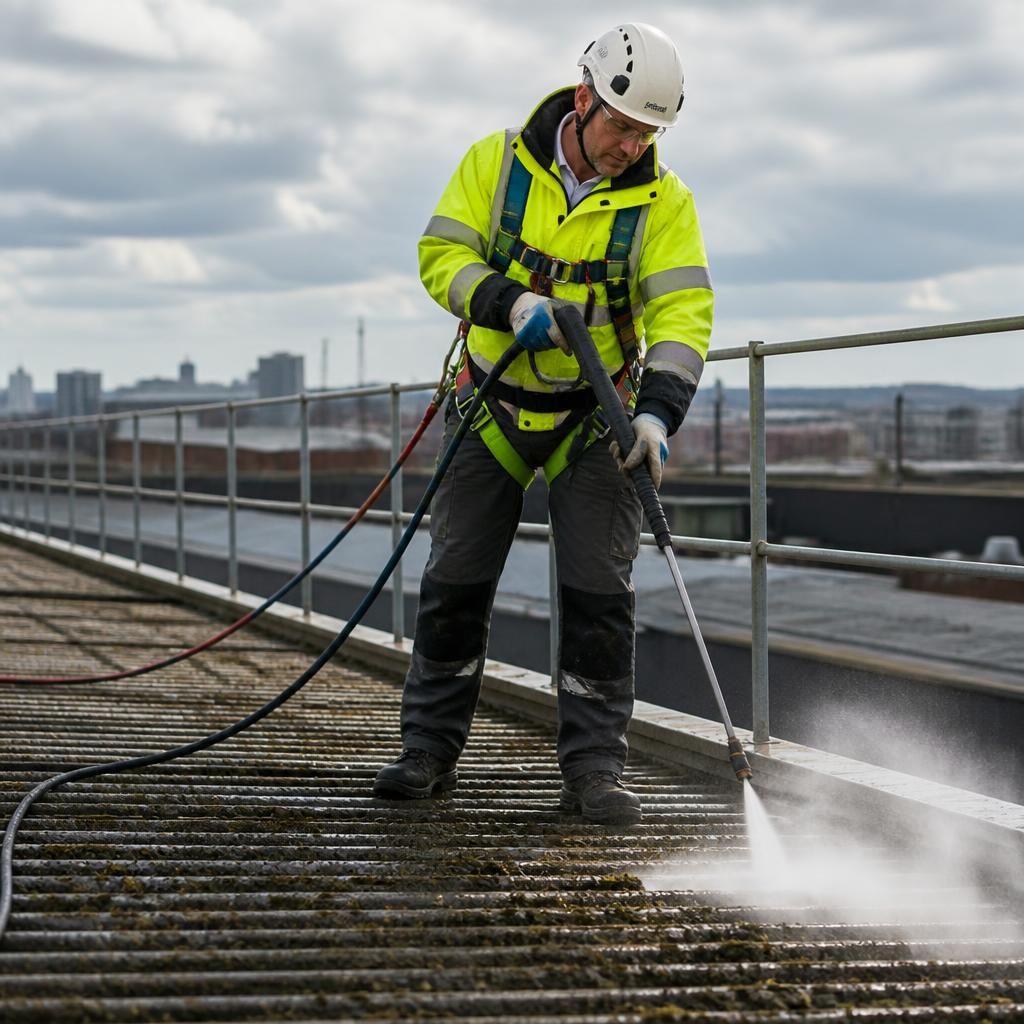
Work at height is a critical safety consideration during algae and lichen removal because growth can make roofs, canopies and sloping surfaces exceptionally slippery, while cleaning adds water, debris and hose-related trip hazards.
- Assess the roof or façade for fragile coverings, open edges, unstable access points and overhead obstructions before work begins.
- Use suitable access equipment, edge protection and fall-restraint or fall-arrest systems where required by the risk assessment.
- Keep tools, hoses and loosened growth secured so they cannot fall into areas below, and establish an exclusion zone at ground level.
- Postpone work during strong winds, frost, poor visibility or other conditions that prevent stable positioning and controlled cleaning.
Only trained operators should use access equipment, with rescue arrangements planned before work starts. Where practical, ground-based pressure washing, steam cleaning or biocidal application can reduce the need to work directly on fragile or contaminated roof surfaces.