
What safety considerations should be taken into account during algae and lichen removal?
Safe algae and lichen removal requires a site-specific risk assessment covering access, work at height, slip hazards, equipment, chemicals and nearby people or property. Operatives should use suitable PPE, control run-off, protect surrounding surfaces and vegetation, and select pressure or biocidal methods that will not damage the substrate.
Algae and lichen removal should be planned as a controlled cleaning operation, with the main risks assessed before work begins. The essential considerations are safe access, slip prevention, work at height, pressure and equipment control, chemical exposure, run-off management, protection of nearby people and property, and selecting a method that is suitable for the surface.
Complete a site-specific risk assessment. Before cleaning starts, the operative should inspect the substrate, identify areas of biological growth, assess access requirements and record hazards such as fragile surfaces, overhead services, traffic, restricted access, drainage routes and nearby occupants. The assessment should also consider the chosen cleaning method, expected weather conditions, water supply, electrical equipment and the arrangements for dealing with an incident.
Control access and protect other people. Work areas should be clearly defined using suitable barriers, signs or exclusion zones. Members of the public, building occupants, visitors and other contractors must be kept away from wet surfaces, hoses, pressure-washing equipment and any area where treatment is being applied. Where cleaning takes place beside roads, loading areas or active premises, the work plan may need additional traffic and pedestrian controls. The area should remain restricted until surfaces are safe to walk on.
Manage slip and trip hazards. Algae, lichen, loosened debris and cleaning residues can make paving, steps, ramps and access routes hazardous. Hoses and leads should be routed away from walkways or secured where this is not possible. Operatives should maintain tidy working areas, remove dislodged material as work progresses and use appropriate footwear with slip-resistant soles. After cleaning, the surface should be checked for remaining contamination, standing water and loose deposits before access is reopened.
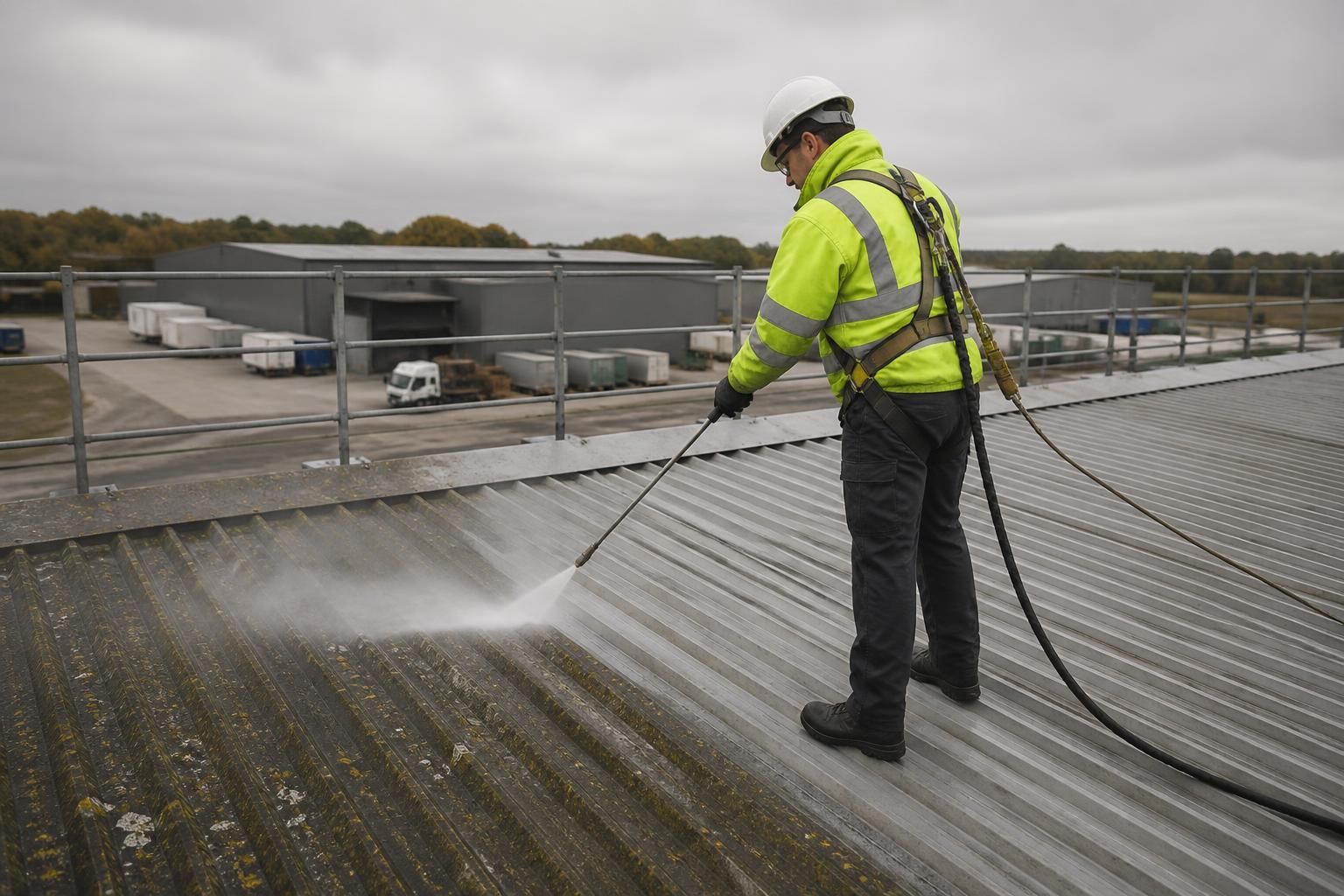
Use safe systems for work at height. Roofs, upper façades, canopies and elevated structures should not be accessed without a suitable method statement and properly inspected access equipment. Depending on the site, this may include a mobile elevated work platform, scaffold, tower, access platform or specialist reach equipment. Ladders are generally intended for short-duration, low-risk access rather than prolonged cleaning. Operatives using access equipment must be trained and competent, and fall-prevention measures must be selected for the specific location. Fragile rooflights, aged roof coverings and unprotected edges require particular attention.
Equipment should be positioned on stable ground and operated within its rated limits. Access routes, overhead obstructions, wind conditions and the possibility of spray reaching adjacent areas should be checked before work begins. Tools, hoses and attachments must be secured where they could fall, and no person should work beneath an elevated cleaning operation unless the area has been properly controlled.
Wear task-appropriate personal protective equipment. The exact PPE depends on the surface, equipment and treatment product, but may include protective footwear, gloves, eye protection, suitable work clothing and hearing protection. Pressure washing can create spray, airborne droplets and dislodged particles, so face and respiratory protection may be required following the risk assessment. Where biocidal products are used, PPE must comply with the product label and safety data sheet. PPE is a final layer of protection and does not replace safe handling, ventilation and exclusion controls.
Control pressure-washing risks. High-pressure water can injure skin, eyes and other people, dislodge masonry or coatings, force water behind cladding and damage joints, pointing, membranes or sealants. Operators should use the lowest effective pressure and a suitable nozzle, distance and working angle for the substrate. The lance should never be directed at people, live electrical equipment, ventilation openings, vulnerable joints or areas where water could enter the building. Equipment, hoses, couplings and trigger mechanisms should be checked before use, and defective equipment should be removed from service.
Pressure washing may also create rebound from hard surfaces and spray drift that affects windows, vehicles, air-intake systems and neighbouring premises. These risks should be controlled by setting an appropriate exclusion zone, protecting vulnerable items and adjusting the method when wind or other conditions make spray difficult to contain.
Handle biocidal treatments in accordance with the product requirements. Biocidal products should be selected for the intended application and used only as directed on the label and current safety data sheet. Operatives should understand the required dilution, application method, contact time, storage arrangements, first-aid measures and incompatibilities before use. Products must not be mixed unless the manufacturer specifically permits this. Containers should be labelled, securely stored and transported in a way that prevents leaks or unauthorised access.
When applying a treatment, prevent contact with skin and eyes and avoid inhaling spray or mist. Take account of wind, rain and temperature because weather can increase drift, reduce effectiveness or carry product beyond the intended area. If conditions prevent controlled application, the work should be postponed. Any spill should be contained promptly using the site’s spill procedure, with contaminated materials handled and disposed of as required.
Prevent uncontrolled run-off. Cleaning water, algae, lichen, sediment and treatment residues should not be allowed to enter surface-water drains, watercourses, ponds, planted areas or neighbouring property without appropriate controls. Before work starts, identify drainage points and establish where the water will go. Drain covers, bunding, drain guards, collection systems or wet vacuum equipment may be appropriate, subject to the site and the substance being used. Run-off should never be directed into a drain simply because it is nearby. Where there is any doubt about discharge requirements, the planned method should be reviewed with the relevant site or environmental authority.
Vegetation, lawns, soil, fish ponds, rainwater harvesting systems, external lighting and air-conditioning equipment should be protected from spray and contaminated water. Windows, doors, vents and vulnerable finishes may need temporary covering, but coverings must not create additional hazards or trap moisture against the building.
Check the substrate before choosing the technique. Algae and lichen can be attached to concrete, sandstone, brick, render, painted surfaces, roof coverings and cladding, each with different tolerances. Excessive pressure or aggressive mechanical action can remove surface material, open joints, strip coatings or worsen existing defects. A biocidal treatment may reduce the need for force on a delicate surface, while pressure washing may be unsuitable where water penetration is a concern. A small, inconspicuous test area should be assessed where practicable, checking for colour change, surface erosion, staining, water ingress and damage to adjacent materials.
Existing cracks, loose pointing, failed sealants, unstable masonry and defective roof coverings should be recorded before cleaning. Cleaning should not be used to mask a defect or proceed on an unstable surface without the appropriate repair or specialist advice.
Consider electrical and mechanical hazards. Water and electricity must be kept apart. Cables, plugs, transformers, external sockets, lighting, sensors, plant and building services should be identified and protected or isolated where necessary. Equipment should be suitable for the working environment, connected and inspected in accordance with the site requirements, and positioned so that water cannot track into electrical components. Petrol-powered equipment must not be operated in enclosed or poorly ventilated areas because of exhaust fumes.
Plan for weather and changing site conditions. Wind can spread spray and biocide, rain can create run-off and make access surfaces slippery, and cold conditions can affect water, equipment and treated surfaces. Work at height should be reconsidered when wind or visibility makes it unsafe. Conditions around the site should be monitored throughout the operation rather than assessed only at the start.
Use competent operatives and clear procedures. Anyone carrying out the work should be trained for the equipment, access method and substances involved. The team should understand the risk assessment, method statement, emergency arrangements and communication procedures. A suitable first-aid provision, clean water for rinsing where required, spill response materials and a reliable means of raising an alarm should be available. At the end of the work, the area should be inspected, equipment made safe, waste and residues dealt with correctly, and any damage or follow-up repairs reported.
For commercial and industrial sites, the safest approach is to combine these controls into a written method statement that reflects the building, surface, access arrangement and surrounding activities. This allows pressure washing, steam cleaning or biocidal treatment to be selected for the actual risks rather than applied as a standard process, protecting operatives, site users, the property and the surrounding environment.
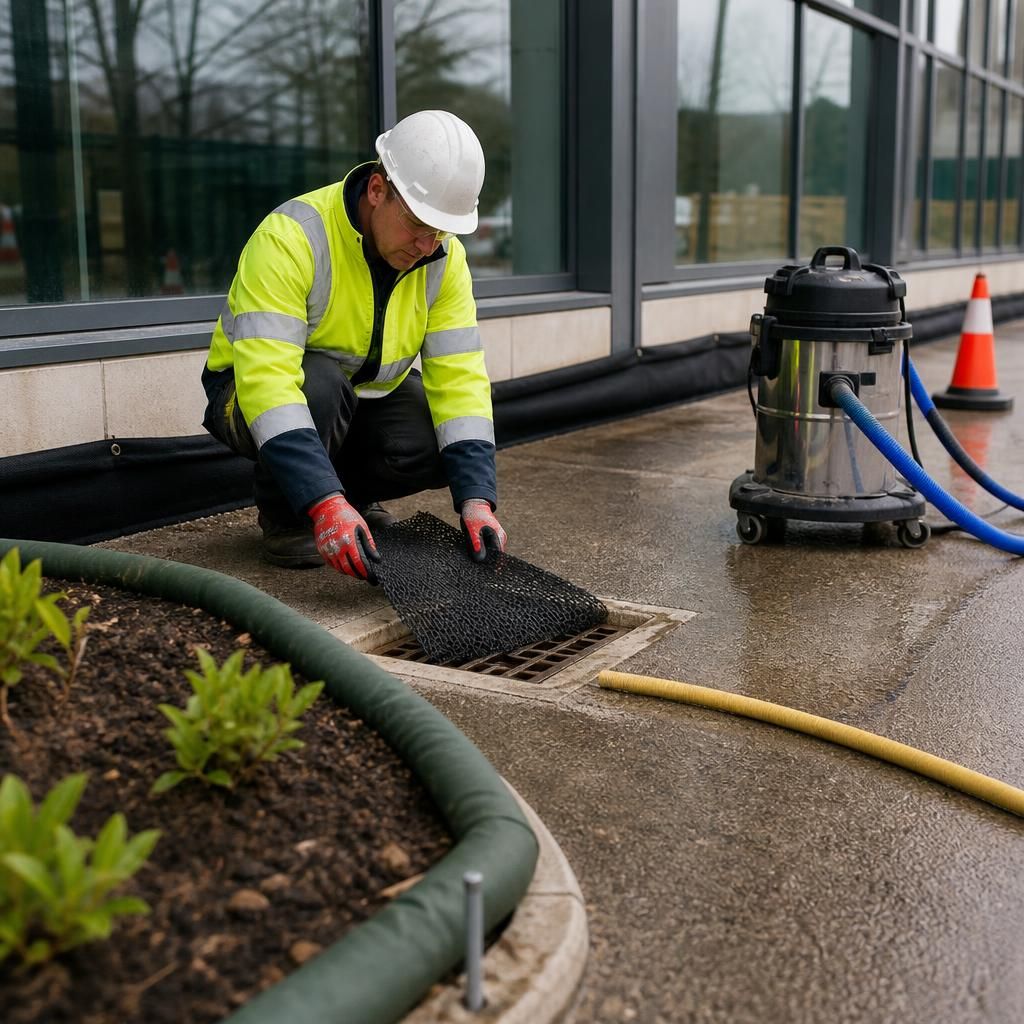
Run-off control is an essential safety measure during algae and lichen removal because cleaning water may carry loosened growth, sediment or biocidal residues into drains, planted areas and watercourses. Before work begins, drainage routes should be identified and suitable controls such as drain guards, temporary bunding, collection equipment or wet vacuums put in place where required.
Operatives should also protect vegetation, ponds, rainwater harvesting systems, air-conditioning units and neighbouring property from spray and contaminated water. Run-off must not be directed into a surface-water drain without confirming that this is permitted and safe for the substances being used. If wind, rain or the site layout prevents effective containment, the cleaning method should be adjusted or postponed.