
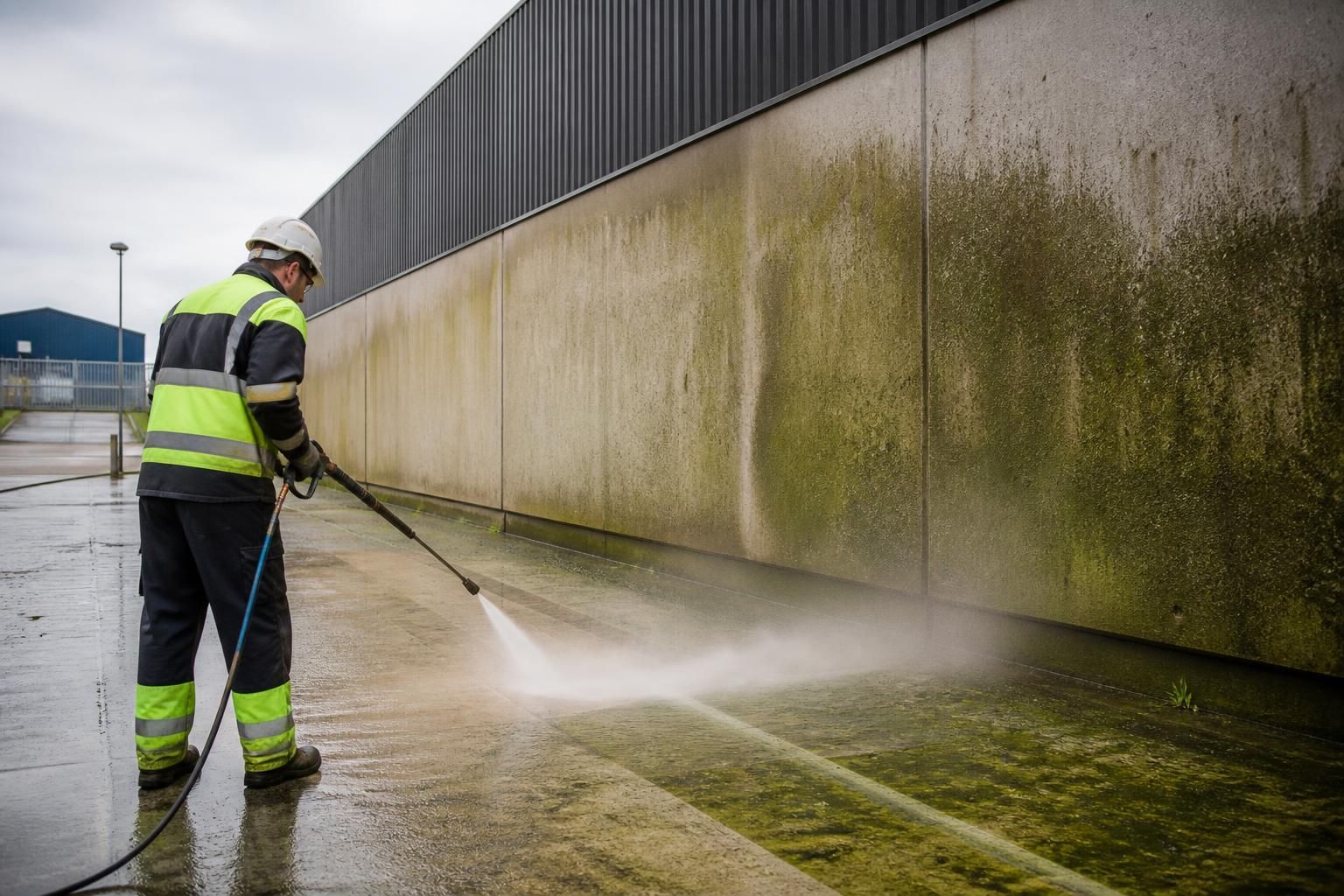
What factors should be considered when choosing between pressure washing and biocidal treatments for effective algae and lichen removal?
Choosing between pressure washing and biocidal treatment depends on the substrate, the severity and depth of algae or lichen growth, access constraints, environmental conditions and the required finish. Pressure washing provides immediate physical removal, while biocides are often preferable for sensitive surfaces or where controlling regrowth is the priority; in many commercial settings, a carefully managed combination delivers the most reliable result.
The choice between pressure washing and biocidal treatment should be based on the surface material, the type and extent of growth, the required finish, the risk of damage, site conditions and the need to control regrowth. Pressure washing removes algae and lichen mechanically and gives an immediate visual improvement, whereas a suitable biocidal treatment targets organic growth at and below the surface and can provide better control where regrowth is a concern. For many commercial and industrial sites, the most effective approach is a carefully controlled combination of both methods.
Consider the substrate first
Different materials tolerate cleaning pressure and chemical treatments in different ways. Robust, sound concrete and some hard-wearing paving may accept pressure washing when the equipment, pressure, nozzle and working distance are selected correctly. This does not mean that maximum pressure is appropriate: excessive force can erode the surface, expose aggregate, damage joints or drive water into cracks.
Sandstone, older masonry, painted surfaces, render, roof coverings, composite cladding and weathered concrete generally require greater caution. High-pressure water can remove friable material, mark the surface or worsen existing defects. A compatible biocidal treatment, low-pressure rinse or soft-washing process may be more appropriate. The condition of the material is as important as its type, so an inspection and discreet test area should be completed before the main work begins.
Assess the nature and severity of the growth
- Light surface algae: A low-pressure clean or correctly applied biocide may be sufficient, depending on the substrate and the required finish.
- Heavy surface contamination: Pressure washing can remove the visible layer efficiently from suitable, durable surfaces, although a biocidal treatment may still be advisable to address residual organisms.
- Established lichen: Lichen can attach firmly to porous materials and may have root-like structures within surface irregularities. Forceful washing can remove the visible growth while leaving residues behind or damaging the substrate. A treatment-led process, followed by gentle removal where necessary, is often safer.
- Growth in joints, pores and shaded areas: Biocides can reach areas that are difficult to clean mechanically, but they must be applied in accordance with the product instructions and site controls.
Where growth is thick, pressure washing alone may produce a clean-looking result without addressing the conditions that allowed it to develop. Conversely, biocides are not a substitute for removing heavy deposits, soil, moss or loose material when a fully restored appearance is required.
Define the required outcome
The correct method depends on whether the priority is immediate appearance, long-term biological control, protection of a sensitive surface or a combination of these objectives. Pressure washing is useful when the client needs visible dirt and growth removed promptly. A biocide is more useful where the principal concern is killing remaining algae and lichen and reducing the likelihood of rapid return. It may take time for treated growth to dry out, change colour and detach, so it does not always deliver the same immediate visual result as mechanical cleaning.
For high-profile façades, entrances, access routes and customer-facing areas, a controlled clean may be followed by biocidal treatment to balance presentation with longer-term maintenance. On vulnerable surfaces, treatment and gentle agitation may be preferable to aggressive pressure washing, even if the process takes longer.
Consider surface condition and the risk of damage
Existing cracks, open joints, failed pointing, delamination, loose coatings and water-sensitive construction should be identified before work starts. Pressure washing can force water into defects and may loosen already unstable material. It can also strip protective coatings or alter the texture of a surface. Biocidal products can create their own risks if they are incompatible with the substrate, allowed to dry where they should be rinsed, or applied without controlling run-off.
A professional assessment should therefore establish the surface condition, identify vulnerable details and determine whether repairs are needed before cleaning. Test patches help confirm the cleaning method, dwell time, dilution, pressure and final appearance without exposing the whole area to unnecessary risk.
Review access and site operations
Access constraints can influence the practical choice of method. Pressure washing requires equipment, water management, drainage control and protection from spray. Work at height may require access platforms or other suitable equipment, and overspray must not affect vehicles, pedestrians, electrical installations or neighbouring property.
Biocidal treatment can reduce the need for aggressive water pressure, but it still requires safe access, controlled application and protection of adjacent surfaces. On active commercial premises, the programme should account for foot traffic, vehicle movements, deliveries, tenant operations and the time needed for treated areas to be kept clear. Where water supply or drainage is restricted, a low-water treatment process may be advantageous, subject to environmental and product requirements.
Account for weather and environmental conditions
Temperature, rainfall, wind, sunlight, humidity and shade affect both methods. Wet or windy conditions can make chemical application unpredictable and increase the risk of drift or run-off. Rain shortly after application may dilute or move the treatment before it has worked properly. Strong sunlight and rapid drying can also affect dwell time.
Pressure washing is generally less dependent on chemical dwell time, but wind can spread spray and cold conditions may affect water handling and drying. Shaded, damp areas are more likely to support recurring growth, so the specification should consider drainage, overhanging vegetation, blocked gutters and persistent moisture rather than treating cleaning as a one-off surface issue.
Check environmental and regulatory controls
Biocidal products must be selected and used for the intended application, in line with the manufacturer’s instructions and current UK requirements. The work plan should address product storage, personal protective equipment, protection of plants and watercourses, containment of run-off and disposal of contaminated water or debris. Pressure washing also requires proper management of dirty water, suspended material and any residues removed from the surface.
Additional controls may be needed near drains, ponds, planted areas, food-related operations or sensitive neighbouring premises. A method statement and risk assessment should set out how the site, public and workforce will be protected, including what will happen if unexpected staining, defective material or contaminated run-off is encountered.
Compare the methods in practical terms
- Pressure washing: Provides immediate physical removal, is effective on suitable durable surfaces and can remove dirt as well as organic growth. It may cause surface erosion, water penetration, joint damage or overspray if poorly controlled, and it does not necessarily prevent regrowth.
- Biocidal treatment: Targets algae and lichen without relying on high mechanical force, making it useful for porous or vulnerable surfaces and for residual growth in surface irregularities. It requires correct product selection, controlled application, suitable weather and responsible run-off management. Results may develop gradually.
- Combined treatment: Uses treatment to weaken or kill organic growth and controlled cleaning to remove deposits and improve the finish. This can reduce the pressure required and provide a more complete result, but each stage must be compatible with the material and the site controls.
Use a site-specific specification
A suitable specification should record the substrate, surface condition, growth type, access arrangements, nearby risks, drainage, weather limitations and the desired finish. It should also define the test area, equipment settings, treatment product, dwell time, rinsing or removal process, run-off controls and inspection requirements. The aim is not to select the strongest treatment or highest pressure, but the least aggressive method that achieves the required result safely and consistently.
In practice, pressure washing is often selected for sound, hard surfaces where rapid physical removal is important. Biocidal treatment is often selected for sensitive, porous or heavily colonised surfaces, or where reducing regrowth is a primary objective. When the site includes several materials or varying levels of contamination, different methods may be specified for different elevations or zones rather than applying one process everywhere.
After cleaning, improvements to drainage, ventilation, shading, gutter maintenance and routine inspection can help reduce recurring algae and lichen. A planned maintenance approach is usually more protective than repeatedly using high pressure to remove established growth after it has returned.
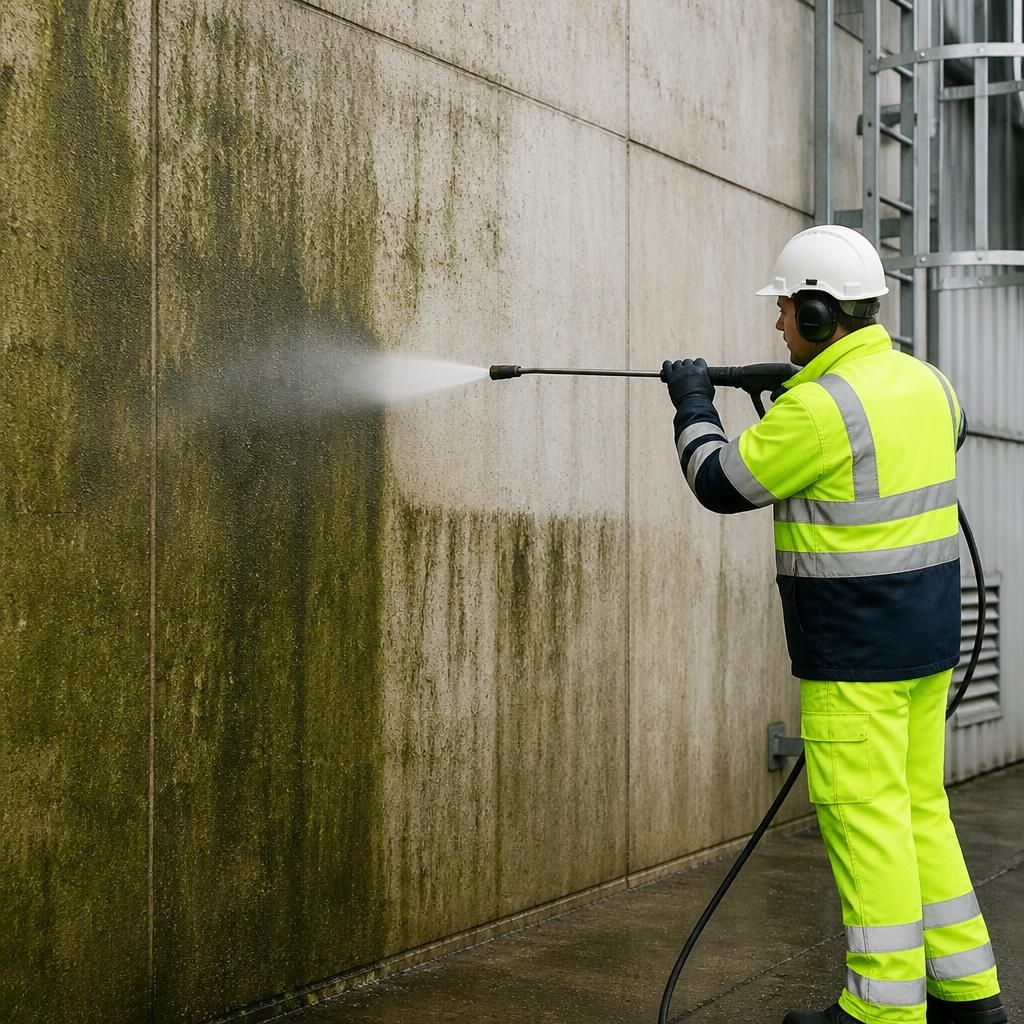
Choosing between pressure washing and biocidal treatment depends primarily on the substrate, the severity of the algae or lichen and the required finish. Pressure washing gives rapid physical removal from sound, durable surfaces, while biocidal treatment can be more suitable for porous or vulnerable materials and for controlling growth within surface irregularities.
Where both appearance and longer-term control matter, a controlled combination is often appropriate. The treatment can weaken or kill the organic growth before low-pressure cleaning removes the residue, reducing the need for aggressive water pressure. A discreet test area should confirm the product, application method, dwell time and rinsing approach before the full surface is treated.