
What are the primary methods for removing algae and lichen from commercial properties?
The primary methods for removing algae and lichen from commercial properties are pressure washing, steam cleaning, biocidal treatments and careful manual removal. The most suitable approach depends on the surface material, the severity of growth and the need to protect surrounding areas, with biocidal treatment often used alongside cleaning to reduce regrowth.
The primary methods for removing algae and lichen from commercial properties are pressure washing, steam cleaning, biocidal treatment and controlled manual removal. The appropriate method depends on the substrate, the extent and maturity of the growth, the condition of the surface, access requirements and the risk of damage to surrounding areas. In many commercial projects, the most effective specification combines physical cleaning with a suitable biocidal treatment to address both existing growth and the spores left behind.
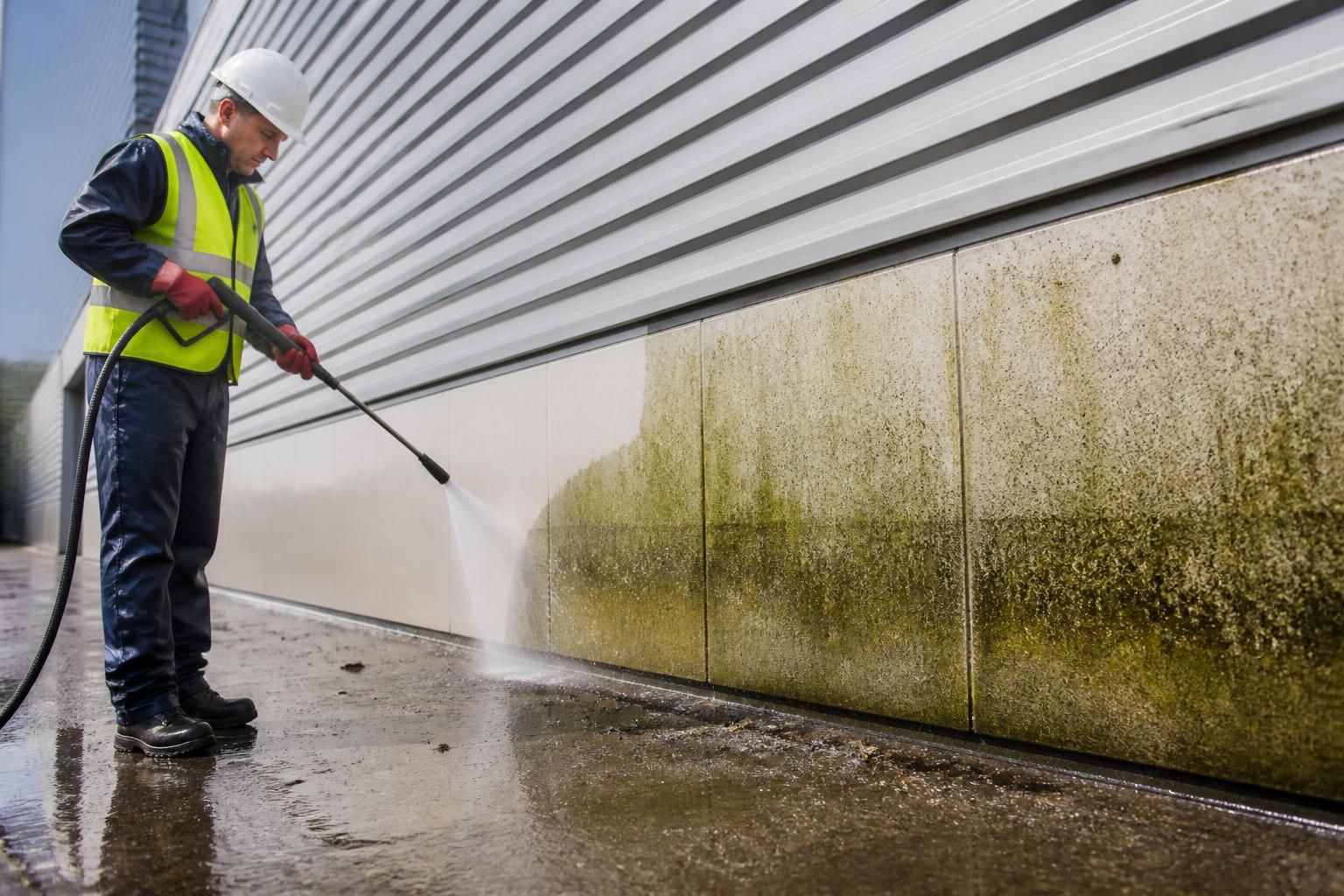
Pressure washing is commonly used to remove established algae, lichen, moss, dirt and other organic deposits from robust exterior surfaces. A controlled water jet breaks the bond between the growth and the substrate, allowing the surface to be rinsed clean. It can be suitable for hard-standing areas, concrete, paving, some masonry, retaining walls, cladding and other durable surfaces, provided the pressure, nozzle, distance and cleaning technique are selected correctly.
Pressure washing is not simply a matter of using the highest available pressure. Excessive force can erode softer masonry, open joints, dislodge surface coatings, drive water into cracks or damage pointing. On concrete, it may expose the aggregate or leave visible cleaning bands if the operator works inconsistently. On sandstone and other porous materials, a lower-pressure approach is usually required. Effective commercial cleaning therefore involves test areas, controlled application and an assessment of how the surface will respond before the main work begins.
Steam cleaning uses heated water to loosen organic growth and remove surface contamination with less reliance on high mechanical pressure. This makes it useful where the substrate is sensitive, where the appearance of the surface must be preserved, or where a lower-pressure process is preferable. Steam can be effective on masonry, façades, paving, walls and detailed areas that are difficult to clean evenly with conventional pressure washing.
The heat can also help break down biofilm and organic residues, although steam cleaning does not necessarily prevent regrowth on its own. It must be carried out with appropriate care around sealants, painted finishes, plastics, timber, glazing, electrical equipment and vulnerable joints. The cleaning contractor should also control the flow of wastewater and prevent loosened contamination from spreading across areas that have already been cleaned.
Biocidal treatment uses a cleaning solution formulated to kill or suppress algae, lichen and related organic growth. Depending on the product and the surface, it may be applied before physical cleaning to loosen contamination, after cleaning to treat residual spores, or as part of a planned maintenance programme. It is particularly useful where growth has penetrated porous surfaces or where aggressive mechanical cleaning could cause damage.
Biocidal treatment is generally slower acting than pressure washing or steam cleaning. It may not provide an immediate visual result, and some treated growth can weather away gradually rather than being removed at once. The product must be suitable for the substrate and applied in accordance with its instructions, including the required contact time, dilution, weather conditions and rinsing arrangements. Nearby vegetation, watercourses, drainage systems, vehicles and occupied areas must be protected from unintended exposure.
For heavily contaminated surfaces, a combined process is often more reliable than relying on one method. A contractor may apply a suitable biocide, allow it to work, remove the weakened growth using low-pressure washing or steam, and then apply a further treatment where appropriate. This approach reduces the amount of force needed during cleaning and can help manage regrowth more effectively. The exact sequence will depend on the condition of the surface, the product specification and the site’s environmental controls.
Manual removal is used where growth is concentrated in joints, textured masonry, roof details, around fixtures or in locations where water and chemicals need to be tightly controlled. Brushes, scrapers and specialist hand tools can remove larger lichen colonies or loosened deposits without applying a powerful water jet. Manual work is slower and may not be practical for a large open area, but it provides precision and can complement pressure washing, steam cleaning or biocidal treatment.
Manual removal must be performed carefully. Scraping too aggressively can score a surface, remove pointing or disturb protective coatings. Lichen can also be firmly attached to porous materials, so attempting to lift it dry may cause fragments of the substrate to come away with the growth. Controlled softening and a suitable follow-up treatment are often preferable to forceful scraping.
Low-pressure soft washing may be selected for façades, render, coated surfaces and other areas where conventional pressure washing presents a risk. This method combines a relatively gentle water application with an appropriate detergent or biocidal solution. It is designed to treat the contamination chemically rather than relying on impact from the water alone. Surface compatibility, dwell time, rinsing and overspray control are essential, particularly on occupied commercial premises.
The substrate should guide the method. Concrete and sound paving can often tolerate carefully controlled pressure washing, while aged concrete may have a weakened surface or exposed aggregate. Sandstone, limestone, brickwork and historic masonry may require low-pressure washing, steam or a specialist biocidal process. Roof coverings, painted cladding, render and sealants need an assessment of their condition before any treatment is applied. Where the material is uncertain, a small test patch can reveal whether the proposed method causes colour change, surface loss, staining or other unwanted effects.
The extent of the growth also affects the specification. Light surface algae may respond well to a biocidal wash and gentle rinsing. Thick lichen, moss and long-established deposits may require staged treatment, manual loosening and physical cleaning. Areas that remain shaded, damp or poorly drained are more likely to develop regrowth, so cleaning should be considered alongside practical issues such as blocked gutters, leaking downpipes, standing water, overhanging vegetation and inadequate ventilation.
Commercial work also requires planning beyond the cleaning method itself. Access equipment may be needed for façades, roofs and high-level cladding, while pedestrian routes, entrances, loading areas and vehicle movements may need temporary segregation. The contractor should identify electrical equipment, fragile finishes, drainage points and sensitive landscaping before work begins. Wastewater, chemical use and rinsing must be managed so that contamination does not enter unsuitable drainage or spread to neighbouring areas.
In practice, the most suitable method is selected after inspecting the property rather than from the appearance of the algae or lichen alone. A professional assessment considers the substrate, surface condition, level of contamination, access, weather, drainage and the required finish. The resulting method may involve pressure washing, steam cleaning, biocidal treatment, manual removal or a combination of these, followed by advice on maintenance and measures that can reduce the conditions responsible for regrowth.
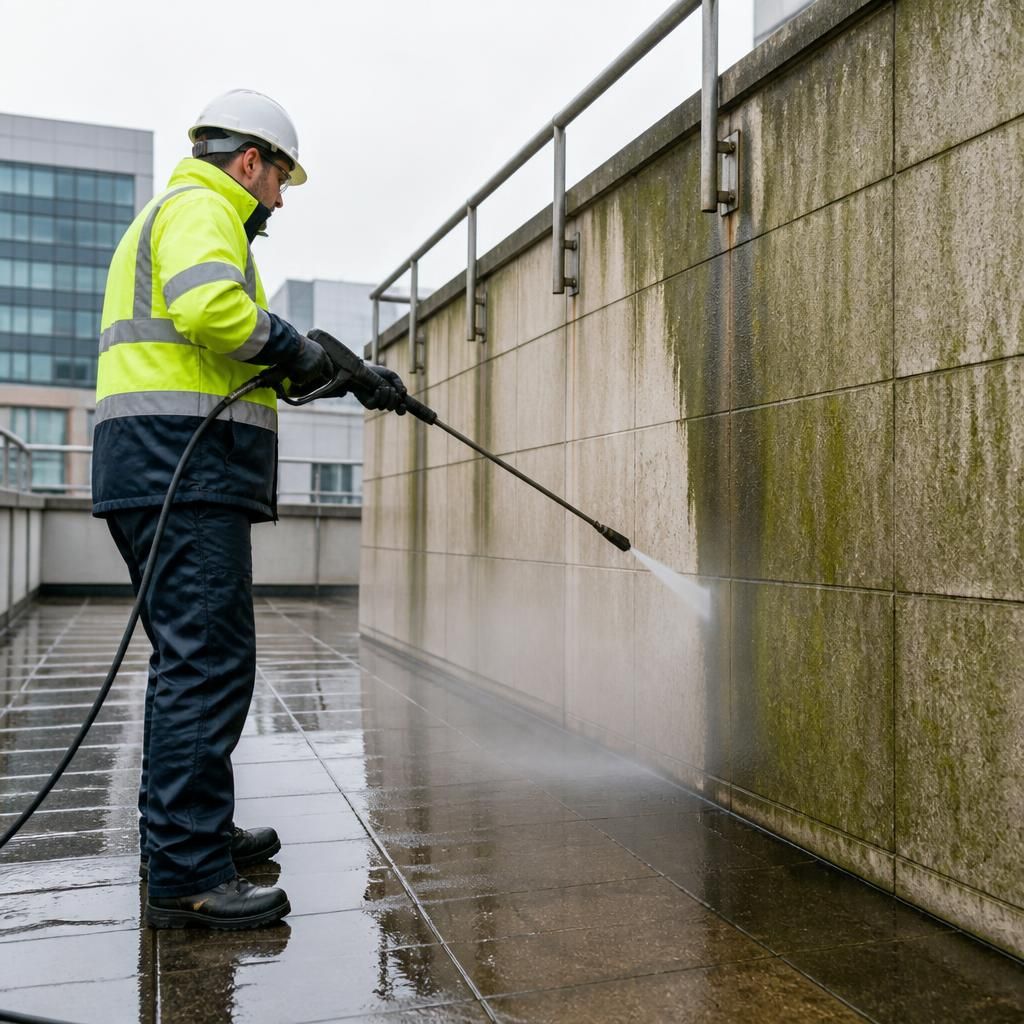
The most effective commercial algae and lichen removal often combines a suitable biocidal treatment with controlled pressure washing or steam cleaning. The biocide weakens organic growth and helps address spores, while the physical cleaning removes the loosened residue and restores the surface appearance.
This combined approach is particularly useful where lichen is firmly attached or the substrate is porous. Treating the area first can reduce the pressure needed, helping to protect pointing, coatings, sandstone, render and other vulnerable surfaces. The exact sequence should be confirmed after a test area and assessment of drainage, nearby landscaping and the condition of the substrate.