
What are the long-term benefits of using biocidal treatments in conjunction with pressure washing for algae and lichen removal?
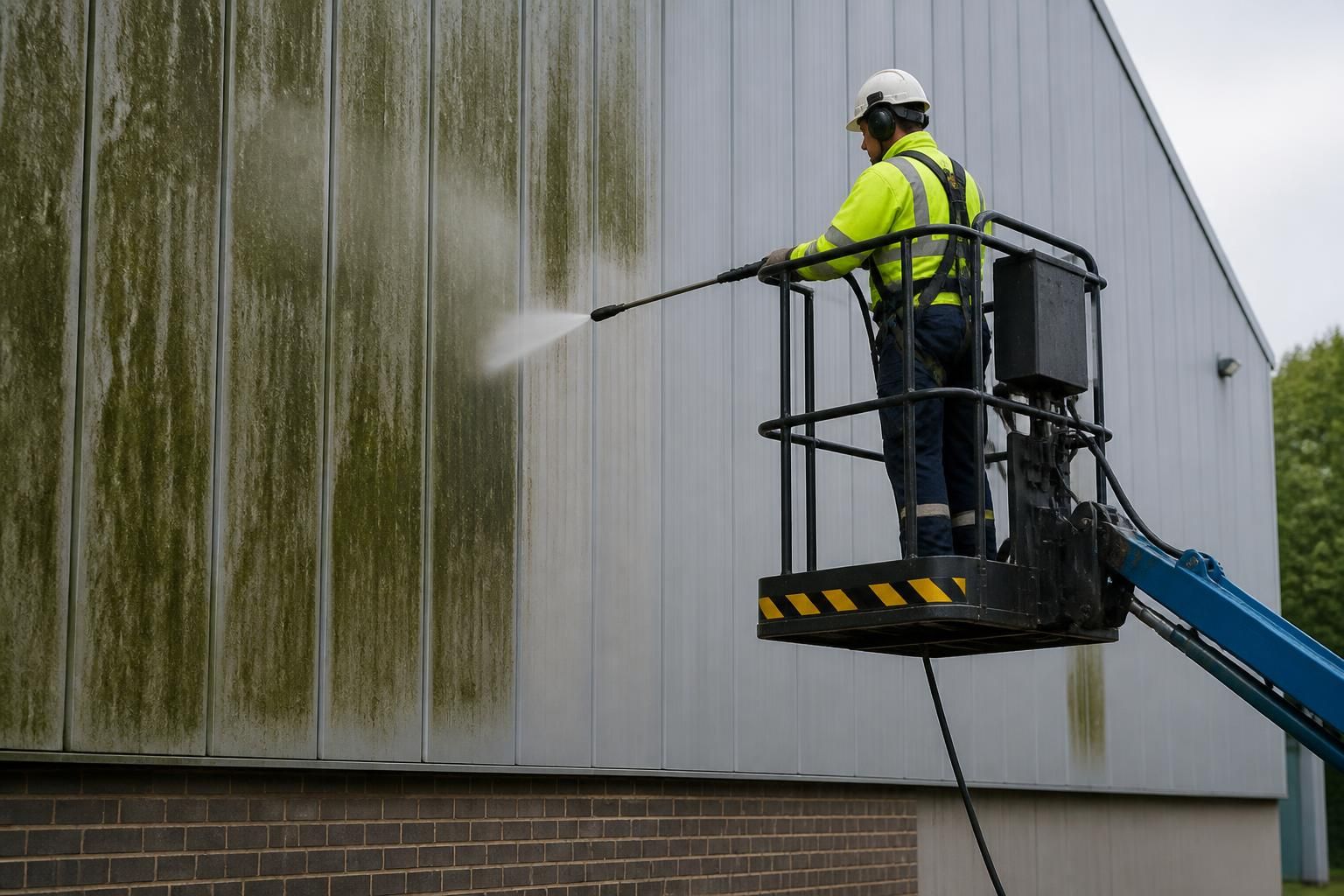
Using a biocidal treatment alongside pressure washing removes existing algae and lichen while helping to control the spores and organic growth left on the surface. This can extend the clean appearance, reduce regrowth between maintenance visits and help protect commercial roofs, façades, paving and other exterior surfaces from moisture-related deterioration.
Using a biocidal treatment alongside pressure washing provides longer-lasting algae and lichen control than physical cleaning alone. Pressure washing removes visible growth, staining and loose debris, while the biocidal treatment helps deactivate remaining organic contamination and reduce the likelihood of regrowth. This can preserve the appearance and serviceability of commercial roofs, façades, paving, cladding and other exterior surfaces between planned maintenance visits.
Pressure washing is primarily a mechanical process. It can lift established algae and lichen from a surface, but some biological residue, spores and growth within pores, joints or textured finishes may remain. A suitable biocidal treatment works on this residual contamination. When correctly selected and applied, it helps reduce the viable organic matter that can restart growth after cleaning.
The main long-term benefits are:
- Reduced regrowth: Algae and lichen are less likely to return quickly when residual biological contamination has been treated rather than simply washed from the surface.
- Longer-lasting visual results: Roofs, walls, walkways and paved areas can retain a cleaner, more professional appearance for longer, subject to local environmental conditions.
- Less frequent intensive cleaning: Slowing regrowth may allow routine maintenance to be carried out before heavy deposits become established, reducing the need for aggressive pressure washing.
- Lower risk of surface damage: If biological growth is controlled, there may be less reliance on high pressure or repeated mechanical agitation. This is particularly relevant to older masonry, concrete, sandstone, render, roof coverings and coated surfaces.
- Protection from moisture retention: Algae and lichen can hold moisture against a surface and within joints or porous materials. Controlling the growth helps limit prolonged damp conditions that can contribute to staining, surface deterioration and freeze-thaw damage where relevant.
- Improved safety and presentation: Algae can make paving, ramps and access routes slippery when wet. Treatment, combined with appropriate cleaning, can help maintain safer pedestrian and vehicle areas while improving the presentation of the site.
Biocidal treatment is particularly useful where surfaces are porous, heavily textured or difficult to clean completely by pressure alone. Sandstone, concrete, roof tiles, masonry joints and textured cladding can retain organic material below the immediately visible surface. A carefully controlled treatment can reach or act on this residual contamination without requiring unnecessarily forceful cleaning.
The process normally involves assessing the substrate and the type of growth, removing loose debris, applying an appropriate product at the specified concentration, allowing the required contact time, and rinsing or otherwise completing the treatment in accordance with the product instructions. In some cases, the treatment is applied after pressure washing; in others, it may be used before cleaning to loosen or weaken established growth. The correct sequence depends on the surface, the extent of contamination and the treatment selected.
Long-term performance depends on more than the chemical treatment itself. Shaded elevations, north-facing roofs, overhanging vegetation, blocked gutters, poor drainage and persistently damp areas provide conditions in which algae and lichen can return. Airborne dust and organic debris can also create a new food source for growth. Addressing these contributing conditions, where practical, is an important part of achieving a durable result.
A biocide does not make a surface permanently resistant to algae or lichen, and it cannot compensate for unsuitable pressure settings, inadequate coverage or poor preparation. It should be regarded as part of a planned cleaning and maintenance system rather than a one-off guarantee against future contamination. Periodic inspections can identify early regrowth and allow it to be managed before thick deposits form.
Product choice and application must also reflect the material being treated. A treatment suitable for roof coverings may not be appropriate for delicate stone, painted cladding, planted areas or surfaces close to watercourses. Professional application requires controls for run-off, overspray, nearby vegetation, operatives, building users and the public. The product label, safety data and site risk assessment should determine handling, dwell time, personal protective equipment and any required rinsing or containment measures.
For commercial properties, the most effective approach is usually a combined one: use pressure washing or a lower-impact cleaning method to remove established deposits, apply a compatible biocidal treatment to address residual biological contamination, and maintain the site so that moisture and debris do not encourage rapid return. This approach helps protect the surface, extend the period between intensive cleans and keep the premises safer and more presentable over the longer term.
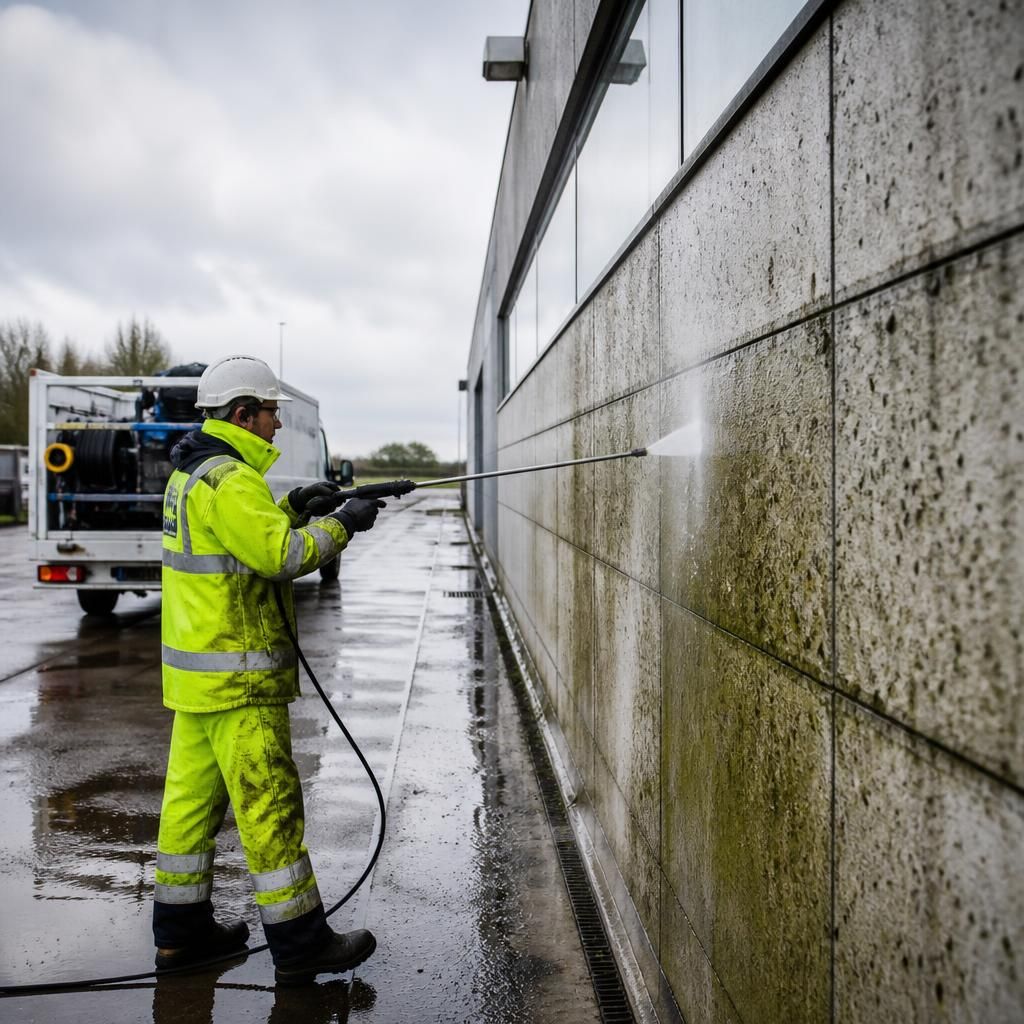
Using a compatible biocidal treatment after pressure washing helps control residual algae and lichen in pores, joints and textured areas that mechanical cleaning may not fully remove. This can slow regrowth and help the cleaned surface retain a professional appearance for longer, particularly where damp, shaded or porous conditions encourage biological contamination.
Slower regrowth can also reduce the need for repeated intensive pressure washing. Routine inspections and early maintenance may prevent deposits becoming deeply established, limiting mechanical stress on materials such as sandstone, concrete, masonry, roof coverings and coated surfaces. Biocidal treatment is not a permanent solution, however; effective long-term results still depend on correct product selection, safe application and managing contributing factors such as poor drainage, blocked gutters, overhanging vegetation and persistent shade.