
How long does it typically take to see results after using algae and lichen removal techniques?
Pressure washing usually produces an immediate visible improvement, while biocidal treatments may take several days or weeks to fully break down algae and lichen, with results developing gradually. The timeline depends on the growth’s severity, the surface material, weather conditions and the technique used.
Results from algae and lichen removal are usually visible immediately after pressure washing, whereas biocidal treatments work progressively over several days or weeks. The actual timescale depends on the type and severity of growth, the surface being treated, the chosen method, weather conditions and whether further rinsing or maintenance is required.
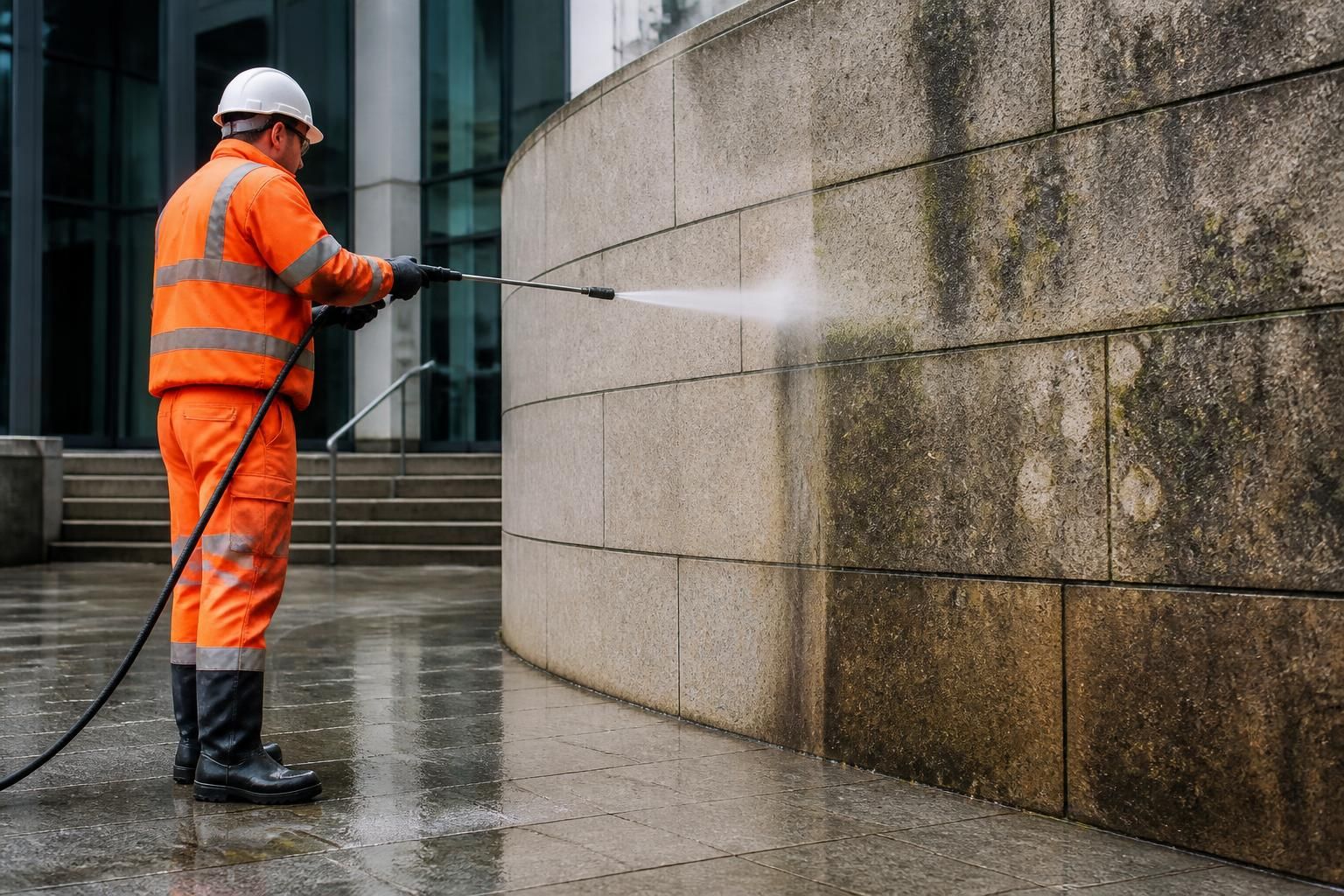
Pressure washing gives the quickest visible change because it physically removes surface contamination, loose lichen and dead organic matter. On suitable hard surfaces, the improvement can normally be assessed as soon as the work is complete and the area has dried. Wet surfaces can appear darker than expected, so the final appearance is often clearer after drying. Some staining may remain where growth has penetrated pores or where the surface has weathered unevenly.
Pressure washing does not necessarily destroy every root, spore or remaining biological deposit. If substantial growth is embedded in a porous surface, a biocidal treatment may be applied before or after cleaning to deal with residual contamination and reduce the likelihood of rapid regrowth. This means that a visibly clean surface is not always the same as a fully treated surface.
Biocidal treatments generally produce a slower, more gradual result. The treatment needs time to penetrate and break down algae, lichen, moss or other organic growth. It may begin affecting the contamination soon after application, but visible changes can continue to develop after the cleaning visit. Dead growth may fade, loosen and weather away naturally, or it may need a later low-pressure rinse, depending on the substrate, the treatment specification and the condition of the site.
Lichen can take longer to disappear than a light film of algae because it attaches firmly to the surface and can extend into small pores and irregularities. Heavy or established growth may therefore require controlled agitation, a repeat treatment or a planned follow-up clean rather than aggressive pressure. Increasing pressure to force an immediate result can damage delicate masonry, coatings, pointing or concrete finishes.
Several conditions can alter the expected timeline:
- Weather: Mild, damp conditions can support the treatment process, while heavy rain soon after application may dilute or wash away an untreated product. Very cold, dry, windy or unusually hot conditions can also affect dwell time and performance.
- Severity of contamination: Thin surface algae usually responds more quickly than thick lichen, staining or growth that has been left untreated for a long period.
- Surface porosity: Concrete, sandstone and other porous materials can retain biological residues below the surface. Smooth, sealed or coated surfaces may show a faster visual improvement, but the coating must be suitable for the cleaning method.
- Access and coverage: Façades, roofs, canopies and large paved areas must be treated consistently. Restricted access, complex elevations or heavily sheltered sections can require additional preparation and inspection.
- Rinsing requirements: Some surfaces need a careful rinse once the treatment has acted, while others are better managed with natural weathering. The correct approach depends on the product, substrate and environmental controls.
- Underlying staining: Algae and lichen may contribute to staining, but they are not always the sole cause. Rust, pollution, efflorescence, paint failure or general weathering can remain after biological growth has been removed.
For commercial properties, the result should be assessed in stages. The first inspection is made during or immediately after cleaning to confirm that contamination has been removed safely and that drainage, edges and adjacent areas have been managed correctly. A further assessment after the treated surface has dried, and after the biocide has had time to work, provides a more accurate view of the final result.
It is also normal for shaded, north-facing or poorly ventilated areas to respond differently from exposed sections of the same building. Persistent moisture, blocked gutters, leaking joints, overhanging vegetation and inadequate drainage can encourage regrowth even when the original cleaning has been completed correctly. Addressing these contributing conditions is important if the cleaned appearance is to last.
Where a property requires a consistent presentation across multiple elevations or large paved areas, the cleaning specification should state whether the objective is immediate cosmetic improvement, deeper biological treatment, removal of all visible staining, or a combination of these outcomes. This avoids judging a gradual biocidal process by the same standard as an instant pressure-washing result.
In practical terms, pressure washing normally provides the first visible result on the day of cleaning, while biocidal treatment should be allowed to develop before the work is considered complete. If growth remains unchanged, returns quickly or leaves significant staining after the agreed treatment period, the surface should be reviewed rather than subjected automatically to higher pressure. A professional assessment can determine whether further treatment, gentle rinsing, remedial repairs or a planned maintenance clean is the most appropriate next step.
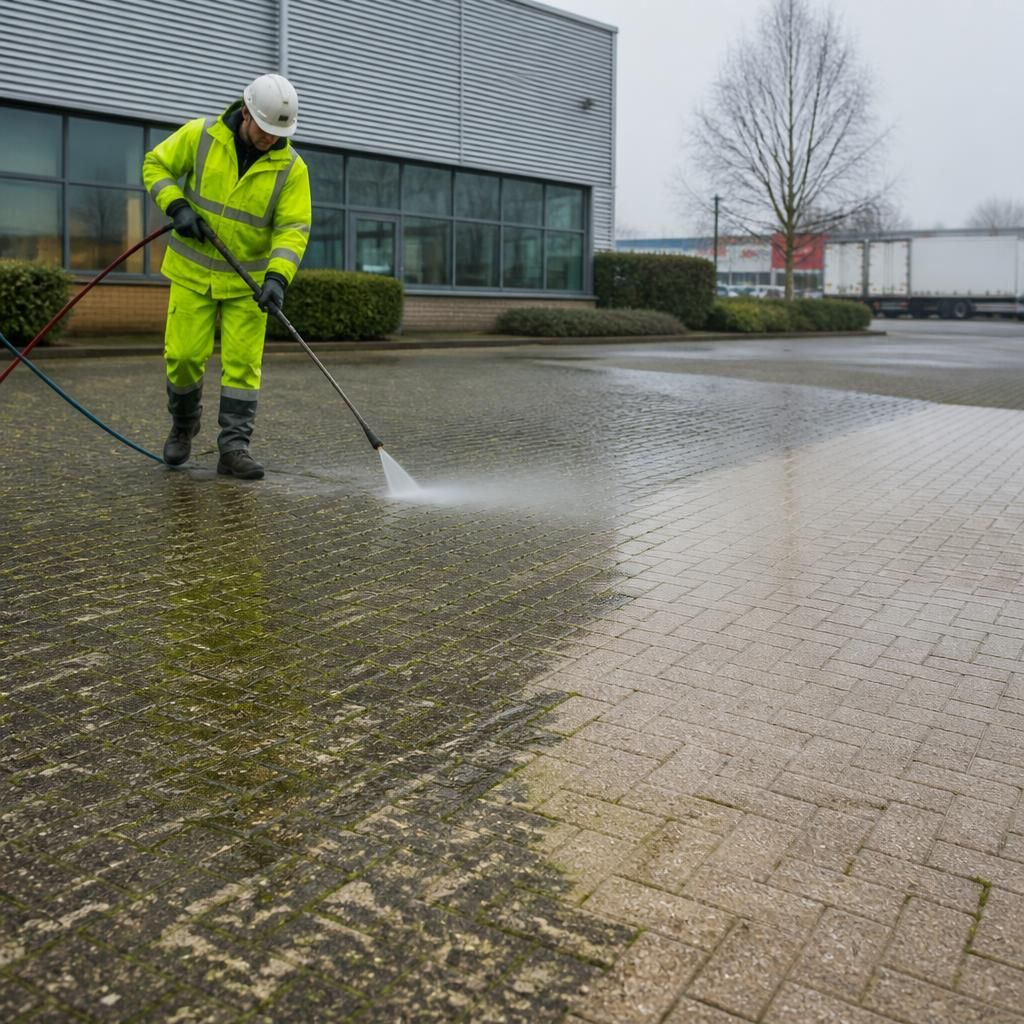
The visible result after algae and lichen removal depends on the technique used. Pressure washing can show an immediate improvement once the surface has been cleaned and dried, while biocidal treatments work progressively and may continue breaking down remaining growth after the cleaning visit.
For this reason, treated areas should be assessed again after the agreed dwell period rather than judged while still wet or immediately after application. Lichen, porous masonry and shaded sections may take longer to clear, and dead growth may either weather away naturally or require a controlled follow-up rinse. This staged assessment helps confirm whether further treatment is needed without risking surface damage through unnecessary high-pressure cleaning.