
How does substrate material influence the choice and effectiveness of algae and lichen removal techniques?
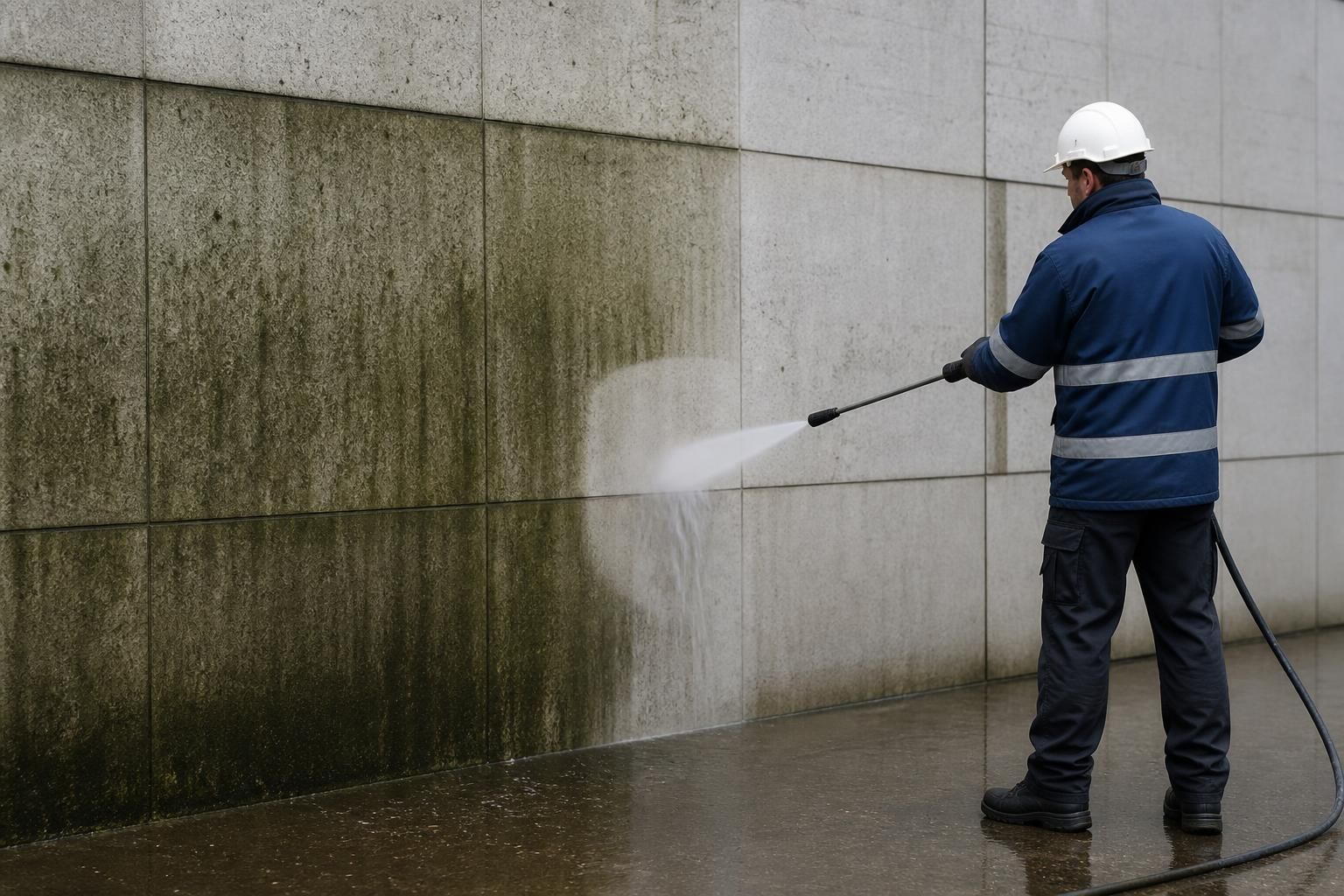
Substrate material determines which algae and lichen removal method is safe and effective, because porous surfaces such as sandstone can be damaged by aggressive pressure while concrete, brick, metal cladding and roof materials require different pressure levels and treatment choices. The correct approach combines substrate assessment with controlled pressure washing, steam cleaning or compatible biocidal treatment to remove growth without etching, staining or weakening the surface.
Substrate material directly determines which algae and lichen removal technique can be used, how much pressure or heat the surface will tolerate, and whether a chemical treatment is needed after cleaning. Porous materials such as sandstone, older brick and unsealed concrete can absorb water and biocides, while metal cladding, glazed surfaces and some roof materials are less absorbent but may be vulnerable to scratching, coating damage or corrosion. A suitable method must therefore be selected after assessing the material, its condition, the type of biological growth and the surrounding drainage and access arrangements.
Algae is usually a surface film that can often be removed with controlled low- to medium-pressure washing, steam cleaning or a compatible biocidal treatment. Lichen is more firmly attached. Its root-like structures can penetrate surface irregularities and pores, so simply washing away the visible growth may leave residues behind or cause it to return quickly. On many substrates, the most effective approach is to soften or treat the growth first, remove the loosened material using the least aggressive practical method, and apply a suitable follow-up treatment where appropriate.
Sandstone and other natural stone
Sandstone is porous and can vary considerably in hardness, density and mineral composition. Aggressive pressure washing can erode the surface, open existing weathering, remove the softer parts of the stone or leave visible streaking. Water can also enter joints and absorbent areas, increasing the risk of staining or prolonged dampness.
For sandstone slabs, walls and steps, cleaning normally starts with a careful inspection for friable areas, delamination, cracked pointing and previous sealers. A low-pressure rinse, soft agitation, steam cleaning or a stone-compatible biocidal treatment may be more appropriate than a concentrated high-pressure jet. The operator should avoid directing pressure into open joints or damaged edges. A small test area is particularly important because a treatment that is safe on one type of sandstone may alter the colour or finish of another.
Lichen may need time to weaken before it can be removed without tearing away the stone surface. Brushing should be controlled and non-abrasive, and metal tools should not be used on finished stone. After cleaning, improving drainage and reducing persistent shade or moisture can help limit regrowth.
Concrete and paving slabs
Concrete is generally more tolerant of pressure than sandstone, but it is not indestructible. Older, weathered or poorly finished concrete may have a weak upper layer that can be etched by excessive pressure. Pressure can also expose aggregate, damage jointing or drive water into cracks. Algae commonly creates a slippery film on paths, loading areas and car parks, while lichen can become established in rough or porous areas.
Sound concrete can often be cleaned effectively with a controlled pressure-washing system and an appropriate surface cleaner. Pressure should be adjusted to the condition of the slab rather than assuming that all concrete can withstand the same treatment. Where the surface is fragile, steam or a compatible biocidal treatment can reduce the need for mechanical force. Run-off should be managed so that contaminated water and treatment residues do not enter unsuitable drains, planted areas or watercourses.
Block paving requires additional care because the cleaning process can disturb jointing sand and wash debris into gaps. After cleaning, joints may need to be checked and reinstated where necessary. Persistent algae around poorly drained areas may indicate a drainage or gradient problem rather than a cleaning problem alone.
Brickwork, masonry and render
Brick varies in hardness and porosity, and the mortar may be weaker than the brick face. High pressure can damage the brick surface, remove mortar, enlarge defects or force water behind the façade. Older masonry is particularly likely to require a gentler method. Cleaning should be directed across the face of the brick, not concentrated on joints, and the pressure should be reduced around damaged or repointed areas.
Rendered façades and coated masonry can be more sensitive still. Pressure may lift loose coatings, expose the underlying material or create visible differences in texture. Steam cleaning or a suitable biocide may be preferable where the render is sound but the growth is widespread. If the coating is already blistering, cracked or detached, cleaning alone will not resolve the underlying defect and a repair assessment may be needed before work begins.
Metal cladding and painted surfaces
Algae and lichen usually remain on the surface of metal cladding rather than penetrating deeply, so a mild detergent or compatible biocidal treatment followed by a controlled rinse can be effective. The main risks are scratching, coating failure, corrosion and water entering laps, seals or fixings. Abrasive pads, harsh chemicals and excessively concentrated jets should be avoided unless the coating manufacturer confirms compatibility.
Cleaning should take account of the direction of cladding joints and the location of electrical equipment, vents and façade penetrations. On coated steel or aluminium, a test patch can confirm that the finish is not being dulled or discoloured. Any exposed metal, damaged paint or rusting fixings should be recorded, as cleaning may make these defects more apparent without causing them.
Roofing materials
Roof tiles, slate, coated metal and roof membranes each require a different risk assessment. Concrete and clay tiles may tolerate controlled cleaning when they are sound, but pressure can break brittle tiles, remove surface coatings, drive water beneath laps or damage pointing and flashing. Natural slate can split or delaminate, particularly when weathered, and should not be treated as though it were concrete.
Biocidal treatment is often useful on roofs because it can weaken algae and lichen without requiring high pressure. Residual growth may then weather away or be removed carefully, depending on the roof material and the agreed specification. On coated metal roofing and membrane systems, chemical compatibility is essential; an unsuitable product may attack the finish, soften the membrane or affect drainage components. Roof cleaning also requires controls for work at height, fragile areas, falling debris and run-off to lower façades or planted ground.
Tarmac, asphalt and resin-bound surfaces
Tarmac and asphalt can be marked, softened or loosened by excessive pressure, heat or unsuitable solvents. A broad, controlled rinse and an appropriate treatment are generally safer than a narrow high-pressure jet. Care is needed around repaired sections, loose aggregate, painted bay markings and edges. Resin-bound surfacing can also be damaged if the binder or aggregate is disturbed, so pressure and chemical choice should be tested before wider cleaning.
Why biocidal treatments can improve results
A biocidal treatment can be particularly valuable on porous or textured substrates where algae and lichen remain in small pores after visible cleaning. It helps address residual biological material and may slow regrowth when the product is compatible with the surface and applied according to its instructions. It is not a substitute for correct preparation, rinsing or repairs, and it should not be selected solely because a surface is heavily stained.
The correct treatment depends on the substrate, the growth present, nearby vegetation, drainage, weather conditions and any restrictions affecting discharge. Product dwell time should be controlled, treated areas should not be allowed to dry where that could cause staining, and residues must be managed responsibly. A biocide that is suitable for masonry may be unsuitable for a painted façade, roof membrane or sensitive landscaping.
How the material assessment is carried out
- Identify the substrate and any coatings, sealers, repairs or mixed materials.
- Check for porosity, softness, cracking, delamination, loose pointing and previous damage.
- Assess whether the growth is a surface film, embedded staining or established lichen.
- Review drainage, run-off routes, nearby planting, access constraints and vulnerable building elements.
- Complete a discreet test area to check cleaning response, colour change and surface integrity.
- Set the lowest effective pressure, temperature, chemical strength and dwell time for the material.
- Inspect the cleaned surface and adjust the method before progressing across the full area.
The visible result should be judged alongside the condition of the substrate. A clean surface is not a successful outcome if the process has removed mortar, etched stone, stripped a coating or opened a previously sound joint. For commercial premises, the cleaning specification should therefore record the substrate, proposed technique, protection measures, run-off controls and any limitations identified during the survey.
In practice, the safest and most effective solution is often a combination of techniques rather than one universal method. Controlled pressure may remove loosened algae from robust concrete, steam may clean sensitive masonry with less mechanical impact, and a compatible biocide may deal with lichen residues on porous surfaces or roofs. Matching the process to the substrate protects the asset, improves the consistency of the finish and reduces the likelihood of rapid regrowth.
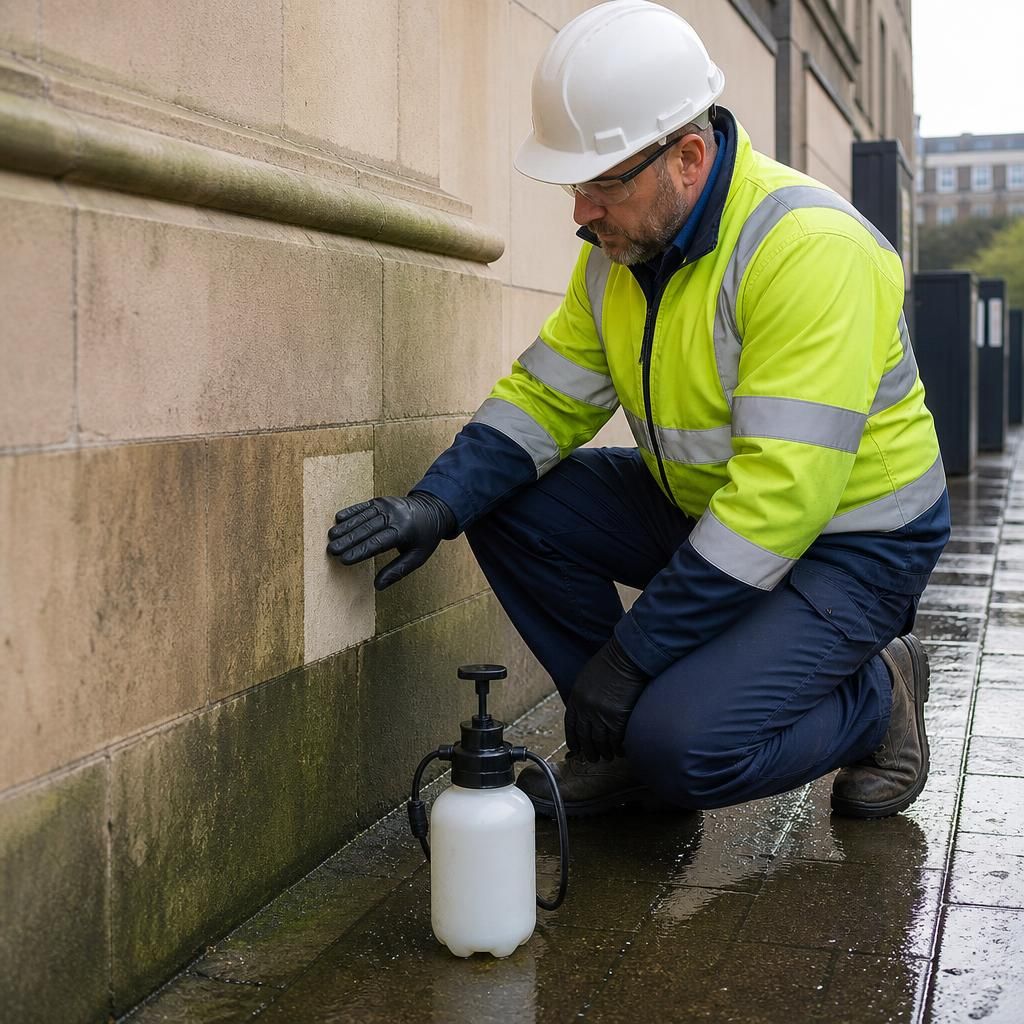
Substrate testing determines whether an algae and lichen removal method will clean effectively without damaging the surface. A discreet test area should be assessed before full-scale work, particularly on porous stone, aged brick, coated cladding, roof materials and resin-bound surfacing.
The test should confirm how the material responds to the proposed pressure, steam or biocidal treatment. It can reveal colour changes, surface erosion, coating failure, loosened jointing or staining caused by prolonged dwell time. The final method can then be adjusted to use the lowest effective pressure and the most suitable treatment for that specific substrate.
This assessment is especially important where different materials meet, such as concrete paving beside brickwork or a coated façade below a roof. Each material may require separate pressure settings, protection measures and run-off controls, even when the same algae or lichen is present.
Arrange a substrate-specific algae and lichen removal assessment
Arrange a substrate-specific algae and lichen removal assessment to identify the safest and most effective cleaning method for each surface. We will review the material, condition, growth and run-off requirements before recommending a suitable approach.