
How do environmental conditions affect the choice of algae and lichen removal techniques?
Environmental conditions determine whether algae and lichen are best treated with low-pressure washing, steam cleaning, biocidal treatment or a controlled combination of methods. Moisture levels, temperature, wind, sunlight, access and the surface material all affect treatment performance, drying time, chemical dwell time and the risk of damage or run-off.
Environmental conditions determine whether algae and lichen should be removed with low-pressure washing, steam cleaning, biocidal treatment or a controlled combination of methods. Moisture, temperature, rainfall, sunlight, wind, access, drainage and the condition of the substrate all affect treatment performance, drying time, chemical dwell time, run-off control and the risk of surface damage.
Moisture and humidity
Algae and lichen thrive where surfaces remain damp, shaded or poorly ventilated. These conditions are common on north-facing façades, roof areas beneath overhanging trees, shaded paving, retaining walls and surfaces close to leaking gutters or downpipes. Persistent moisture can make growth softer and easier to rinse, but it can also dilute a biocidal treatment and prevent it from remaining in contact with the affected area for long enough.
Where practical, the source of excess moisture should be addressed before cleaning. Blocked gutters, defective joints, leaking rainwater goods and poor drainage can allow growth to return even after a successful treatment. On damp surfaces, a suitable biocide may be applied when weather conditions allow adequate dwell time, followed by low-pressure rinsing or natural weathering. The selected product and application method must always follow the manufacturer’s instructions, including any requirements for dilution, contact time and rinsing.
Temperature and frost
Temperature affects both the activity of biocidal products and the behaviour of water during cleaning. Very cold conditions can slow treatment reactions, extend drying times and increase the risk of water freezing in pores, joints or small defects. Cleaning should be postponed where frost is present or expected to affect the treated area. Frozen surfaces can be hazardous to work on, and freezing water may worsen existing cracks, open joints or fragile surface finishes.
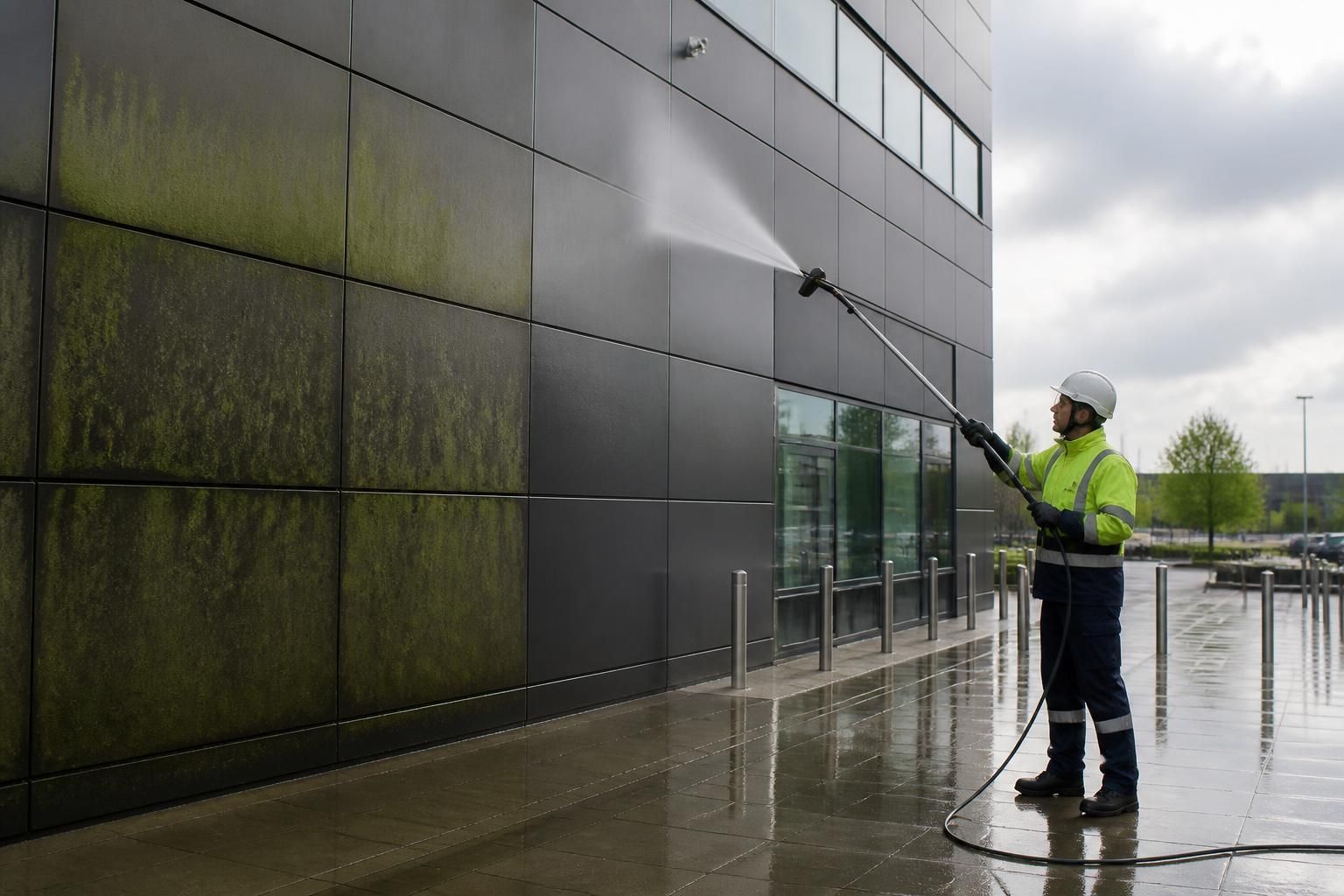
High temperatures can cause cleaning solutions to dry too quickly, particularly on dark cladding, metalwork or sun-exposed paving. Rapid drying can reduce the effective contact time and may leave residues or streaking. In these conditions, shaded working, smaller treatment areas and careful control of application can be more appropriate than treating a large area at once.
Rainfall and weather forecasts
Rain shortly after application can wash a biocide from the surface before it has acted, carry contaminated liquid into drainage systems and make it difficult to assess the result. Conversely, a period of suitable, settled weather allows the treatment to remain in contact with the growth and gives the surface time to dry. The forecast should therefore be considered before scheduling the work rather than relying only on conditions at the start of the day.
Pressure washing can often be used where a treatment needs to be removed promptly, but rainfall does not remove the need for run-off controls. Dirty water, detached growth and cleaning residues must be managed so they do not enter surface-water drains, watercourses, planted areas or neighbouring property. Local drainage arrangements and the site’s environmental controls should be reviewed before work begins.
Sunlight and shade
Sunlight helps surfaces dry and can improve working conditions, but direct sun may also make a treatment dry before it has achieved adequate dwell time. Strong sunlight is particularly relevant on roofs, rendered walls and dark-coloured surfaces. Shaded elevations may require a longer drying period and can retain moisture after the rest of a building appears dry.
These differences mean that one façade or roof should not necessarily be treated as a single uniform area. The cleaner may divide the work according to orientation, exposure and surface temperature, adjusting the application and rinsing process while keeping the overall method consistent.
Wind and site exposure
Wind affects spray control, worker safety and the potential movement of cleaning solution or contaminated water. Exposed roofs, elevated façades, car parks and sites beside roads require particular care because mist or overspray can reach vehicles, pedestrians, glazing, ventilation intakes and adjacent property. High winds may make spraying unsuitable, even when the surface itself appears ready for treatment.
Where wind is variable, low-pressure application with controlled equipment may be safer than broad spray patterns. Access equipment must also be assessed for wind limitations, and work should stop if conditions prevent stable positioning or accurate control. Temporary exclusion zones and protection for nearby assets may be required.
Surface exposure and biological growth
The type and maturity of the growth are influenced by the environment. A light film of algae on relatively sound paving may respond well to a controlled low-pressure wash or biocidal treatment. Established lichen can attach more firmly and may require time for a biocide to weaken it before gentle rinsing. Thick growth on a shaded roof or façade may conceal defects, open joints or damaged coatings that need to be recorded during the survey.
Environmental conditions should therefore be considered alongside the substrate. Porous sandstone, aged concrete, brickwork, render, roof tiles, painted metal and composite cladding have different tolerances to water pressure, heat and chemical exposure. A method suitable for a robust concrete surface may be inappropriate for friable stone, weathered mortar or a coated panel.
Choosing between pressure, steam and biocidal treatment
- Low-pressure washing is generally suitable where growth and surface deposits can be removed without aggressive impact. Pressure must be controlled to avoid driving water into joints, lifting coatings or eroding softer materials.
- Steam cleaning can be useful where reduced water use, controlled heat or precise treatment is required. The temperature and distance must be matched to the substrate, sealants, paint systems and surrounding fixtures.
- Biocidal treatment is useful where growth is embedded, widespread or likely to return. It is often allowed to work over time rather than being removed by force immediately, but weather, run-off and protection of nearby vegetation must be carefully managed.
- A combined approach may be appropriate where a biocide loosens established growth and a subsequent low-pressure rinse removes the residue. The sequence should be selected after inspecting the material and the site conditions.
These methods are not interchangeable. Increasing pressure or heat to compensate for unsuitable weather can damage a surface, while applying a biocide during rain, frost or excessive heat can reduce its effectiveness and increase environmental risk. Test patches are valuable where the surface finish, age or previous treatment is uncertain.
Access, safety and surrounding operations
Weather conditions also influence how the work can be accessed safely. Wet roofs, algae-covered paving and shaded steps may become slippery before, during and after cleaning. Access equipment, edge protection and exclusion zones should be selected according to the height, slope, exposure and condition of the area. On active commercial sites, cleaning may need to be coordinated around deliveries, pedestrians, vehicles, ventilation systems and other contractors.
Nearby planting, water features, sensitive equipment and building openings should be protected from spray, residues and run-off. Ventilation intakes and doors may need to be closed temporarily, while signs and barriers should remain in place until the treated surface is safe to use. The control measures should be proportionate to the product, equipment and site environment.
Planning for lasting results
The most reliable choice comes from assessing the site as a combination of conditions rather than selecting a method from the growth type alone. A survey should consider the source of dampness, surface material, degree of soiling, weather forecast, drainage, nearby vegetation, access restrictions and the consequences of run-off. Photographs and test areas can help establish whether the substrate is sound and whether cleaning has exposed defects that require separate attention.
After removal, improving drainage, repairing leaks, reducing persistent shading where feasible and arranging planned inspections can help limit recurrence. Biocidal maintenance may be appropriate for vulnerable areas, but it should be scheduled and applied responsibly, with the product instructions and site environmental controls followed each time. In this way, the cleaning method is adapted to the actual environment, protecting the substrate while achieving a clean and maintainable commercial exterior.
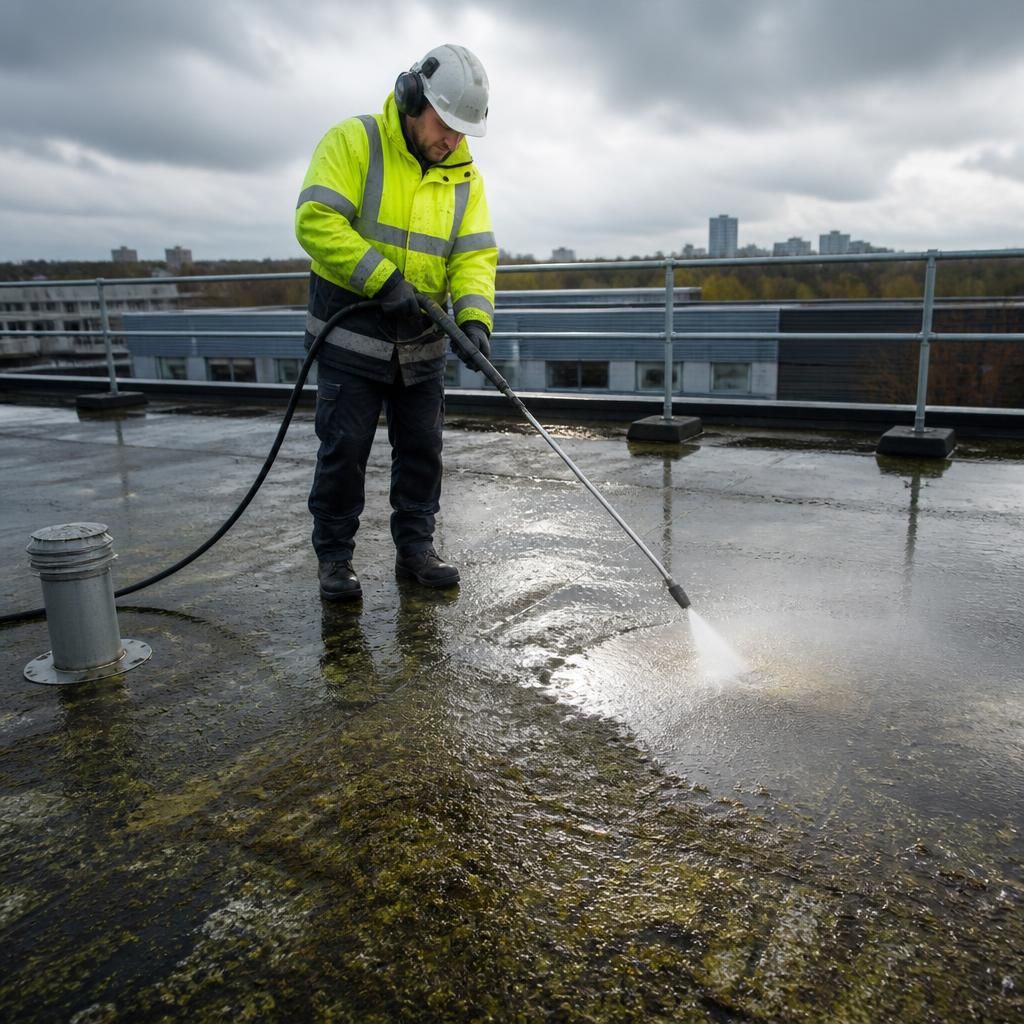
Weather conditions directly affect whether an algae or lichen treatment will work safely and effectively. Biocidal products need suitable contact time, while pressure washing and steam cleaning require conditions that allow controlled application, drying and run-off management.
Rain can dilute or remove a treatment before it has acted, frost can make surfaces hazardous and increase the risk of damage, and strong sunlight may dry cleaning solutions too quickly. Wind can carry spray towards vehicles, planting, glazing or neighbouring property. Checking the forecast before work and dividing exposed areas into manageable sections helps the cleaning team select the right method and protect the surrounding site.