
How do biocidal treatments prevent algae and lichen from returning after cleaning?
Biocidal treatments help prevent algae and lichen returning by neutralising remaining spores and organic growth after surface cleaning. Applied appropriately to roofs, façades, paving and other exterior surfaces, they continue working after treatment while reducing the conditions that allow regrowth.
Biocidal treatments help prevent algae and lichen returning by chemically deactivating remaining organic growth and reducing viable algae, lichen and moss propagules on the surface after physical cleaning. Unlike pressure washing, which removes visible contamination immediately, a suitable treatment can continue working after application and reach residues left in pores, joints and textured areas.
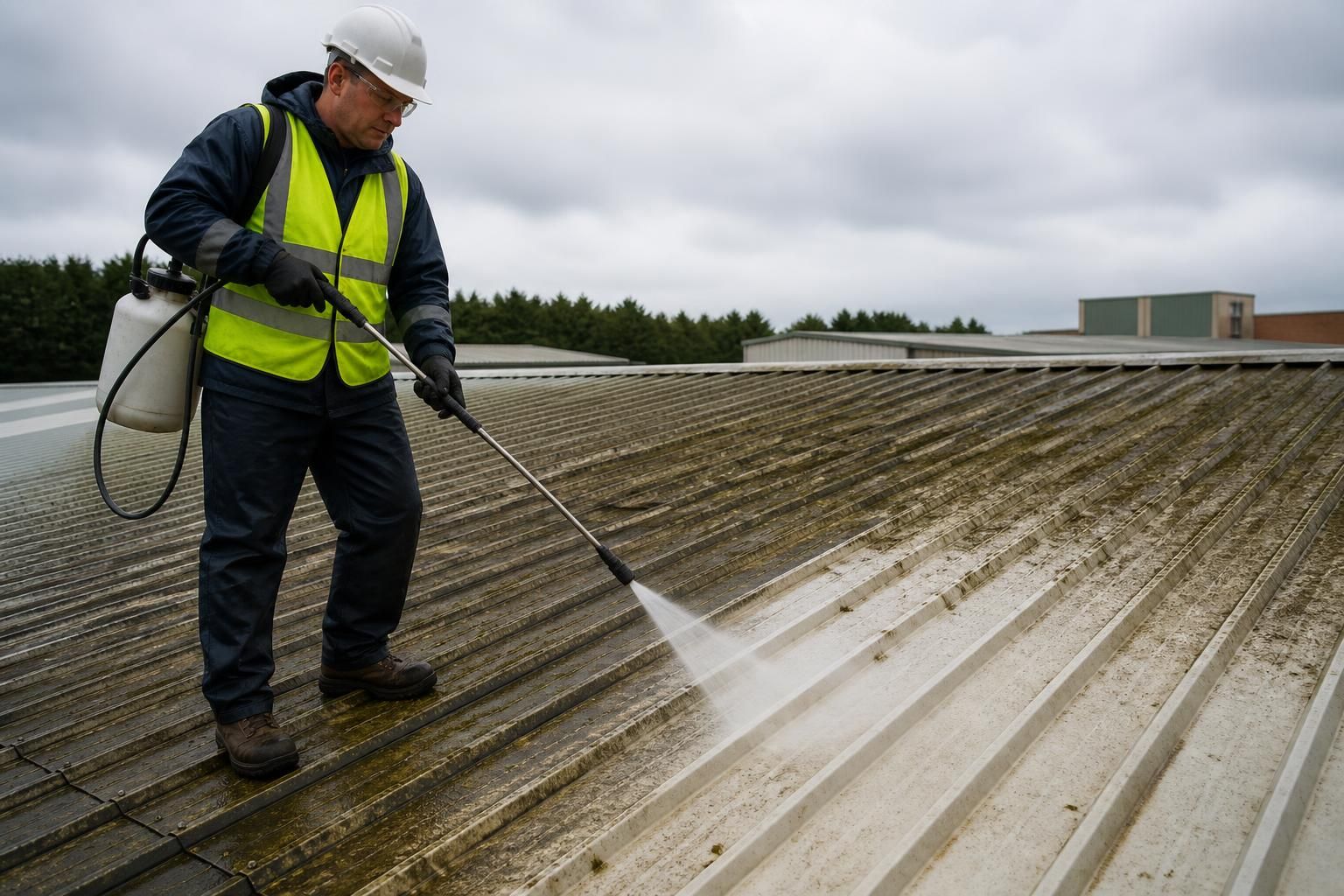
Cleaning and biocidal treatment perform different functions. Pressure washing, steam cleaning or other approved methods remove the established layer of growth, staining and surface debris. A biocidal treatment is then applied to the cleaned surface, where it targets residual biological contamination that may not be visible. This is particularly useful on roof coverings, paving, façades, cladding, concrete and sandstone, where algae and lichen can remain within surface texture or around laps, joints and edges.
When applied correctly, the treatment disrupts the organisms’ ability to survive and reproduce. It can also weaken residual lichen attachment and help break down organic material that would otherwise provide a base for new growth. The result is not an instant waterproof or permanent protective coating; it is a controlled treatment designed to reduce the biological load and delay recolonisation.
The usual process involves:
- Assessment: The substrate, existing growth, drainage, nearby vegetation and environmental conditions are reviewed before selecting a treatment. Some materials are more absorbent or chemically sensitive than others.
- Removal of established growth: Loose contamination and heavy growth are removed using the most suitable low-pressure, pressure-washing, steam-cleaning or manual method for the surface.
- Application: The biocidal product is applied evenly at the manufacturer’s specified dilution and contact time. Good coverage is important, including textured areas and places where growth has been present.
- Dwell and rinse requirements: Depending on the product and substrate, the treatment may need to remain in contact with the surface for a controlled period or may be rinsed after treatment. It should never be allowed to dry where the manufacturer’s instructions prohibit this.
- Inspection and maintenance: The surface is checked for remaining contamination, drainage issues and areas likely to become damp. Follow-up cleaning or treatment can be scheduled where the site is exposed to persistent biological growth.
Biocidal treatments are most effective when the underlying causes of regrowth are also addressed. Persistent shade, poor drainage, leaking gutters, standing water, overhanging vegetation, blocked channels and rough or porous surfaces all make recolonisation more likely. Correcting these conditions will usually extend the clean appearance for longer than relying on treatment alone.
Weather affects performance. Rain shortly after application can dilute or wash away the product before it has had sufficient contact time, while cold conditions may slow the treatment process. Wind can cause spray drift and uneven coverage, and strong sunlight or rapid drying may affect some products. Contractors should therefore plan applications around the product instructions and site conditions rather than applying them automatically at any time.
The treatment must also be compatible with the material being cleaned. A product suitable for one roof covering, façade or paving type may not be appropriate for another. Particular care is required around painted or coated surfaces, metalwork, sealants, glazing, planted areas, watercourses and sensitive masonry. Pre-testing in an inconspicuous area helps confirm that the method will not cause unacceptable staining, colour change or surface damage.
Biocidal treatment does not replace safe cleaning practice. Operatives should follow the product safety data sheet, use the required personal protective equipment, control access to the work area and protect drains, vegetation and adjacent property. Run-off must be managed responsibly, especially on commercial sites near watercourses or public areas. Any treatment programme should comply with the product label, relevant UK requirements and the site’s environmental controls.
Regrowth can still occur because airborne particles, bird activity, moisture and nearby vegetation continually reintroduce organic material. The practical aim is to reduce the speed and extent of return, not to guarantee that algae or lichen can never reappear. For commercial properties, combining a thorough initial clean with a correctly selected biocidal treatment and planned inspections generally provides more durable control than repeatedly removing visible growth alone.
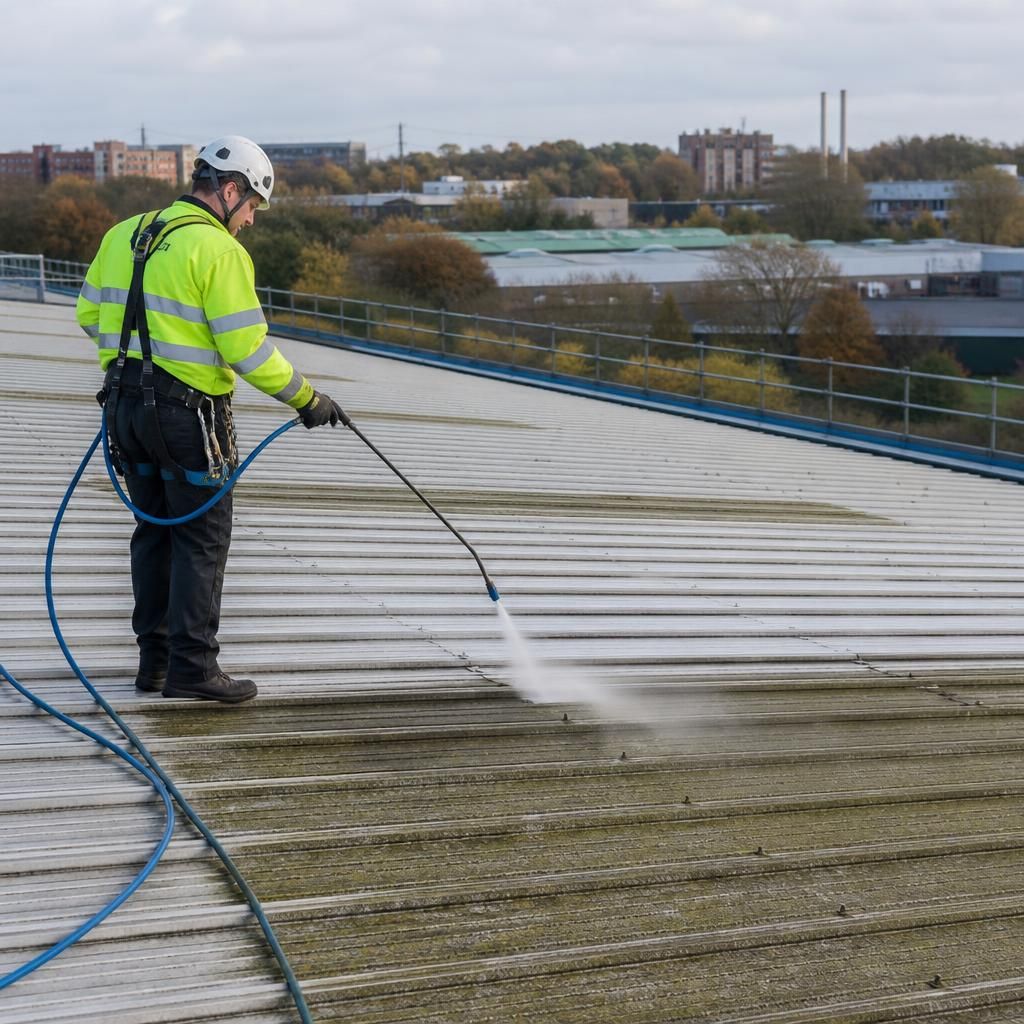
Biocidal treatments help delay algae and lichen regrowth by neutralising residual biological contamination left after visible growth has been removed. They are not a permanent coating: their effectiveness depends on thorough coverage, the correct product for the substrate and sufficient contact time.
For this reason, the treatment is normally applied after cleaning, when pores, joints and textured areas have been exposed. Persistent dampness, blocked drainage, shade and overhanging vegetation can still encourage recolonisation, so addressing these conditions is an important part of achieving longer-lasting results. The surface should also be treated in suitable weather, as rain or rapid drying can reduce the product’s contact with the area.