
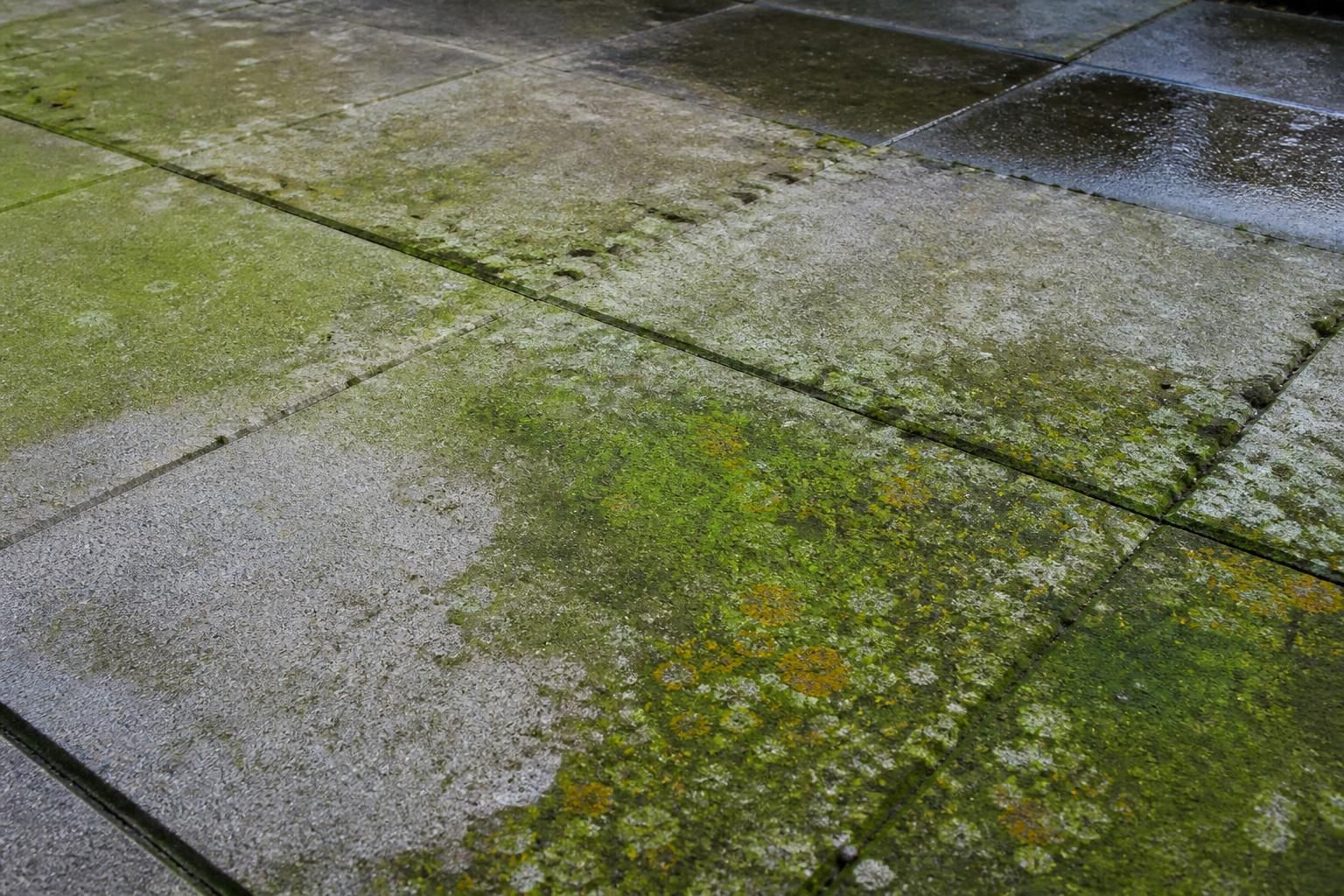
Can cleaning algae and lichen impact the structural integrity of surfaces like concrete and sandstone slabs?
Algae and lichen can contribute to the deterioration of concrete and sandstone slabs by retaining moisture, encouraging surface erosion and widening existing cracks or joints. Cleaning is generally beneficial, but excessive pressure, unsuitable chemicals or poor technique can damage vulnerable sandstone faces and weaken already deteriorated concrete.
Yes. Algae and lichen can contribute to the deterioration of concrete and sandstone slabs, although they are not usually the sole cause of structural failure. Their growth retains moisture against the surface, can encourage staining and surface erosion, and may exploit existing cracks, open joints and areas of weathering. Cleaning is generally beneficial, but excessive pressure, unsuitable chemicals or poor technique can damage the substrate, particularly where sandstone is already friable or concrete has begun to break down.
Algae forms a slippery biological film, while lichen attaches more firmly and can develop into joints, pores and small surface defects. Both can retain water for longer than a clean, exposed surface. Repeated wetting and drying may then accelerate the effects of frost, salts and general weathering. Roots or attachment structures from established lichen can also loosen weak surface particles when the growth is removed.
The level of risk depends on the condition and material of the slab. Sound concrete is relatively robust, but algae and lichen can make it slippery and conceal defects such as cracking, spalling or failed joints. Where water is able to enter damaged concrete, corrosion of embedded reinforcement may become a concern, particularly on structural concrete rather than ordinary paving. Organic growth does not normally create this corrosion by itself, but the moisture it retains can worsen an existing pathway for water ingress.
Sandstone is more porous and variable than concrete, so it requires greater care. Its surface can contain naturally weak or weathered layers, and aggressive cleaning may remove the face of the stone, leave pitting or expose softer material beneath. Strong acids, inappropriate biocides and excessive pressure can cause colour changes, salt movement or irreversible surface loss. A sandstone slab that is already delaminating, flaking or soft under light contact should be assessed before any intensive cleaning is planned.
Cleaning can protect the surface when it is matched to the substrate and the condition of the growth. A suitable process normally includes:
- Inspecting the slabs, joints, drainage and surrounding areas before work begins.
- Identifying whether the contamination is algae, lichen, moss, dirt, efflorescence or a combination of materials.
- Checking for cracks, loose sections, hollow-sounding areas, open joints, spalling and friable stone.
- Selecting a compatible biocidal treatment or cleaning solution, with care taken around planted areas, watercourses and drainage systems.
- Allowing the treatment to act rather than relying on force to remove established growth.
- Using controlled pressure, steam or gentle agitation where appropriate, with test cleaning carried out in an inconspicuous area first.
- Rinsing and collecting run-off responsibly, then checking that joints, edges and adjacent surfaces have not been disturbed.
Pressure washing is not automatically unsuitable, but the pressure, nozzle, distance, water flow and cleaning direction must be controlled. Holding a lance too close to concrete can strip weak cement paste and expose aggregate. On sandstone, a high-pressure jet can open the stone’s pores, remove the weathered face or create visible streaking. Repeated aggressive washing may leave a surface more porous and therefore more receptive to future contamination.
Biocidal treatment can reduce the need for force by weakening or killing algae and lichen before physical removal. It is not a substitute for inspecting the substrate, correcting drainage problems or repairing damaged joints. Treatments must be selected and applied according to the surface, the contamination and the manufacturer’s instructions. A treatment that is suitable for one type of paving may be inappropriate for another, especially where sandstone, painted finishes, nearby vegetation or sensitive drainage arrangements are involved.
Signs that growth may be associated with existing deterioration include slabs that rock underfoot, widening cracks, loose corners, flaking or powdering surfaces, deep open joints, persistent damp patches and areas that remain slippery after cleaning. These symptoms should not be attributed to algae or lichen alone. They may indicate movement, poor drainage, frost damage, subsidence, failed bedding or a defect within the concrete. Cleaning should be coordinated with repairs where necessary, rather than used to conceal a maintenance problem.
After removal, preventing a rapid return is as important as the initial clean. Improving drainage, reducing persistent shade where practical, clearing leaf debris and keeping joints in good condition can reduce moisture retention. A planned maintenance programme can identify regrowth and minor defects before they become more difficult to manage. Where the surface is suitable, an appropriate protective treatment may also help, but sealers should never be applied without checking that they are compatible with the substrate and its moisture movement.
In practical terms, cleaning algae and lichen is more likely to preserve concrete and sandstone than harm it when the work is assessed and carried out by a suitably experienced contractor. The main structural risk comes from the underlying defect and prolonged moisture, while the main cleaning risk comes from treating a vulnerable surface too aggressively. For commercial paving, façades, access routes and larger hard-surface areas, a condition survey and small test area provide a reliable basis for choosing between biocidal treatment, pressure washing, steam cleaning or a combination of methods.
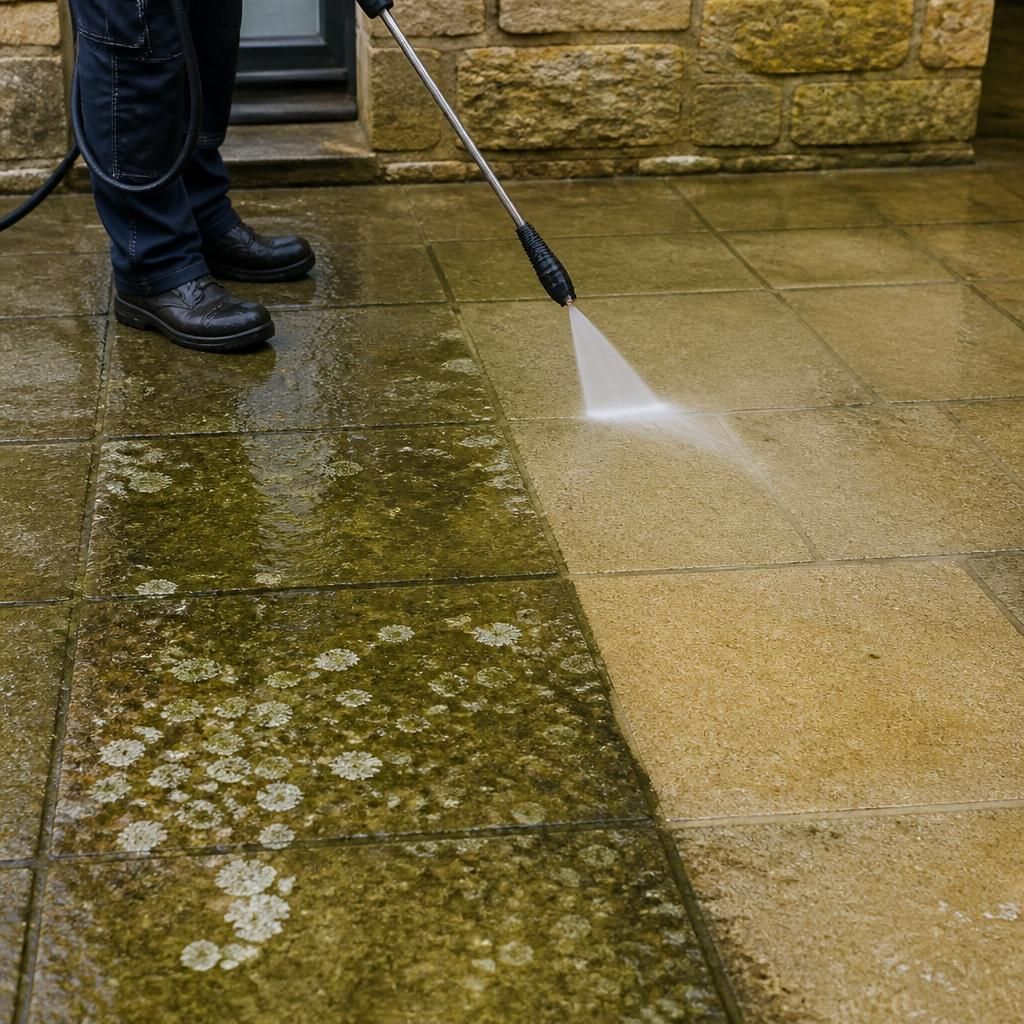
Cleaning algae and lichen can help protect concrete and sandstone slabs, but the method must match the condition of the surface. Biocidal treatment and controlled low-impact cleaning can loosen established growth without unnecessarily removing sound material. Excessive pressure, unsuitable chemicals or cleaning a friable surface can strip concrete’s cement paste or damage sandstone’s weathered face, leaving it more porous and vulnerable to further deterioration.
Before cleaning, check for cracking, spalling, loose sections, open joints and areas that feel soft or unstable. These defects may indicate an underlying drainage, frost or movement problem rather than damage caused by the growth alone. A small test area helps confirm that the chosen treatment removes contamination without affecting the colour, texture or integrity of the slab.