
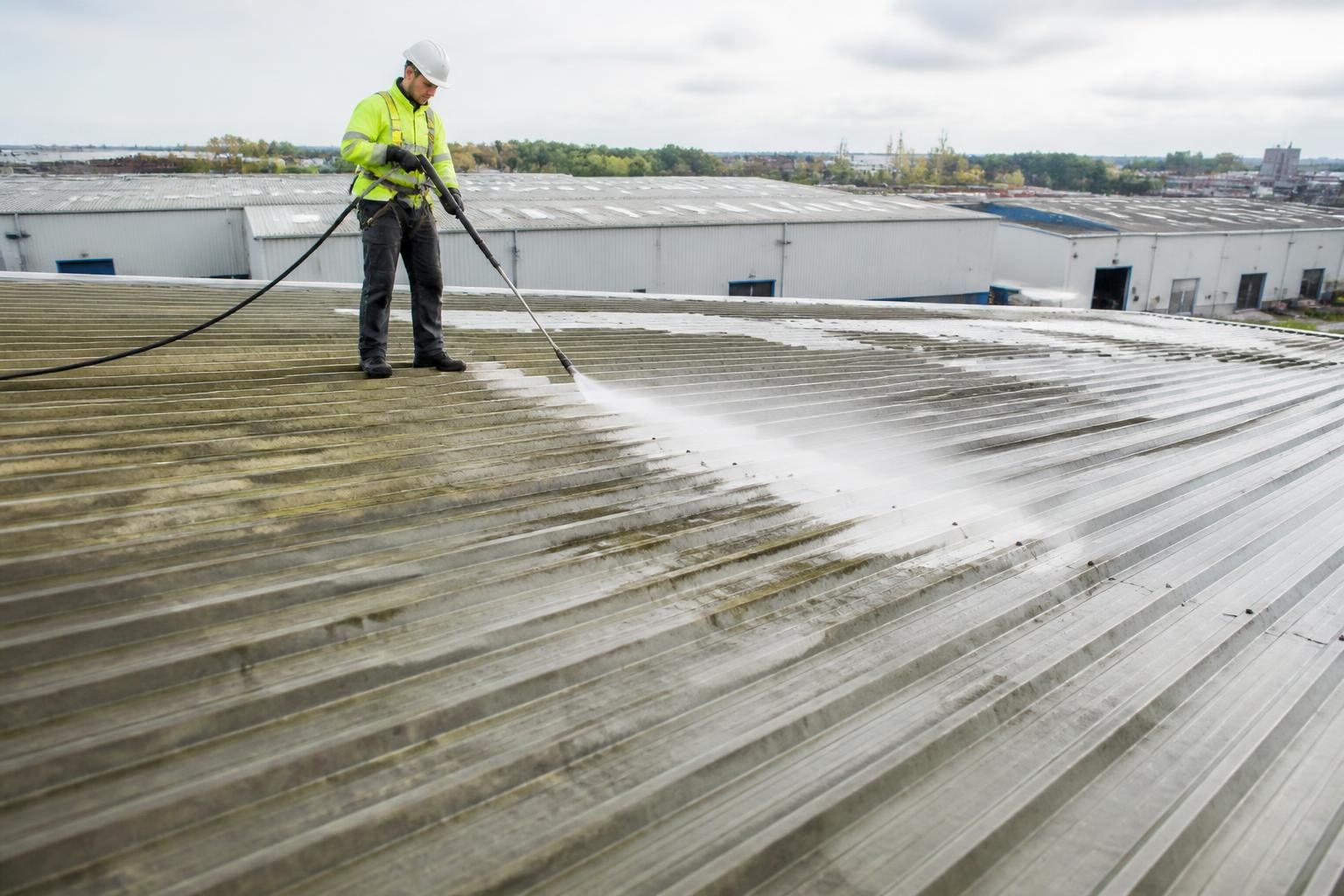
What types of roofs require industrial cleaning?
Industrial cleaning is commonly required for metal sheeting, profiled steel, composite panels, cladding, flat roofs, EPDM, fibreglass, felt and concrete roofs. These surfaces can accumulate moss, algae, dirt, oil, bird fouling and industrial pollutants, so the cleaning method must be matched to the roofing material and its condition to avoid damage.
Industrial cleaning is commonly required for metal sheeting, profiled steel, composite panels, cladding, flat roofs, EPDM, fibreglass, felt and concrete roofs. These surfaces can accumulate moss, algae, dirt, oil, bird fouling and industrial pollutants, so the cleaning method must be matched to the roofing material, coating and condition to avoid damage.
Cleaning is usually most important where contamination is affecting drainage, roof inspections, appearance, maintenance access or the performance of the roof covering. A roof does not necessarily need aggressive cleaning simply because it looks weathered. The correct approach depends on the material, the type of contamination, the roof’s age, previous repairs and whether the surface can safely withstand pressure, heat or chemical treatment.
Profiled metal and steel roofs
Profiled steel, aluminium and other metal sheet roofs are frequently cleaned on warehouses, factories, agricultural buildings and commercial units. Dirt, moss, algae, atmospheric deposits, bird fouling and residues from nearby industrial activity can collect in the profiles, laps, gutters and around roof penetrations. These deposits may retain moisture and obscure corrosion, failed fixings, damaged coatings or blocked drainage points.
Metal roofs are often suitable for controlled low-pressure washing, soft washing or steam cleaning, depending on the coating and condition. High pressure can lift protective finishes, force water beneath laps and seals, damage flashings or accelerate corrosion around exposed fixings. Cleaning should also identify areas where the original coating has failed, as washing alone will not correct corrosion or deterioration.
Composite panels and insulated roof systems
Composite panels require careful cleaning because their external coating, joints and sealants form part of a weather-resistant system. They are commonly affected by general grime, algae, bird fouling and staining beneath overhanging trees or beside extraction systems. Cleaning can improve the visibility of damaged joints and panel surfaces, but excessive pressure or unsuitable chemicals may mark the finish or affect sealants.
A low-pressure or steam-based method is generally considered only after the panel coating, manufacturer guidance and condition have been assessed. Particular care is needed at joints, trims, rooflights, penetrations and areas where the panel core may be exposed.
Flat roofs with felt or built-up coverings
Felt and built-up flat roofs can require cleaning when leaves, silt, moss, algae, bird fouling and wind-blown debris obstruct outlets or hold moisture against the surface. Flat roofs are especially dependent on effective drainage, so contamination around gutters, outlets and perimeter details should not be overlooked.
These coverings should not normally be treated as if they were concrete or sound metal. Excessive pressure, concentrated heat and harsh chemicals can damage the weathering layer, loosen mineral finishes or expose the underlying reinforcement. Cleaning should be gentle and controlled, with close attention to membrane laps, edge details, outlets and any areas that are already blistered, split or loose.
EPDM rubber roofs
EPDM is used on many low-slope and flat-roof applications and can collect atmospheric grime, algae, moss and bird deposits. Although the membrane is flexible, it can still be damaged by sharp tools, aggressive pressure, incompatible solvents and careless movement across the roof.
EPDM cleaning should use a method and cleaning product known to be compatible with the membrane. Low-pressure washing or controlled steam may be appropriate in some circumstances, but the condition of seams, adhesives, edge restraints and penetrations must be checked first. Any standing water, punctures or open seams should be recorded rather than concealed by the cleaning process.
Fibreglass and GRP roofs
Fibreglass, also known as GRP, is found on some industrial roofs, canopies and roof sections. It may develop surface dirt, algae, oxidation and staining, particularly where water drains slowly. The surface can appear sound while its resin finish is becoming weathered, so abrasive cleaning may remove more of the protective surface than intended.
Controlled low-pressure cleaning, steam cleaning or a compatible detergent-based process may be suitable. The method should be tested on an inconspicuous area and adjusted for the age, finish and condition of the GRP. Cracks, exposed fibres and failed sealant require assessment before cleaning proceeds.
Concrete and cement-based roofs
Concrete tiles, cement sheets and other cement-based roof coverings can support moss, algae and lichen, especially in shaded or damp locations. Dirt may also accumulate in overlaps and drainage channels. Cleaning can help reveal cracked sheets, displaced tiles, damaged fixings and blocked gutters.
These roofs can be robust, but their condition varies considerably. Old cement sheets may be brittle, porous or weakened by weathering. A pressure-washing approach that is suitable for sound concrete may cause surface loss, breakage or water penetration on an aged roof. Access planning is essential, as workers should not assume that every area can safely support foot traffic.
Coated and refurbished industrial roofs
Some industrial buildings have roofs that have been over-coated, encapsulated or repaired with a liquid-applied system. These surfaces may need periodic cleaning to remove dirt and biological growth, but the coating can be more vulnerable than the original substrate. The cleaning plan should account for the product specification, curing condition, adhesion and any manufacturer’s maintenance requirements.
Where a roof has recently been restored, cleaning may be part of a planned maintenance programme rather than a response to heavy contamination. Gentle cleaning helps preserve the finish and makes it easier to identify new defects during later inspections.
Roof areas affected by specific contamination
The roof type is only one part of the assessment. Industrial roofs may need cleaning because of:
- moss, algae, lichen and other biological growth;
- bird fouling, feathers and nesting material;
- dust, soot and airborne industrial deposits;
- oil or grease near plant, loading areas and extraction equipment;
- leaf litter and wind-blown debris blocking drainage;
- cement, plaster, paint or construction residue after building work; and
- graffiti or staining on accessible roof-level structures and associated cladding.
Oil, chemical residues and construction materials may need a different treatment from moss or general dirt. The source of the contamination should be considered, because recurring deposits may indicate an issue with extraction, nearby operations, drainage or bird control.
Roofs that need additional caution
Cleaning should be preceded by a condition survey where the roof is old, visibly damaged, heavily corroded, fragile or suspected to contain asbestos. Asbestos-containing cement and other potentially hazardous materials must be managed under appropriate regulations and should never be disturbed through unplanned pressure washing. A specialist assessment may be required before any work is specified.
Rooflights, translucent panels, brittle sheets, loose coatings, exposed insulation, failed flashings and damaged seals also require particular care. Solar panels, ventilation equipment, lightning protection, roof-mounted plant and fragile roof access points should be identified before equipment or operatives are positioned on the roof.
How the cleaning method is selected
A professional assessment should establish the roof material, coating, age, access arrangements, drainage layout and type of contamination. The contractor can then select from low-pressure washing, steam cleaning, soft washing, manual removal or a combination of methods. Test areas are useful where the surface finish or coating response is uncertain.
Cleaning should protect gutters, outlets, rooflights, seals and adjacent façades. Run-off must also be controlled so that contaminated water does not enter surface-water drains, reach landscaped areas or affect neighbouring property. Once the roof is clean, defects that were hidden by deposits should be documented and referred for repair rather than treated as part of the cleaning itself.
In practice, most industrial roof types can benefit from professional cleaning when contamination is affecting the roof’s condition, drainage, inspection or appearance. The important distinction is that the safest method for a durable concrete surface may be unsuitable for EPDM, felt, composite panels or coated metal. Matching the process to the roof system is what removes contamination while helping to protect the building and extend the useful life of the covering.
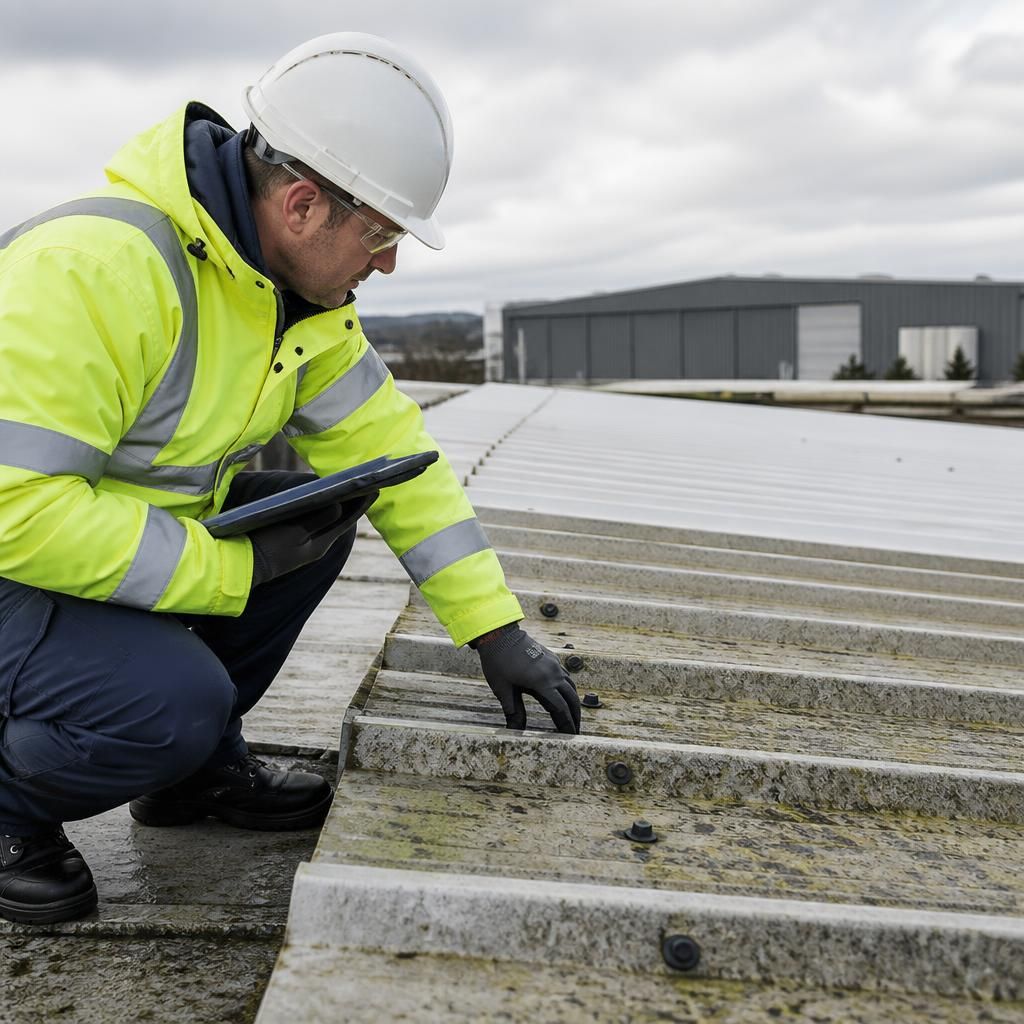
Industrial roof cleaning must be matched to the roofing material and its condition. Controlled low-pressure washing or steam cleaning may suit sound metal, composite panels and some GRP surfaces, while EPDM, felt and coated roofs usually require gentler treatment to avoid damaging membranes, finishes, seams or sealants.
A pre-cleaning inspection should identify fragile sheets, rooflights, corrosion, open joints, blocked outlets and hazardous materials such as asbestos cement. Test cleaning can confirm that the chosen process removes contamination without lifting coatings, forcing water beneath laps or worsening existing defects.
Arrange an Industrial Roof Cleaning Assessment
Arrange an industrial roof cleaning assessment so we can identify the roof material, contamination, access requirements and any areas needing repair or specialist precautions. We will then recommend a suitable cleaning method and maintenance approach for the building.