
What types of industrial roofs are suitable for different cleaning methods?
Industrial roof cleaning methods should be matched to the roofing material, coating, condition and level of soiling. Metal and coated roofs usually suit controlled low-pressure washing or steam cleaning, while membrane, EPDM, fibreglass and tiled roofs require gentler, material-specific techniques to prevent surface or waterproofing damage.
Industrial roof cleaning methods must be matched to the roof covering, protective coatings, condition and type of contamination. Metal and coated profiled roofs commonly suit controlled low-pressure washing or steam cleaning, whereas EPDM, fibreglass, single-ply membranes and tiled roofs generally require gentler, material-specific techniques to avoid damaging the waterproofing or surface finish.
The correct method is determined through a pre-cleaning inspection rather than by selecting the most powerful equipment. The inspection should identify the roofing material, age, previous repairs, coating condition, drainage arrangements, areas of corrosion, loose fixings, fragile sections and the type of soiling present. Moss, algae, bird fouling, atmospheric grime, oil residues and construction dust do not all respond in the same way. A test clean on an inconspicuous area can confirm how the surface reacts before work proceeds across the roof.
Metal and profiled sheet roofs
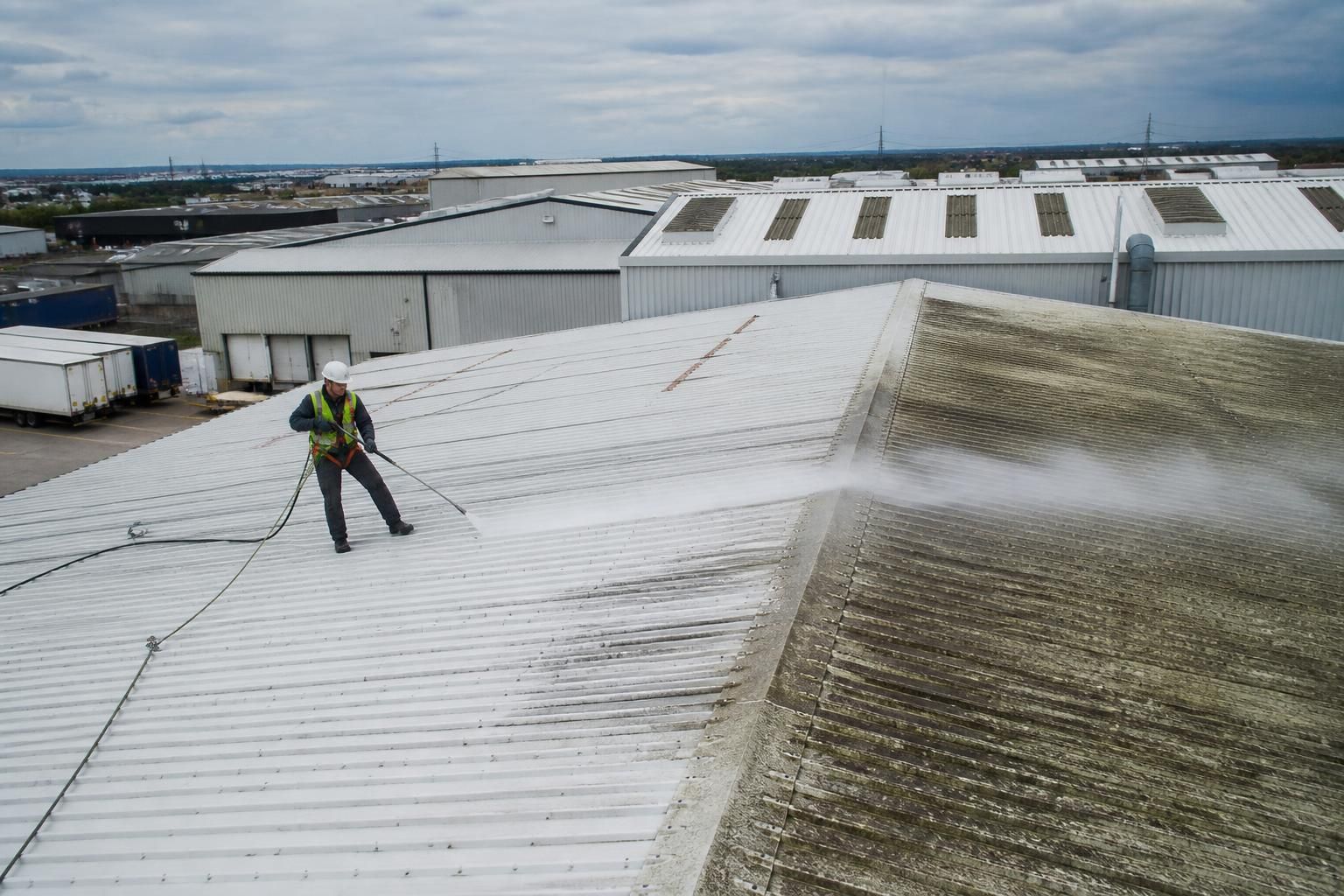
Steel and aluminium roofs with sound factory-applied or renewed coatings are often suitable for low-pressure washing, provided the pressure, nozzle and working distance are carefully controlled. This approach can remove general dirt, algae, bird fouling and loose organic growth without unnecessarily abrading the coating. Water should be directed in a way that avoids forcing contamination beneath laps, flashings, seals and edge details.
Steam cleaning can be appropriate where the roof has ingrained biological growth or deposits that respond better to heat than to aggressive pressure. It uses lower mechanical force, but the operator must still assess the coating and sealants, manage runoff and avoid concentrating heat on vulnerable areas. High-pressure cleaning is not automatically appropriate for metal roofs: excessive pressure can strip coatings, expose the substrate, damage sealants and drive water into joints.
Where corrosion is present, cleaning is only one part of the work. Loose rust and flaking coating may need controlled removal, followed by assessment and any required repair or protective treatment by a suitably qualified contractor. Cleaning should not conceal perforations, failed fasteners or deteriorated roof sheets.
Standing-seam and coated architectural metal roofs
Standing-seam systems and other specialist coated metal roofs need particular care around seams, clips, penetrations and folded details. A soft-wash or low-pressure approach may be suitable for light contamination, while steam cleaning can be considered for more persistent deposits after compatibility has been checked. Abrasive pads, scraping tools and forceful jets can mark the finish or compromise the protective coating, so they should not be used as a routine method.
The cleaning process should preserve the roof’s drainage paths and avoid lifting or deforming seam components. Any suspected movement, open joint or failed seal should be recorded for repair rather than treated as a cleaning issue.
EPDM and other rubber membrane roofs
EPDM roofs are generally cleaned with a low-pressure application and a compatible, non-abrasive cleaning solution, followed by controlled rinsing where the drainage design allows it. The aim is to remove dirt, algae and organic deposits without scouring or swelling the membrane. Strong solvents, petroleum-based products and unsuitable chemical treatments can affect rubber materials, adhesives and associated flashings.
Pressure should be kept low enough to avoid lifting membrane edges, disturbing bonded seams or forcing water below details. Operators should take extra care around outlets, upstands, termination bars, roof penetrations and patched sections. Heavy moss should be loosened carefully rather than torn away, as aggressive removal can pull at the membrane or its bonded joints.
Cleaning does not restore a membrane that is split, blistered, unbonded or beyond its serviceable condition. Such defects should be reported so that the building owner or roofing specialist can decide whether repair or replacement is needed.
PVC, TPO and other single-ply membranes
Single-ply membranes require a method confirmed as compatible with the particular membrane and its surface finish. Low-pressure washing with a suitable detergent is commonly preferable to aggressive jetting. Some membranes have textured, fleece-backed or reflective surfaces that can retain contamination or be affected by unsuitable chemicals.
Heat, solvents, abrasive brushes and excessive pressure may damage the membrane, welds or surface treatment. Particular attention is needed at mechanically fixed areas, welded seams, perimeter details and penetrations. Any chemical used should be checked against the manufacturer’s guidance or the roof system specification, with runoff controlled so that cleaning residues do not enter unsuitable drainage systems.
Fibreglass and GRP roofs
Fibreglass and GRP roofing can often be cleaned using a gentle low-pressure method with a compatible detergent. The surface finish may be vulnerable to abrasion, harsh chemicals and concentrated pressure, particularly where the resin or topcoat has weathered. Soft brushes may be used where necessary, but they should not be used aggressively on brittle or degraded areas.
Cleaning should expose, rather than conceal, signs of cracking, crazing, exposed reinforcement, failed trims or water ingress. If the surface is chalking or the topcoat is breaking down, the appropriate follow-up may involve a roofing repair or recoating system rather than more intensive cleaning.
Built-up felt and bituminous roofs
Built-up felt and bituminous coverings are usually treated with low-pressure washing or careful soft cleaning. High-pressure water can lift mineral surfacing, damage laps and expose the underlying bitumen. Solvent-based products may soften or adversely affect the covering and should not be used unless specifically approved for that system.
Loose chippings, degraded felt, open laps and blistered sections need to be identified before cleaning. Water should not be allowed to pond, and runoff should be directed safely through functioning outlets. Where the roof is fragile, cleaning may need to be limited to accessible areas or replaced with a non-abrasive maintenance approach.
Concrete and clay tiled industrial roofs
Sound concrete and clay tiles can sometimes withstand controlled low-pressure washing, but the condition of the tiles and bedding is more important than the material alone. Aged tiles may be porous, cracked, loose or weakened by frost and weathering. Excessive pressure can dislodge tiles, remove surface treatment, damage pointing or force water beneath the covering.
Steam cleaning can be useful for biological growth where reducing mechanical pressure is important. Manual removal with suitable tools may be appropriate for isolated moss, followed by a controlled wash. Broken or loose tiles should be reported and dealt with by a competent roofing contractor. On older tiled roofs, the safest method may be a limited clean from suitable access equipment rather than widespread foot traffic.
Asbestos-cement and other fragile sheets
Older industrial buildings may have asbestos-cement roofing. These roofs must be treated as potentially hazardous until their status has been confirmed. Abrasive cleaning, dry brushing and high-pressure washing can release hazardous fibres or damage the cement matrix. Work should follow the applicable UK asbestos regulations and be carried out by appropriately trained and competent personnel using a method suitable for the material and its condition.
Fragile asbestos-cement sheets also present a serious fall-through risk. Cleaning should not proceed simply because the surface appears accessible. A survey, suitable control measures, safe access system and appropriate waste and runoff arrangements may be required. In some cases, cleaning is not the correct solution if the roof is severely degraded.
Green roofs, solar installations and roofs with specialist finishes
Green roofs should not be treated as conventional roof-cleaning areas. The growing medium, planting, drainage layers and waterproofing require a planned maintenance method that avoids contamination and unnecessary disturbance. Solar panels, rooflights, sensors, vents and plant must be protected from impact, excessive pressure and unsuitable chemicals. Panels should only be cleaned using a method approved for their surface and electrical installation, with isolation and access requirements considered where necessary.
How the cleaning method is selected
- Identify the roof system. Confirm the covering, coating, membrane type, age and any manufacturer’s restrictions.
- Assess condition and fragility. Look for corrosion, cracks, failed seams, loose sheets, brittle tiles, damaged coatings, rooflights and unsafe access points.
- Classify the contamination. Establish whether the roof has dust, algae, moss, bird fouling, oil, grease, paint, cement residue or other deposits.
- Choose the least aggressive effective method. Start with controlled low pressure, steam or manual techniques before considering stronger pressure or specialist treatments.
- Test compatibility. Use a discreet test area to check the impact on colour, coating, membrane, sealants and drainage.
- Control water and residues. Protect outlets, collect or filter contaminated runoff where required, and prevent cleaning materials entering watercourses or unsuitable drainage systems.
- Inspect after cleaning. Record defects that become visible and confirm that outlets, laps, seams and roof details remain intact.
Low-pressure cleaning and steam cleaning are not interchangeable terms: both can be controlled, but the actual risk depends on operating pressure, temperature, flow rate, nozzle selection, chemicals and the operator’s technique. A competent contractor should be able to explain why a particular method has been selected for the roof rather than applying one standard process to every building.
Roof access and fall protection must also be planned alongside the cleaning method. Fragile coverings, rooflights and wet surfaces can make even a technically suitable cleaning process unsafe. The work may require edge protection, fall restraint, access platforms, mobile elevating work platforms or other suitable equipment, together with a site-specific risk assessment and method statement.
For industrial premises, the most suitable approach is therefore the one that removes the identified contamination while preserving the roof covering, waterproofing, coatings, seals and drainage system. If the inspection finds significant deterioration, the findings should be referred for roofing repairs before or alongside cleaning rather than relying on cleaning to resolve structural or waterproofing defects.
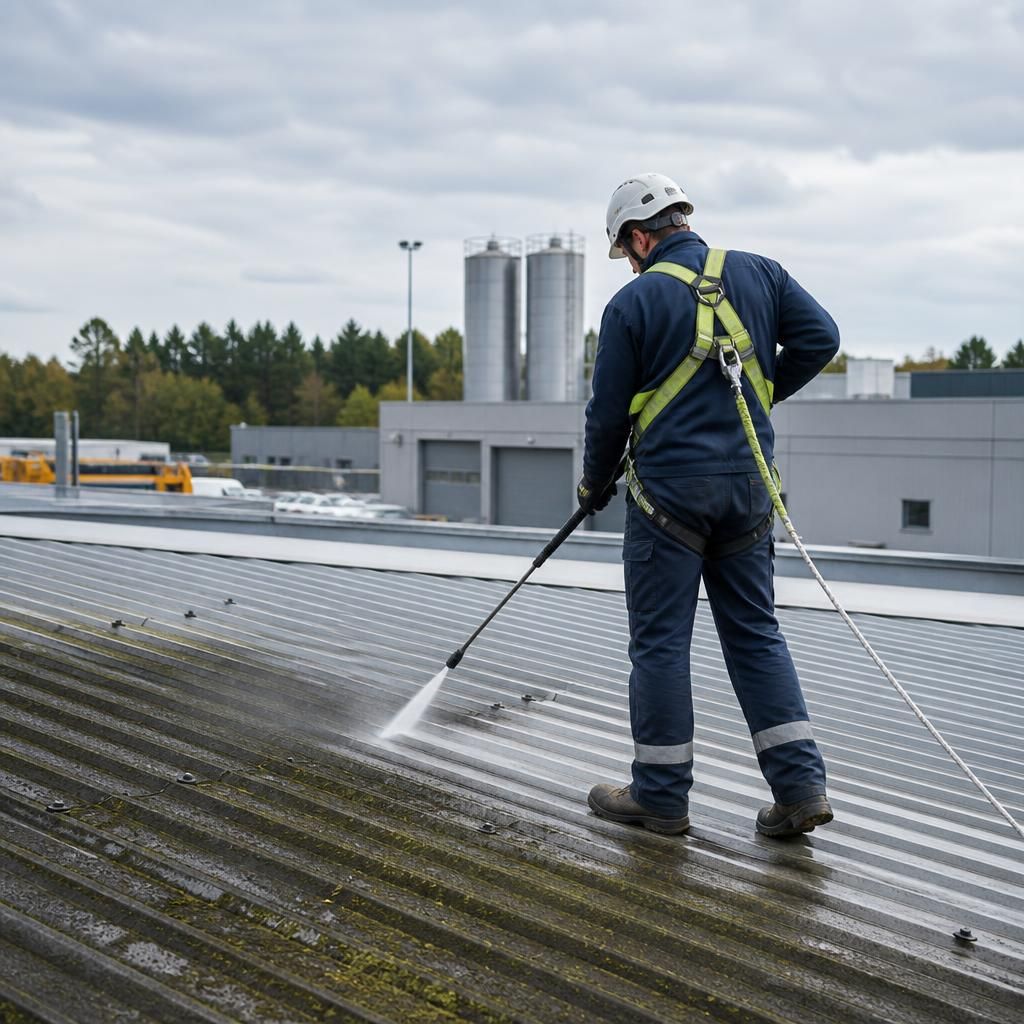
The most suitable industrial roof cleaning method is the least aggressive process that removes the contamination without harming the roof covering, waterproofing, coatings or seals. A pre-cleaning inspection should confirm whether the roof is metal, membrane, fibreglass, felt, tiled or asbestos-cement, as well as identifying fragile areas, failed joints, corrosion and the type of soiling present.
Controlled low-pressure cleaning or steam cleaning may suit sound metal roofs, while EPDM, single-ply membranes, GRP and bituminous coverings usually require gentler, compatible treatments. A discreet test area should be cleaned first to check the effect on the surface and confirm that runoff can be managed safely. High-pressure jetting, abrasive tools and unsuitable chemicals should not be used simply because they remove dirt faster; they can strip coatings, lift laps, disturb seams or force water beneath the roof system.
Arrange an industrial roof cleaning assessment
Arrange an industrial roof cleaning assessment so we can identify the roof covering, condition, contamination and safest effective cleaning method. We will also consider access, drainage and any repairs or fragile areas that need attention before work begins.