
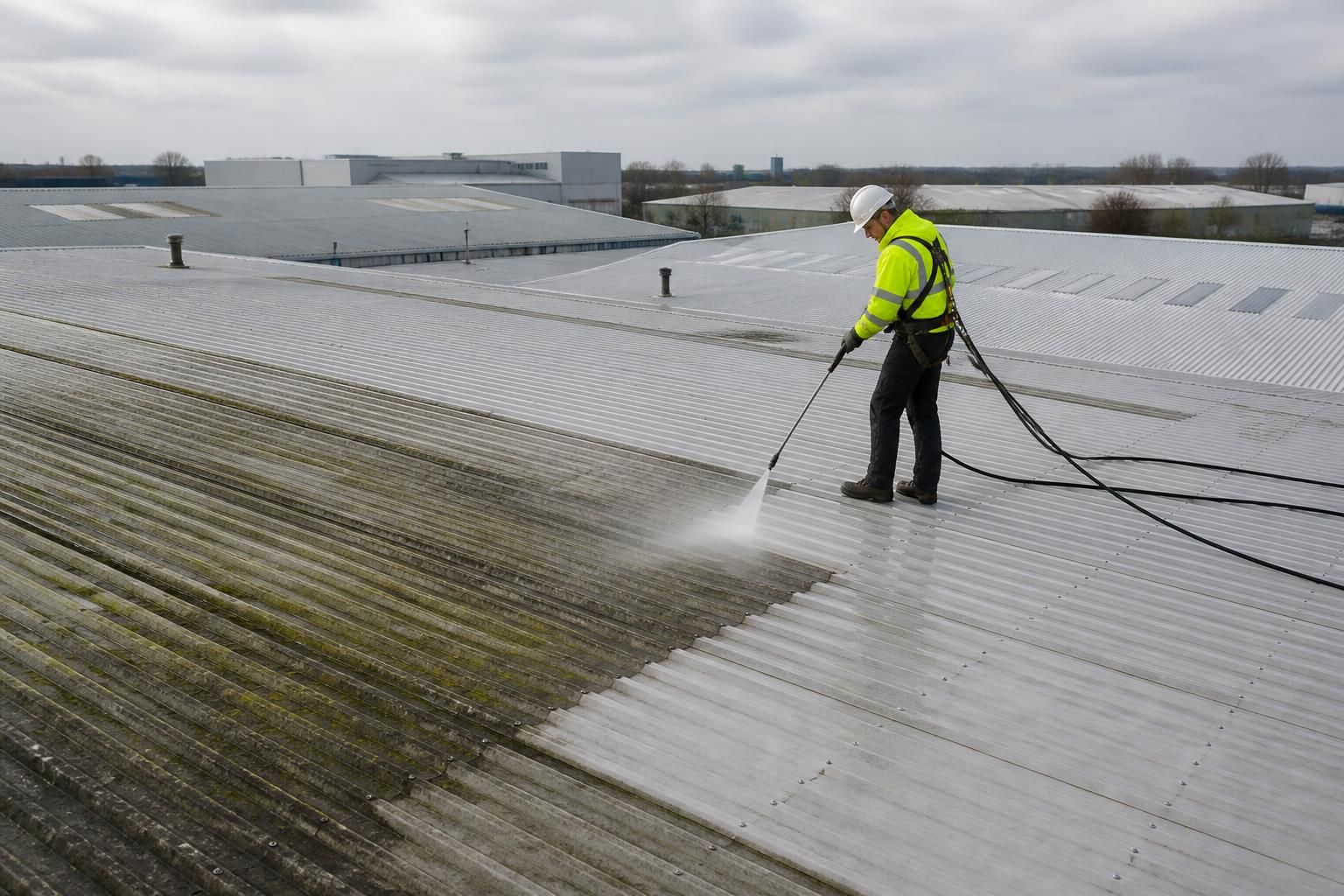
What factors determine the cost of industrial roof cleaning?
The cost of industrial roof cleaning is mainly determined by the roof’s size, material, condition, accessibility and the cleaning method required. Additional factors include safety provisions, access equipment, waste-water management, travel and whether specialist treatments or ongoing maintenance are needed.
The cost of industrial roof cleaning is determined primarily by the roof area, its construction and condition, the level of access available, and the cleaning method required. A straightforward, accessible roof with light surface soiling will usually cost less to clean than a large or heavily contaminated roof requiring specialist access equipment, low-pressure treatment, wastewater controls or additional repairs and safety measures.
Industrial roof cleaning is therefore priced as a site-specific service rather than by roof area alone. A reliable assessment considers the building, the roof system, the surrounding site and the practical requirements for carrying out the work safely and compliantly.
Roof size and layout
The total roof area is an important starting point because it affects labour, equipment time, water use and the quantity of cleaning solution required. However, the shape and layout of the roof can be equally significant. A large, open roof may be relatively efficient to clean, while a smaller roof divided by plant, rooflights, service ducts, parapets or changes in level may require more careful working and repositioning of equipment.
Multiple roof sections, separate buildings and restricted areas can also increase the time needed for preparation and movement around the site. The estimate may take account of elevations, canopies, loading bays and other surfaces included within the requested scope.
Roof material and construction
Different roofing materials require different cleaning techniques and levels of control. Profiled metal sheeting, coated cladding, asbestos-free fibre cement, membrane systems, EPDM and fibreglass roofs all have different tolerances for pressure, heat, chemicals and mechanical agitation.
A robust surface may tolerate a carefully controlled pressure-washing process, whereas a membrane or ageing coated roof may require low-pressure or steam cleaning to reduce the risk of damage. Fragile rooflights, deteriorated coatings, exposed fixings and vulnerable joints also affect how quickly the work can be completed. Where the roof material is uncertain, identifying it before work begins is an important part of producing an accurate quotation.
Level and type of contamination
Light dust, atmospheric deposits and loose debris generally require less preparation than established moss, algae, lichen, bird fouling, oil residues, rust staining or industrial pollution. Contamination may be concentrated around outlets, parapets, plant areas and shaded sections, creating additional cleaning time.
Some deposits need pre-treatment, controlled agitation or more than one cleaning pass. Oil, chemical residues and other potentially hazardous contaminants may require separate handling and wastewater arrangements. Bird fouling can also require additional hygiene precautions, particularly where the roof is above occupied areas, food-related operations or ventilation equipment.
Roof condition and pre-cleaning preparation
The condition of the roof affects both the method and the speed of cleaning. Loose coatings, corrosion, failed sealants, damaged sheets, blocked outlets and degraded membrane surfaces must be considered before work starts. Cleaning may need to be gentler where the roof is weathered, and some areas may need to be excluded if they cannot safely support operatives or equipment.
Removing loose debris, protecting vulnerable plant and sealing or isolating selected drainage points can add to the preparation required. Cleaning does not normally include roof repairs unless these have been separately specified. If defects are identified during the survey, they should be recorded and brought to the client’s attention rather than concealed by the cleaning process.
Access and working-at-height requirements
Access is often one of the most variable elements of an industrial roof cleaning quotation. The cost can be affected by roof height, ground conditions, loading restrictions, the availability of suitable access points and the distance between the work area and equipment location.
Depending on the site, the work may require mobile elevated work platforms, scaffold towers, edge protection, temporary barriers, roof ladders, fall restraint systems or other access arrangements. A suitable machine must be selected for the ground and working conditions, and the site may need traffic management or exclusion zones. Where access equipment must be delivered, set up, moved or collected, these activities are included in the overall project time and cost.
Restricted access can also affect the choice of cleaning system. If hoses, water supplies or machinery cannot be positioned close to the roof, additional handling, longer hose runs or specialist equipment may be needed.
Cleaning method and equipment
Pressure washing, low-pressure cleaning, steam cleaning and soft-washing approaches have different equipment, labour and water requirements. The selected method should be based on the roof material and contamination, not simply on the quickest available process.
Steam cleaning may involve more controlled application and specialist machinery, while low-pressure cleaning can require pre-treatment and longer dwell times. Pressure washing may be appropriate for some durable surfaces but can be unsuitable for fragile coatings, joints or membranes. The quotation should identify the proposed method and any limitations so that the price can be compared on a like-for-like basis.
Specialist attachments, long-reach systems, filtration, water recovery equipment and controlled chemical application can also influence the cost. Equipment must be suitable for the roof and used by trained operatives rather than selected solely for speed.
Safety provisions and site controls
Industrial roof cleaning requires a documented approach to working at height, equipment use, access, weather conditions and protection of people below. The site may need a risk assessment and method statement, induction arrangements, exclusion zones, banksmen or coordination with other contractors.
Additional controls may be necessary where the premises remain operational, vehicles move beneath the work area, members of the public are nearby or employees work inside the building. Sites with complex access, fragile roof areas or hazardous substances may require more planning and supervision, which is reflected in the project price.
Water supply, drainage and wastewater management
The availability of a suitable water supply can affect the practicality and cost of the work. If an on-site supply is unavailable or insufficient, water may need to be brought to the site. The cleaning process may also require protection of drains, collection of runoff, filtration or controlled disposal.
Wastewater must not be allowed to enter surface-water systems or contaminate surrounding land. The required controls depend on the cleaning products used, the type of contamination, local drainage arrangements and the environmental risks presented by the site. These measures may add preparation, equipment and disposal costs but are an essential part of responsible industrial cleaning.
Specialist treatments and additional work
A quotation may increase where the specification includes biocidal treatment, algae or moss inhibition, stain removal, coating-compatible chemical treatment, gutter clearance, cladding cleaning, rooflight cleaning or cleaning of associated façades. Persistent staining may require a separate treatment rather than additional pressure, particularly where aggressive cleaning could damage the surface.
Clients should check whether gutter and outlet clearance, removal of waste, final rinsing, treatment application and photographic reporting are included. These items are sometimes priced separately because their necessity cannot be confirmed until the roof has been inspected.
Location, scheduling and operational constraints
Travel distance, parking, site access and the availability of suitable welfare or storage areas can affect the quotation, particularly for projects outside the usual service area. Work scheduled outside normal operating hours, at weekends or during planned shutdowns may require additional coordination and supervision.
Weather can also affect roof cleaning. Wet, icy, windy or exceptionally cold conditions may make access unsafe or prevent treatments from working correctly. A professional quotation should allow for safe working conditions rather than encouraging work to continue when the roof or surrounding area presents an unacceptable risk.
How to obtain a more accurate industrial roof cleaning price
Provide the cleaning contractor with the site address, approximate roof dimensions, roof material, photographs, known access restrictions, contamination concerns and any requirements for out-of-hours work. Information about fragile roof areas, asbestos surveys, drainage arrangements, roof plans and other contractors on site is also useful.
A proper survey should confirm the cleaning scope, proposed method, access equipment, safety controls, wastewater arrangements, exclusions and any recommended follow-up work. The final price should make clear whether it includes preparation, equipment, labour, treatment, waste removal, reporting and VAT. Comparing quotations on this complete basis is more useful than selecting the lowest headline price, because an apparently cheaper option may omit essential access, safety or environmental controls.
For ongoing maintenance, a planned cleaning programme may provide more predictable costs than waiting until contamination is heavily established. The appropriate interval depends on the roof material, surrounding environment, nearby trees or industrial emissions, bird activity, drainage performance and the consequences of blocked outlets or persistent biological growth. A site assessment can establish whether a one-off clean or a scheduled maintenance plan is the more practical option.
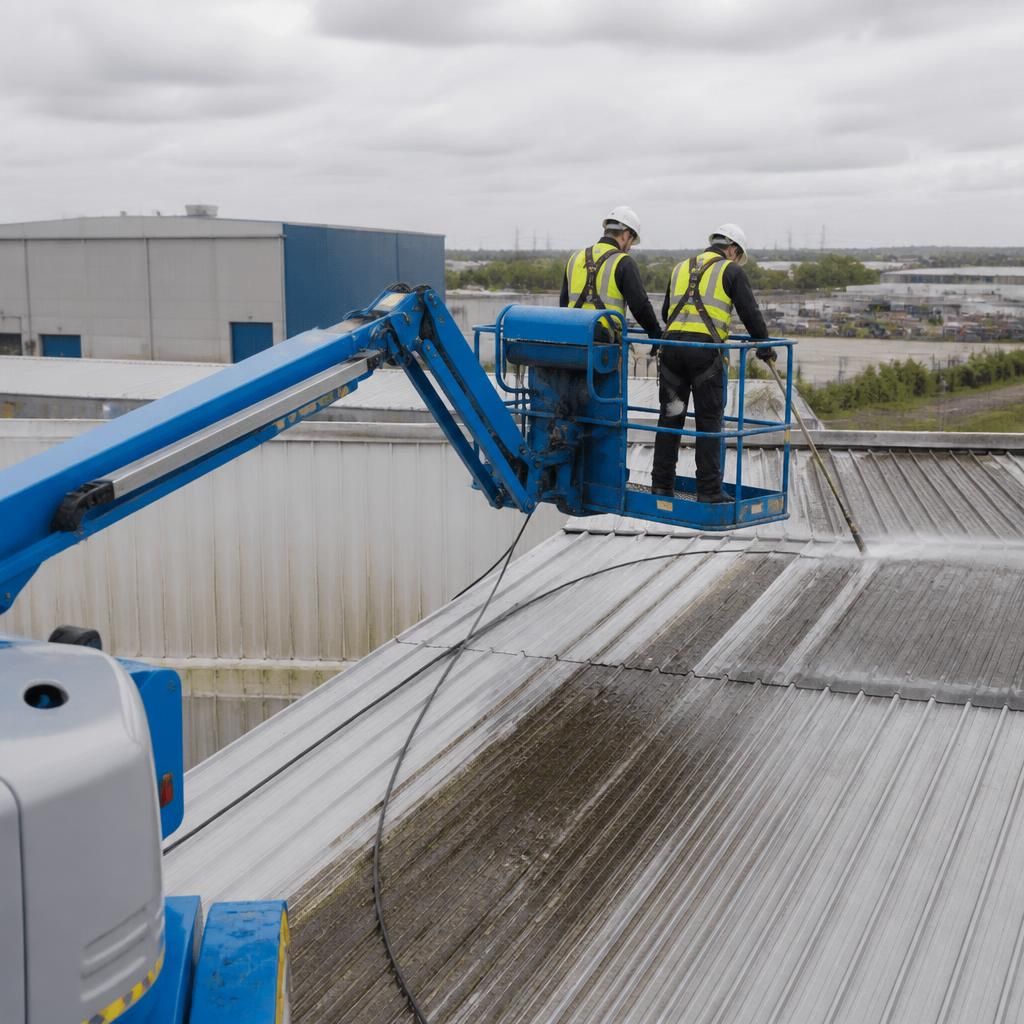
Access and safety requirements can significantly affect the cost of industrial roof cleaning. Roof height, fragile areas, restricted ground access and nearby vehicle or pedestrian routes may require equipment such as mobile elevating work platforms, edge protection, barriers or fall-restraint systems.
These provisions are essential rather than optional extras. A reliable quotation should explain which access equipment, site controls, labour and wastewater measures are included, so different prices can be compared on a like-for-like basis.
Request an Industrial Roof Cleaning Cost Assessment
Contact Encanto Exterior Cleaning for an industrial roof cleaning cost assessment based on your roof’s size, material, condition, access requirements and proposed cleaning method. Provide your site details and any known restrictions so we can prepare a clear, site-specific quotation.