
What environmental considerations should be taken into account when selecting an industrial roof cleaning service?
When selecting an industrial roof cleaning service, assess how it controls water use, cleaning chemicals, contaminated runoff and waste, while protecting drainage systems, surrounding land and watercourses. The contractor should use the least harmful effective method, recover or treat wastewater where required, dispose of residues lawfully and demonstrate compliance with relevant environmental regulations.
The main environmental considerations when selecting an industrial roof cleaning service are water consumption, chemical selection, contaminated runoff, waste disposal, energy use and protection of the surrounding site. A suitable contractor should assess the roof, drainage arrangements, construction materials and local environmental risks before recommending a cleaning method. The objective is to remove contamination effectively while preventing pollution and avoiding unnecessary damage to the roof or its coatings.
Ask the contractor for an environmental method statement covering the proposed equipment, cleaning agents, water-management arrangements, waste handling and emergency procedures. This should be specific to the site rather than a generic policy. It should identify nearby watercourses, surface-water drains, foul drains, hardstanding, planted areas, neighbouring premises and any sensitive operations that could be affected by spray, residue or runoff.
Water use and recovery
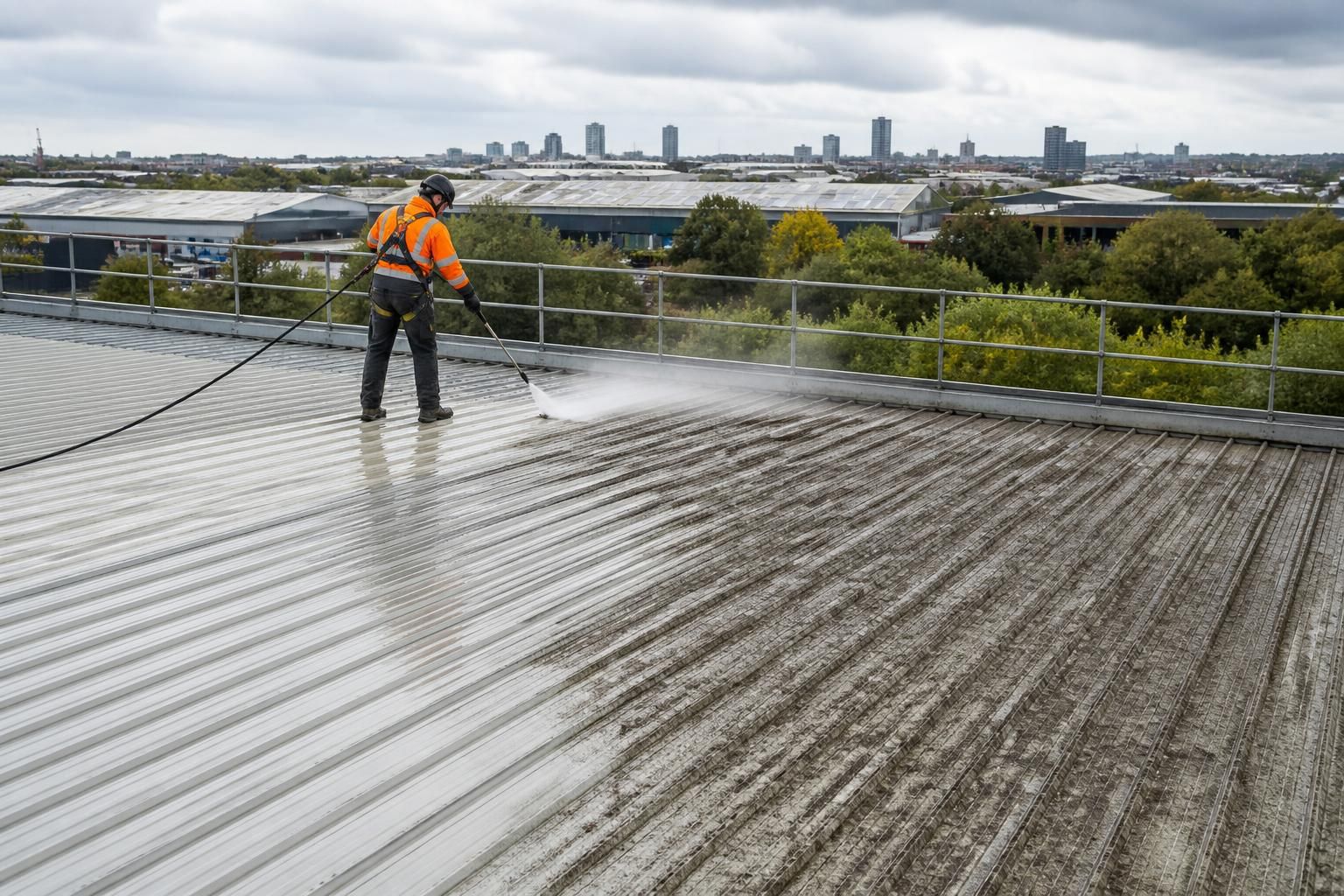
Industrial roof cleaning can use substantial quantities of water, particularly when removing heavy dirt, moss, algae, bird fouling or construction residues. The contractor should explain how water use will be controlled and whether dry removal, low-pressure washing, steam cleaning or a combination of methods is appropriate. The lowest-water method is not automatically the most environmentally suitable: a method that leaves contaminants in place or causes repeated cleaning may have a greater overall impact.
Good practice may include controlled application, flow-restricted equipment, targeted cleaning rather than unrestricted spraying, and recovery of wastewater from roof edges and paved areas. Where water is collected for reuse, it should be managed so that contaminated residue is not redistributed across the site. Any proposal to use harvested rainwater or recycled process water should also consider its quality and compatibility with the roof surface and cleaning chemicals.
Runoff and drainage protection
Roof wash water can contain silt, organic growth, oils, metals, old coatings, bird fouling and cleaning products. It must not be allowed to enter surface-water drains or a watercourse without appropriate assessment and permission. Surface-water systems commonly discharge directly to the environment, whereas foul drainage may require the consent of the relevant sewerage provider to accept trade effluent.
A responsible contractor should identify and protect drainage points before work begins. Controls may include drain covers, temporary bunding, collection mats, wet vacuums, settlement systems or licensed wastewater removal. The correct measure depends on the contaminants, the roof layout and the volume of water involved. Simply diluting dirty water or directing it into a drain is not an acceptable pollution-control strategy.
Ask how the contractor would respond to a spill, sudden rainfall or a failed containment measure. A suitable plan should include stopping work, protecting drains, containing the material, reporting the incident where required and arranging lawful recovery or disposal. Contractors should understand the requirements of relevant UK environmental legislation and the conditions imposed by local drainage, trade-effluent or environmental authorities.
Cleaning chemicals and biocides
The selected service should use chemicals only where they are necessary and suitable for the roof material and the contamination. Products used on coated metal, concrete, EPDM, PVC, asphalt, fibreglass and other roofing systems can have different environmental and compatibility requirements. Strong acids, alkalis, solvents or high-strength biocides may damage coatings, increase hazardous residues or create a greater pollution risk if they are poorly controlled.
Request the product names, safety data sheets and application instructions for any chemical treatment. The contractor should be able to explain the product’s environmental precautions, dilution requirements, contact time, neutralisation or rinsing needs, and how residues will be contained. Terms such as “eco-friendly” or “biodegradable” should not be accepted as a substitute for proper controls: a biodegradable product can still harm aquatic life if released at a harmful concentration.
Consider whether a chemical treatment is required at all. Physical removal, steam or controlled low-pressure cleaning may be suitable for some deposits, while a carefully selected treatment may be justified for persistent biological growth. The decision should be based on the roof survey, not on applying the same product to every surface.
Waste, sludge and contaminated materials
Roof cleaning can produce removed moss, silt, paint flakes, damaged membrane, disposable sheeting, used filters and contaminated sludge. The contractor should prevent this material from being blown or washed into surrounding areas and should separate waste where practical. Waste must be classified correctly before disposal, particularly where it may contain oil, heavy metals, hazardous coatings or other regulated substances.
Under the waste duty of care, the producer and contractor must ensure that waste is stored, transferred and disposed of responsibly. Ask for confirmation that the waste carrier and receiving facility are appropriately authorised, together with waste transfer or consignment documentation where applicable. Waste should not be left in open skips where rainwater can carry contamination into drains or soil.
Protection of the roof, building and surrounding environment
An environmentally responsible service also prevents avoidable replacement and repair. Excessive pressure, abrasive cleaning or incompatible chemicals can remove protective coatings, expose metal, damage membranes and shorten the roof’s service life. Selecting a method that preserves the existing roof reduces material consumption and the environmental impact associated with premature refurbishment.
The contractor should consider overspray and drifting mist, especially near air intakes, ventilation systems, planted areas, food-production facilities, neighbouring properties and public spaces. Equipment should be positioned to minimise noise, fuel use and disturbance. Access planning can also reduce environmental impact by avoiding unnecessary vehicle movements, protecting landscaped areas and using suitable access equipment rather than placing loads or equipment where the roof could be damaged.
Wildlife should be considered before cleaning starts. Birds may nest on or beneath industrial roofs, and roof voids can provide shelter for bats or other protected species. A pre-work inspection should identify signs of nesting or occupation. Work must be adapted or postponed where protected wildlife could be disturbed, and specialist advice should be obtained when necessary. There is no universal date that makes all roof work safe from nesting-bird considerations.
Energy use and equipment
Pressure washers, steam systems, water-recovery units, pumps and access equipment all consume energy. The contractor should select equipment that is proportionate to the roof and contamination, maintain it properly and avoid running machinery unnecessarily. Energy efficiency is relevant, but it should be assessed alongside water use, cleaning effectiveness, runoff control and the risk of damage. A lower-fuel option that creates uncontrolled wastewater is not necessarily the better environmental choice.
Ask whether the service provider can explain its approach to fuel storage, equipment leaks, battery charging, maintenance and transport. Where work is carried out over several visits, sensible scheduling and efficient mobilisation can reduce avoidable emissions without compromising safety or cleaning quality.
Evidence of compliance and responsible practice
Before appointing a contractor, check that it can provide relevant risk assessments, method statements, chemical information, waste arrangements and evidence of suitable training. Environmental management certification can be useful, but it should support—not replace—site-specific controls. You should also confirm who is responsible for obtaining any required consent, notifying the relevant authority or arranging wastewater removal.
A strong quotation should state what happens to wash water, removed debris and chemical containers rather than treating disposal as an unspecified extra. It should also identify any assumptions, such as the availability of a suitable foul-drain connection or the requirement for the client to provide access to a water supply. Clear documentation makes it easier to demonstrate compliance and investigate any issue after the work.
Ultimately, select a service that can show how its proposed method prevents pollution, minimises resource use, protects the existing roof and handles waste lawfully. The best environmental decision is usually a documented, proportionate cleaning plan based on the roof material, contamination, drainage and surrounding site conditions—not simply the cheapest method or the one using the least water in isolation.
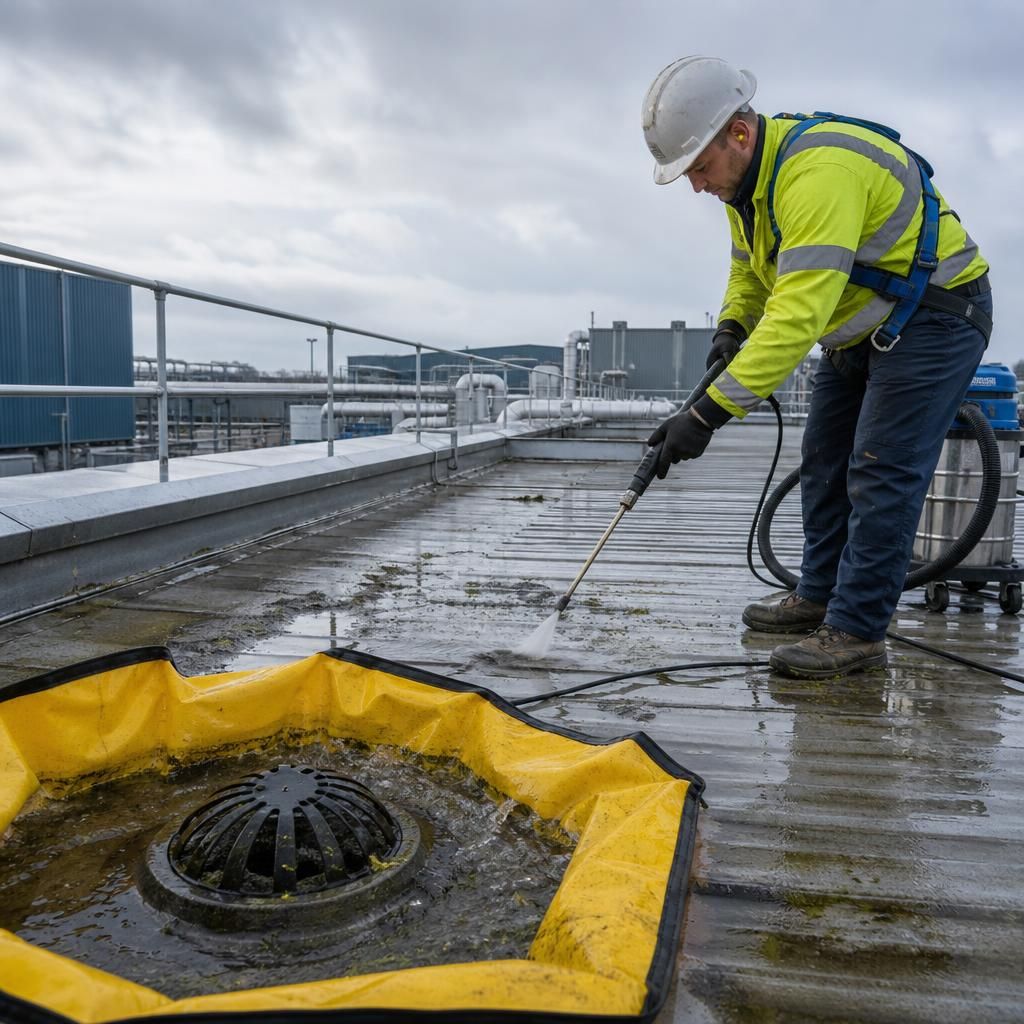
Controlling roof-cleaning runoff is one of the most important environmental safeguards. Wash water can carry silt, moss, bird fouling, oils, coating residues and cleaning chemicals into surface-water drains, which may discharge directly to rivers or other watercourses.
Before work starts, the contractor should identify nearby drains and protect them with suitable covers, bunding, collection mats or wet-vacuum recovery. The method statement should explain how contaminated water will be contained, treated, reused or removed lawfully. Simply directing dirty water into a drain, or diluting it with clean water, does not provide adequate pollution control.