
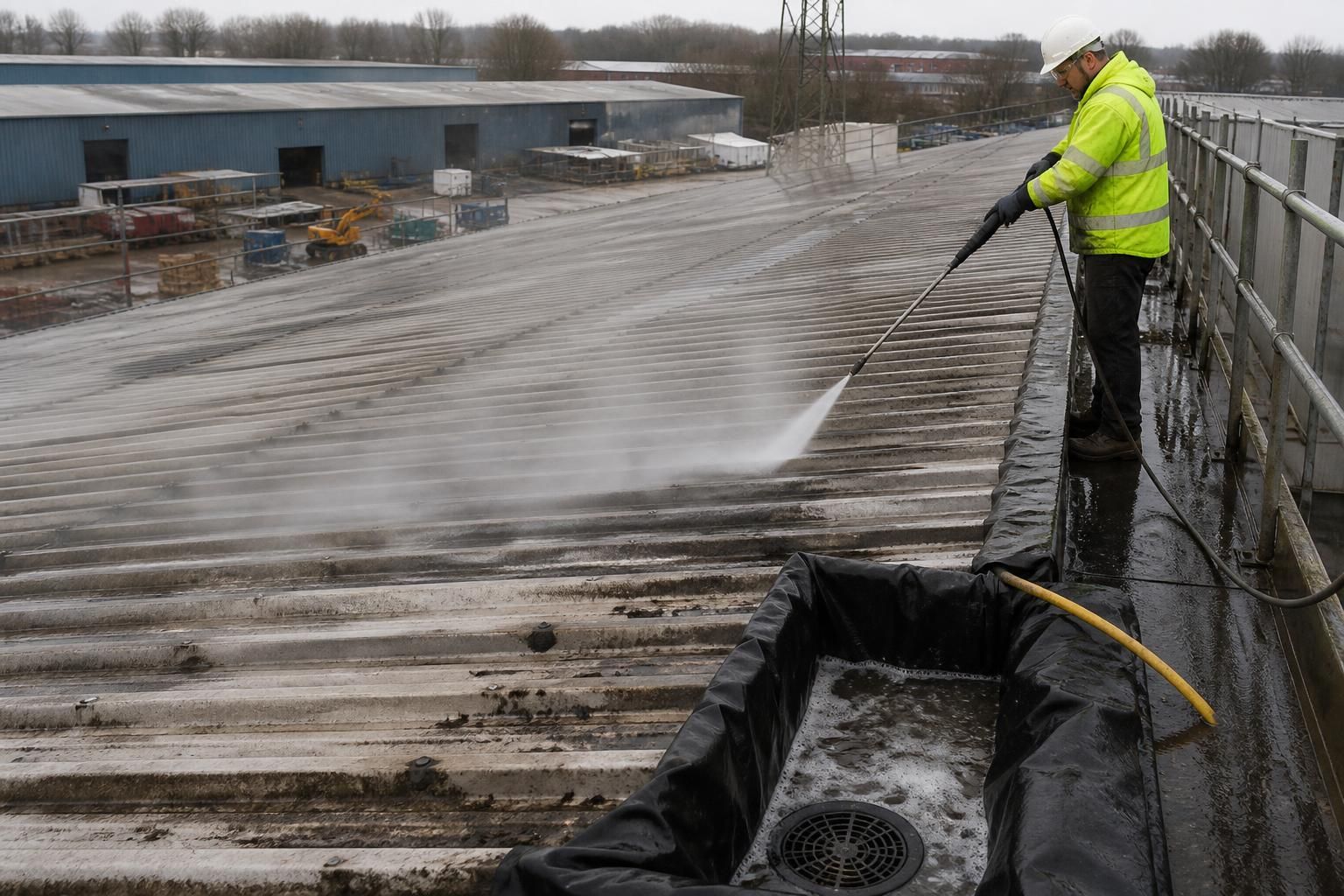
What environmental considerations should be kept in mind when conducting industrial roof cleaning?
Industrial roof cleaning should minimise water and energy use, prevent contaminated runoff entering drains or soil, and use cleaning products that are suitable for the roof material and the surrounding environment. Contractors should also contain and dispose of sludge, debris, wastewater and packaging responsibly, while protecting rainwater systems, nearby habitats and building occupants during the work.
Environmentally responsible industrial roof cleaning controls the use of water, chemicals and energy, prevents polluted runoff, and ensures that debris and wastewater are recovered and disposed of correctly. The method should be selected for the roof material and the level of soiling, with protection for rainwater systems, drainage, surrounding land, nearby watercourses, vegetation, wildlife and building occupants.
A suitable environmental plan should be agreed before work starts. This normally includes identifying roof outlets and drainage routes, checking whether the roof drains to surface water or foul drainage, assessing nearby watercourses and sensitive areas, and confirming how removed sludge, moss, coatings and packaging will be handled. The condition of the roof should also be considered, since excessive pressure or unsuitable chemicals can damage the membrane and create additional waste through premature repairs or replacement.
Important considerations include:
- Water consumption: Use the least amount of water that will achieve a proper clean. Low-pressure washing, controlled rinsing, steam cleaning or targeted application can reduce consumption compared with unrestricted high-pressure washing. Water should not be left running while equipment is idle, and reclaimed or captured water may be suitable for certain preliminary tasks where it does not create a contamination risk.
- Runoff and drainage: Dirty water can contain silt, organic matter, oils, metals, paint fragments, biocides or other residues. It must be prevented from entering surface-water drains, open ground or watercourses without appropriate treatment and permission. Drain covers, collection points, temporary bunding, vacuum recovery and filter systems can be used where appropriate. Rainwater outlets may need to be isolated during cleaning, but only after a safe alternative route for captured water has been established.
- Cleaning chemicals: Products should be selected for compatibility with the roof covering, insulation, sealants, fixings and surrounding materials. The least hazardous effective product is generally preferable. Safety data sheets and product instructions should be reviewed, dilution requirements followed, and chemicals kept away from unprotected drains and sensitive habitats. Uncontrolled use of biocides, solvents, acidic products or strong alkalis can harm vegetation, aquatic life and building materials.
- Roof-material protection: EPDM, fibreglass, coated metal, asbestos-containing materials and other roofing systems have different tolerances. A cleaning technique that is acceptable for one surface may strip coatings, open joints or weaken membranes on another. Avoiding damage is an environmental measure because it reduces remedial materials, repeat visits and the embodied impact of unnecessary replacement.
- Waste and sludge management: Moss, leaves, grit, failed coatings, contaminated silt and used absorbents should be collected rather than washed into drainage. Waste must be assessed, stored securely and transferred through an appropriate waste route. Hazardous or contaminated material may require additional controls, records and a suitably authorised disposal facility. Empty containers and packaging should also be segregated and recycled or disposed of responsibly where facilities permit.
- Energy and emissions: Equipment should be correctly sized and maintained so that pumps, generators, steam systems and access equipment operate efficiently. Where practical, use mains electricity rather than unnecessary generator use, avoid prolonged idling, and plan work to reduce repeat journeys. Access equipment should be selected according to the roof layout and task rather than using larger machinery than necessary.
- Weather conditions: Rain, strong wind, frost and very low temperatures can increase runoff, affect chemical performance and make containment less reliable. Cleaning should be postponed when weather could carry pollutants beyond the controlled work area. Wind conditions must also be considered when applying any treatment, particularly near neighbouring properties, roads, planting and watercourses.
- Protection of habitats and occupants: The work area should be checked for nesting birds, protected species, vegetation, ponds and other sensitive receptors. Dust, spray drift, odour and noise should be controlled, especially around occupied premises, food-handling areas and ventilation intakes. Where birds or other wildlife are present, the work may need to be adjusted or delayed in line with applicable wildlife protection requirements.
Containment is particularly important where the roof has accumulated heavy organic growth, industrial deposits, bird fouling, loose coatings or material from nearby construction work. A contractor should determine whether the waste is merely biodegradable debris or could contain hazardous substances. Visual inspection alone may not identify every contaminant, so the site history and the building’s previous use should be taken into account.
Disposal arrangements should be confirmed before cleaning begins. Wastewater should never be discharged to a drain simply because it appears clear, and permission may be required from the relevant drainage or water authority before trade effluent is released. If wastewater is taken off site, it should be transported and documented in accordance with applicable UK waste requirements. The contractor should be able to explain where recovered water and solid waste will go and provide waste documentation when required.
Good practice also involves measuring and recording the controls used. Useful records can include the roof material and condition, products applied, quantities of water or chemicals used, drainage protection measures, weather conditions, waste transfer information, and any incidents or corrective actions. A completion report with photographs can confirm that outlets were reinstated, collected debris was removed and no visible contamination was left on adjoining surfaces.
The most environmentally suitable approach is therefore not simply the method using the least water. It is the method that removes the required contamination with the lowest overall risk to the roof, drainage network, receiving environment and people. Before work starts, the cleaning specification should state the proposed technique, chemical controls, runoff arrangements, waste route and measures for dealing with unexpected contamination or changing weather.
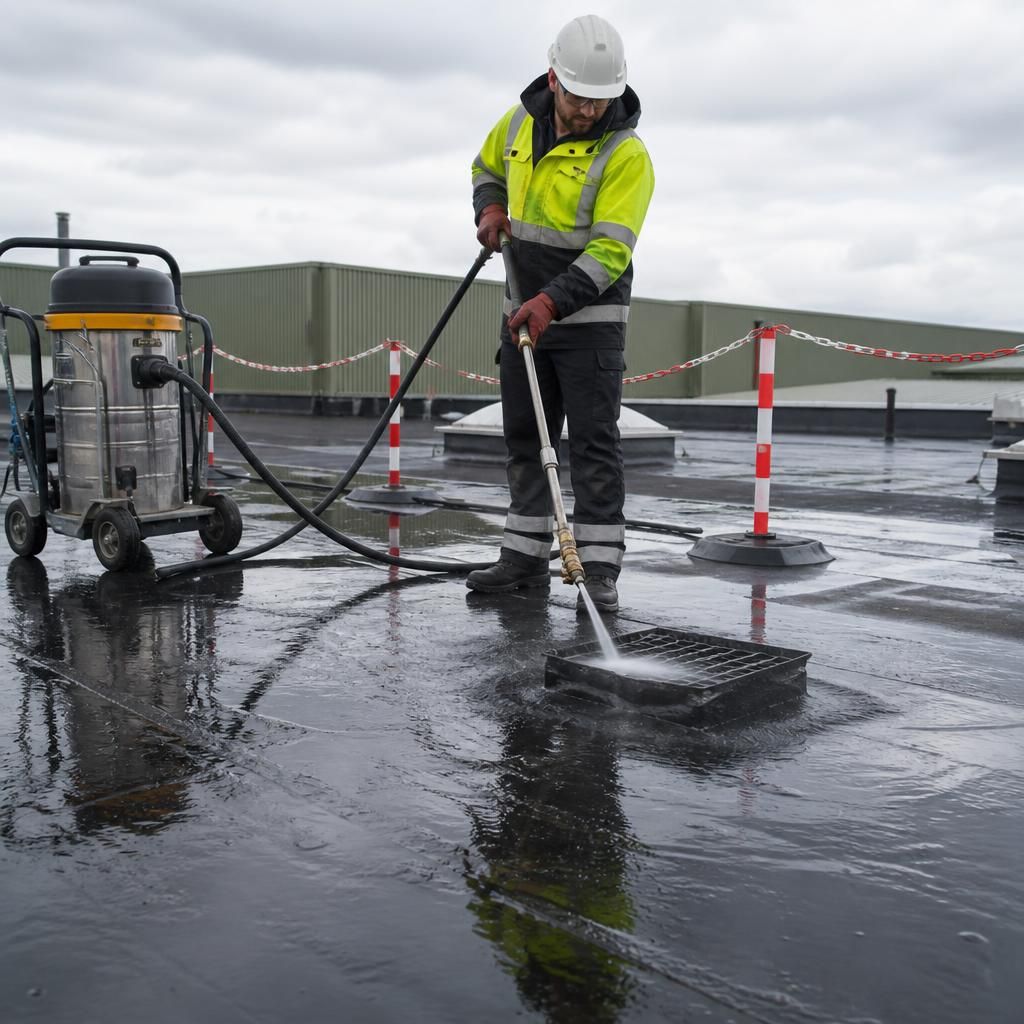
Runoff containment is a key environmental control during industrial roof cleaning because wastewater can carry silt, organic matter, oils, coating fragments and cleaning residues into drains, soil or watercourses. Before work begins, the contractor should identify every roof outlet and drainage route, isolate outlets where appropriate, and establish a safe method for collecting and recovering dirty water.
Suitable controls may include drain covers, temporary bunding, vacuum recovery and filtration. Collected sludge and wastewater should be assessed rather than discharged because clear-looking water may still contain contaminants. The contractor should confirm the approved disposal route in advance and retain waste documentation where required. Cleaning should also be postponed during heavy rain or strong winds if weather could overwhelm containment or spread spray and pollutants beyond the controlled area.
Discuss your industrial roof cleaning requirements
Discuss your industrial roof cleaning requirements with Encanto Exterior Cleaning, including water use, runoff containment, chemical selection and responsible waste disposal. We can help agree a suitable, environmentally controlled cleaning specification for your site.