
What are the specific cleaning techniques and equipment required for different types of industrial roofing?
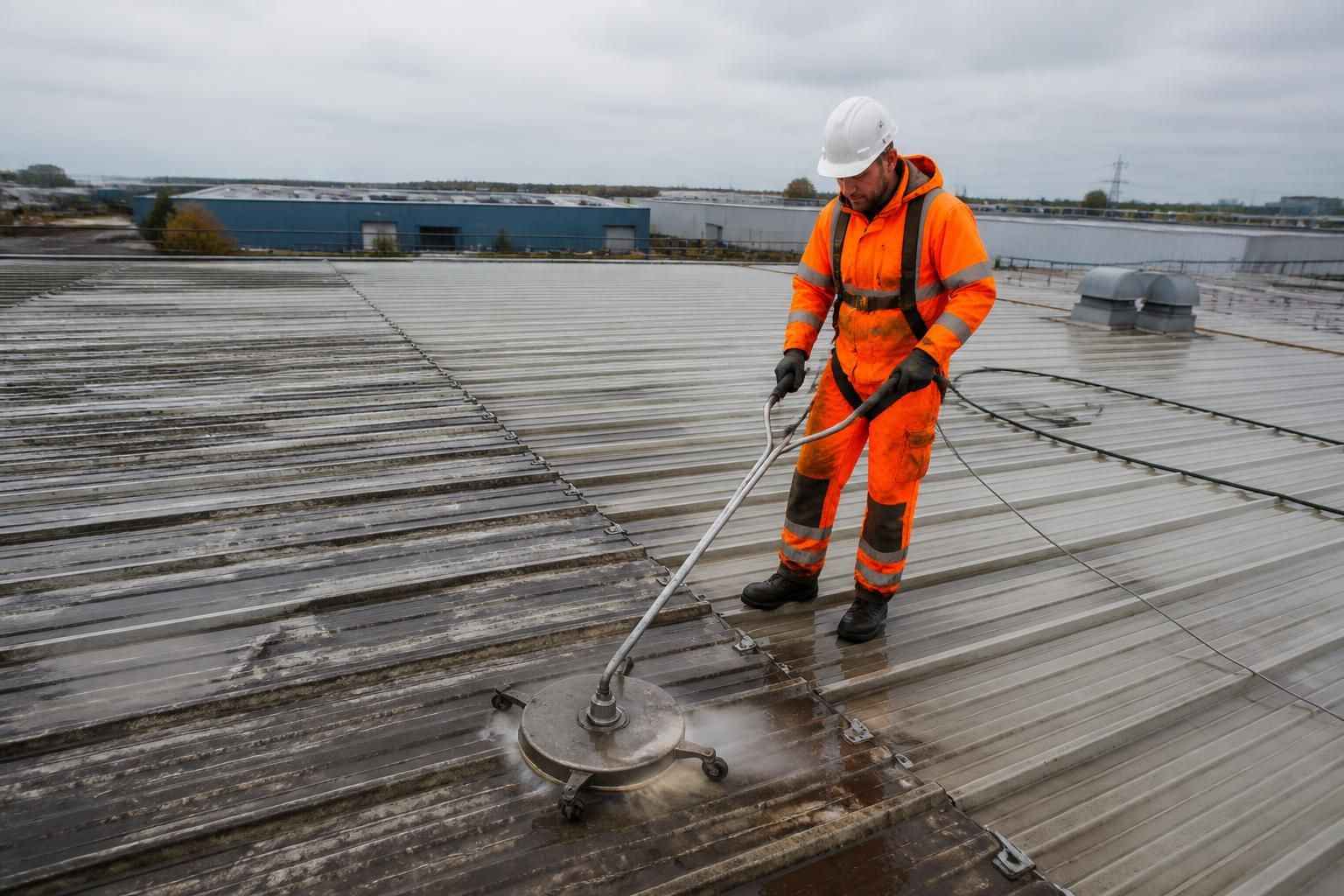
Different industrial roofs require tailored cleaning methods: low-pressure washing or steam cleaning is generally suitable for coated metal and many membrane roofs, while soft washing is used where delicate surfaces or protective coatings could be damaged. Equipment may include adjustable pressure washers, steam systems, soft brushes, appropriate cleaning solutions, access equipment and fall-protection systems, selected after inspecting the roof material, condition and drainage arrangements.
Industrial roof cleaning must be matched to the roof’s material, surface finish, condition and drainage design. Coated metal roofing commonly needs controlled low-pressure washing or steam cleaning; single-ply membranes usually require gentle rinsing, soft brushes and compatible detergents; fibreglass and tiled roofs need non-abrasive methods; and fragile or asbestos-containing sheets require specialist assessment before any cleaning takes place. The equipment is selected after inspecting the roof rather than applying one pressure setting or cleaning product to every surface.
Coated and profiled metal roofing
Steel and aluminium roofs with factory-applied coatings can collect dust, traffic film, algae, moss, bird fouling and atmospheric deposits. A controlled low-pressure wash is often suitable for general soiling, provided the coating is sound and the water is directed away from laps, flashings, vents and vulnerable seals. Steam cleaning can be useful where deposits are bonded to the surface or where a lower volume of water is preferred.
- Adjustable pressure-washing equipment with suitable flow control
- Wide-angle fan jets rather than aggressive pinpoint nozzles
- Steam cleaning equipment for stubborn deposits and sensitive coated finishes
- Soft brushes or non-abrasive pads for areas requiring agitation
- Material-compatible detergents or biocidal treatments where biological growth is present
- Low-level or telescopic access equipment where practical, reducing foot traffic on the roof
Rotary surface cleaners can be appropriate on robust, level sections, but they must be used cautiously around fasteners, seams, gutters and damaged coating. Abrasive cleaning, excessive pressure and harsh chemicals can remove the protective finish, expose the substrate and accelerate corrosion. Rusted fixings, open laps, failed sealant and damaged coating should be recorded during the clean rather than concealed by washing.
Single-ply membrane roofs
EPDM, PVC and other single-ply systems are more vulnerable to cuts, punctures, stretching and chemical incompatibility than many metal roofs. Cleaning is normally carried out using low-pressure rinsing, soft-bristle brushes and a detergent approved for the particular membrane. Steam may be considered in controlled conditions, but the temperature, dwell time and proximity of the nozzle must be managed to avoid softening, distorting or weakening the membrane and its seams.
Cleaning teams should avoid dragging hoses, equipment or tools across the surface. Stiff wire brushes, abrasive pads, solvent-based products and untested petroleum-based chemicals are unsuitable. A small test area should be checked for colour change, tackiness, swelling, surface marking or loss of finish before the wider clean begins. Particular care is needed around perimeter details, outlets, upstands, walkway pads and bonded joints.
EPDM and other rubber roofing
EPDM roofs generally respond best to gentle, even cleaning rather than forceful pressure. Loose debris should be removed first, followed by a compatible cleaning solution and soft agitation. Rinsing should be controlled so that water does not pool around seams or enter vulnerable detailing. Some roof treatments and sealants can be affected by petroleum distillates, strong solvents or unsuitable disinfectants, so the product’s technical information and the roof manufacturer’s guidance should be checked before use.
Fibreglass and GRP roofing
Fibreglass, or GRP, roofing has a resin-rich surface that can be marked by aggressive nozzles and abrasive tools. A low-pressure wash, soft brush and compatible detergent are usually preferable. Steam cleaning may be used for localised deposits when carefully controlled, but heat must not be concentrated on cracked resin, exposed matting, failed trims or deteriorated joints. Any areas showing crazing, delamination, exposed fibres or movement should be assessed before cleaning.
Rooflights and translucent panels
Polycarbonate, acrylic and other translucent rooflights require particularly gentle treatment because they can scratch, craze, become brittle or lose light transmission. Use low-pressure water, a soft brush and a non-abrasive product confirmed as compatible with the panel. Avoid walking directly on rooflights, placing ladders on them or directing high-pressure water at their edges and fixings. Where rooflights are aged or opaque, cleaning may reveal existing deterioration rather than restore their original condition.
Concrete, clay and fibre-cement tiles
Concrete and clay tiles can often be cleaned with controlled low-pressure washing and soft brushing, but the method must account for cracked tiles, loose bedding, porous surfaces and fragile ridge or verge details. High-pressure cleaning can strip surface material, force water beneath tiles and dislodge mortar. Moss should be removed without levering against the tile, and gutters should be cleared so loosened growth does not obstruct outlets.
Fibre-cement roofing needs additional caution. Older sheets may contain asbestos, and their condition cannot be confirmed safely from appearance alone. An asbestos survey or appropriate material assessment should be completed where relevant. If asbestos is suspected, the cleaning method must prevent fibre release: aggressive pressure washing, dry brushing and mechanical abrasion are not suitable. Work should be planned and carried out by appropriately trained and competent personnel in line with current UK health and safety requirements.
Soft washing and biological growth
Soft washing uses a low-pressure application of a compatible cleaning solution, followed by controlled rinsing or a suitable treatment process. It is useful where moss, algae, lichen or other biological growth is present and the roof surface could be damaged by mechanical force. The solution must be selected for the roof material and applied without allowing it to enter occupied areas, ventilation systems, watercourses or sensitive landscaping.
Biocidal products should be used only as directed, with suitable controls for storage, application, runoff and disposal. A treatment is not a substitute for removing heavy deposits, repairing defective drainage or addressing the cause of persistent dampness. Where required, the cleaning plan should include temporary protection for downpipes and a method for collecting, filtering or safely disposing of contaminated wash water.
Access and safety equipment
Roof cleaning equipment is only effective when it can be used without exposing workers or the building to unnecessary risk. The access arrangement may include mobile elevating work platforms, scaffold towers, edge protection, roof ladders, crawl boards, temporary walkways and telescopic cleaning systems. The correct choice depends on roof pitch, height, loading capacity, fragile areas, obstructions and the need to work near vehicle routes or operational premises.
- Harnesses, lanyards and suitable anchor systems where a properly designed fall-arrest or restraint system is required
- Guardrails, toe boards and temporary edge protection where collective protection is practicable
- Roof ladders, crawling boards and designated walkways to distribute loads
- Barriers, signage and exclusion zones below the work area
- Waterproof electrical connections, residual-current protection and equipment suitable for wet working conditions
- Personal protective equipment, including eye protection, gloves, suitable footwear and respiratory protection where the risk assessment requires it
Before work starts, the roof should be inspected for fragile surfaces, unprotected edges, skylights, overhead services, unstable plant, poor weather conditions and areas that cannot safely support workers or equipment. A method statement and risk assessment should define the cleaning sequence, access route, emergency arrangements, water controls and protection for people below.
How the equipment is selected
- Identify the roof construction, coatings, membranes, rooflights, flashings and previous repairs.
- Assess the condition, including corrosion, cracking, delamination, loose coverings, failed sealants and blocked drainage.
- Test the proposed detergent, pressure and temperature on an inconspicuous area.
- Choose the least aggressive method that will remove the identified contamination effectively.
- Protect outlets, sensitive plant, façades, vehicles, entrances and surrounding surfaces from overspray and runoff.
- Clean in manageable sections, checking the surface and drainage as work progresses.
- Complete a final inspection and report defects that require repair or further investigation.
Industrial roof cleaning should therefore be treated as a material-specific maintenance operation, not simply a pressure-washing task. Matching the technique, chemical treatment, access system and water controls to the roof type helps prevent coating failure, membrane damage, contamination of drainage systems and avoidable safety risks while producing a cleanable, maintainable surface.
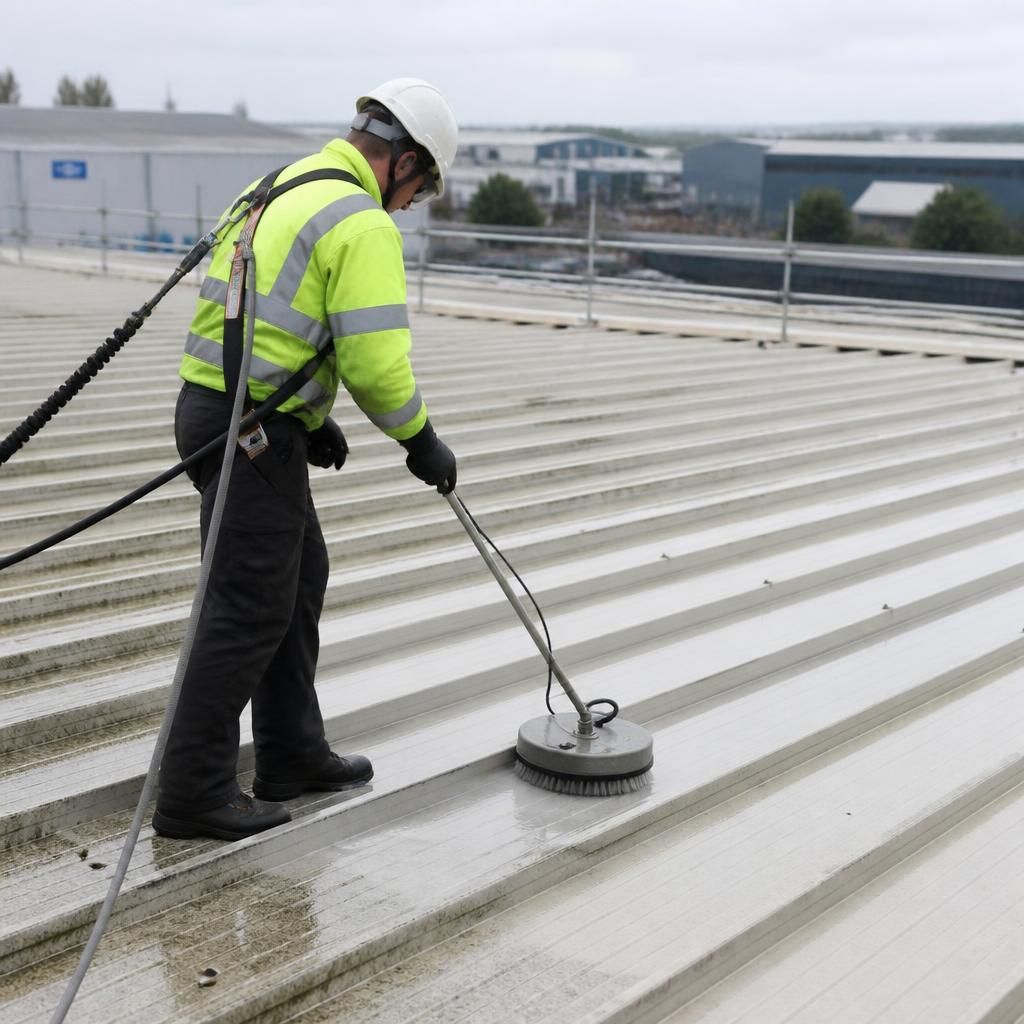
Industrial roof cleaning equipment must be matched to the roof material and its condition. Coated metal and sound tiled roofs may tolerate controlled low-pressure washing, while EPDM, fibreglass, rooflights and ageing surfaces generally require soft brushes, compatible detergents and gentle rinsing to prevent scratching, distortion or loss of protective finish.
Access and safety equipment are equally important. Roof ladders, crawl boards, temporary walkways, edge protection or suitable access platforms help prevent damage to fragile areas and reduce fall risks. Before cleaning, the proposed pressure, temperature and cleaning solution should be tested in an inconspicuous area, with outlets, plant, façades and drainage protected from runoff.