
What are the main factors to consider when choosing an industrial roof cleaning service?
When choosing an industrial roof cleaning service, assess the contractor’s relevant experience, health and safety procedures, insurance, cleaning methods, access equipment, environmental controls and ability to work around your operations. Also compare the proposed scope, roof-specific approach, inspection and reporting process, maintenance advice and overall cost rather than selecting on price alone.
Choosing an industrial roof cleaning service should be based on the contractor’s relevant experience, safety controls, roof-specific cleaning methods, insurance, environmental procedures, access arrangements and the clarity of the proposed scope. Price is important, but it should be assessed alongside the likely effect on the roof, building operations, compliance requirements and the durability of the result.
Relevant industrial experience
Industrial roof cleaning is different from domestic roof cleaning. Large roofs may include fragile rooflights, composite panels, profiled metal sheeting, membranes, plant, drainage systems and areas that are difficult to access. Choose a contractor that regularly works on commercial and industrial premises and can demonstrate experience with roofs similar to yours.
Ask whether the contractor understands the requirements of working around occupied buildings, manufacturing processes, stored goods, vehicles, electrical installations and other site activities. Experience should include planning the work around access restrictions, weather conditions, delivery schedules and the need to keep parts of the premises operational.
Inspection and a roof-specific method
A reliable service should begin with an inspection rather than recommending the same treatment for every roof. The assessment should identify the roof covering, surface contamination, biological growth, staining, corrosion, blocked drainage, fragile areas, rooflights, joints, penetrations and any visible defects.
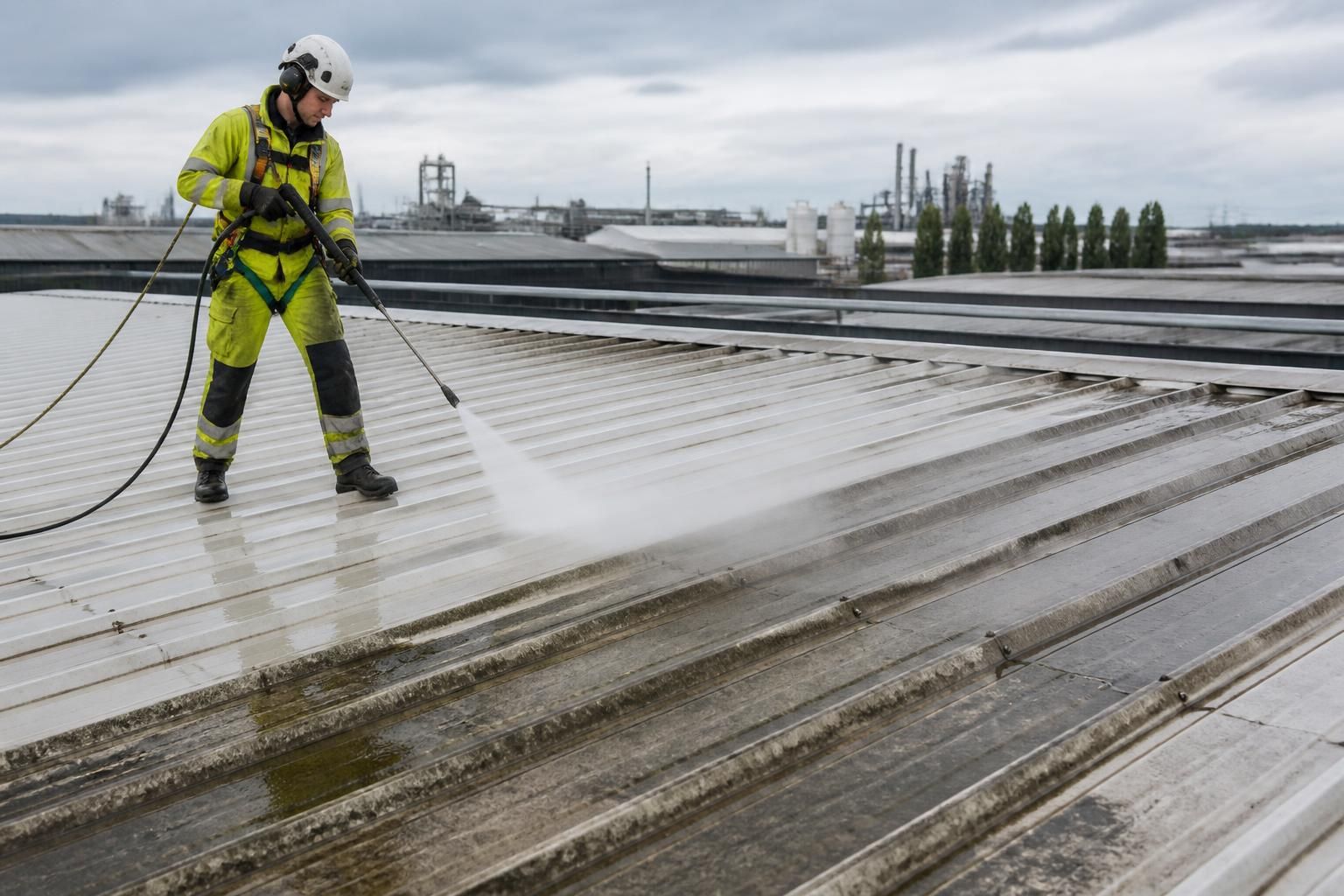
The proposed method should reflect the roof material and its condition. Depending on the surface, suitable options may include controlled low-pressure washing, steam cleaning, soft washing or carefully selected manual treatments. Excessive pressure can damage coatings, force water beneath laps or seals, and break fragile components. A competent contractor should explain why a particular method is appropriate and identify any areas that should not be treated.
Cleaning should not be presented as a repair service unless repairs are specifically included and the contractor is suitably qualified to carry them out. The inspection should distinguish between removable dirt or organic growth and underlying problems such as coating failure, corrosion, leaks or damaged sheets.
Health and safety arrangements
Roof cleaning involves work at height, wet surfaces, fragile materials, access equipment, water management and, in some cases, chemical products. Before work starts, request information about the contractor’s risk assessment and method statement, site induction arrangements, supervision and emergency procedures.
The contractor should explain how workers will reach and move around the roof safely, how fragile roof areas and rooflights will be identified and protected, and how falls will be prevented. Suitable controls may include edge protection, mobile access equipment, work-restraint or fall-arrest systems, exclusion zones and safe methods for handling hoses and equipment. The exact controls should be determined by a site-specific assessment rather than assumed in advance.
Check that access equipment is suitable for the ground conditions, working height and reach required. Equipment should be properly maintained, operated by competent personnel and used in accordance with the relevant instructions. Where mobile elevating work platforms or other specialist equipment are required, the contractor should be able to provide evidence of appropriate operator competence.
Qualifications, insurance and compliance
Ask for evidence of public liability insurance and, where relevant, employers’ liability cover, together with any qualifications or training relevant to the proposed work. Depending on the project, this may include work-at-height training, access equipment training, asbestos awareness, safe chemical handling and industry-recognised health and safety training.
Membership of a trade or safety scheme can support a contractor’s credibility, but it should not replace checking the actual documents, procedures and experience relevant to your site. If the building or roof may contain asbestos, the contractor should understand the limits of their work, avoid disturbing suspected materials and follow the appropriate arrangements for identification and specialist advice.
Protection of the building and site
Industrial cleaning can affect walls, windows, doors, cladding, roof-mounted equipment, landscaping, vehicles and stored materials. The quotation or method statement should explain how these areas will be protected. It should also cover the control of overspray, splashing, run-off, debris and water entering the building.
Drainage points, gutters and outlets should be considered before cleaning begins. Dislodged moss, dirt and other deposits can block drainage systems if they are not collected or managed. Confirm whether gutter and outlet clearance, debris removal and final rinsing are included, and how waste will be contained and disposed of.
Where the site contains sensitive operations, the contractor should discuss noise, access routes, water supply, cleaning times and any restrictions on detergents or run-off. A suitable service can coordinate with the site manager so that the work does not create an avoidable risk to employees, visitors, production or neighbouring premises.
Environmental controls
Environmental procedures are particularly important on large roofs because cleaning can generate substantial water run-off and contaminated debris. Ask how the contractor will prevent cleaning products, dirt and organic material from entering surface-water drains, watercourses or surrounding land.
The contractor should use products and quantities appropriate to the roof and contamination, avoid unnecessary chemical application and follow the product manufacturer’s instructions. Where water recovery or controlled collection is required, the method should be agreed before work starts. The quotation should make clear who is responsible for waste handling and whether disposal is included.
Scope, reporting and aftercare
Compare written quotations that describe the same work. The scope should state the roof areas to be cleaned, the proposed method, preparation, access equipment, protection measures, treatment of gutters and rooflights, waste removal, final inspection and any exclusions. It should also clarify whether remedial work, stain removal, biocide treatment or follow-up visits are included.
Before-and-after photographs, inspection notes and a completion report can provide useful evidence of what was treated and identify defects that require separate attention. A good report should not imply that cleaning guarantees a watertight roof. Instead, it should record observable conditions and provide practical advice on drainage, vegetation, surface deterioration and future maintenance.
Cost and long-term value
The lowest quotation may not represent the lowest overall cost. A cheaper method may omit safe access, waste management, protection of building components or adequate preparation. Conversely, an expensive proposal is not automatically better. Compare the method, labour, equipment, insurance, safety controls, environmental measures, reporting and included aftercare.
Ask whether the contractor has identified potential additional costs, such as restricted access, heavily contaminated areas, fragile roof sections, specialist equipment, water recovery or unexpected defects. Clear exclusions reduce the risk of disagreement once work has started.
Finally, consider whether the contractor can support a planned maintenance approach. Regular inspections and cleaning at an appropriate interval can help control organic growth, protect drainage and make emerging roof defects easier to identify. The correct interval depends on the roof material, surrounding trees and pollution, building use, drainage and local conditions. A service that combines safe cleaning with accurate reporting and realistic maintenance advice is generally more useful than a one-off treatment selected on price alone.
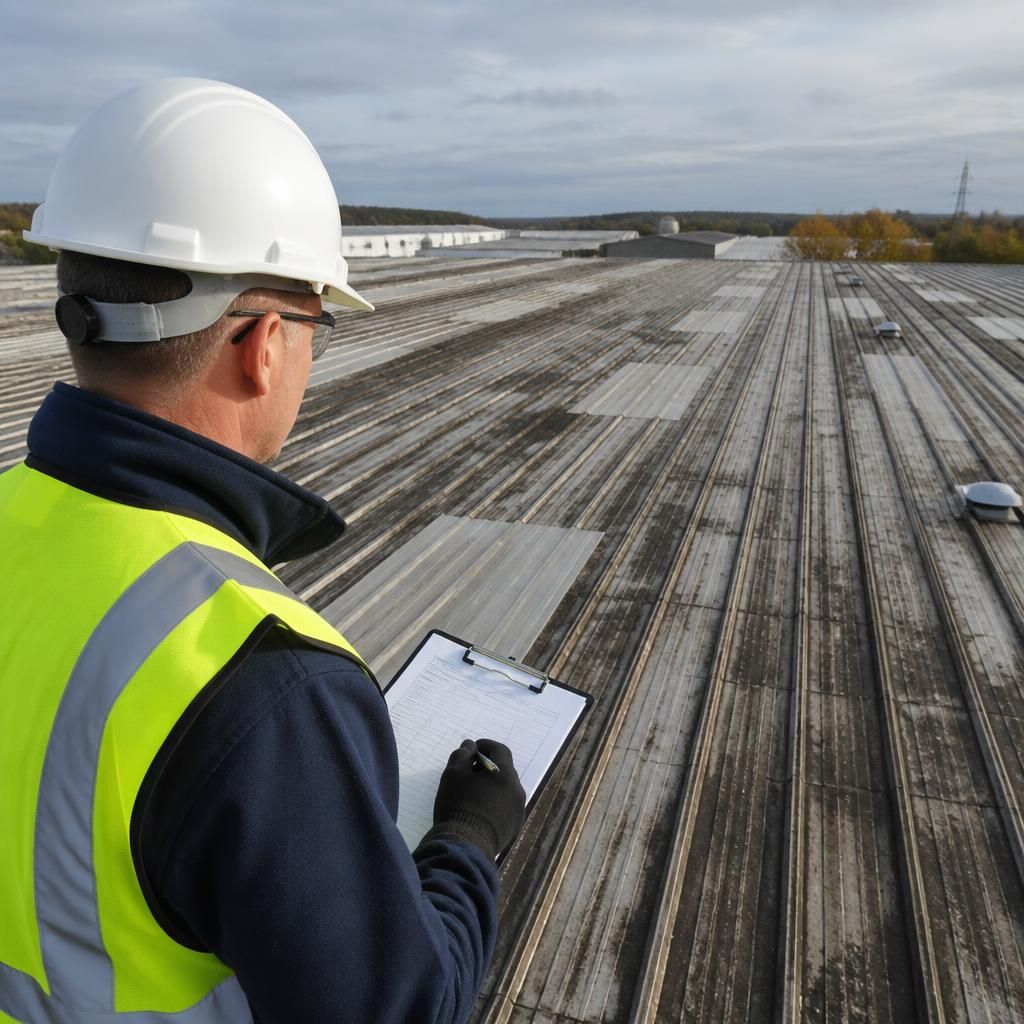
The most important factor when choosing an industrial roof cleaning service is whether the proposed method is suitable for the specific roof covering and its condition. A competent contractor should inspect the roof before quoting, identify fragile areas, rooflights, joints, drainage points, corrosion and existing defects, then explain how the cleaning process will avoid unnecessary damage.
Controlled low-pressure washing, steam cleaning, soft washing or manual treatment may be appropriate depending on the surface and contamination. Excessive pressure can damage coatings, force water beneath laps and seals, or break fragile components. Ask for a written scope confirming the cleaning method, access equipment, protection of nearby areas, run-off control and any exclusions. Before-and-after photographs and a completion report can also help distinguish cleaned surfaces from defects that require separate repair or monitoring.