
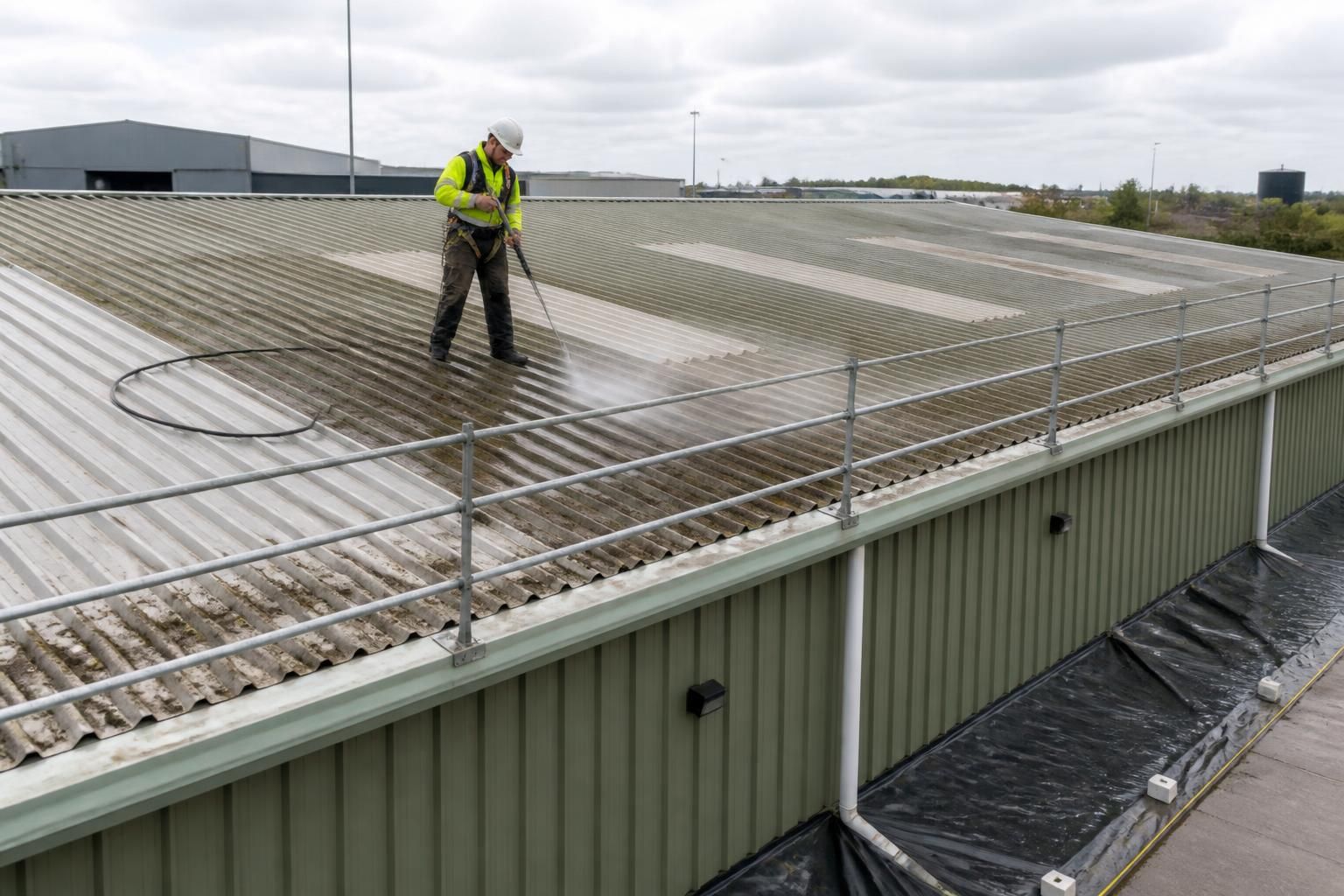
What safety measures do you implement to protect buildings and landscapes during the roof cleaning process?
Before roof cleaning, we assess the roof, surrounding structures, access points and ground conditions, then use suitable access equipment, exclusion zones and controlled pressure or steam settings to protect people and property. We shield vulnerable surfaces, manage runoff and cleaning solutions, protect plants and drainage systems, and inspect the area afterwards to confirm that buildings, landscapes and site users have not been put at risk.
We protect buildings, landscapes and people during roof cleaning by planning the work around the condition of the roof, the surrounding site and the cleaning method required. Before work starts, we complete a site assessment, select suitable access equipment, establish controlled work areas and set pressure, steam or biowash applications to levels appropriate for the roofing material. We also control runoff, shield vulnerable surfaces and inspect the site after cleaning.
Pre-cleaning inspection and method planning
Every roof is assessed before cleaning rather than treated as a standard surface. We consider the roof covering, its age and condition, existing repairs, flashings, rooflights, gutters, downpipes, vents and areas of suspected weakness. We also inspect access routes, ground conditions, nearby buildings, glazing, vehicles, plant, pedestrian areas and drainage arrangements.
This assessment informs the method statement and risk assessment for the project. Where the roof, substrate or surrounding area is unsuitable for a particular process, we adjust the approach. For example, a delicate or weathered surface may require a gentler treatment instead of high-pressure cleaning, while a fragile roof may need additional access controls or specialist equipment.
Safe access and work-at-height controls
Roof cleaning involves work at height, so access is planned to avoid unnecessary movement across vulnerable areas. Depending on the site, this may involve scaffold, mobile elevated work platforms, towers, roof ladders or other suitable access equipment. Equipment is selected according to the roof profile, building height, ground conditions and available working space.
Operatives use appropriate personal protective equipment and follow site-specific procedures for work at height. Access points are kept clear, equipment is positioned on stable ground and areas beneath the work are controlled. We do not rely on the roof covering alone to provide a safe working platform, particularly where tiles, slates, rooflights or aged materials may be fragile.
Exclusion zones and protection for people
We establish exclusion zones below and around the cleaning area to prevent people from entering locations where water, debris, tools or dislodged contaminants could fall. On commercial and industrial sites, this may require coordination with building managers, tenants, contractors, delivery teams and members of the public.
Where necessary, we use barriers, warning signs, banksmen and controlled access arrangements. Pedestrian routes, entrances, fire exits and vehicle movements are considered before equipment or hoses are placed. We also agree suitable working times where this helps reduce interaction with normal site operations.
Controlled pressure, steam and chemical application
Cleaning settings are matched to the material and its condition. Excessive pressure can drive water beneath tiles, damage pointing, strip protective finishes or loosen already weakened materials. We therefore use controlled pressure and suitable spray patterns, keeping the lance at an appropriate distance and avoiding concentrated application to vulnerable details.
Steam cleaning is controlled to manage heat, moisture and surface contact. Biowash or other cleaning solutions are selected and applied in accordance with the product requirements and the roof assessment. Operatives use the relevant safety data, protective equipment and handling procedures, while preventing spray drift towards people, vehicles, ventilation openings and sensitive surfaces.
Protecting façades, windows and building details
Before cleaning, we identify surfaces that could be affected by water, detergents or falling debris. Windows, doors, rendered areas, painted surfaces, signage, external lighting, air-conditioning equipment and other vulnerable features may be covered, screened or otherwise protected. Openings and ventilation points are considered so that water or solution does not enter the building.
Gutters and downpipes are checked as part of the preparation. Loose roof debris can obstruct drainage, while cleaning residues can be carried into gullies or internal systems. We use suitable collection, filtration or temporary protection measures where required and remove accumulated debris rather than allowing it to spread across the property.
Landscape and ground-surface protection
Landscaping is protected by identifying planting beds, lawns, trees, ornamental features, water features, paving, resin-bound surfaces and other sensitive areas before work begins. Plants may be covered or shielded for the duration of the work, with care taken to avoid trapping heat or restricting ventilation for longer than necessary.
We manage hoses and access equipment to reduce damage to lawns, borders and hard landscaping. Where cleaning water or treatment solution could reach planted areas, we use controlled application and appropriate runoff measures. We also prevent debris from accumulating in soil, beds, car parks and pedestrian routes, and clear affected surfaces as part of the completion process.
Runoff, drainage and environmental controls
Runoff is planned before cleaning starts. We identify where water will travel, protect vulnerable drains and use containment or diversion measures where needed. Cleaning residues are not deliberately directed into watercourses, planting areas or drainage systems without suitable controls. If the site has sensitive drainage or regulatory requirements, these are included in the project planning.
We use water and cleaning products responsibly, avoid unnecessary overspray and remove solid waste from the roof and surrounding areas. The exact controls depend on the roof material, the cleaning product, the weather and the drainage layout.
Weather, electrical and site-condition checks
Weather conditions are monitored because strong winds, rain, ice, poor visibility and extreme temperatures can increase the risk of falls, overspray, runoff or unstable access equipment. Work may be paused or rescheduled if conditions make the planned controls ineffective.
We also consider external electrical equipment, overhead services, lighting, solar panels and other building systems. These features are isolated, covered or kept clear where appropriate, and hoses and cables are routed to reduce trip hazards and contact with sensitive equipment.
Final inspection and handover
After cleaning, we inspect the roof, gutters, façades, access routes and surrounding landscape. We remove loose debris, check that drainage paths are clear, take down protective coverings and confirm that barriers can be removed safely. Any condition that becomes apparent during cleaning, such as loose tiles or defective pointing, is reported rather than concealed.
This combination of planned access, controlled cleaning, surface protection, runoff management and post-work inspection helps prevent avoidable damage while maintaining a safe working environment for occupants, contractors and the public.
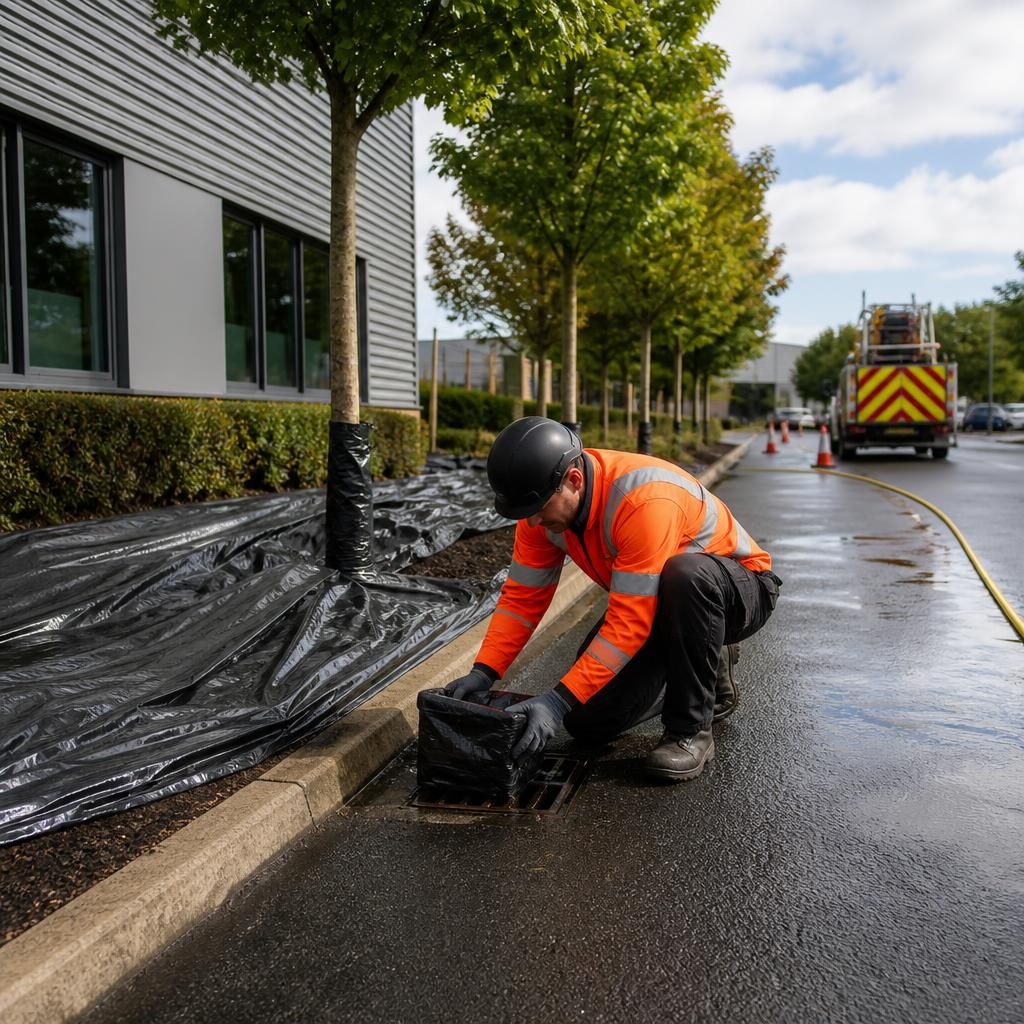
Runoff control is a key safety measure during roof cleaning because water, treatment residues and loosened debris can affect façades, drains, planting and hard surfaces. Before work begins, we identify where water will flow and put suitable controls in place to prevent it reaching sensitive areas or entering drainage systems without proper management.
We shield planting beds, lawns, paving, vehicles and building features where necessary, while using controlled application methods to limit overspray. Gutters, downpipes and gullies are checked and protected so that debris does not cause blockages. Hoses and access equipment are positioned carefully to avoid damaging landscapes, creating trip hazards or obstructing entrances and pedestrian routes.
After cleaning, we remove collected debris, check drainage paths and inspect the surrounding area before the site is handed back. These measures help protect the building and landscape while keeping the work area safe for occupants, contractors and members of the public.
Arrange a Site-Specific Roof Cleaning Safety Assessment
Contact Encanto Exterior Cleaning to arrange a site-specific roof cleaning safety assessment for your building, access arrangements and surrounding landscape. We will review the roof condition, cleaning method, runoff controls and site risks before work begins.