
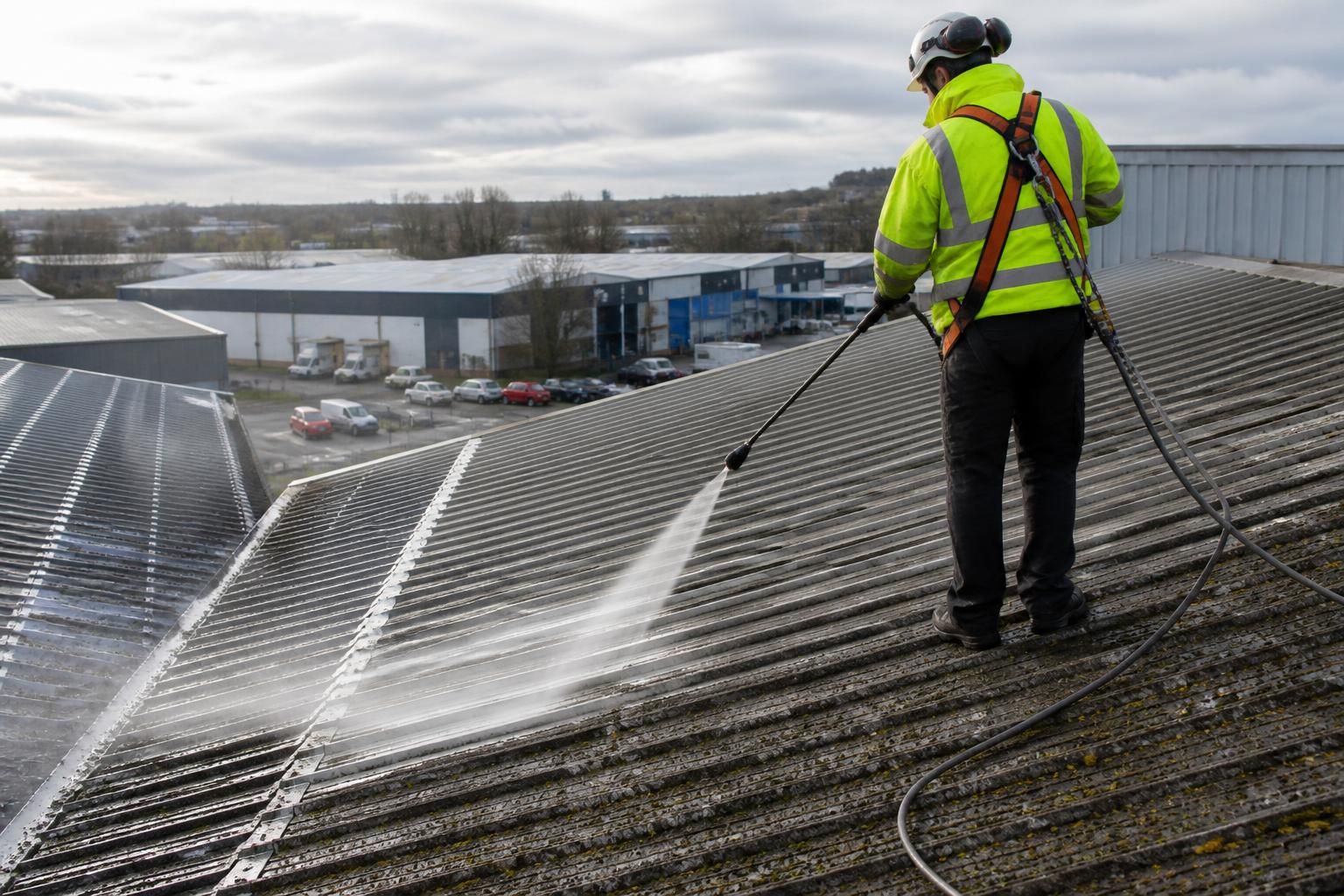
What factors influence the cost of professional roof cleaning services?
The cost of professional roof cleaning services is mainly influenced by the roof’s size, material, condition, accessibility and the cleaning method required. Additional factors can include access equipment, safety measures, waste or water management, stain and moss removal, and whether the work forms part of a one-off project or planned maintenance programme.
The cost of professional roof cleaning services is determined by the scope and complexity of the work rather than roof area alone. Key factors include the roof’s size, covering and condition, the level of moss or staining, access requirements, the cleaning method, health and safety controls, environmental measures, and whether the work is a one-off clean or part of a planned maintenance programme.
Roof size and layout
Larger roofs generally require more labour, water, cleaning solution and operating time. However, two roofs with a similar surface area can have different prices if one has multiple levels, roof sections, plant enclosures, skylights, fragile areas or complex drainage. The roof’s pitch and shape also affect how safely operatives can move around and which equipment can be used.
Roofing material and construction
The covering must be identified before a method and price can be recommended. Concrete and clay tiles, slate, metal cladding, built-up felt systems and single-ply membranes have different tolerances for pressure, heat, moisture and chemical treatment. Some surfaces require a gentle biowash or soft-washing approach, while others may allow controlled pressure washing. Fragile, aged or coated materials need additional care, which can increase preparation and cleaning time.
The condition of the roof is also relevant. Loose tiles, failed pointing, exposed fixings, damaged membranes and areas of corrosion may require a revised method or coordination with a roofing contractor before cleaning begins. Professional cleaning should not be used to conceal defects or substitute for roof repairs.
Moss, algae, lichen and staining
Light surface dirt is usually quicker to remove than established moss, lichen, algae, bird fouling, pollution deposits or organic growth embedded in the surface. Heavy growth may need scraping, treatment, controlled rinsing and a further inspection. Additional measures may be required to prevent dislodged material entering gutters, downpipes or surface water systems. The extent and depth of contamination therefore influence both labour and waste-management costs.
Access and working at height
Safe access is a significant part of commercial roof cleaning costs. A site may need mobile elevating work platforms, scaffolding, roof access systems, edge protection, safety lines or specialist equipment. The choice depends on building height, ground conditions, nearby structures, loading restrictions and the distance between the access point and the roof.
Restricted yards, busy car parks, narrow service roads, overhead obstructions and public areas can make equipment setup more involved. Where machinery cannot be positioned close to the building, additional handling and setup time may be needed. Access arrangements should be assessed during the site survey rather than assumed from photographs alone.
Cleaning method and equipment
Prices vary according to whether the work involves low-pressure washing, steam cleaning, biocide or biowash treatment, manual removal, controlled rinsing, or a combination of methods. The correct approach is selected for the roof covering, contamination and surrounding environment. Steam cleaning can be appropriate for some deposits but requires suitable equipment and careful control. Chemical treatments may require dwell time, protective measures and follow-up checks.
Equipment costs can also include pumps, water-fed systems, generators, recovery systems and access machinery. A method that appears quicker may not be suitable if it risks damaging the covering, forcing water beneath laps or disturbing coatings. The lowest initial price is not necessarily the most economical option if inappropriate cleaning causes repairs or premature deterioration.
Water, runoff and waste management
Commercial sites often require greater control of water, sediment and cleaning residues than domestic properties. The quotation may account for water supply, collection or recovery, protection of drains, filtration, responsible discharge and removal of moss or other waste. Additional controls may be necessary where the building is near public areas, landscaping, watercourses, food-handling operations or sensitive equipment.
Where the site has limited water access, water may need to be brought in or a low-water method considered. Similarly, blocked or inaccessible gutters can increase the time needed to clear and manage debris safely.
Protection of surrounding areas
Windows, doors, vents, electrical equipment, signage, vehicles, planted areas, façades and neighbouring properties may need to be protected before cleaning starts. This can involve sheeting, temporary covers, exclusion zones, controlled runoff and careful rinsing. The amount of protection required depends on the building’s use and the proximity of vulnerable surfaces or equipment.
For operational premises, the timing of the work may also affect the cost. Cleaning outside normal working hours, working in separate sections or coordinating with site teams can require additional planning and supervision, particularly where the roof is above entrances, loading bays or active pedestrian routes.
Health and safety requirements
Roof cleaning requires a documented assessment of work-at-height risks, fragile surfaces, weather conditions, falling materials, chemical handling and public protection. Commercial and industrial sites may also require RAMS, permits, inductions, traffic management, coordination with other contractors and compliance with the client’s site procedures. These controls are essential project requirements, not optional extras, and their extent can affect the overall quotation.
Weather can influence the programme as well. High winds, heavy rain, frost or unsafe roof conditions may require work to be postponed. A responsible contractor should allow for safe working conditions rather than continuing where access or equipment cannot be used safely.
Site location and logistics
Travel, parking, delivery restrictions, equipment transport and site setup can affect the cost, particularly for projects outside the West Midlands or at sites with difficult access. Large commercial premises may require staged deliveries, multiple setup areas or coordination with security and facilities teams. These requirements are normally reviewed as part of the site survey.
One-off cleaning or planned maintenance
A roof requiring heavy restoration cleaning may need more preparation than a roof receiving routine maintenance. Planned inspections and periodic treatments can help control organic growth and identify drainage or covering defects earlier. The price of a maintenance programme depends on the agreed frequency, inspection scope, treatment requirements and reporting, but it can provide more predictable budgeting than arranging reactive work after substantial build-up has occurred.
What is needed for an accurate quotation?
An accurate price normally requires a site survey or sufficiently detailed information about the roof and its surroundings. Useful information includes:
- roof type, covering and approximate area;
- building height, pitch and access points;
- the type and extent of moss, algae, lichen, dirt or staining;
- known damage, fragile areas, rooflights or restricted zones;
- nearby landscaping, drainage systems, vehicles and public access;
- site operating hours, security requirements and access restrictions; and
- any client requirements for risk assessments, method statements, waste records or completion reports.
Photographs can help with an initial assessment, but they may not show roof condition, safe access routes or runoff risks. A site visit allows the cleaning method, equipment, protection measures and programme to be assessed together. The final quotation should make clear what is included, such as preparation, access equipment, treatments, rinsing, gutter clearance, waste handling, protection and any post-clean inspection. It should also identify exclusions, repair requirements and any conditions that could change the scope.
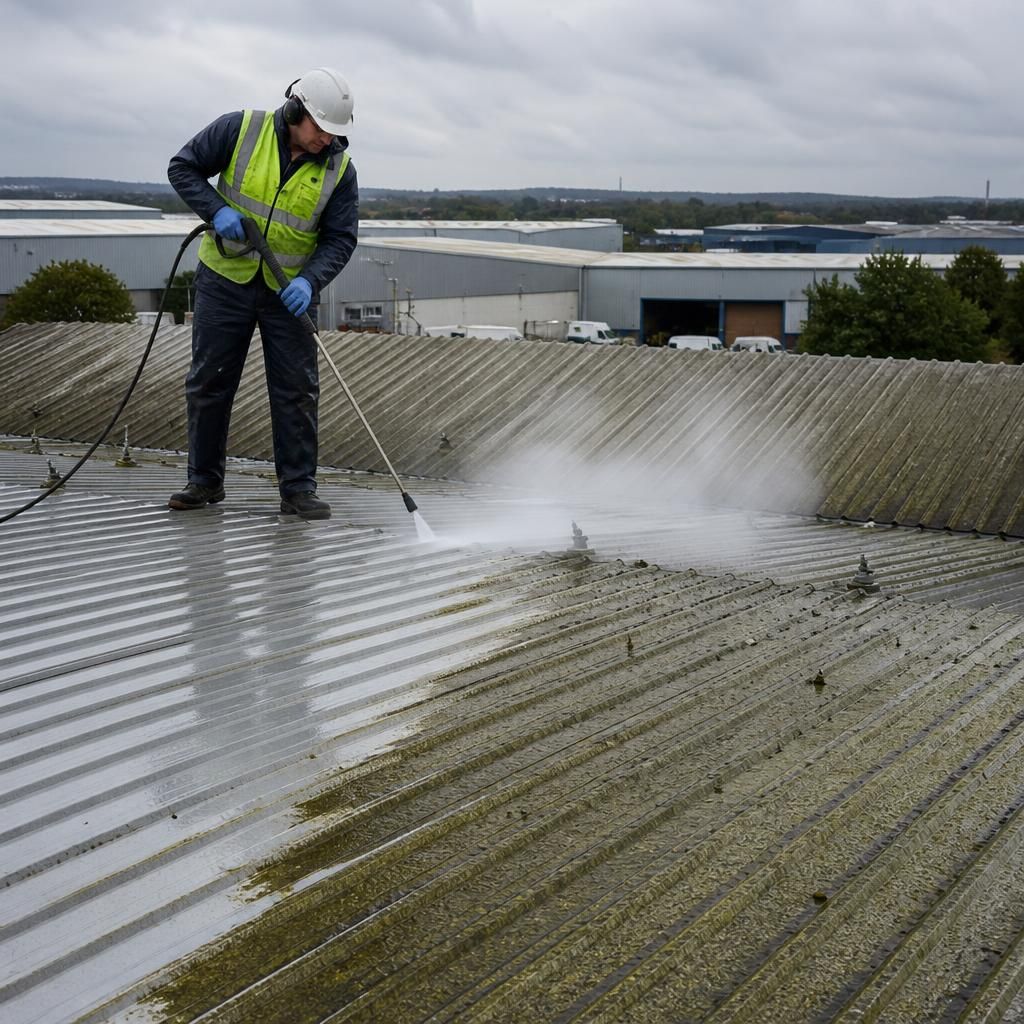
An accurate professional roof cleaning cost depends on the roof’s condition and the work required to clean it safely, not simply its surface area. A site survey helps assess the covering, contamination, access, drainage, nearby surfaces and any fragile or damaged areas before a method and quotation are confirmed.
The quotation should clearly distinguish cleaning from additional requirements such as access equipment, protective sheeting, moss or waste removal, runoff control and out-of-hours working. This prevents important safety and site-management measures from being overlooked when comparing prices.
- Roof size, pitch, layout and material
- Extent of moss, algae, lichen, staining or debris
- Access, working-at-height controls and equipment
- Required cleaning method and treatment
- Protection of buildings, landscaping, vehicles and drainage
- Waste handling, reporting and any planned maintenance
Arrange a Roof Cleaning Survey and Quotation
Arrange a professional roof cleaning survey with Encanto Exterior Cleaning to assess the roof covering, condition, access requirements and surrounding site risks. We can then provide a clear quotation based on the work required, including any necessary access equipment, protection and waste management.