
What are the environmental impacts of your roof cleaning techniques, and how do you ensure eco-friendly practices?
Roof cleaning can affect water use, chemical discharge, surrounding vegetation and surface runoff, so we select the least intensive effective method for the roofing material and condition. We support eco-friendly practice by limiting water and chemical use, protecting nearby areas, controlling runoff and disposing of cleaning residue responsibly.
Roof cleaning can affect water consumption, chemical use, surface runoff, surrounding habitats and waste disposal. Our approach is to use the least intensive effective method for the roof material and level of contamination, while containing runoff and preventing cleaning residues from entering soil, watercourses or drainage systems without suitable controls.
Assessing the environmental impact before cleaning
Before work begins, we assess the roof covering, its condition, the type of growth or staining present, nearby landscaping, drainage arrangements and the surrounding working area. This determines whether the roof needs a low-pressure wash, steam cleaning, a controlled biocidal treatment or a combination of methods. Selecting the correct process prevents unnecessary water use, excessive pressure and repeated treatment.
The condition of the roof is also relevant. Damaged tiles, open joints, fragile coatings and defective gutters may allow water or cleaning products to travel into areas that cannot be adequately controlled. Where we identify such risks, we discuss them before starting and adapt the method or recommend remedial work.
Managing water consumption
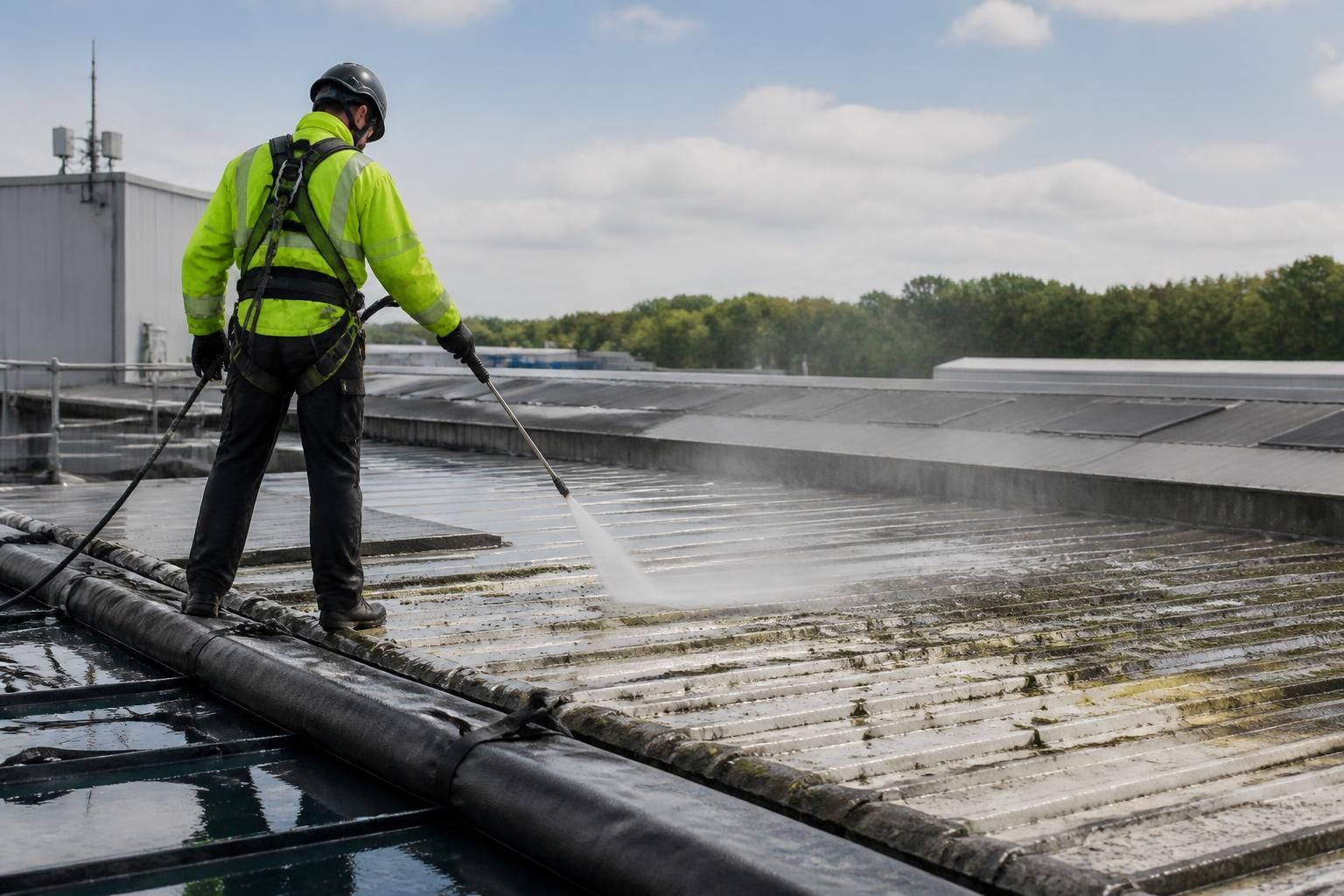
Pressure washing can use more water than gentler processes, particularly where heavy deposits require prolonged rinsing. We therefore avoid treating water volume as a substitute for preparation or correct technique. Operators use suitable pressure, targeted application and controlled rinsing rather than directing high-pressure water across the entire roof without need.
Steam cleaning can reduce the need for chemical products in some situations, while a carefully applied soft-wash or biocidal treatment may be more appropriate where growth needs to be treated rather than simply removed from the surface. The right option depends on the roof material and contamination. Overly aggressive cleaning can shorten the service life of the covering, creating an avoidable environmental impact through repair or replacement.
Using cleaning products responsibly
Where a treatment product is required, we select it for the specific growth, surface and site conditions rather than applying a stronger product by default. Products are stored, diluted and applied in line with the manufacturer’s instructions and relevant safety information. We use only the amount needed to achieve the intended result and avoid overspray onto walls, windows, vehicles, planting and neighbouring property.
Biocidal treatments can help control moss, algae and lichen without relying solely on high-pressure cleaning, but they still need responsible handling. A product being effective does not mean it is harmless if allowed to enter a watercourse or damage vegetation. For that reason, application is planned around wind, rainfall and drainage conditions. We do not proceed where weather could cause uncontrolled movement of the treatment.
Protecting gardens, façades and surrounding areas
Before cleaning, we identify vulnerable areas such as planted borders, ponds, rainwater harvesting equipment, air-conditioning units, entrances and porous wall finishes. Appropriate protective measures may include sheeting, temporary coverings, isolation of water collection systems and controlled wetting or rinsing of compatible vegetation. Protection is selected carefully so that it does not create a new runoff route or trap contaminated water.
Vehicles, access routes and pedestrian areas are also considered. Any overspray or dislodged material is dealt with promptly, and access equipment is positioned to minimise damage to landscaping and ground surfaces. On commercial or industrial premises, we coordinate the work with the site team so environmental controls do not interfere with emergency access or normal drainage arrangements.
Controlling runoff and cleaning residue
Runoff is one of the main environmental considerations in roof cleaning because it may contain sediment, moss, organic matter or traces of treatment product. We inspect where water will travel before starting and use practical containment measures such as drain protection, collection, temporary diversion or controlled discharge where appropriate.
We do not deliberately wash contaminated residue into surface-water drains, watercourses or unprotected ground. Drainage systems are treated according to their purpose and the site’s requirements; surface-water drainage must not be used as a convenient disposal route for unsuitable wastewater. Where a site has specific trade-effluent, drainage or environmental requirements, these are confirmed with the responsible person before work begins.
Loose moss, silt and other solid material are gathered where practicable rather than being left to enter gutters or drainage channels. Gutters and downpipes are checked as part of the work, and removed debris is handled and disposed of in accordance with its nature and applicable site arrangements.
Reducing disturbance and preventing repeat work
Eco-friendly cleaning is not limited to the products used on the day. Avoiding damage to tiles, membranes, coatings and pointing reduces the likelihood of premature replacement and the associated use of materials, transport and labour. A method that removes staining quickly but damages the roof is not an environmentally responsible solution.
We also explain practical maintenance measures where appropriate, such as keeping gutters clear, addressing overhanging vegetation and monitoring areas that are prone to recurring growth. Regular inspection can allow a less intensive treatment to be used before heavy deposits develop. Any maintenance recommendation is based on the roof and site rather than a fixed cleaning cycle.
Site controls and responsible working
Our operatives follow the agreed method statement and risk assessment, use appropriate personal protective equipment and handle equipment and substances in a controlled manner. Chemical containers are kept secure, spills are dealt with using suitable procedures and unused products are not poured onto the ground or into drains. Waste packaging, contaminated materials and other residues are removed or managed through the agreed disposal route.
For larger commercial and industrial sites, we can work with the client’s facilities, environmental or compliance team to confirm access restrictions, drainage plans, protected areas and any reporting requirements. This is particularly important at premises with water-recovery systems, sensitive landscaping, manufacturing activities or strict contractor controls.
These measures do not mean that roof cleaning has no environmental impact. They are designed to identify the impact in advance, reduce it where possible and prevent avoidable contamination or damage. After assessing the roof and site conditions, we explain the proposed technique and any relevant environmental precautions so that the cleaning work is effective, controlled and suitable for the property.
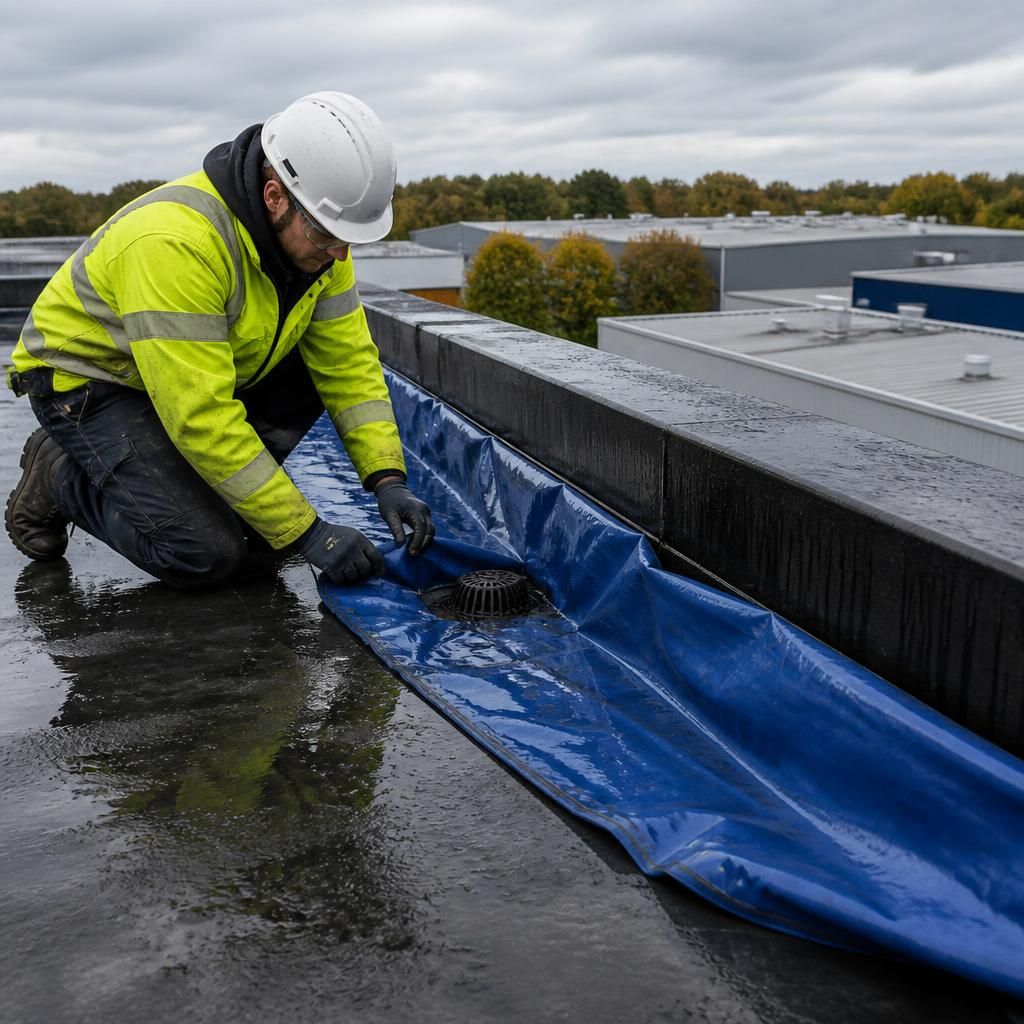
Controlling roof-cleaning runoff is one of the most important ways to reduce environmental impact. Water leaving the roof may contain moss, sediment, organic matter or traces of treatment product, so it must not be allowed to flow unchecked into surface-water drains, watercourses, planted areas or unprotected ground.
Before work starts, we identify the roof’s drainage routes and vulnerable areas, then agree suitable controls with the site team. These may include protecting drains, diverting or collecting runoff, removing loose debris before rinsing and isolating rainwater-harvesting systems. We also avoid working during weather conditions that could carry treatment products beyond the controlled area.
Any residue, packaging or collected debris is handled through the appropriate site disposal arrangements. This approach reduces the risk of contamination while allowing the roof to be cleaned effectively and with minimal disturbance to surrounding landscaping and building services.