
What are the benefits of using biowash for roof cleaning?
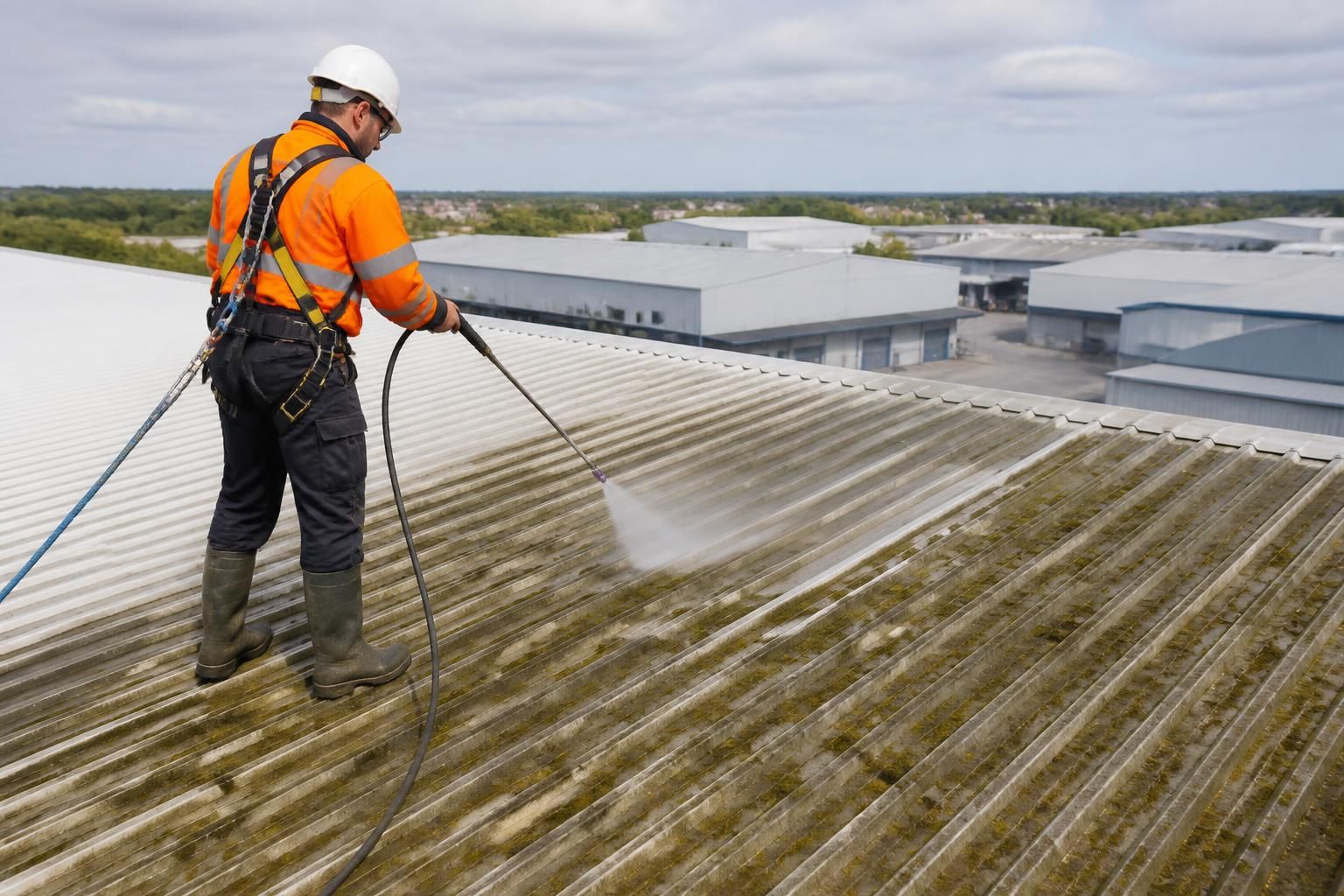
Biowash roof cleaning uses a specialist treatment to break down moss, algae and lichen without relying solely on aggressive pressure, helping to reduce the risk of damaging tiles and protective finishes. It can also provide longer-lasting results by treating organic growth at its source, while supporting a controlled, lower-impact cleaning process suitable for many commercial and industrial roofs.
Biowash roof cleaning uses a specialist biocidal treatment to break down moss, algae, lichen and other organic growth on roofing surfaces. Unlike cleaning methods that depend mainly on high-pressure water, Biowash is applied in a controlled way so the treatment can work on the growth and its underlying spores. This can reduce the need for aggressive mechanical action, helping to protect suitable roof tiles, coatings and other roofing materials while providing a longer-lasting clean.
On commercial and industrial premises, organic growth is more than a cosmetic issue. Moss can retain moisture against the roof surface, algae can create unsightly staining and lichen can become firmly attached to porous materials. If growth is left unmanaged, it may obstruct drainage, contribute to slippery access areas and make it harder to identify damaged tiles, failed sealants or blocked outlets. Biowash forms part of a planned roof-cleaning process that removes this build-up and helps keep the roof easier to inspect and maintain.
Key benefits of Biowash roof cleaning include:
- Effective treatment of organic growth: The solution is designed to target moss, algae, lichen and similar contamination rather than simply washing the visible surface. This is particularly useful where growth has established itself in joints, overlaps and textured or porous areas.
- Reduced reliance on high pressure: Because the treatment helps loosen and break down organic matter, it can often be used with gentler rinsing or controlled removal techniques. This may reduce the risk of dislodging tiles, driving water beneath laps or damaging protective finishes.
- Protection of suitable roofing materials: High-pressure cleaning can be unsuitable for older, weathered or delicate roof surfaces. A lower-impact Biowash approach can be more appropriate for many concrete tiles, clay tiles, coated surfaces and other materials, subject to an assessment of their condition.
- Longer-lasting results: Removing visible growth while treating the biological contamination beneath it can slow the return of moss and staining. The exact duration depends on the roof’s aspect, shade, moisture levels, surrounding vegetation, material and local exposure, so no fixed period should be assumed.
- Improved roof presentation: A clean roof gives commercial buildings a better-maintained appearance and can support the presentation of offices, retail premises, managed estates, public buildings and industrial sites. It also helps prevent organic staining from becoming embedded over time.
- Better maintenance visibility: Once moss and other deposits have been removed, defects such as cracked tiles, displaced components, deteriorated pointing, blocked gutters and failed flashing are easier to identify. Cleaning should therefore be coordinated with a visual condition check rather than treated as a substitute for roof repairs.
- Potentially less disruption: A controlled treatment can reduce the noise, vibration and water use associated with intensive pressure washing. This can be beneficial where premises remain operational, although access arrangements, overspray controls and the required dwell time still need to be planned.
How the Biowash process works
Before treatment, the roof should be assessed for its material, age, condition, pitch, access requirements and level of organic contamination. The surrounding building envelope, rooflights, ventilation openings, solar equipment, vehicles, planted areas and drainage routes also need to be considered. This assessment determines whether Biowash is suitable and whether preliminary scraping or another form of controlled removal is required.
Loose moss is normally removed using methods appropriate to the roof, with care taken not to fracture tiles or disturb vulnerable details. The Biowash solution is then applied evenly to the affected areas and allowed to work for the required period. Remaining deposits may be rinsed or removed using controlled water pressure, soft-brushing or other suitable techniques. In some cases, the treatment continues to act after the initial service, with residual staining and biological growth weathering away gradually rather than disappearing immediately.
The treatment is not a universal solution for every roof. It will not repair cracked or slipped tiles, replace failed membranes, restore severely deteriorated coatings or resolve structural defects. Thick growth may require more than one stage of removal, while heavily weathered surfaces may need a different cleaning approach altogether. A professional assessment is important before work begins, particularly on older roofs, fragile tiles and buildings with complex drainage or sensitive neighbouring areas.
Biowash and environmental controls
A biocidal treatment must be handled responsibly. The product should be selected and used in accordance with its label instructions and relevant safety data, with suitable controls for workers, occupants, pets, plants and surface water. During the work, we plan application areas carefully, protect vulnerable landscaping and building elements, control runoff and prevent spray from reaching unintended surfaces. The amount and strength of treatment should be appropriate to the contamination rather than applied unnecessarily.
These controls are especially important on commercial sites where roof drainage may connect directly to surface-water systems or where customers, staff and members of the public are nearby. Weather conditions also matter: strong wind, heavy rain and unsuitable temperatures can affect application, dwell time and runoff control. Rescheduling work is preferable to applying treatment when conditions could compromise safety or environmental protection.
When Biowash is most suitable
Biowash is often suitable where the main problem is moss, algae, lichen or biological staining and the roof is sound enough to withstand the planned access and cleaning process. It can be particularly useful when preserving the existing surface is a priority, when high-pressure washing would be inappropriate, or when a site needs a maintenance treatment that limits disruption.
It may be unsuitable or require modification where roofing materials are severely degraded, where the substrate is not compatible with the treatment, where water ingress is already present, or where access cannot be made safe. Roof cleaning should never proceed solely because the surface looks dirty. The condition of the roof, the risk to people and property, and the consequences of runoff must all be considered.
For lasting results, Biowash should be part of a maintenance plan. Keeping gutters and outlets clear, managing overhanging vegetation, improving persistent drainage problems and arranging periodic inspections can reduce the conditions that encourage organic growth. After cleaning, we can also identify areas that may need repair or closer monitoring. This practical combination of treatment, inspection and preventative maintenance gives commercial roof owners a more reliable way to protect appearance and condition than repeatedly removing surface growth without addressing its causes.
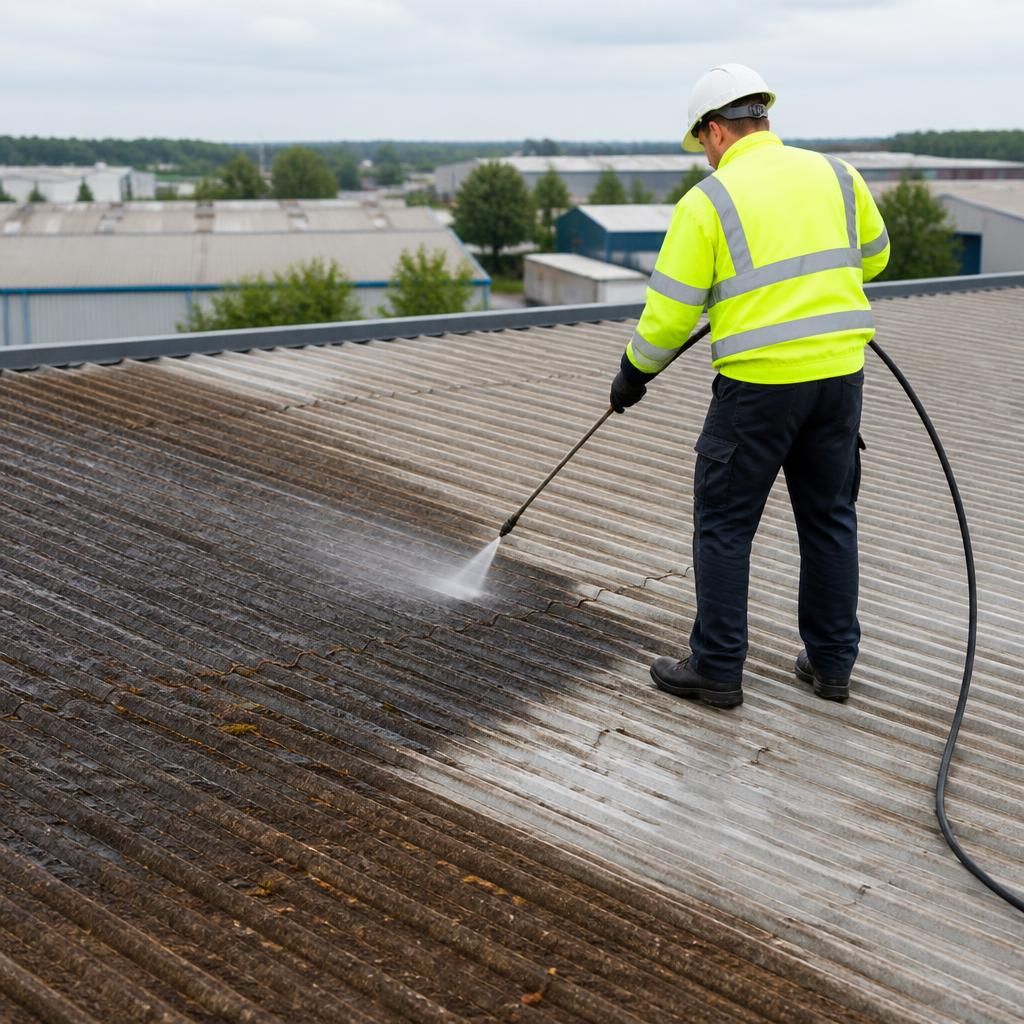
Biowash roof cleaning uses a specialist treatment to break down moss, algae and lichen before controlled rinsing or removal. By treating the organic growth rather than relying solely on aggressive pressure, the process can reduce the risk of dislodging tiles, forcing water beneath overlaps or damaging suitable protective coatings.
This lower-impact approach is particularly useful on older, weathered or porous roofing materials where high-pressure washing may be inappropriate. The treatment does not replace a condition assessment: the roof’s material, age, surface condition, access requirements and drainage arrangements must be checked first to confirm that Biowash is suitable.
Arrange a Biowash Roof Assessment
Arrange a Biowash roof assessment to confirm whether the treatment is suitable for your roof’s materials, condition, access requirements and drainage arrangements. We can then recommend a controlled cleaning approach that protects the building and minimises disruption to your operations.