
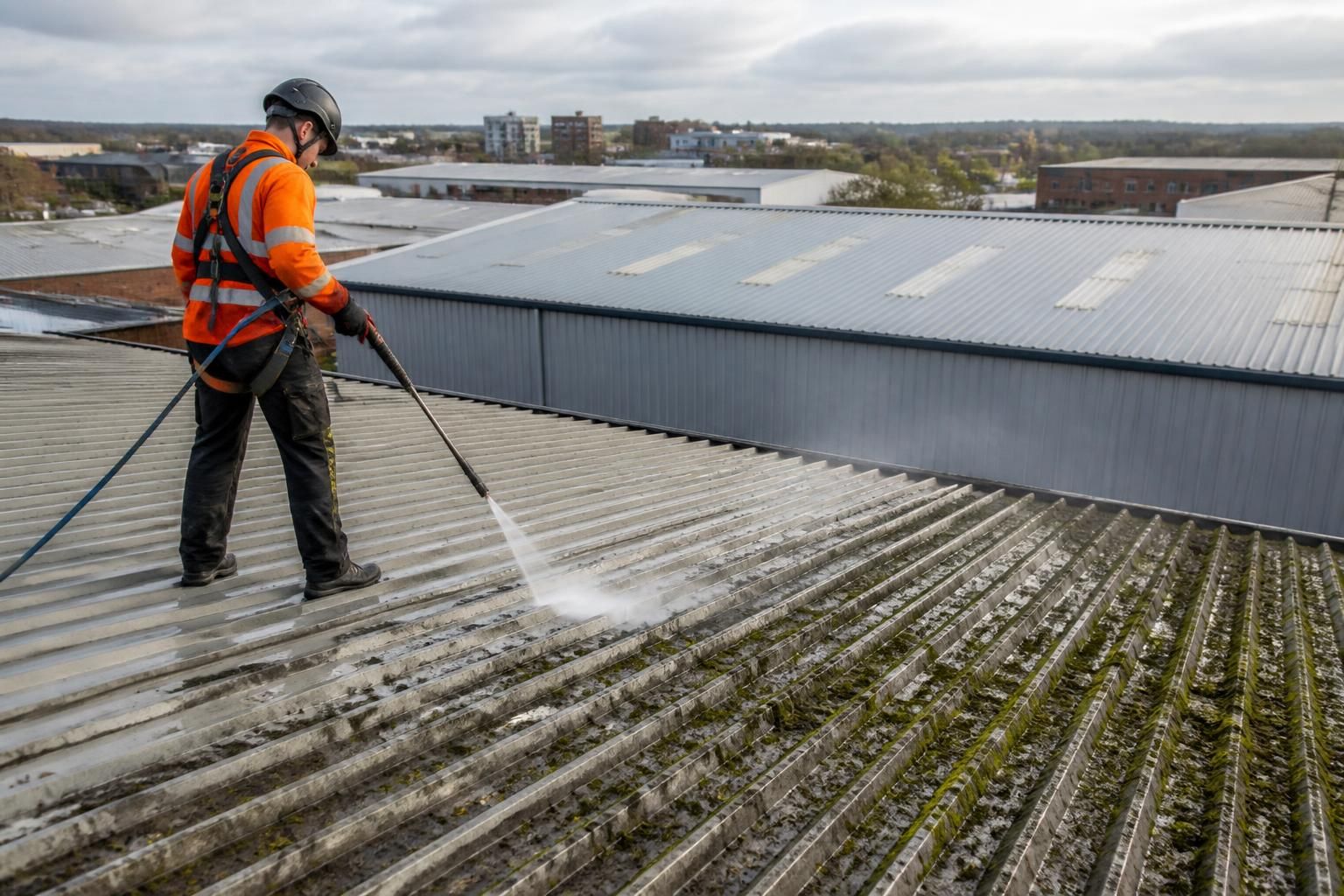
How does regular roof cleaning improve safety and prevent accidents?
Regular roof cleaning removes moss, algae, lichen and accumulated debris that can make roof surfaces slippery, obstruct drainage and conceal defects. By reducing these hazards and identifying issues such as loose materials or damaged coverings early, it helps prevent falls, falling debris, water ingress and related accidents.
Regular roof cleaning improves safety by removing moss, algae, lichen and accumulated debris that can make surfaces slippery, obstruct drainage and conceal defects. It also gives trained operatives an opportunity to identify loose materials, damaged coverings, failing flashings and other hazards before they contribute to falls, falling debris, water ingress or wider building damage.
On commercial and industrial premises, roof-related hazards can affect more than the cleaning team. Loose tiles, fragments of degraded covering, dislodged cladding or saturated debris may fall onto entrances, walkways, vehicles, plant and neighbouring areas. Keeping the roof clear reduces the conditions that allow materials to become unstable and makes defects easier to detect and report.
How roof contamination creates safety risks
- Moss and algae: Organic growth retains moisture and can create a slippery surface, particularly during inspection, maintenance or severe weather.
- Lichen: Lichen can adhere firmly to roofing materials and may contribute to surface deterioration if it is allowed to spread and retain moisture.
- Leaves and organic debris: Accumulations can conceal fragile areas, trip hazards and damaged coverings.
- Blocked gutters and outlets: Restricted drainage can cause standing water, overflow and damp penetration, while heavier saturated debris may place additional strain on roof components.
- Unnoticed defects: Growth and dirt can hide cracked tiles, open joints, damaged membranes, corrosion and failed sealants until the problem becomes more serious.
Cleaning is therefore part of a wider roof maintenance programme rather than an isolated cosmetic service. Removing contamination makes the roof easier to inspect and helps maintenance teams distinguish normal surface soiling from defects requiring repair. Where a problem is outside the scope of cleaning, it should be recorded and brought to the responsible property manager or building owner rather than covered over.
Reducing slip and fall risks
Roof work must be planned as work at height, even where the roof appears shallow or accessible. Moss, wet algae and loose debris increase the likelihood of slips, while fragile roof sheets, rooflights, unprotected edges and changes in level create additional fall risks. A competent contractor should assess the roof, access routes, weather conditions, surrounding ground and the proposed cleaning method before work begins.
Depending on the building and roof construction, suitable controls may include safe access equipment, edge protection, designated walkways, fall-arrest or fall-restraint systems, exclusion zones and controlled movement of equipment and materials. Operatives should not assume that a roof is safe to walk on simply because it looks structurally sound from ground level. Some coverings and rooflights can fail under load without obvious warning.
Preventing falling objects and ground-level accidents
Cleaning can release moss, dirt, fragments of coating and other material. On an occupied commercial site, this creates a potential risk to employees, visitors, members of the public, vehicles and nearby property. Before work starts, the working area should be reviewed and controlled. This may involve barriers, warning signs, temporary restrictions to walkways, protection for vulnerable surfaces and coordination with the site contact.
Water, cleaning solutions and loosened debris also need to be managed at ground level. Downpipes, drainage channels, entrances, ventilation points and sensitive landscaping should be considered when setting up the work. Proper collection or controlled rinsing helps prevent blocked drains, slippery paths and contamination of areas that remain in use.
Protecting the building from preventable damage
Blocked drainage and persistent moisture can lead to dampness, staining, internal leaks and deterioration of roofing materials. In turn, these problems may affect ceilings, electrical installations, insulation, stock and occupied areas. Regular cleaning helps maintain clear drainage paths and allows signs of water ingress or material failure to be identified earlier.
Cleaning must still be matched to the roof material and its condition. Excessive pressure, unsuitable chemicals or careless use of equipment can damage coatings, pointing, membranes, sealants and fragile coverings. A suitable method may involve low-pressure washing, steam cleaning, soft washing or manual removal, depending on the surface, contamination and surrounding environment. The objective is to remove the hazard without creating a new one.
How a safer cleaning programme is managed
- Inspect the roof, access points, drainage and surrounding areas, noting fragile surfaces and visible defects.
- Prepare a site-specific risk assessment and method statement, including controls for work at height, cleaning products, equipment and public access.
- Confirm the appropriate cleaning approach for the roofing material and the condition of any coatings, membranes or sealants.
- Establish exclusion zones and protect entrances, walkways, vehicles, landscaping and drainage points where necessary.
- Use suitable access and fall-protection equipment, with trained operatives working to the agreed method.
- Remove loosened contamination in a controlled manner and prevent waste or wash water from creating hazards below.
- Check gutters, outlets and visible roof areas after cleaning, then report defects or repairs that require separate attention.
Regularity should be based on the roof’s exposure, surrounding trees, level of organic growth, drainage performance, building use and previous maintenance history. A heavily shaded roof near trees may need more frequent inspection than a roof with little surrounding vegetation. Cleaning should be arranged before growth becomes dense enough to obscure the roof surface or restrict drainage.
Roof cleaning does not replace structural inspections, repairs or formal safety checks, and it cannot eliminate every risk associated with a roof. Its safety value comes from combining controlled cleaning with inspection, planned access and prompt reporting of defects. For commercial premises, that approach helps reduce avoidable hazards while supporting a safer, more maintainable building environment.
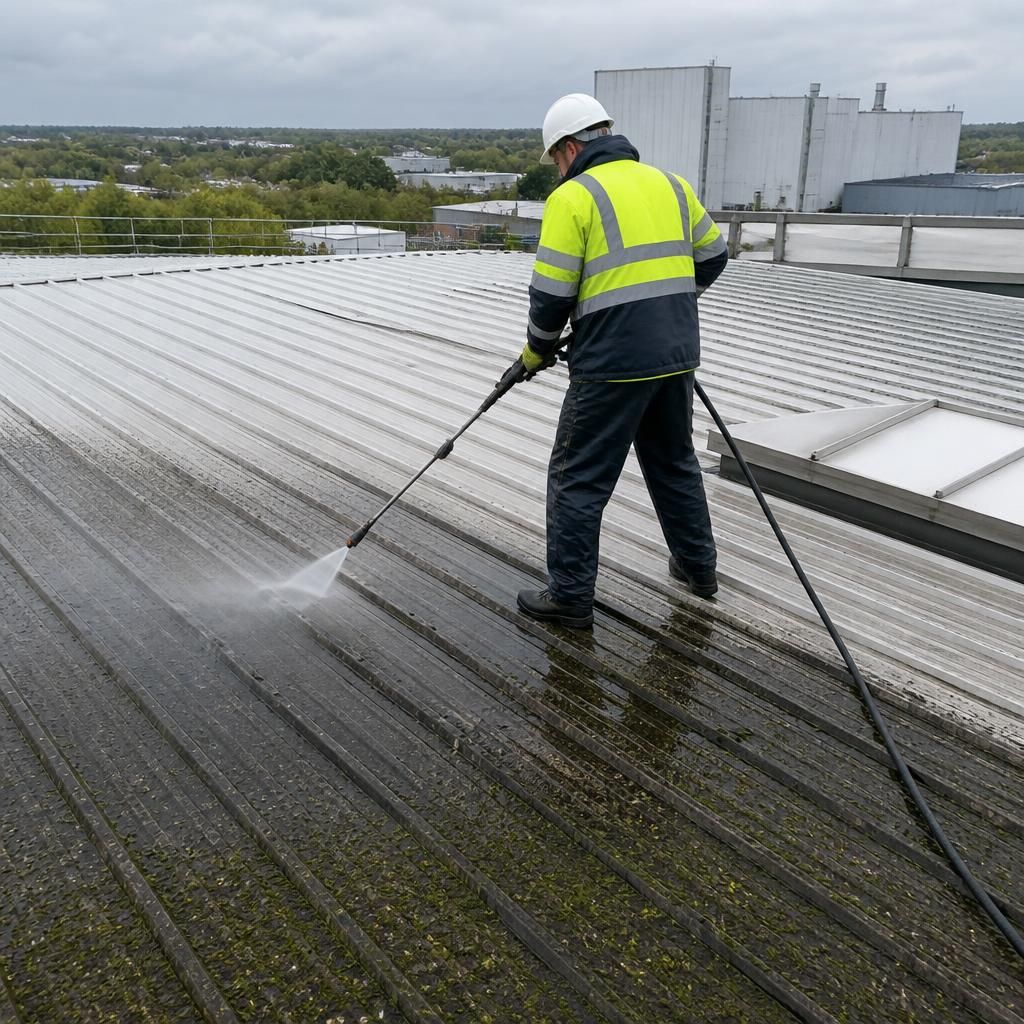
Regular roof cleaning improves safety by removing moss, algae, leaves and loose debris that can make roof surfaces unstable and conceal defects. Clearing these materials makes it easier to identify damaged coverings, failed joints, blocked outlets and other issues before they contribute to accidents or water ingress.
On commercial premises, controlled cleaning also reduces hazards below the roof. Loose contamination and fragments can fall onto entrances, walkways, vehicles, landscaping or occupied areas, while uncontrolled wash water may create slippery surfaces or obstruct drainage. A planned service should therefore include suitable access equipment, exclusion zones, protection for vulnerable areas and safe collection or management of waste and run-off.
Cleaning is not a substitute for structural inspections or repairs, but it supports a safer maintenance programme by making defects visible and allowing them to be reported promptly. The frequency of cleaning should reflect the roof’s condition, surrounding trees, exposure to organic growth and drainage performance.