
How does professional roof cleaning protect roofing materials from deterioration?
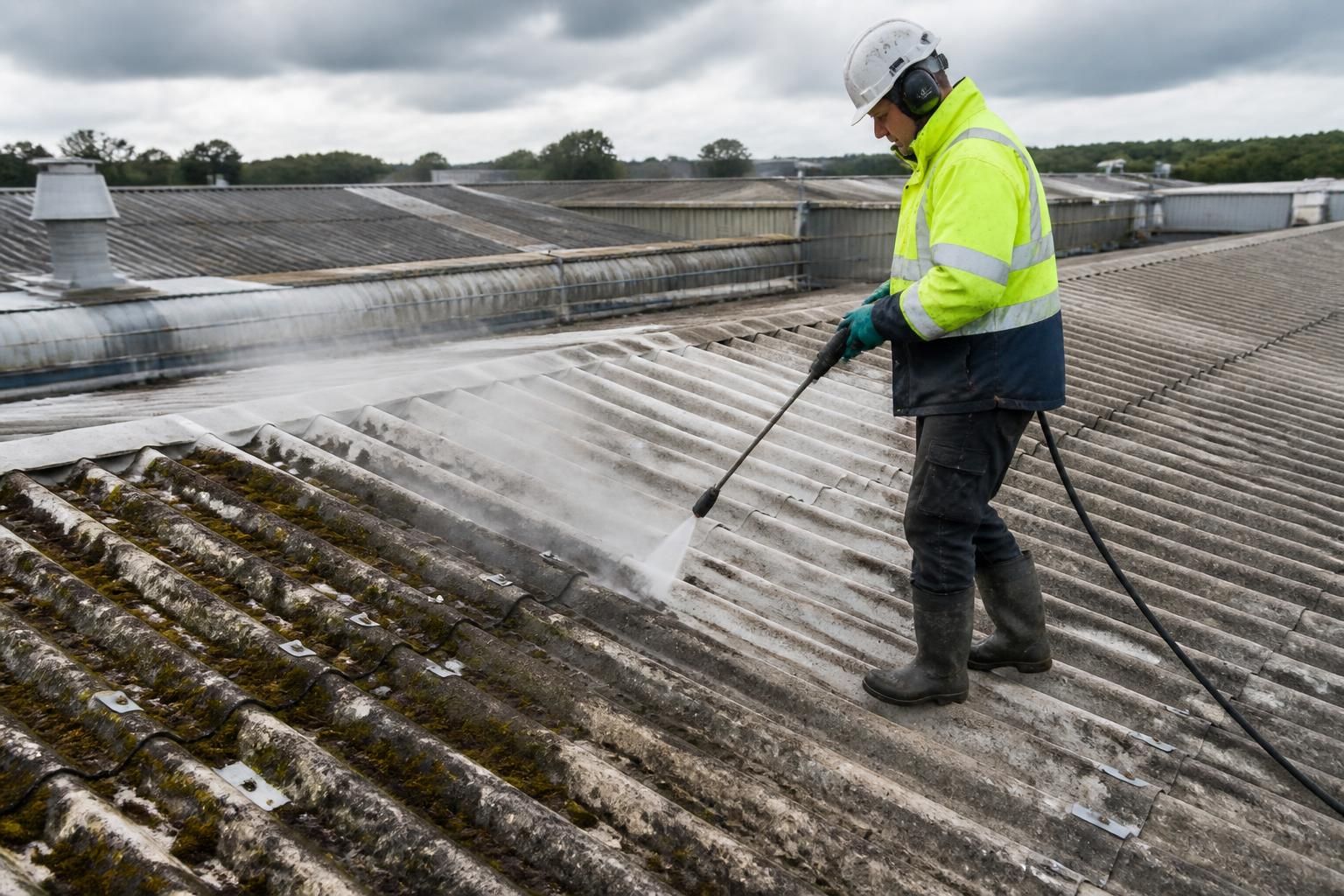
Professional roof cleaning protects roofing materials by removing moss, algae, lichen, dirt and pollutants that retain moisture and encourage surface deterioration. Using a method suited to the roof type, it helps reduce blocked drainage, staining, biological growth and avoidable wear, supporting a longer service life.
Professional roof cleaning protects roofing materials from deterioration by removing moss, algae, lichen, dirt, pollutants and other deposits that hold moisture against the surface. When the cleaning method is matched to the roof construction, it reduces avoidable wear, helps drainage operate correctly and allows early defects to be identified before they develop into more expensive problems.
Moisture is one of the main causes of roof deterioration. Organic growth and accumulated dirt can create a damp layer over tiles, slates, membranes and coated metal. This keeps the surface wet for longer after rainfall and can encourage staining, surface breakdown and corrosion around vulnerable areas. Moss can also form a dense mat that traps water and debris, while lichen attaches firmly to porous materials and can make cleaning more difficult if it is allowed to spread.
On pitched roofs, moss and debris may become lodged beneath overlapping tiles or around roof details. As growth expands and contracts in changing conditions, it can place pressure on the surface and contribute to the loosening or displacement of older materials. It may also obstruct the path of rainwater towards gutters and outlets. Professional cleaning removes these deposits in a controlled way rather than relying on aggressive methods that could damage the roof.
Cleaning also limits the effects of freeze-thaw weather. Water retained in porous materials can expand when temperatures fall and contract again as it warms. Repeated cycles can gradually worsen small cracks, surface weaknesses and previously damaged edges. Removing moisture-holding growth and keeping drainage routes clear helps reduce the conditions that allow this process to continue. Cleaning cannot repair frost-damaged materials, but it can form part of a sensible maintenance programme for reducing further exposure.
Different deposits affect different roofing materials:
- Concrete and clay tiles: These can become stained and porous over time. Moss, algae and airborne dirt may retain moisture and obscure cracked, chipped or displaced tiles.
- Natural slate: Slate can be durable but may be vulnerable to impact, excessive pressure and damage around fixings. A suitable low-impact method is important, particularly on older roofs.
- Metal roofing and cladding: Dirt and organic deposits can retain moisture against the coating or expose areas where corrosion has already started. Cleaning helps reveal damaged finishes, failed sealants and rusting fixings.
- Single-ply membranes and other flat-roof systems: Standing water, silt, leaves and biological growth can obstruct outlets and increase stress on joints or penetrations. These surfaces require careful cleaning that avoids cutting, lifting or puncturing the membrane.
- Coated and painted surfaces: Incorrect pressure, abrasive tools or unsuitable chemicals may strip the finish. A controlled process helps preserve the protective coating while removing contamination.
Keeping drainage clear is a further protective benefit. Roof valleys, gutters, downpipes, outlets and channels are designed to remove rainwater quickly. Moss, leaves and silt can restrict this flow, causing water to back up against roof edges, joints, fascias and wall surfaces. Persistent wetting can damage coatings, timber, sealants and masonry, as well as increasing the likelihood of leaks during heavy rainfall. Roof cleaning is often carried out alongside the removal of associated debris from drainage components, where this is included within the agreed scope of work.
Professional cleaning is not simply a matter of applying high pressure. Before work begins, the roof should be assessed for its material, age, condition, pitch, access requirements and existing defects. Areas such as fragile tiles, loose flashings, rooflights, vents, solar equipment, sealant joints and membrane seams need particular care. This assessment helps determine whether soft washing, controlled pressure washing, steam cleaning, manual removal or a combination of methods is appropriate.
For some roofs, a lower-pressure treatment is preferable because it removes contamination without forcing water beneath laps, flashings or joints. Steam cleaning can be useful where controlled heat and reduced water volumes are appropriate, while manual methods may be needed around delicate details. Biocidal or other treatment products should only be selected according to the roof material, the type of growth and the surrounding environmental requirements. The aim is to remove the cause of the deterioration without creating a new risk through chemical incompatibility or excessive mechanical force.
A clean roof is also easier to inspect and maintain. Deposits can hide slipped tiles, cracked slate, corrosion, failed pointing, damaged coatings, blocked outlets and deteriorating sealants. Once the surface has been cleaned, these conditions are more visible and can be recorded for repair or monitoring. Identifying a minor defect early may help prevent water entering insulation, ceilings, plant areas or occupied parts of a commercial building.
There are limits to what cleaning can achieve. It does not restore a roof that has reached the end of its service life, replace defective materials or correct structural movement. It should not be used to conceal significant faults. Where cleaning exposes damage, the appropriate next step may be a roof inspection or repair by a suitably qualified contractor. Recording the roof condition before and after cleaning provides a useful maintenance reference for property managers and facilities teams.
For commercial and industrial premises, the most effective approach is usually planned cleaning rather than waiting until growth, staining or blocked drainage becomes severe. The suitable interval depends on the roof material, surrounding trees, pollution levels, exposure, drainage design and the building’s maintenance requirements. Periodic inspections can identify early regrowth and contamination, allowing smaller areas to be treated before deposits become deeply established.
In practical terms, professional roof cleaning supports the roof’s protective finishes, reduces moisture retention, keeps rainwater routes functioning and improves visibility of developing defects. When carried out with appropriate access equipment, surface protection and material-specific techniques, it helps preserve existing roofing materials and can contribute to a longer, more predictable maintenance life.
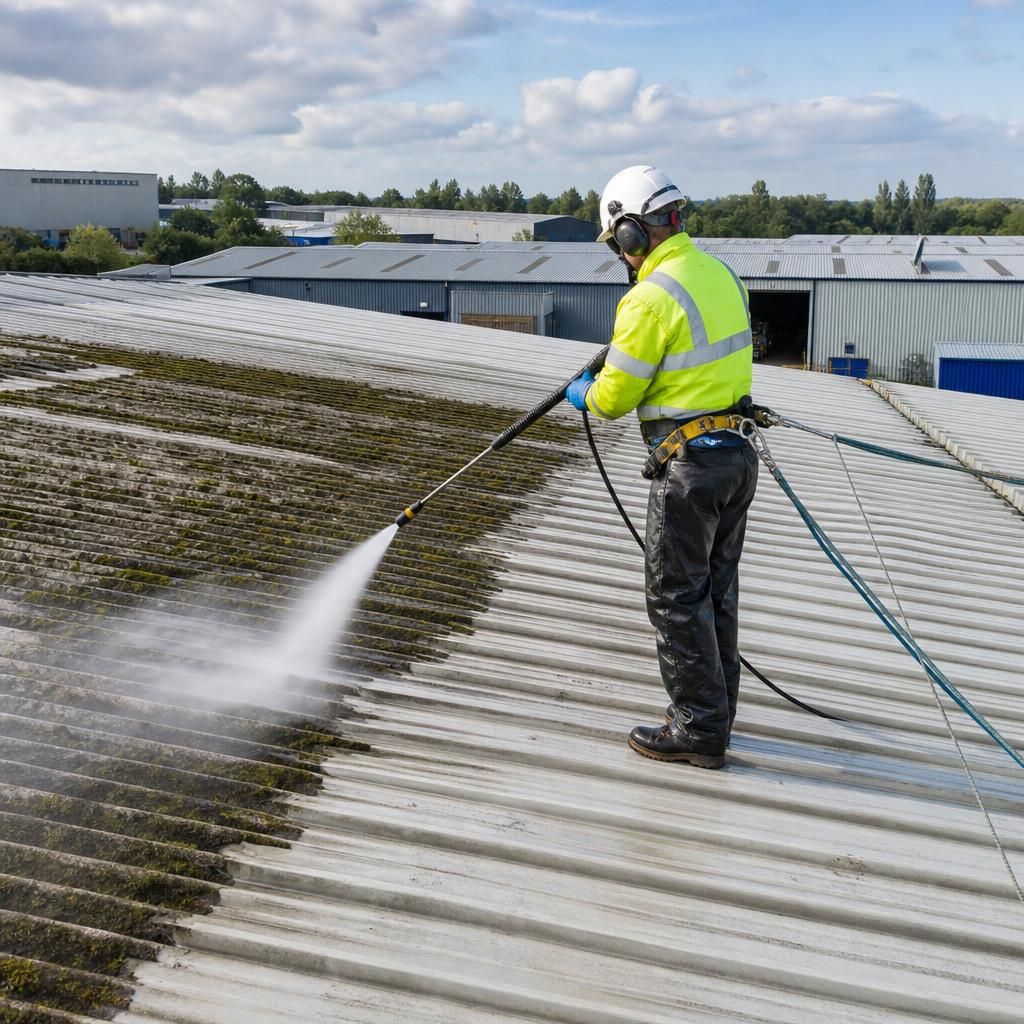
Professional roof cleaning protects roofing materials by removing moss, algae, lichen, dirt and debris that retain moisture against the surface. Keeping the roof drier helps reduce staining, surface breakdown, corrosion and freeze-thaw damage, particularly on porous tiles, slate and ageing coated materials.
Cleaning also helps keep valleys, gutters and outlets clear so rainwater can drain properly. This reduces prolonged wetting around roof edges, joints, flashings and wall surfaces, while making cracked tiles, failed sealants, corrosion and other defects easier to identify before they cause more extensive deterioration.