
How do you ensure minimal disruption to business operations during the roof cleaning process?
We minimise disruption to business operations by planning the roof cleaning around your working hours, coordinating access and isolating affected areas before work begins. Our team uses controlled cleaning methods, safe access equipment and clear communication to keep entrances, staff areas, vehicles and customer activities operating safely wherever practicable.
We minimise disruption during roof cleaning by planning the work around your operational requirements, controlling access and water, and using cleaning methods suited to the roof and surrounding premises. Before work starts, we agree the working areas, access arrangements, isolation measures, communication process and completion standards with your nominated contact.
Our planning begins with a site assessment. We review the roof structure, access points, fragile areas, drainage routes, nearby entrances, vehicle movements, pedestrian routes and any activities that must continue while cleaning takes place. This helps us identify potential interruptions before work begins rather than reacting to them on site.
We then prepare a method statement and risk assessment that reflects the building and its use. Where relevant, the plan considers staff and visitor access, deliveries, loading areas, plant, customer-facing entrances, neighbouring units and sensitive equipment. The proposed sequence of work is discussed with you so that operational priorities are built into the programme.
Where practicable, roof cleaning can be scheduled outside your busiest periods, before opening, after closing or during planned maintenance windows. For premises that operate continuously, we can plan the work in manageable sections and keep unaffected areas available. The most suitable arrangement depends on the roof condition, cleaning method, access requirements and the activities taking place below.
Access is arranged to avoid unnecessary obstruction. We establish suitable positions for access equipment, vehicles, hoses and other equipment before arriving, taking account of emergency routes and normal traffic flows. If a car park, service yard or loading area is affected, we agree temporary restrictions and provide advance notice so that deliveries and vehicle movements can be reorganised safely.
We use clearly defined exclusion zones beneath active work areas. These zones protect people from falling debris, equipment and wash water without closing more of the site than necessary. Barriers, signage and agreed pedestrian routes help maintain safe movement around the building. Entrances that need to remain open are protected and kept clear wherever the risk assessment allows this.
Water and run-off are managed as part of the work plan. We inspect drainage arrangements and identify where dirty water, moss, silt or cleaning residue could travel. Protective measures and controlled application help prevent run-off from reaching entrances, walkways, stock, vehicles, landscaped areas or surface-water drains. Any collected waste is handled in accordance with the agreed method and applicable requirements.
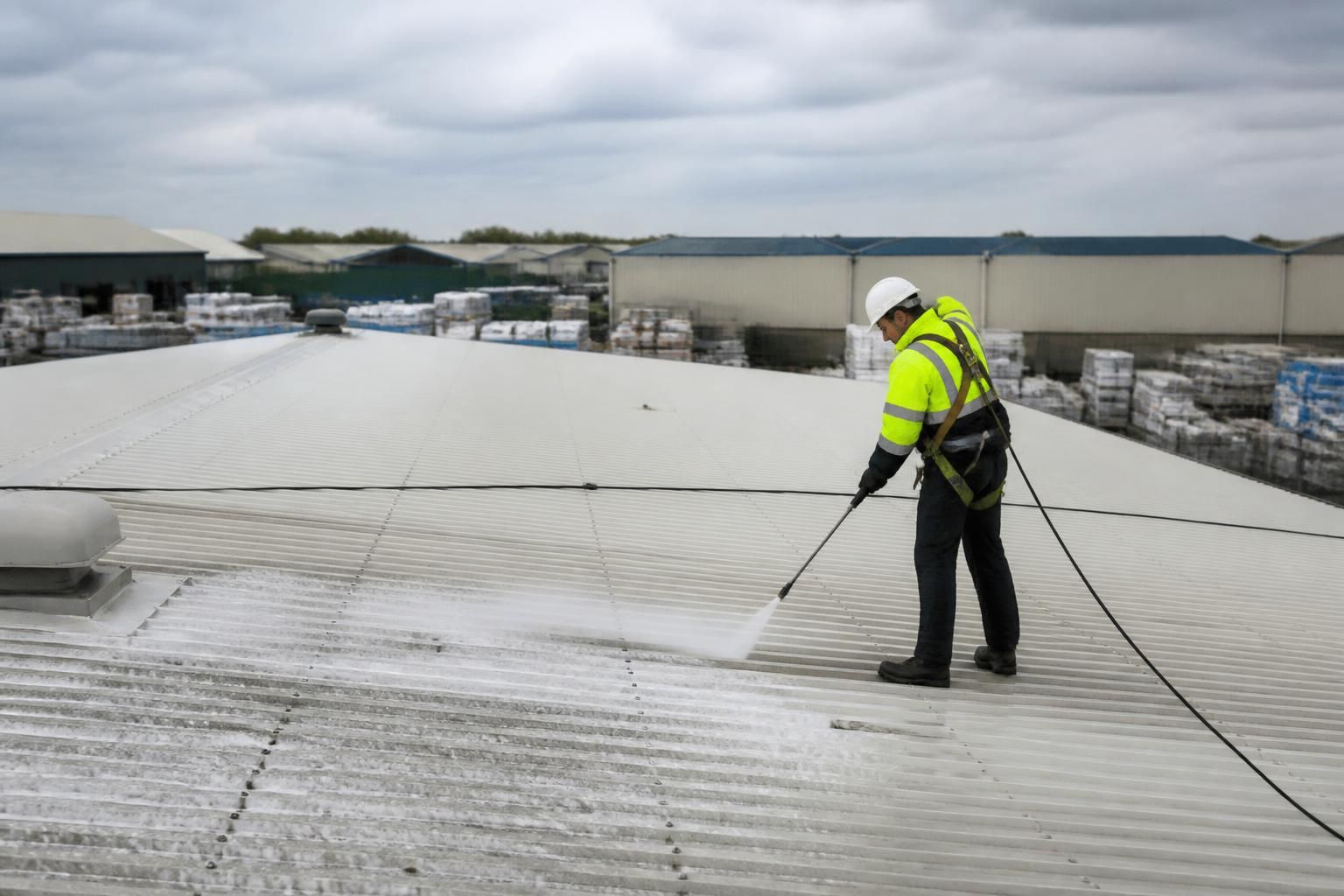
The cleaning technique is selected to achieve the required result without creating avoidable noise, spray or vibration. Depending on the roofing material and contamination, this may involve controlled pressure washing, steam cleaning, biowash treatment or a combination of methods. We avoid using excessive pressure where it could damage the roof or increase spray beyond the working area. The method statement also identifies any areas that require hand cleaning or additional protection.
Our operatives coordinate with the site contact throughout the work. We confirm where the team is working, advise when access routes need to change and report any unexpected issue that could affect the programme. If weather, roof condition or another site activity makes the planned approach unsuitable, we pause or revise the work rather than creating an uncontrolled risk or unnecessary interruption.
For larger commercial or industrial sites, phased cleaning can reduce the area affected at any one time. A typical sequence may involve setting up access, isolating one roof section, cleaning and inspecting that section, clearing equipment and then moving to the next area. The exact sequence is agreed in advance and can be adjusted around deliveries, public access, tenant requirements or other contractors.
At the end of each working period, we check the work area and access routes. We remove debris and equipment that is no longer required, confirm that walkways and operational areas are safe to use, and leave agreed barriers or notices in place if further work is scheduled. On completion, we carry out a final inspection and confirm any follow-up requirements with your representative.
Minimal disruption does not mean that every activity can continue without any restriction. Roof cleaning involves work at height, equipment, water and temporary exclusion zones, so some short-term controls may be necessary. The objective is to make those controls proportionate, predictable and as brief as practicable through early planning, clear communication and disciplined site management.
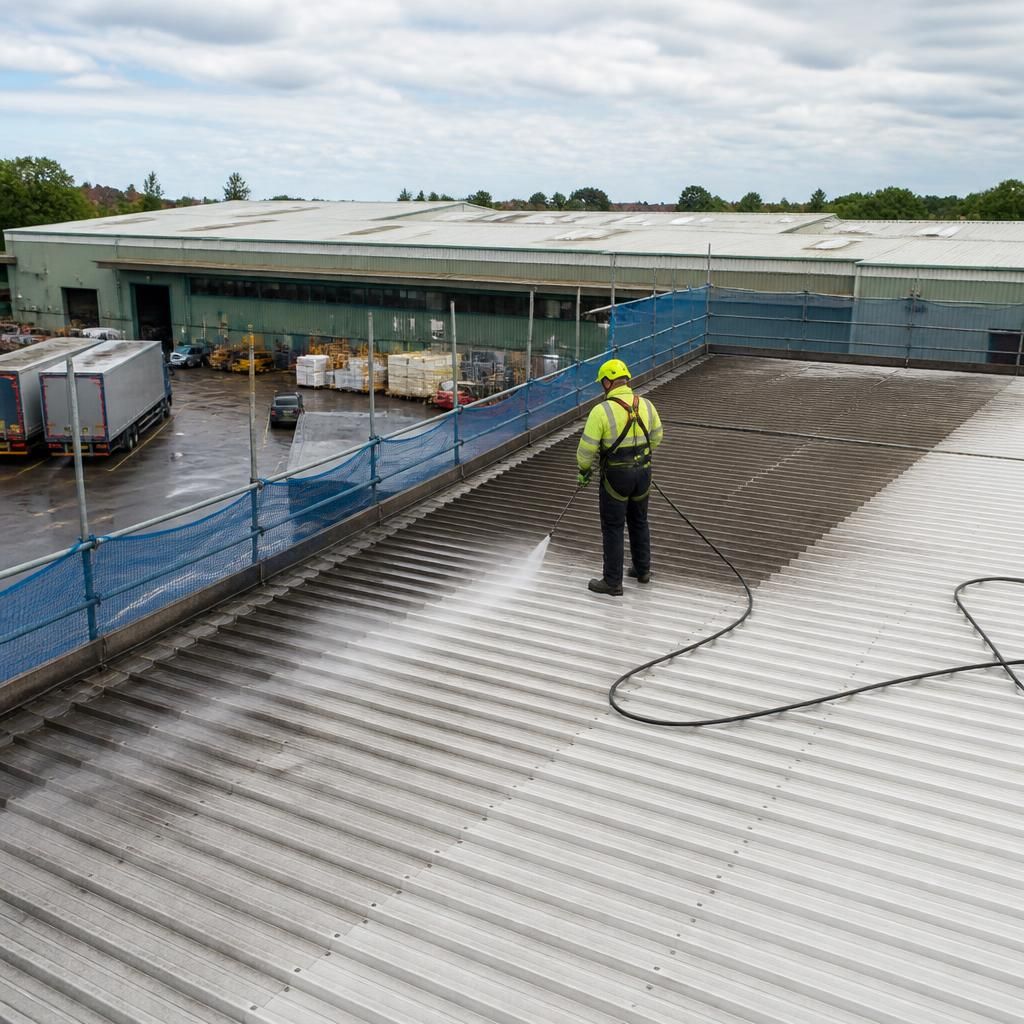
Phased roof cleaning keeps disruption to a minimum by limiting work to a controlled section of the building at a time. This allows unaffected entrances, walkways, loading areas and operational spaces to remain available wherever the site layout and risk assessment permit.
Before work begins, we agree the sequence with your nominated contact and identify any activities that must continue, such as deliveries, tenant access or customer movements. Our team then isolates the active area, manages equipment and run-off, completes the cleaning and checks the section before moving on. If access arrangements need to change, we communicate this promptly so your staff and visitors can use the site safely.
This approach is particularly useful for larger commercial and industrial premises, where closing the whole site is neither practical nor necessary. Weather, roof condition and other contractors may affect the sequence, so we review progress throughout the work and adjust the plan when required rather than allowing avoidable disruption.