
How do you determine the most suitable cleaning method for different types of roofing materials?
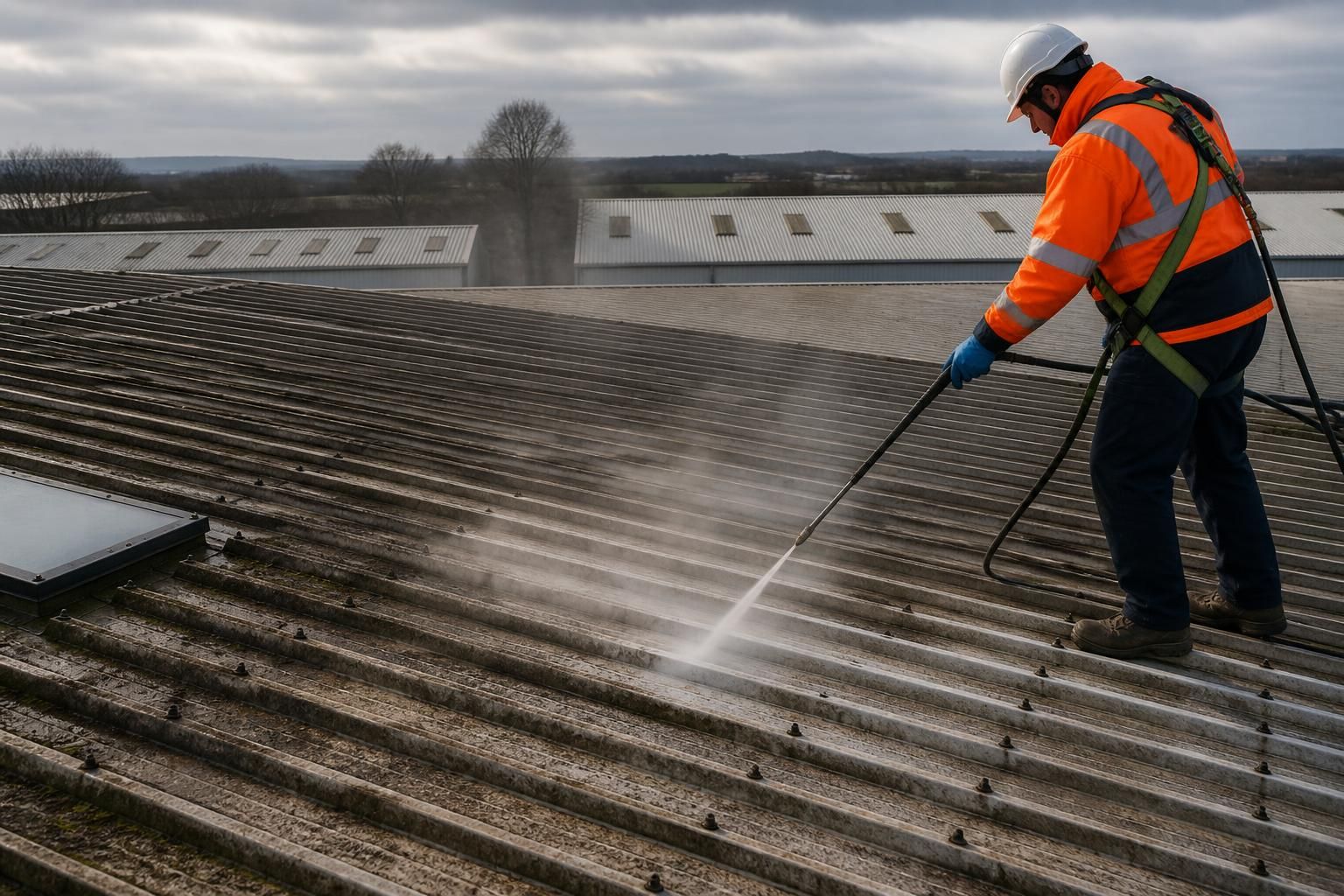
We determine the most suitable roof cleaning method by assessing the roofing material, its condition, the type of contamination and the risk of water or surface damage. We then select an appropriate combination of low-pressure washing, steam cleaning or biowash treatment to remove moss, dirt and staining safely without compromising the roof.
The most suitable roof cleaning method is determined by the roofing material, its age and condition, the type of contamination present, and the risk of water or surface damage. We inspect the roof before work begins and then select a controlled combination of manual removal, low-pressure washing, steam cleaning or biowash treatment. The objective is to remove moss, algae, lichen, dirt and staining without stripping protective finishes, dislodging tiles or forcing water beneath the roof covering.
Assessment before cleaning
Every roof requires a site-specific assessment. We identify the roof covering and check for cracked, slipped or loose materials, failed sealants, exposed fixings, fragile edges, blocked drainage routes and areas where previous repairs may be vulnerable. We also consider the roof’s pitch, access requirements, nearby surfaces and the condition of gutters, rooflights, solar equipment and external building finishes.
Contamination is assessed separately because surface growth and ingrained staining do not always require the same treatment. Light surface dirt may be removed with a carefully controlled rinse, while established moss may need to be loosened by hand before treatment. Lichen and biological staining can require a biowash application and dwell time rather than aggressive pressure. Where the roof is particularly delicate, cleaning may be limited to treatment and gentle removal instead of attempting to restore every mark immediately.
Clay and concrete roof tiles
Clay and concrete tiles can usually be cleaned using manual moss removal followed by low-pressure rinsing or a suitable biowash treatment. The pressure, water volume and direction are controlled to reduce the risk of lifting tiles, damaging joints or driving water beneath overlaps. Concrete tiles may have a weathered or surface-coated finish, so excessive pressure can remove the outer surface and leave an uneven appearance. Clay tiles can also become brittle with age, making a pre-clean inspection particularly important.
Where moss has formed thick deposits, we normally remove the bulk of it manually before applying any treatment. This reduces the amount of material entering the drainage system and allows the biowash to work more effectively on remaining organic growth and staining.
Natural slate
Slate is strong in some applications but can become brittle, delaminated or easily fractured as it ages. Cleaning is therefore undertaken with minimal mechanical force. Loose growth is removed carefully, and low-pressure or steam methods may be considered where appropriate. High-pressure cleaning is generally unsuitable for fragile slate because it can chip the surface, disturb fixings and expose weaknesses that are not visible from ground level.
We also check the condition of slate hooks, nails, flashings and junctions before deciding whether cleaning is appropriate. If the covering is already unstable, remedial roofing work may be needed before or instead of cleaning.
Metal roofing and coated sheeting
Metal roofs are assessed for corrosion, failing coatings, exposed fasteners and vulnerable seams. A low-pressure wash with a compatible cleaning solution is often more appropriate than abrasive cleaning or high-pressure water. The method must not damage the coating or force water into laps and fixings. Any cleaning product used is selected with regard to the metal type and existing finish, followed by thorough rinsing where required.
Care is also taken around rooflights, sealants, drainage outlets and electrical or mechanical equipment. Corrosion or coating failure cannot be corrected by cleaning alone, so these conditions are recorded and reported rather than concealed.
Asphalt, felt and single-ply membranes
Flat roof membranes, including asphalt, felt and single-ply systems, need a particularly restrained approach. We avoid methods that could puncture, lift, stretch or soften the membrane. Loose debris is generally removed manually, while suitable low-pressure cleaning or a carefully selected treatment may be used for surface dirt and biological growth. Standing water, exposed insulation, open seams and damaged outlets are checked before work starts.
Steam cleaning may be suitable in some situations because it can provide effective cleaning with controlled pressure, but it is not automatically appropriate for every membrane. Compatibility with the membrane, adhesives, coatings and detailing must be considered first.
When steam cleaning, low pressure or biowash is selected
- Low-pressure washing: used where controlled water flow can remove dirt and loosened growth without damaging the roof covering.
- Steam cleaning: considered for suitable hard surfaces or sensitive areas where heat and low mechanical pressure provide better control.
- Biowash treatment: used to target moss, algae and lichen while reducing the need for aggressive mechanical cleaning. The product, application method and runoff controls are selected for the roof and surrounding environment.
- Manual removal: used to clear thick moss, leaves and debris before rinsing or treatment, particularly around tiles, slates and drainage points.
Testing and protection
Where the material or coating is uncertain, we carry out a discreet test area to confirm how the surface responds. This helps establish the lowest effective pressure, the appropriate cleaning solution and whether staining can be removed without altering the finish. We protect walls, windows, entrances, planted areas and drainage systems, and manage removed moss and wastewater so that contamination is not spread across the property.
The final method is therefore based on the roof’s actual condition rather than a standard pressure setting. If inspection identifies defects that cleaning could worsen, we explain the limitation and recommend the appropriate next step. This approach produces a safer, more controlled result and helps preserve the existing roofing materials during commercial and industrial roof maintenance.
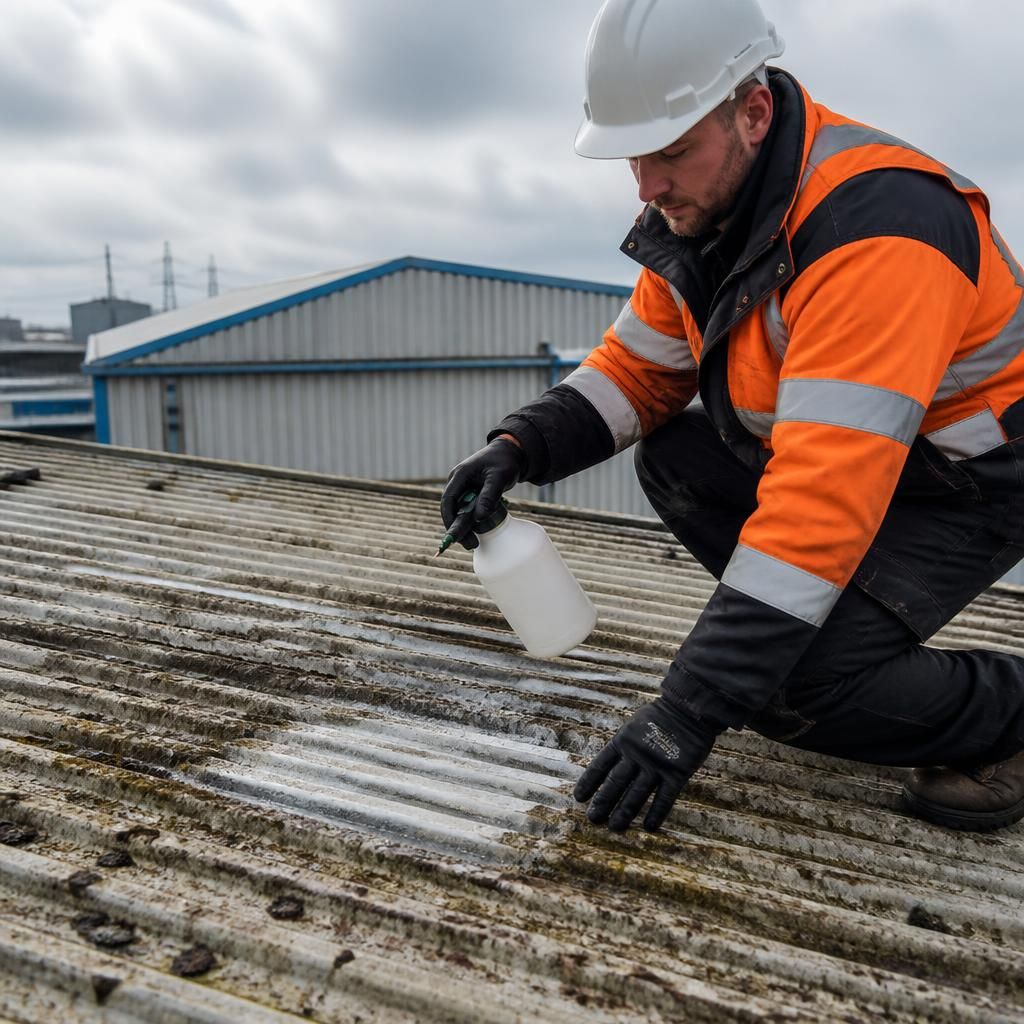
The safest roof cleaning method is confirmed by inspecting and testing the material before full treatment. A discreet test area shows how the surface, coating and existing defects respond to the proposed pressure, temperature and cleaning solution.
This is particularly important for weathered tiles, slate, coated metal and flat roof membranes, where excessive pressure or unsuitable chemicals may cause surface loss, cracking, corrosion or water ingress. The test also helps determine whether manual moss removal, low-pressure washing, steam cleaning or biowash will provide the required result with the least mechanical force.
Once the method has been confirmed, we protect adjacent walls, glazing, landscaping, drainage points and building equipment before proceeding. If testing reveals that cleaning could worsen an existing defect, we report the limitation clearly and recommend remedial roofing work rather than risk unnecessary damage.