
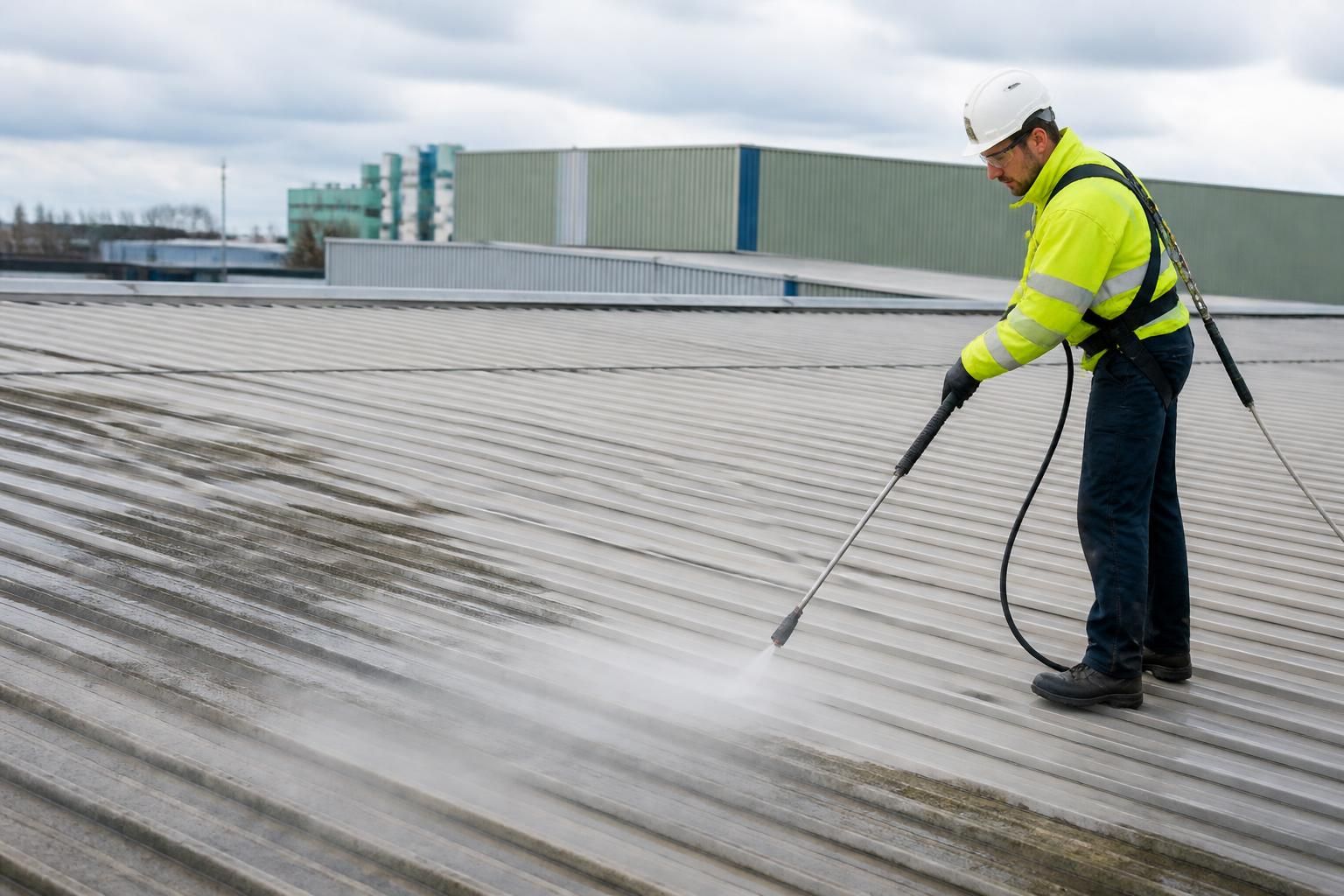
What should I consider when choosing pressure washers and nozzles for different roof surfaces?
Choose a pressure washer by matching its adjustable pressure and water flow to the roof material, then select a nozzle with a suitable spray angle and standoff distance. Use lower pressure and wider fan nozzles for delicate tiles, coatings and membranes, reserving higher settings and more focused nozzles for robust surfaces only after testing an inconspicuous area.
Choosing a pressure washer and nozzle for roof cleaning requires matching the machine’s pressure, water flow, temperature and control features to the roofing material and its condition. The safest approach is to use the lowest effective pressure, a generous spray angle and a suitable working distance, increasing cleaning intensity only when inspection and testing show that the surface can tolerate it.
Pressure alone does not determine cleaning performance. Water flow helps carry loosened dirt, moss and residue away, while excessive pressure can strip coatings, open laps, dislodge pointing or force water beneath tiles and membranes. For commercial work, the machine should therefore offer adjustable pressure and flow rather than relying on a fixed, high-pressure output.
Assess the roof before selecting the equipment
Identify the roofing material, its age, surface finish and current condition before deciding on a washer or nozzle. A roof that is structurally sound and regularly maintained may tolerate a different cleaning method from an older roof with brittle tiles, failed sealant or exposed reinforcement. Check for damaged areas, loose coverings, open joints, fragile coatings, rooflights, vents, plant and electrical equipment.
- Clay and concrete tiles: These may be cleaned with controlled pressure, but aged, cracked or porous tiles can be damaged by an aggressive jet. Keep the spray moving and avoid directing water into laps, ridge joints and damaged edges.
- Slate: Slate can split, delaminate or become displaced if subjected to excessive pressure or impact. A low-pressure method, soft washing or steam cleaning may be more appropriate, particularly on older roofs.
- Metal roofing and cladding: Coated steel and aluminium can usually be cleaned effectively with controlled pressure, although a narrow jet may remove paint, expose corrosion or damage protective finishes. Pay particular attention to fasteners, seams and sealants.
- Single-ply membranes and other flexible systems: These surfaces can be punctured, lifted or damaged at seams by concentrated pressure. Use a broad, gentle spray and avoid forcing water beneath edges, laps and details.
- Fibre-cement and coated sheets: Older sheets may be fragile, weathered or contaminated with hazardous material. Establish the sheet type and condition before any pressure washing, and do not disturb suspected asbestos-containing materials.
- Roof coatings and liquid-applied systems: Confirm the coating manufacturer’s cleaning limitations where available. Pressure that is acceptable for the substrate may still cause peeling, erosion or premature failure of the coating.
Match pressure and water flow to the risk
Use adjustable pressure so the operator can start conservatively and work upwards only if necessary. A lower setting is normally preferable for delicate tiles, membranes, coatings and weathered surfaces. Robust, uncoated materials may allow a stronger setting, but the correct choice still depends on the substrate, contamination and nozzle position.
Water flow is equally important. Adequate flow can improve rinsing and reduce the temptation to compensate with excessive pressure. The machine must also be capable of supplying the selected nozzle consistently; an unsuitable combination can produce poor cleaning, unstable pressure or unnecessary strain on the equipment.
For oil, traffic film, ingrained biological growth or stubborn deposits, consider whether pressure is genuinely the right solution. Pre-treatment, agitation, hot water or steam may remove contamination more safely than simply increasing pressure. Chemical treatments must be compatible with the roof, surrounding surfaces, drainage system and environmental requirements.
Select the nozzle for control, not maximum impact
Nozzle selection controls how widely the water is distributed and how much impact reaches the roof. In general, wider fan nozzles spread the load over a larger area and are more suitable for rinsing and sensitive surfaces. Narrower fan nozzles concentrate the jet and should be reserved for durable areas where testing has confirmed that the finish will not be damaged.
- Use a wide fan for delicate or coated surfaces, general rinsing and removing loose contamination.
- Use a medium fan where more cleaning action is required on a sound, compatible substrate.
- Use a concentrated nozzle only for carefully controlled spot work on robust materials, never as the default setting across an entire roof.
- Do not use a rotary or turbo nozzle on fragile tiles, membranes, painted finishes or uncertain substrates unless the surface has been specifically assessed and approved for that method.
- Use a low-pressure chemical or detergent nozzle when applying a compatible treatment, followed by thorough rinsing in accordance with the product instructions.
The nozzle should remain at a consistent standoff distance from the surface. Moving it closer increases impact rapidly, even if the machine pressure has not changed. Keep the lance at a suitable angle rather than directing the jet straight into joints, laps or overlaps. Work in controlled passes, keep the nozzle moving and avoid lingering over one tile, seam or coating defect.
Consider temperature and cleaning chemistry
Hot water can improve the removal of grease, oil and some biological deposits, but heat is not suitable for every roof. Temperature-sensitive membranes, sealants, coatings and adhesives may soften, distort or lose performance. When the surface or manufacturer’s guidance is uncertain, use cold water or a controlled low-temperature method and test first.
Detergents and biocides should never be selected solely because they improve cleaning speed. Check compatibility with the roof finish, drainage, nearby planting, watercourses and adjacent materials. Protect or isolate vulnerable areas, control runoff and follow the product’s application, dwell-time and rinsing requirements. A chemical pre-treatment can often reduce the pressure needed during the final rinse.
Test the proposed method before full-scale cleaning
Carry out a documented test on an inconspicuous area or representative sample. Record the machine setting, nozzle, working distance, temperature, chemical used and result. Inspect for colour change, coating loss, fibre release, marking, water penetration and movement of tiles or sheets. Allow the area to dry where necessary, as some damage is not immediately visible when the surface is wet.
If the test causes damage or fails to remove the contamination, do not simply increase pressure. Change one variable at a time, such as the nozzle, dwell time, pre-treatment or temperature, and reassess. Where the roof remains unsuitable for pressure washing, use a softer method or refer the issue for specialist roofing advice.
Include roof condition and access in the equipment decision
The machine and nozzle are only part of the system. Safe roof cleaning depends on suitable access equipment, edge protection, fall-prevention measures and a stable position from which the operator can control the lance without overreaching. Long lances and high-pressure reaction forces can reduce control, particularly when working from ladders, platforms or elevated access equipment.
Plan hose routes to prevent trip hazards and avoid dragging hoses across fragile coverings. Keep the operator clear of the discharge path, protect rooflights and vulnerable fixtures, and establish exclusion zones below the work area. Before cleaning, confirm where dirty water will go and prevent contaminated runoff from entering occupied areas, drainage systems or watercourses without suitable controls.
Use a practical selection sequence
- Identify the roof material, finish, age, defects and any manufacturer restrictions.
- Classify the contamination and decide whether pressure, steam, hot water, soft washing or a combination is most appropriate.
- Select a machine with adjustable pressure, suitable flow, reliable temperature control where required and compatible accessories.
- Start with a wide-angle nozzle and the lowest effective setting.
- Test the method on a discreet area and inspect the dry result as well as the immediate appearance.
- Adjust the nozzle, pressure, flow, temperature or pre-treatment only where the test demonstrates that it is safe and necessary.
- Clean in controlled sections, maintaining a consistent distance and angle while monitoring the roof and runoff.
- Stop if tiles move, coatings lift, membranes deform, water enters the building or the surface responds differently from the test area.
For commercial roofs, the best equipment choice is the one that provides sufficient cleaning performance without compromising the roof covering, building occupants, surrounding property or the planned maintenance life of the surface. When the substrate is fragile, coated, temperature-sensitive or poorly documented, conservative settings and specialist assessment are preferable to using a more powerful washer or a more concentrated nozzle.
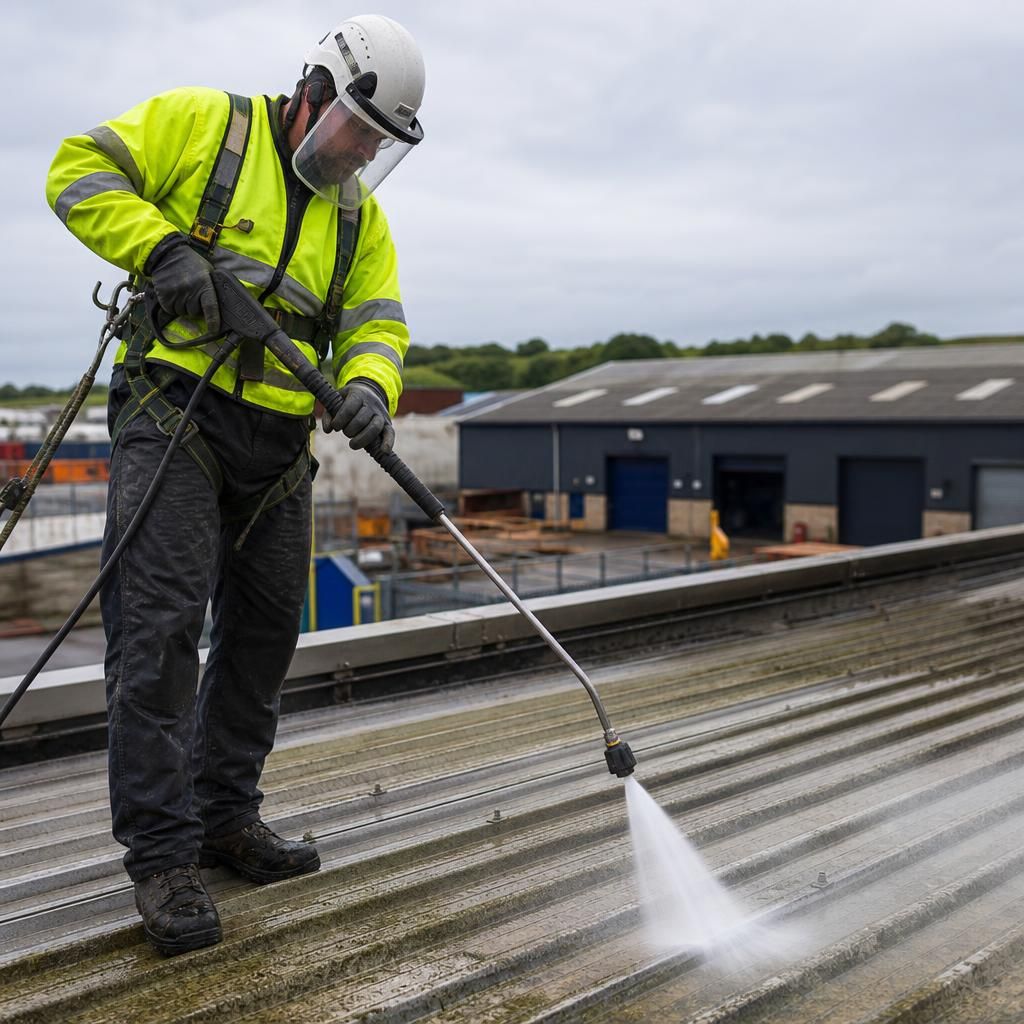
Nozzle choice controls how much impact reaches the roof: a wider fan distributes water over a larger area, while a narrow jet concentrates force on a smaller point. Start with a wide-angle nozzle and the lowest effective pressure, particularly on slate, aged tiles, coatings and flexible membranes.
Keep the lance moving at a consistent distance and angle, avoiding direct spray into laps, seams, joints, rooflights and damaged edges. Test the proposed setting on an inconspicuous area first and inspect the surface after it has dried. If the coating lifts, tiles move or water penetrates the roof covering, stop and reassess the method rather than increasing pressure.
Discuss the Right Pressure Washer and Nozzle for Your Roof
Discuss your roof material, condition and cleaning requirements with Encanto Exterior Cleaning to identify a suitable pressure washer, nozzle and safe operating method. We can help assess whether pressure washing, steam cleaning or a lower-impact approach is appropriate for the surface.