
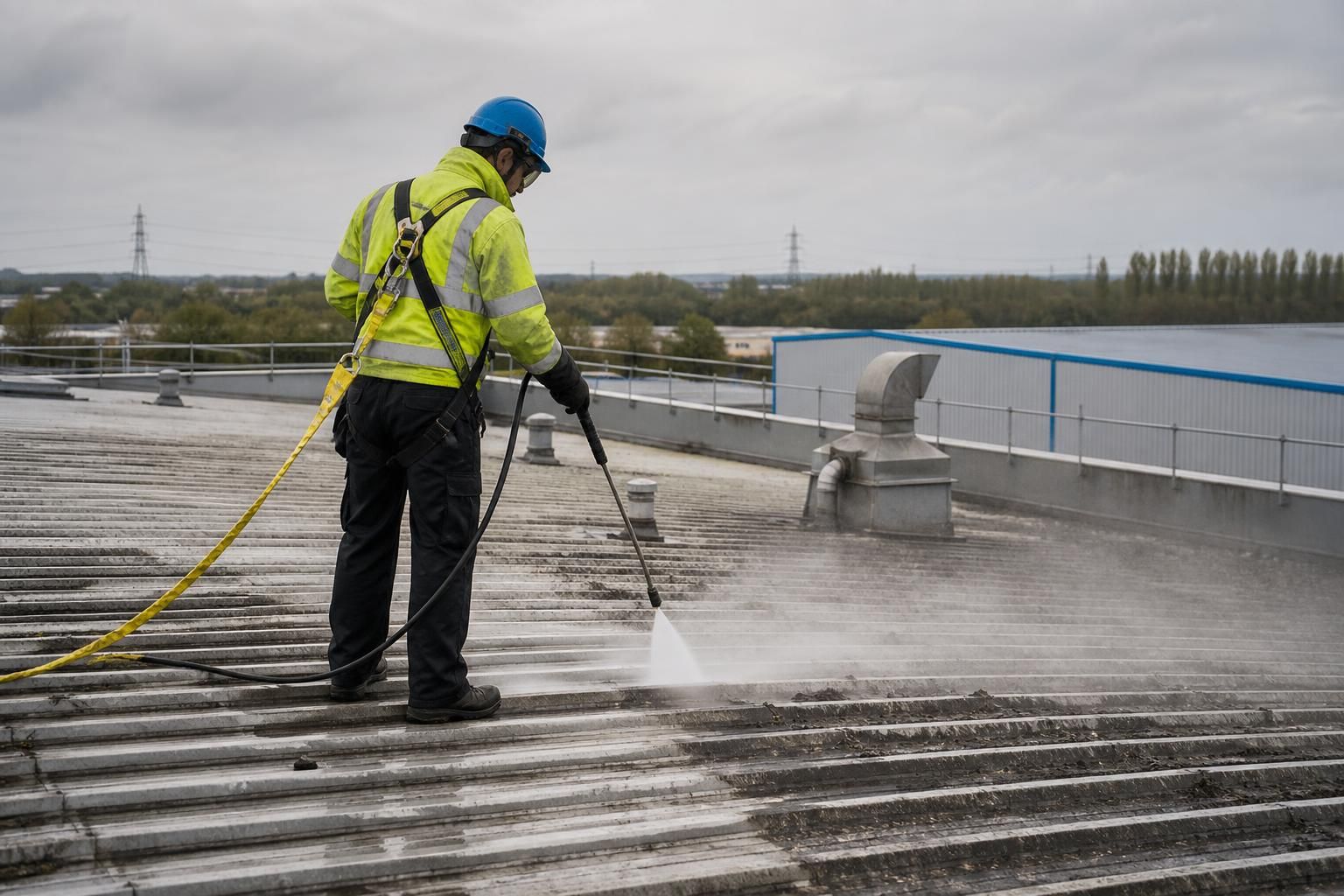
What safety measures should be implemented when using roof cleaning equipment on commercial properties?
Commercial roof cleaning requires a documented risk assessment, trained operatives, suitable work-at-height and access controls, inspected equipment, and task-specific PPE. Establish exclusion zones, secure equipment and hoses, control water and chemical run-off, monitor weather and roof conditions, and follow the manufacturer’s operating instructions and site emergency procedures.
Safe use of roof cleaning equipment on commercial properties depends on controlling work at height, equipment operation, roof-specific hazards, water and chemical exposure, and risks to people below. Before work starts, the contractor should complete a site-specific risk assessment and method statement, appoint competent operatives, inspect the roof and access arrangements, and establish controls for the entire cleaning process, including setup, operation, repositioning and dismantling.
Plan the work and assess the roof
- Inspect the roof structure, covering, edges, rooflights, skylights, access hatches, plant, services and drainage before selecting equipment or planning access.
- Treat rooflights, fragile sheets, aged coverings and areas affected by corrosion as potential fall-through hazards. Mark them clearly and prevent operatives from placing weight or equipment on them.
- Identify overhead power lines, electrical installations, flues, ventilation outlets, antennas, photovoltaic panels and other building services that could be damaged by water, steam, pressure or cleaning chemicals.
- Consider the effect of water and equipment loads on the roof, particularly where hoses, tanks, surface cleaners or access equipment will be positioned.
- Record the cleaning method, pressure, temperature, chemicals, access system, exclusion zone, weather limits, waste controls and emergency arrangements in the method statement.
The assessment should be reviewed if the roof condition changes, unexpected materials are found, weather deteriorates, equipment is changed or the work extends into a different area of the building.
Use suitable work-at-height controls
Roof cleaning should be planned to avoid working at height where a safer ground-based or telescopic method is reasonably practicable. Where access to the roof is necessary, use a suitable hierarchy of controls: collective protection such as guardrails or edge protection should generally be considered before personal fall protection. Access equipment must be appropriate for the roof, the task, the ground conditions and the reach required.
- Use properly installed scaffolding, towers, edge protection, access platforms or other suitable systems where they provide the safest method.
- Only use ladders for suitable short-duration tasks where a risk assessment confirms that they are appropriate. They must be stable, secured and used for access rather than as a substitute for a proper working platform.
- Use harnesses, lanyards and horizontal or vertical lifelines only as part of a designed system, with suitable anchor points and a documented rescue plan.
- Keep access routes clear of hoses, power leads, standing water, sludge and removed debris.
- Prevent unauthorised access to the roof and ensure operatives do not work alone where a fall or delayed rescue could create a serious risk.
Fall-arrest equipment does not remove the need for edge protection or safe planning. It also creates a suspension-rescue requirement, so someone on site must know how to raise the alarm and recover an incapacitated worker without relying solely on the emergency services.
Control equipment and pressure-related hazards
Pressure washers, steam cleaners, pumps, hoses and surface-cleaning attachments should be selected for the roofing material and used in accordance with the manufacturer’s instructions. High-pressure water can dislodge tiles, damage coatings, force water beneath laps and flashings, break fragile components and create dangerous spray or flying debris.
- Check machines, hoses, couplings, trigger mechanisms, lances, nozzles, guards and electrical connections before use.
- Remove damaged equipment from service and do not repair pressure hoses or electrical equipment with temporary fixes.
- Fit the correct nozzle, pressure-control setting and attachment for the surface. Never assume that a setting suitable for concrete or masonry is suitable for roof tiles, membranes, coatings or cladding.
- Keep the lance under control, maintain a stable stance and avoid directing spray towards people, glazing, electrical equipment, vents or vulnerable roof details.
- Secure hoses and equipment against movement, particularly on sloping roofs, platforms and exposed edges. Use hose management rather than allowing a hose to pull against an operative.
- Do not leave a pressurised machine unattended. Isolate the water and power supply before clearing a blockage, changing a nozzle or carrying out adjustments.
- Use a residual current device where appropriate for electrical equipment, keep connections away from water and follow the equipment manufacturer’s electrical requirements.
Steam cleaning introduces additional risks from hot water, vapour, heated surfaces and reduced visibility. Operatives should keep clear of the discharge, allow surfaces and equipment to cool before handling them, and prevent hot run-off from reaching people, sensitive materials or public areas.
Provide task-specific personal protective equipment
PPE should supplement, not replace, safe access and other control measures. The selection should follow the risk assessment and the equipment being used. It may include a suitable safety helmet with chin strap, protective footwear with effective slip resistance, waterproof or chemical-resistant gloves, eye protection or a full-face visor, hearing protection, protective clothing and respiratory protection where the assessment identifies an inhalation risk.
When chemicals are used, check the product safety data and COSHH assessment before work begins. Confirm the required gloves, eye and skin protection, storage arrangements, dilution method, spill response and first-aid measures. Do not mix products unless the manufacturer specifically permits it, and ensure labels remain legible in transfer or application containers.
Manage slips, falling objects and the area below
Roof cleaning produces water, foam, algae, silt, loose coating and other debris. These can create slip hazards on the roof, access equipment, walkways and ground-level surfaces. Use planned drainage routes, remove build-up regularly and stop work if visibility or footing becomes unsafe.
- Establish a clearly marked exclusion zone beneath and around the work area.
- Prevent vehicles, pedestrians, staff and members of the public from entering areas exposed to falling tools, debris, spray or run-off.
- Use tool lanyards, secure containers and suitable barriers where tools or attachments could fall.
- Provide warning signs, banksmen or controlled access where the site remains operational during cleaning.
- Protect entrances, loading bays, stock, vehicles, glazing and sensitive external equipment from spray and falling material.
- Inspect the area below regularly because wind or changes in the work position can extend the hazard zone.
Never rely on signage alone where people could walk beneath the work. Physical segregation and site coordination are needed on busy commercial premises.
Control water, chemicals and environmental releases
Run-off can carry detergents, biocides, oil, dirt, paint particles and organic growth into surface-water drains or neighbouring property. Before cleaning, identify the drainage system and agree how water will be contained, filtered, collected or safely discharged. Protect drains where required, but do not block drainage in a way that causes flooding or directs water into the building.
- Use bunding, drain covers, collection systems or wet vacuums where the assessment identifies a pollution risk.
- Prevent contaminated water from entering watercourses, landscaped areas, occupied spaces or adjoining premises.
- Store chemicals securely, keep containers upright and protect them from damage, heat and unauthorised access.
- Have spill kits and a clear reporting procedure available, and deal with leaks promptly.
- Confirm that the cleaning method will not affect roof coatings, sealants, membranes, rainwater goods or adjacent materials.
Monitor weather and changing conditions
Wind, rain, frost, heat, poor visibility and lightning can make roof cleaning unsafe or reduce the effectiveness of controls. Wind can move ladders, platforms, hoses and spray into unsafe areas; rain and cleaning residues can make surfaces slippery; frost can affect footing and equipment; and hot conditions can affect workers, chemicals and roof materials.
Set clear stop-work criteria before starting and monitor conditions throughout the job. Suspend work when operatives cannot maintain secure footing, equipment cannot be controlled, visibility is inadequate, electrical risks increase or the exclusion zone cannot be maintained. Reassess the roof after heavy rain or any event that changes its condition.
Ensure competence, supervision and communication
Operatives should be trained and competent in the specific pressure washer, steam cleaner, access equipment, fall-protection system and chemicals they will use. Training should cover manufacturer instructions, roof-surface limitations, manual handling, electrical safety, chemical exposure, equipment faults, emergency shutdown and rescue procedures.
- Carry out a documented pre-use inspection and record statutory or scheduled examinations where applicable.
- Brief the team on the risk assessment, method statement, exclusion zone, access route, communication arrangements and emergency contacts.
- Coordinate with the building manager and other contractors about working hours, deliveries, alarms, fire routes, occupied areas and temporary isolation of vulnerable services.
- Maintain a reliable means of communication, especially where workers are spread across a large roof or the work is out of sight of ground staff.
- Use a competent supervisor to check that controls remain in place and that the method is followed.
Prepare for emergencies
The site plan should cover falls, equipment failure, electric shock, chemical splashes, burns, loss of footing, sudden weather changes, fire and pollution incidents. Keep first-aid supplies accessible, identify the nearest suitable treatment facilities and make sure emergency responders can reach the site. For work at height, specify how a fallen or injured operative will be recovered, who will raise the alarm and how access equipment will be made safe.
After cleaning, inspect the roof, access system, surrounding areas and drainage routes. Remove equipment and waste safely, confirm that no trip hazards or unsecured items remain, check for damage or water ingress, and report defects before the premises are returned to normal use. A properly documented close-out provides evidence that the work was completed under controlled conditions and helps inform future maintenance.
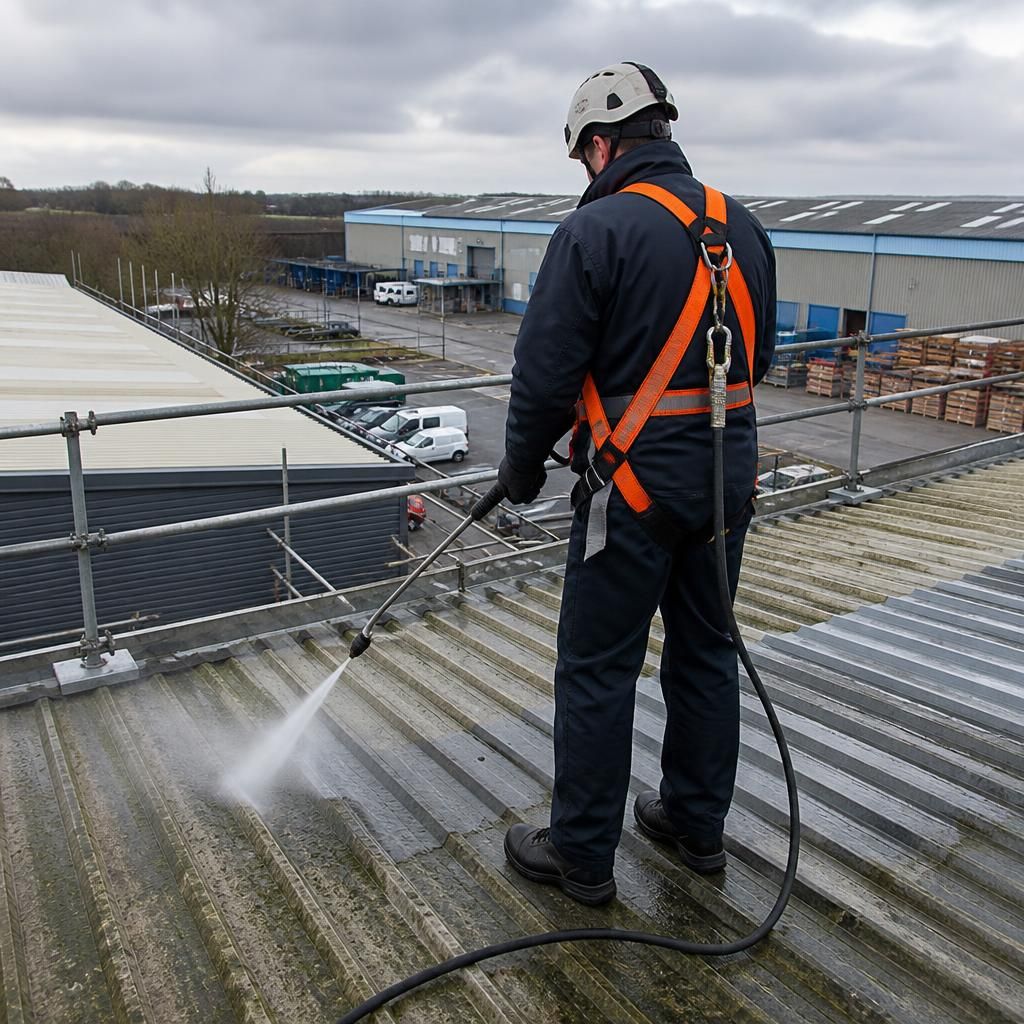
Safe roof cleaning on commercial properties starts with controlling work at height before equipment is operated. Use ground-based or telescopic methods where practicable; where roof access is necessary, prioritise collective protection such as guardrails, edge protection or a suitable access platform.
Rooflights, fragile coverings, roof edges, skylights and areas affected by corrosion must be identified during the site assessment and kept outside the working route. Harnesses and lanyards should only be used within a designed fall-protection system with suitable anchor points and a documented rescue plan.
Establish a physical exclusion zone below the work area to protect people, vehicles, entrances and equipment from falling tools, debris, spray and contaminated run-off. Barriers, controlled access and a banksman may be needed on busy commercial sites; warning signs alone are not sufficient where people could pass beneath the work.
Arrange a Safe Commercial Roof Cleaning Assessment
Arrange a site-specific commercial roof cleaning assessment to review access, roof condition, equipment selection, exclusion zones and emergency controls before work begins. Contact Encanto Exterior Cleaning to plan a safe, compliant cleaning method for your premises.