
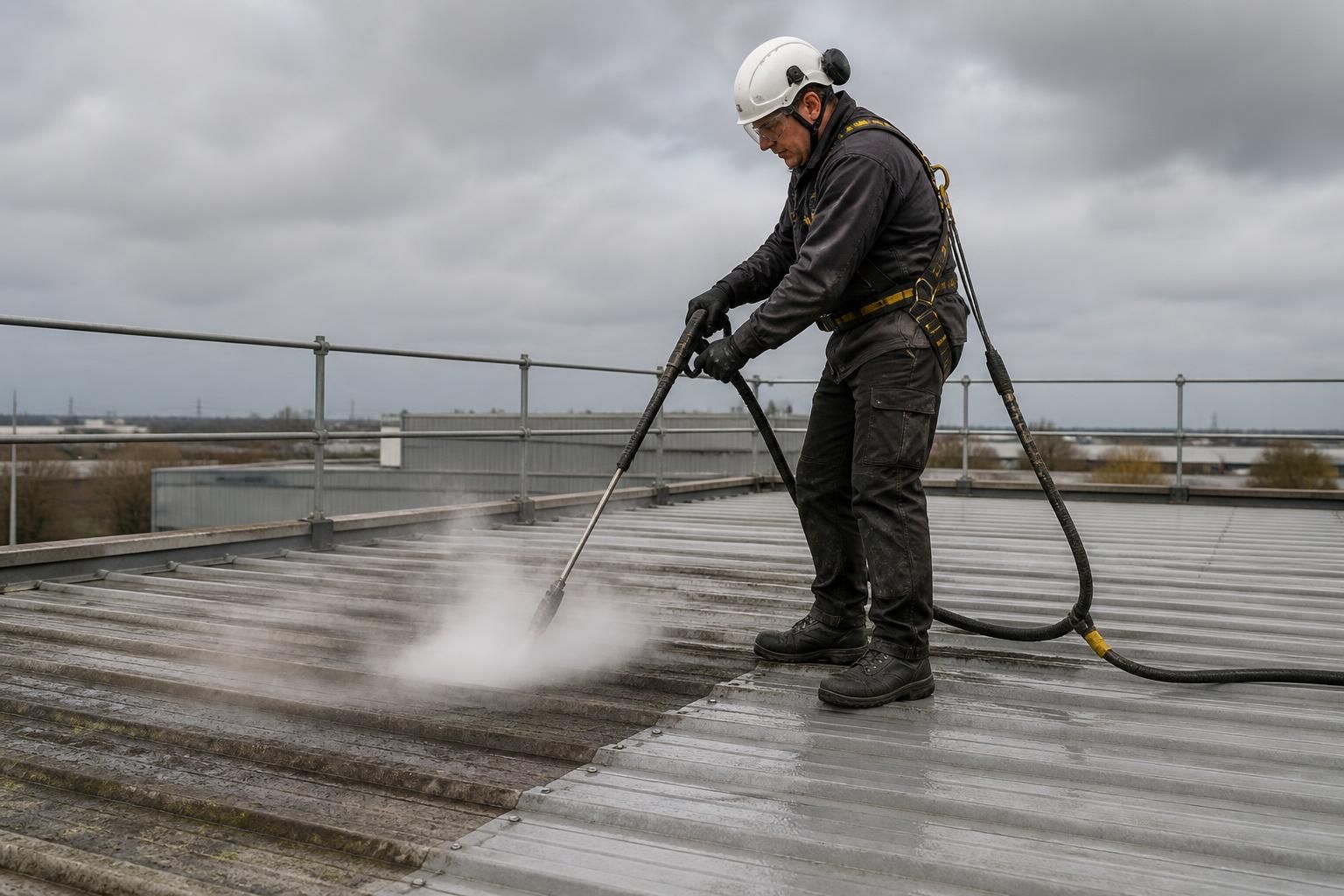
How do steam cleaners contribute to the roof cleaning process for commercial buildings?
Steam cleaners use high-temperature, low-moisture vapour to loosen dirt, algae, grease and biological growth from commercial roofs while using less water than conventional pressure washing. When matched to the roofing material and used with suitable access and runoff controls, steam cleaning can improve surface cleanliness while helping reduce the risk of water penetration and substrate damage.
Steam cleaners support commercial roof cleaning by using high-temperature, low-moisture vapour to soften and release algae, moss, grease, traffic film, bird fouling and other organic contamination. The reduced water volume can help limit saturation and runoff compared with conventional high-pressure washing, while controlled application allows operatives to clean many roof surfaces with less mechanical force. Steam is not suitable for every roof, however, so the equipment, temperature, pressure and method must be matched to the roofing material and its condition.
During cleaning, heat helps break the bond between contamination and the roof surface. This is particularly useful where dirt has accumulated in textured finishes, joints, laps, fixings or drainage channels. Once softened, the residue can usually be removed using a controlled rinse, soft brush, surface-cleaning attachment or vacuum recovery system, depending on the roof construction and the level of contamination. Steam can also reduce the need for aggressive scrubbing, which helps limit unnecessary wear to coatings and finishes.
For commercial buildings, the main contributions of steam cleaning include:
- Lower water consumption: Steam systems use vapour rather than relying solely on a large volume of pressurised water. This can make runoff easier to control around occupied premises, plant areas and sensitive drainage systems.
- Controlled cleaning action: Heat loosens contamination without requiring the same mechanical impact as high-pressure cleaning. This can be beneficial on surfaces where excessive pressure could lift coatings, drive water beneath laps or damage fragile details.
- Effective removal of organic growth: Heat can help break down algae, moss residue and biological films, although visible growth may still require manual removal and an appropriate treatment to reduce regrowth.
- Improved cleaning of detailed areas: The operator can direct steam around ridges, outlets, service penetrations, gutters and awkward roof features where broad cleaning equipment may be difficult to use.
- Reduced drying burden: Because less water is applied, some roofs and surrounding areas may dry more quickly. This does not remove the need to manage condensation, pooled water or runoff.
A competent commercial roof cleaning process begins with a survey rather than with the equipment. The roof should be identified by material and construction, and its age, coating condition, repairs, drainage arrangements and areas of existing water ingress should be recorded. The inspection should also identify fragile sheets, loose tiles, degraded membranes, exposed insulation, corroded fixings and surfaces that may be damaged by heat. Manufacturer guidance and any available building maintenance records should be checked before selecting steam as the cleaning method.
A small test area is important. It allows the cleaning team to assess whether the selected temperature and pressure remove the contamination without discolouring the finish, softening a coating, disturbing joint sealant or exposing the underlying substrate. The test should be reviewed after the surface has dried, because some damage or staining is not immediately apparent while the roof is wet. Settings can then be adjusted for different areas rather than applying one fixed method across the entire building.
Steam is often most useful as part of a wider equipment strategy. Access equipment provides a stable working position and keeps operatives away from unsafe roof edges. Low-pressure rinsing or suitable surface-cleaning tools may be used after steaming to collect loosened deposits. Wet vacuums, drain guards and controlled collection systems can help prevent contaminated water entering rainwater systems or reaching public areas. On large premises, the work may be divided into manageable sections so that debris, condensate and runoff remain under control.
Roofing materials require different levels of caution. Coated metal roofs may tolerate steam when the coating is sound, but excessive heat or prolonged application can affect ageing finishes and sealants. Concrete and clay tiles can be cleaned with controlled methods, although cracked, loose or porous tiles may be vulnerable to thermal shock, water penetration or movement underfoot. Single-ply membranes, liquid-applied systems and other temperature-sensitive materials require particular care because heat can alter the membrane, welds, adhesive bonds or protective finish. Insulated panels and roofs with concealed cavities should not be treated in a way that forces moisture into joints or openings.
Steam should not be used to conceal defects or replace roof repairs. Cleaning may reveal cracked tiles, failed sealant, open laps, blocked outlets, corrosion or damaged flashing. These findings should be documented and reported so that the building owner or facilities team can arrange suitable remedial work. If a roof contains suspected asbestos cement or another hazardous material, the work must be assessed and managed under the applicable UK health and safety requirements before any cleaning takes place. Cleaning should not disturb hazardous surfaces without the correct survey, controls and competent personnel.
Safety controls remain essential even though steam systems use less water. A suitable risk assessment and method statement should address work at height, fragile surfaces, access and rescue arrangements, hot vapour, electrical equipment, hoses, visibility, falling debris and interaction with building occupants or members of the public. Operatives should use appropriate personal protective equipment, including eye and face protection, gloves suitable for hot equipment and footwear with suitable slip resistance. Exclusion zones and warning signs may be required below the work area, particularly where loosened debris or condensate could fall.
Runoff must also be planned. Steam cleaning produces condensed water and contaminated residue, so drains should be protected where required and discharge should follow the site’s environmental controls. Grease, biological material, paint fragments and cleaning chemicals should not be allowed to enter surface-water drainage without assessment. The method should account for nearby entrances, air-conditioning intakes, electrical installations, loading bays, vehicles and sensitive landscaping.
Steam cleaning is therefore most effective when it is used selectively and with precise control, rather than treated as a universal replacement for pressure washing. It can provide a lower-moisture option for loosening stubborn contamination and reducing the mechanical force needed on suitable commercial roofs. The final choice should be based on the roof material, surface condition, contamination type, access arrangements, drainage controls and the building’s operational requirements. A documented inspection, test clean and agreed method help ensure that the finished roof is clean without compromising its protective layers or surrounding premises.
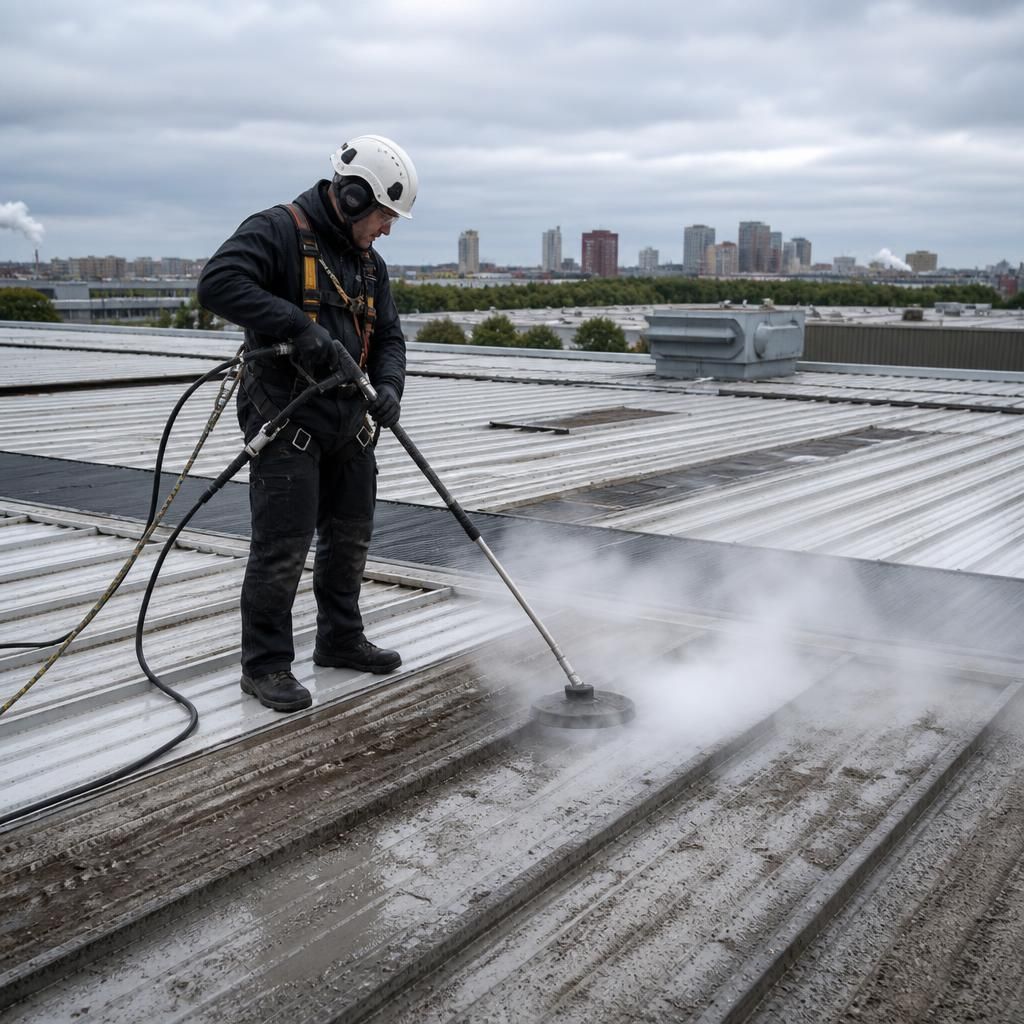
Steam cleaners use high-temperature, low-moisture vapour to loosen algae, grease, bird fouling and embedded grime from suitable commercial roof surfaces. This reduces the mechanical force and water volume needed compared with conventional pressure washing, helping operatives work more carefully around coatings, joints, fixings and drainage details.
Steam must still be matched to the roof material and condition. A test clean should confirm that the selected temperature and pressure do not soften coatings, disturb sealants or affect membranes before wider cleaning begins. Condensed water and loosened residue also require controlled collection or discharge, particularly near entrances, plant, surface-water drains and occupied areas.