
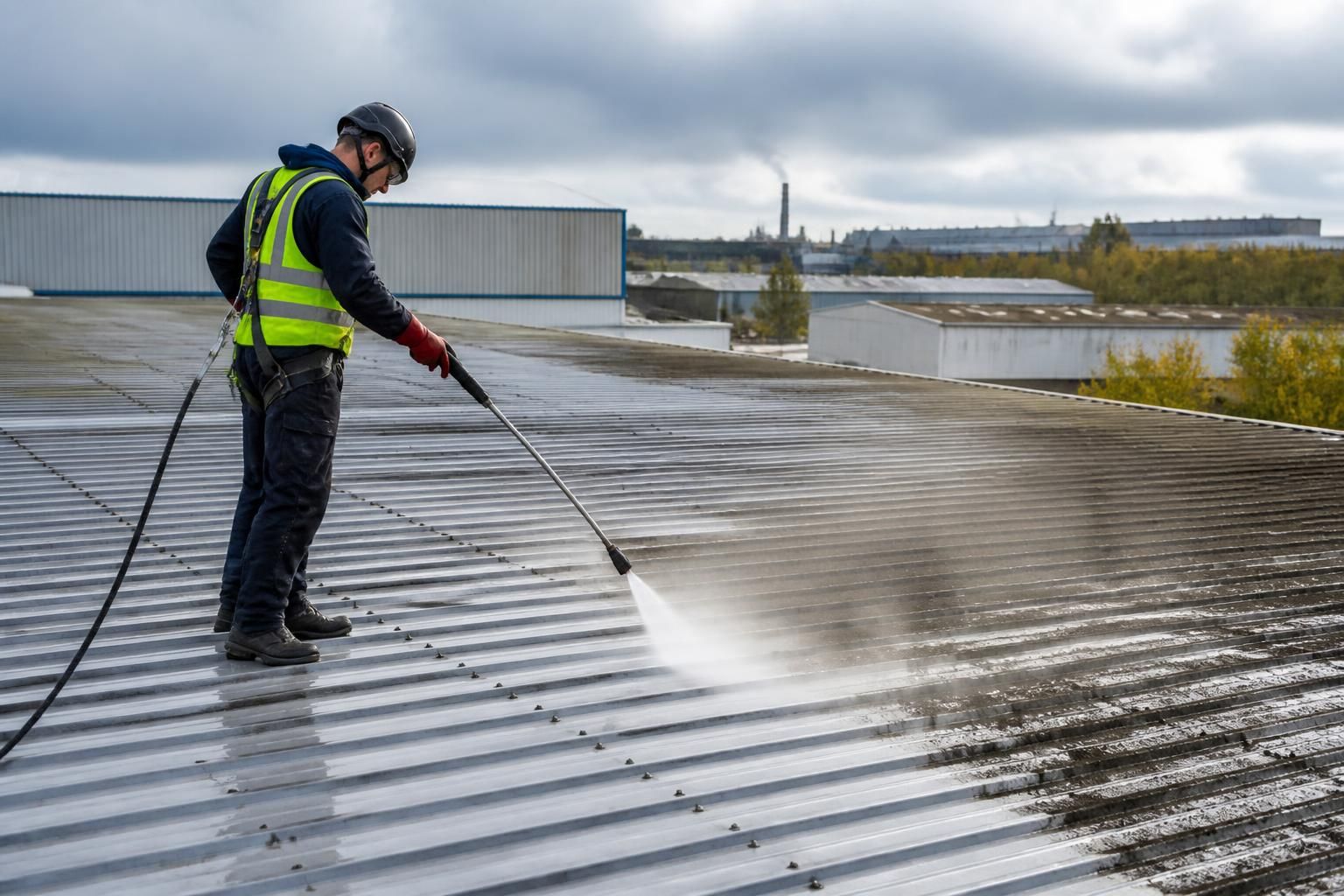
How do pressure washers enhance the effectiveness of roof cleaning on commercial premises?
Professional pressure washers enhance commercial roof cleaning by combining controlled water pressure and suitable flow rates to remove dirt, algae, moss and other build-up more efficiently than manual methods. When the pressure, nozzle and technique are matched to the roofing material, they improve surface cleanliness while reducing the risk of damage and helping maintain a safe, presentable premises.
Professional pressure washers make commercial roof cleaning more effective by combining controlled water pressure, consistent flow and suitable attachments to remove dirt, algae, moss, bird fouling, atmospheric deposits and loose surface contamination. When the equipment is matched to the roof material and used by a trained operator, it can clean large areas more consistently than manual methods while limiting unnecessary disturbance to the roofing system.
Pressure alone is not the objective. Effective roof cleaning depends on balancing pressure, water volume, temperature, nozzle selection, cleaning solution and working distance. Excessive pressure can damage roof coverings, dislodge protective finishes, force water beneath laps or seals, and spread contaminated run-off. Professional cleaning therefore uses the lowest effective setting for the material and the type of deposit being removed.
How pressure washing improves the cleaning process
- More consistent coverage: A pressure washer delivers a controlled stream across the surface, helping operators treat broad areas methodically rather than relying on uneven manual scrubbing.
- Faster removal of loose contamination: Surface dirt, dust, loose moss, organic debris and some exhaust deposits can be rinsed away efficiently once they have been loosened.
- Better preparation for treatment: Removing surface contamination allows an appropriate biocide or other cleaning treatment to contact the roof more evenly. Treatments should be selected and applied in accordance with the roof material and product instructions.
- Improved access to difficult areas: Lance extensions, telescopic equipment and suitable surface-cleaning attachments can help reach broad roof sections, edges and awkward areas while reducing the need for operators to work directly on fragile coverings.
- Controlled water use: Correct nozzle choice and flow control help direct water where it is needed, reducing overspray and limiting the amount of run-off requiring collection or treatment.
Pressure, flow and temperature work together. Pressure describes the force available at the nozzle, while flow rate affects how quickly contamination is rinsed away and how much water reaches the surface. A high-pressure, low-flow setting is not automatically more effective; it may be aggressive without providing efficient rinsing. Conversely, suitable flow with moderate pressure can remove loosened deposits over a wider area with less risk to the covering.
Hot water or steam can improve the removal of greasy, oily or deeply ingrained deposits, particularly on commercial roofs affected by traffic pollution, food-related residues or industrial emissions. However, heat must be assessed carefully. Some membranes, coatings, sealants and adhesives can soften, deform or lose performance if exposed to unsuitable temperatures. Cold-water cleaning may be more appropriate for temperature-sensitive materials or where the main issue is loose biological growth.
Nozzle and attachment selection is critical. A narrow jet concentrates force into a small area and may mark, cut or strip a roof coating. Wider fan patterns distribute the water more gently and are generally more appropriate for controlled rinsing. Rotary or surface-cleaning attachments can improve uniformity on suitable robust surfaces, but they are not suitable for every roof. The operator should consider the covering, its condition, the contamination, the working distance and the likelihood of water entering joints or vulnerable details before selecting an attachment.
Different roofing materials require different methods.
- Metal roofing and cladding: Cleaning should protect painted finishes, anti-corrosion coatings, fixings, laps and sealants. Aggressive jets can expose bare metal or drive water into joints. A controlled rinse and suitable detergent may be preferable to concentrated pressure.
- Concrete or clay tiles: These can often tolerate more robust cleaning than delicate membranes, but aged, cracked, porous or previously damaged tiles still require low-impact techniques. Pointing, underlays and ridge details must also be protected.
- Asphalt or bituminous coverings: Abrasive pressure can remove surface granules or damage the weathering layer. Cleaning should be gentle and should avoid directing water beneath seams, flashings and edge details.
- Single-ply membranes and coated systems: These are particularly dependent on controlled pressure, temperature and chemical compatibility. Operators should avoid scuffing, lifting edges or compromising welds and seams.
- Polycarbonate, glazed and other lightweight roof elements: These may scratch, craze or become distorted through unsuitable chemicals, heat or pressure. A soft rinse and compatible cleaning product may be required instead.
Before work begins, the roof should be surveyed for its material, age, condition, previous repairs, drainage arrangement and vulnerable details. Cracked coverings, loose trims, failed sealant, exposed insulation, defective flashings and blocked outlets should be recorded. Pressure washing is a cleaning method, not a repair solution, and damaged areas may need to be isolated or referred for remedial work before cleaning proceeds.
A controlled commercial roof-cleaning process normally includes:
- Inspecting the roof, surrounding elevations, access routes, drainage points and areas beneath the work zone.
- Identifying the roofing material and checking the manufacturer’s maintenance guidance where available.
- Removing loose items such as leaves, branches and heavy moss before introducing pressurised water.
- Testing the selected pressure, temperature, nozzle, attachment and cleaning solution in an inconspicuous area.
- Applying compatible detergent or treatment where required, allowing suitable dwell time without allowing the product to dry on the surface.
- Working in controlled sections, keeping the lance at a consistent distance and directing water away from laps, vents, flashings and roof edges where possible.
- Rinsing thoroughly and checking for remaining deposits, blocked outlets, displaced debris or signs of damage.
- Collecting or controlling contaminated run-off in line with site requirements and environmental obligations.
- Inspecting the completed roof and recording defects or maintenance recommendations for the responsible building manager.
Safety and environmental controls are essential on commercial premises. Roof cleaning combines work at height, pressurised equipment, wet surfaces, electrical hazards, chemicals and falling debris. Suitable access equipment, edge protection and fall-prevention measures should be selected following a site-specific assessment. Operators should also protect roof lights, vents, air-intake points, pedestrian routes, vehicles and sensitive plant. Water and chemical run-off must not be allowed to enter surface-water drainage systems unless it is safe and permitted to do so.
Pressure washing also supports planned maintenance by making defects easier to identify. Once moss, grime and biological growth have been removed, inspectors can more clearly assess corrosion, failed coatings, damaged tiles, open joints, blocked drainage and deteriorating sealants. Cleaning should not be presented as a substitute for a roof survey, but it can form a useful part of a wider maintenance programme.
The most effective approach is therefore not simply to use the most powerful machine available. It is to select equipment that provides adequate flow and controllable pressure, combine it with the correct nozzle or surface attachment, and adjust the method to the roof covering and contamination. For commercial buildings, that balance delivers a cleaner, safer and more presentable roof while reducing the likelihood of avoidable damage, uncontrolled run-off and disruption to the site.
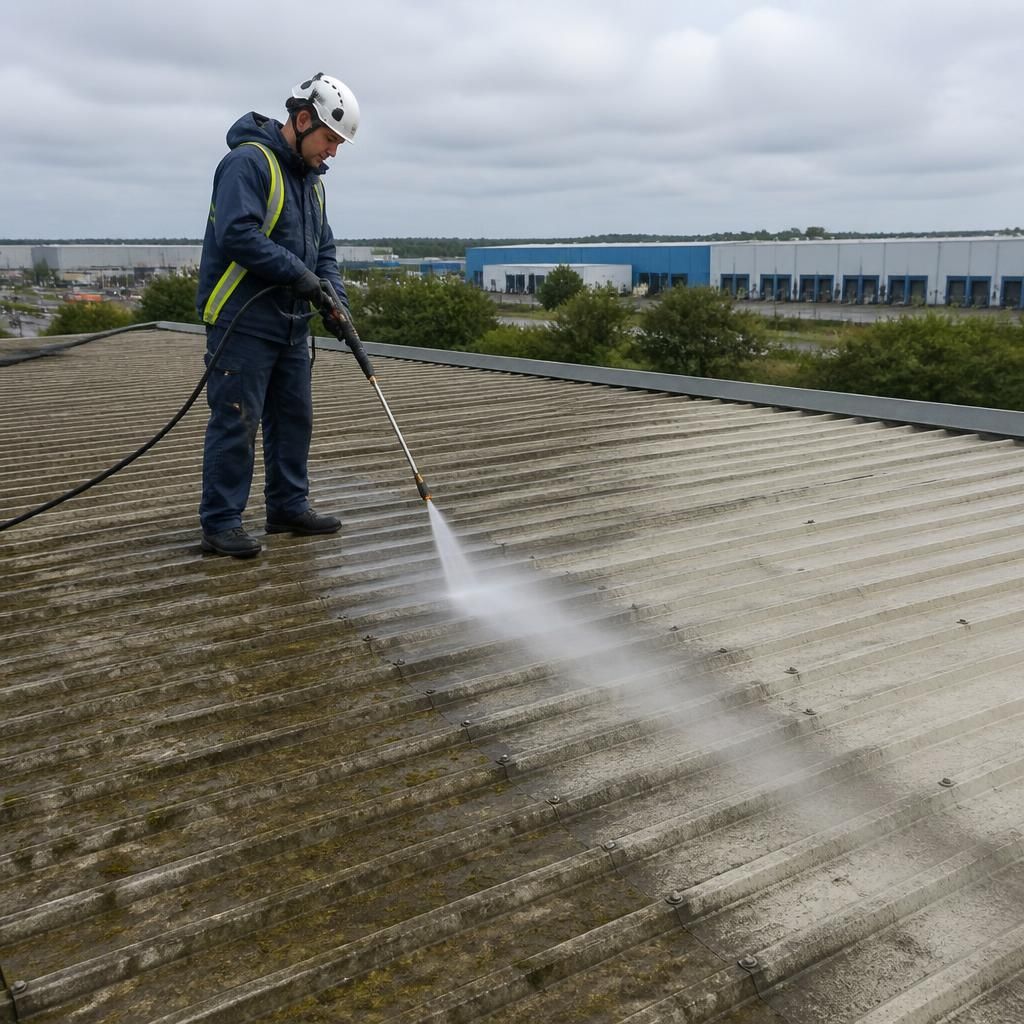
Pressure washers enhance commercial roof cleaning by delivering controlled water pressure and flow across large areas, helping remove loose dirt, algae, moss and atmospheric deposits more evenly than manual methods. Their effectiveness depends on using the lowest pressure that will remove the contamination without damaging the roof covering.
Operators should match the nozzle, working distance, temperature and flow rate to the material and its condition. A wide fan pattern and moderate pressure may suit painted metal or single-ply membranes, while more robust coverings may accept a suitable surface-cleaning attachment. Testing an inconspicuous area first helps identify the safest effective setting and reduces the risk of lifting coatings, disturbing seals or forcing water beneath laps and joints.