
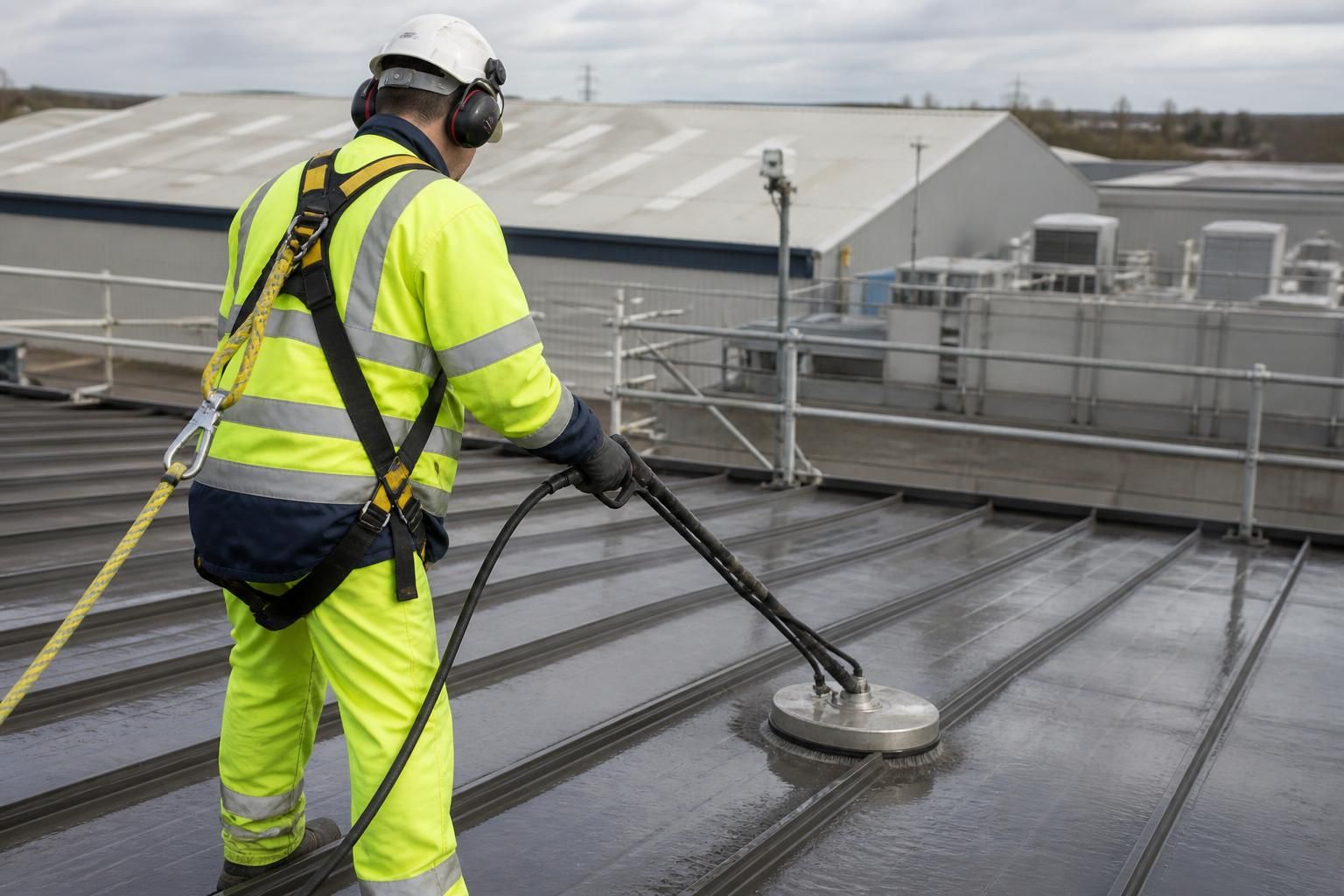
How can I identify the most suitable surface cleaner attachments for diverse roofing surfaces?
Identify the most suitable surface cleaner attachment by matching its pressure rating, water flow, cleaning head, brush or skirt design and operating height to the roofing material and its condition. Use gentler, non-abrasive attachments for slate and delicate tiles, controlled rotary cleaners for robust concrete tiles, and compatible low-pressure tools for coated or temperature-sensitive metal roofing, following a test area and the manufacturer’s guidance.
The most suitable surface cleaner attachment is identified by matching its operating pressure, water flow, cleaning action, head design and recovery method to the roofing material and its condition. Robust, relatively even concrete surfaces can often accept a controlled rotary surface cleaner, whereas slate, aged clay tiles, coated metal, membranes and profiled sheets generally require a lighter, lower-pressure attachment or a different cleaning method altogether. Always confirm compatibility with the equipment manufacturer and test a small, inconspicuous area before starting the main work.
Start by assessing the roof rather than choosing the attachment first. Identify the material, surface profile, coating, age, existing damage and degree of soiling. Check for loose or cracked tiles, failed mortar, exposed fixings, degraded sealants, corrosion, flaking coatings and areas where water could enter beneath laps or flashing. A surface cleaner that is suitable for sound concrete may be inappropriate for a fragile or weathered equivalent. On commercial premises, also consider roof access, drainage routes, nearby occupants, electrical equipment, ventilation intakes and the need to contain dirty water.
Choose the cleaning head according to the surface profile.
- Rotary flat surface cleaners: These use rotating jets beneath a covered head to produce a more even clean than an exposed lance. They are generally most appropriate for sound, relatively flat and durable surfaces, such as suitable concrete roof areas, plant-room decks or accessible hardstanding around a roof structure. The head must remain level and should not be forced over ridges, exposed edges or raised defects.
- Small or lightweight rotary attachments: These provide greater control where access is restricted or the roof has modest changes in level. They can reduce operator fatigue and make it easier to avoid fragile details, although they are not automatically safe for delicate materials.
- Brush or soft-contact attachments: These may be preferable where mechanical impact needs to be limited. Use only non-abrasive bristles that will not scratch coatings, dislodge surface granules or damage protective finishes. A brush attachment still requires suitable water pressure and controlled movement.
- Low-pressure or steam-compatible heads: These are useful where the cleaning objective is to soften biological growth, atmospheric deposits or oily contamination without relying on aggressive impact. Steam and low-pressure cleaning need careful control around seals, joints, insulation and temperature-sensitive finishes.
- Vacuum-recovery surface cleaners: These can help on commercial sites where contaminated water must be collected rather than allowed to enter surface-water drainage. Confirm that the recovery system can cope with the expected solids, water volume and roof access arrangements.
For concrete and other robust tiled roofs, prioritise control and even coverage. A rotary head with a protective skirt can reduce splash and help maintain a consistent cleaning distance. It should have an operating pressure and flow requirement compatible with the pressure washer, as an attachment will not perform correctly if the machine cannot supply the required water volume. Keep the head moving at a steady pace; holding it in one position can create visible cleaning marks or remove more of the surface than intended. Avoid directing water into open joints, damaged tiles, ridge details or vulnerable mortar.
Clay tiles require a more conservative approach. Older clay tiles can be brittle, porous or already weakened by frost and weathering. A heavy rotary cleaner may chip edges, disturb the tile surface or drive water beneath overlaps. A soft brush, low-pressure rinse or controlled steam attachment may be more appropriate, depending on the deposit and the tile condition. Work with the roof profile rather than across exposed laps, and use a test area to check that the attachment does not alter colour, glaze or surface texture.
Slate should normally be treated as a delicate surface. Select an attachment that limits impact and avoids abrasive contact. Lightweight equipment, soft brushes and low-pressure application are generally easier to control than a high-impact rotary head. Do not use the attachment to bear down on the slate, and take particular care around nail holes, corners, flashings and areas of delamination. If the slate is loose, laminating or visibly fragile, cleaning may need to be restricted or postponed until a suitable roofing professional has assessed it.
Metal roofing needs compatibility with both the metal and its finish. Coated, painted and galvanised sheets can be damaged by excessive pressure, harsh brushing or unsuitable chemicals. Choose a non-abrasive attachment with controlled spray impact and enough clearance to avoid catching seams, laps and fixings. On profiled metal, a flat surface cleaner may not maintain an even seal over the ribs and could force water into joints. A lance with the correct low-pressure nozzle, a soft brush or a steam-based tool may provide better control. Check for corrosion and failed coating before cleaning, because cleaning cannot restore a deteriorated protective finish.
Membranes, insulated panels and other temperature-sensitive systems need particular caution. Confirm the membrane or coating manufacturer’s limits for pressure, temperature, chemical use and mechanical contact. Avoid hot water or steam where heat could soften, distort or separate the surface, and avoid attachments that can snag seams or lift edges. For these roofs, the correct tool may be a low-pressure rinse or soft-contact attachment rather than a conventional rotary cleaner. Test both the cleaning result and the condition of the surface after it has dried.
Check the attachment’s technical features before use. The following points are more important than the attachment’s appearance or stated cleaning area:
- The pressure and water-flow requirements must match the pressure washer without operating beyond the roof material’s safe limit.
- The cleaning head must be appropriate for the surface profile and provide stable, even coverage.
- Skirts, splash guards and protective wheels should not mark the roof or trap debris against the surface.
- Rotary arms, nozzles, swivels and bearings should be in good condition. Worn components can produce uneven jets and strip or etch the surface.
- The attachment should be light enough to control without being dragged, dropped or used as a support on the roof.
- Hose connections and recovery equipment should be suitable for the working height, access route and expected water volume.
- Materials used in brushes, seals and fittings should be compatible with any approved cleaning solution.
Use a controlled selection and testing process. Remove loose debris using a method that will not spread contamination, then select the least aggressive attachment likely to remove the deposit. Set the equipment conservatively, clean a small test patch and allow it to dry before judging the result. Check for colour change, coating loss, scuffing, exposed aggregate, displaced granules, water penetration and damage to pointing or sealants. If the test is unsuccessful, change one factor at a time: attachment, pressure, temperature, distance, movement speed or cleaning solution. Increasing pressure should not be the default response.
Surface cleaners are not suitable for every part of a roof. Use a lance, soft brush or detail tool around vents, rooflights, skylights, flashings, gutters, ridge tiles, parapets and service penetrations. Keep water away from openings and protect sensitive plant, electrical systems and occupied areas. Where the roof is steep, fragile or difficult to reach, use appropriate access equipment and fall protection rather than extending the attachment beyond safe control.
For commercial and industrial work, the final choice should also account for containment and site protection. Confirm where dirty water will go, whether vacuum recovery is needed, how removed moss or debris will be collected, and whether the attachment can be operated without contaminating façades, vehicles or neighbouring premises. Record the roof condition, test area, equipment settings and any exclusions before the work begins. This creates a clear basis for selecting the same or a more suitable attachment during future maintenance visits.
In practical terms, use a controlled rotary cleaner on sound, even and durable surfaces; choose soft-contact or low-pressure equipment for slate, aged clay and sensitive finishes; and use a compatible low-pressure or steam approach for coated, profiled or temperature-sensitive metal where appropriate. When the roof condition or material is uncertain, the safest choice is the attachment that provides the greatest control with the least surface impact, supported by a test area and the manufacturer’s guidance.
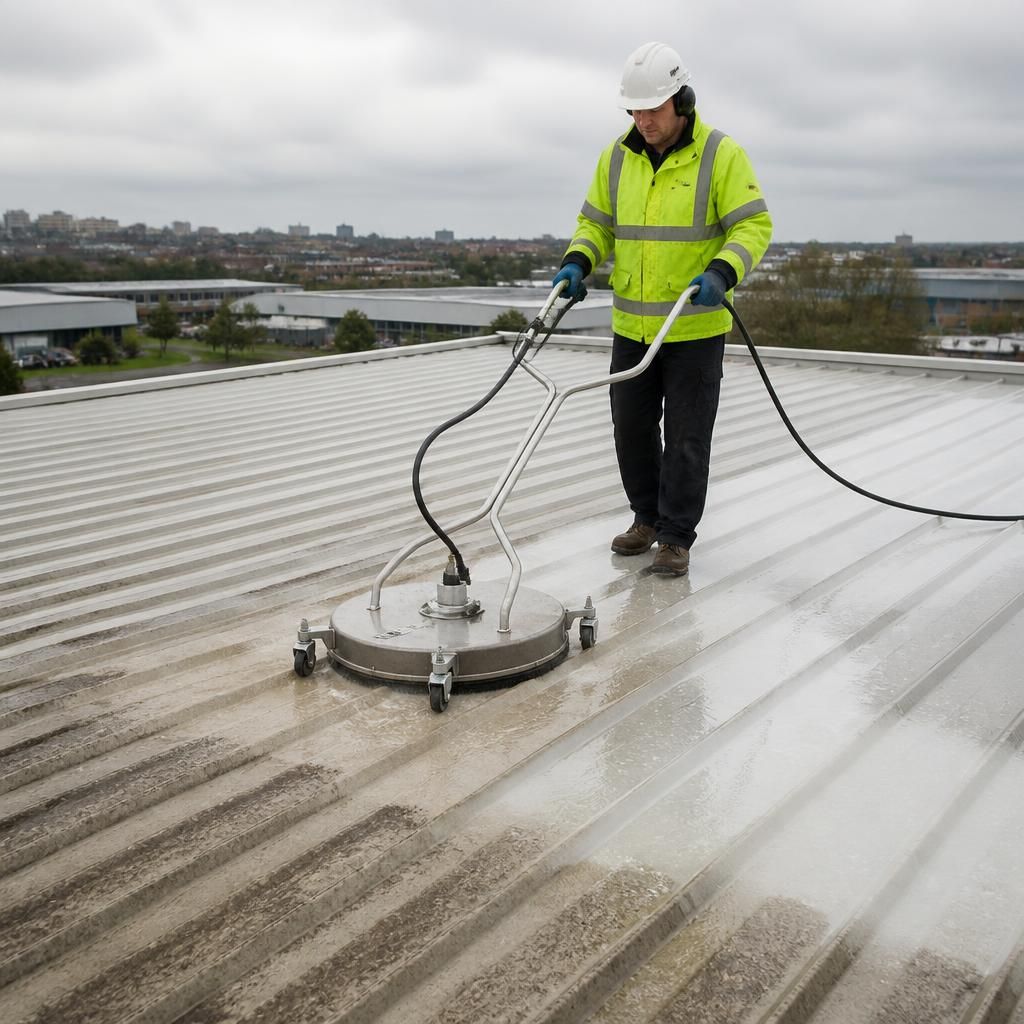
The safest way to identify a suitable roof surface cleaner attachment is to test the least aggressive option on a small, inconspicuous area first. Check the roof material, coating, profile and condition, then assess the dried test patch for colour change, scuffing, coating loss, displaced granules or water penetration before proceeding.
Use a controlled rotary cleaner only on sound, even and durable surfaces. Slate, aged clay tiles, coated metal and roofing membranes usually require a soft-contact brush, low-pressure tool or compatible steam method. If the attachment cannot maintain stable contact without forcing water beneath laps, seams or joints, select a more controllable tool instead.