
What types of roofs are suitable for low pressure and steam cleaning?
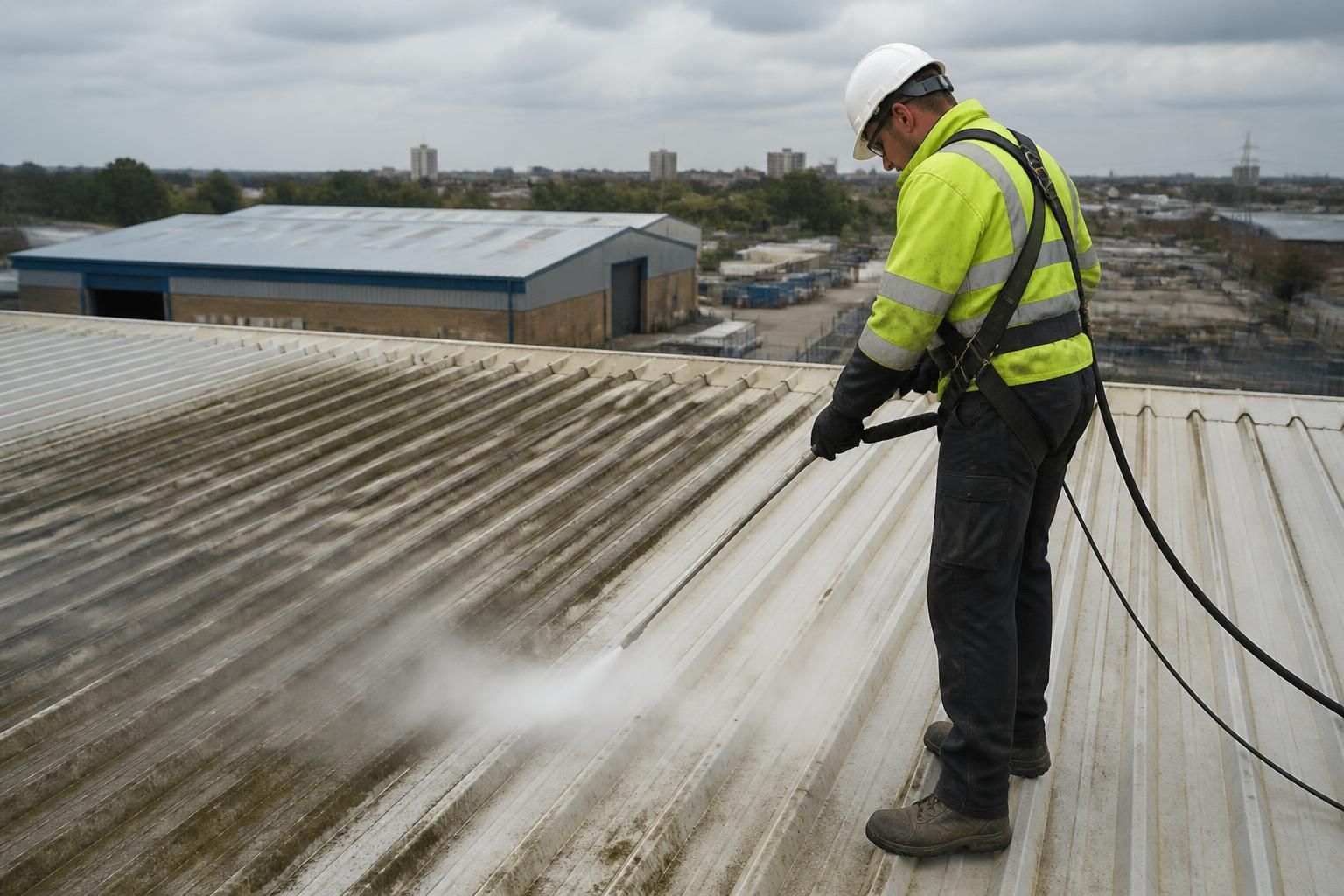
Low pressure and steam cleaning are generally suitable for robust commercial roof surfaces such as concrete tiles, clay tiles, slate, metal cladding and some coated roofing systems, provided the material, condition and existing coatings are assessed first. These controlled methods can remove moss, algae, dirt and grime while reducing the risk of damage associated with high-pressure cleaning, but delicate, weathered or poorly sealed roofs may require an alternative treatment.
Low pressure and steam cleaning are suitable for many sound commercial roofs, including concrete and clay tiles, natural slate, metal roofing and some coated cladding systems. Suitability depends on the roof’s material, age, condition, fixing method, existing coatings and the type of contamination present. A professional inspection should always take place before cleaning, particularly where the roof is weathered, fragile, poorly sealed or covered by a membrane.
Concrete and clay tiles are commonly suitable for controlled low pressure cleaning and, where appropriate, steam cleaning. These methods can remove moss, algae, atmospheric dirt, bird fouling and general staining without the aggressive force associated with conventional high pressure washing. The operator must still work at a pressure appropriate to the tile and avoid directing water beneath overlaps, around flashings or into defective bedding and pointing.
Clay tiles can be more vulnerable than they appear if they are old, porous, cracked or frost-damaged. Their surface may also have a weathered finish that should not be unnecessarily removed. Steam can be useful for targeted treatment of biological growth and ingrained deposits, but the temperature, distance and dwell time need to be controlled to avoid thermal stress or damage to adjacent components.
Natural slate roofs may be suitable for low pressure cleaning when the slates are sound and securely fixed. Slate itself is durable, but older roofs can contain fragile, delaminating or slipped slates, deteriorated nails and weakened flashings. Cleaning should therefore be carried out with minimal pressure and careful access arrangements. Walking directly on slate can cause breakage, so the cleaning method and access plan are as important as the cleaning equipment.
Metal roofs and cladding, including galvanised steel, aluminium and pre-finished metal panels, can often be cleaned using low pressure methods. Steam may be appropriate for localised grease, grime, biological growth or staining, subject to the manufacturer’s coating requirements. Care is needed around laps, fixings, sealants, joints and exposed edges, as water ingress and corrosion can begin in areas that are already damaged. Abrasive tools and excessive heat should not be used on coated surfaces unless specifically approved.
Painted, powder-coated and otherwise protected roofing systems can be suitable, but the condition of the coating must be checked first. Peeling, chalking, blistering or poorly bonded coatings may be lifted by cleaning, even when the pressure is relatively low. A small test area can help establish whether the surface will tolerate the proposed temperature, pressure and cleaning solution before the main work begins.
Fibre cement and cement-based sheets require particular care. Modern, intact sheets may accept a controlled low pressure clean, but older materials can be brittle, heavily weathered or contaminated with coatings that should not be disturbed. Some older fibre cement products may contain asbestos. A suitable survey and legal compliance checks are essential before any cleaning, drilling, cutting or intrusive access work takes place. A roof should not be cleaned simply because its surface appears similar to a newer cement-based product.
Flat roofs need a system-specific assessment. Built-up felt, asphalt, EPDM, PVC, TPO and other single-ply membranes can react differently to pressure, heat, detergents and foot traffic. Low pressure cleaning may be possible where the membrane is intact and the drainage system is protected, but steam is not automatically suitable for every membrane or seam. Loose edges, exposed reinforcement, failed joints, ponding water, punctures and ageing can make cleaning unsafe or increase the risk of water penetration. In some cases, a soft-wash or non-mechanical treatment may be more appropriate than pressure or steam.
Green roofs, insulated panels and roofs with specialist finishes also require a tailored approach. Vegetation, waterproofing layers, insulation, roof lights, solar installations and protective coatings can be damaged by unsuitable cleaning. Areas beneath solar panels or around roof-mounted plant may need separate treatment, while drainage outlets should be isolated or protected so that loosened moss and debris do not enter the system.
Regardless of roof type, the condition of the substrate is a deciding factor. Cleaning may be unsuitable, or may need to be postponed, where there are:
- Cracked, slipped, loose or delaminating tiles or slates.
- Exposed underlay, damaged membranes or failed waterproofing.
- Open joints, defective pointing, degraded sealants or corroded fixings.
- Heavy lichen or moss growth that is concealing structural defects.
- Loose coatings, advanced corrosion or significant surface erosion.
- Suspected asbestos-containing materials without the required assessment.
Low pressure cleaning is generally selected where the roof needs controlled rinsing and removal of surface contamination with reduced mechanical impact. Steam cleaning can be useful where heat helps loosen stubborn grime or reduce biological growth, but it is not a universal solution and must be matched to the material and coating. The two methods can sometimes be combined, although the treatment should be designed around the roof rather than imposed as a standard process.
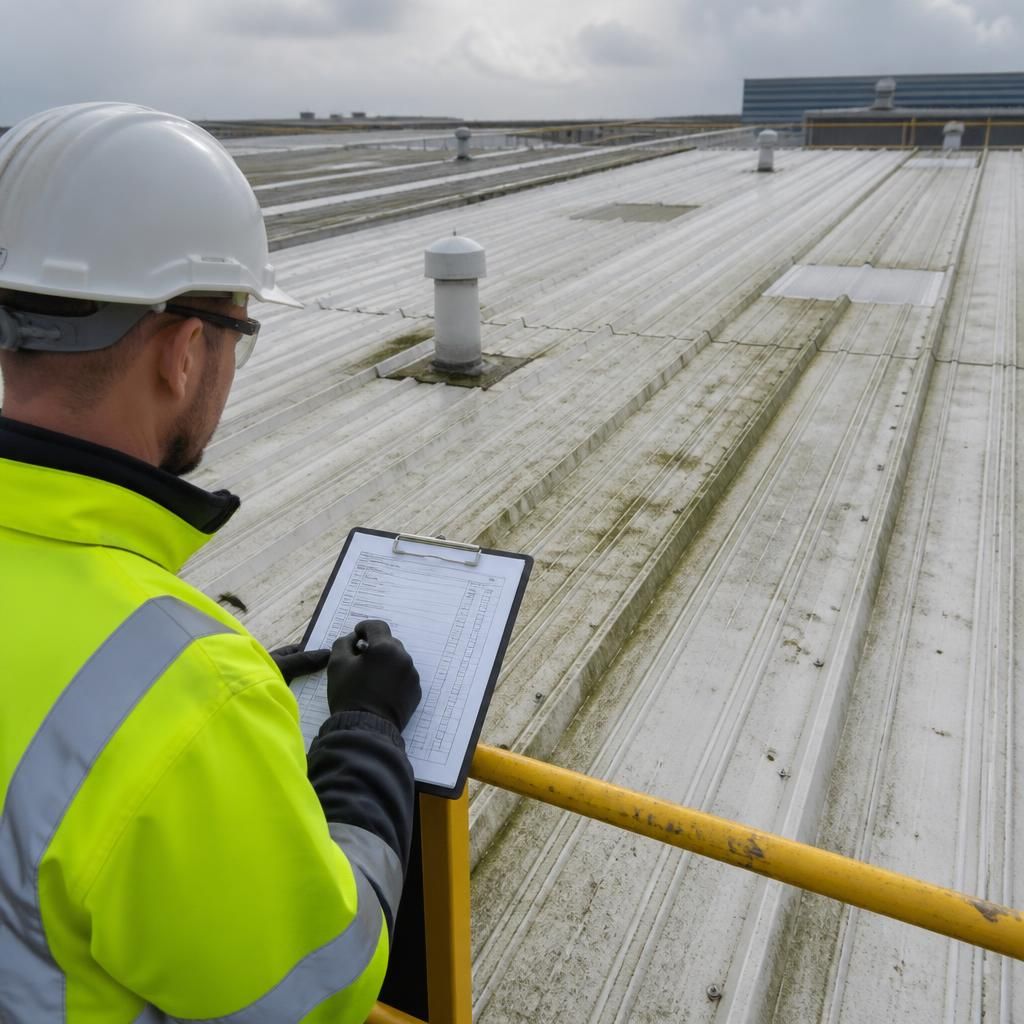
Before work begins, the roof should be surveyed from ground level and, where safe, from suitable access equipment. The assessment should identify the roof construction, drainage routes, fragile areas, roof lights, plant, access restrictions, existing damage and the likely destination of wash water. A controlled test clean can then confirm the appropriate pressure, temperature, nozzle, cleaning solution and working distance. Any necessary repairs should be completed before cleaning, because cleaning a defective roof can expose or worsen existing problems without addressing their cause.
For commercial premises, the method should also account for surrounding façades, vehicles, pedestrian routes, tenant operations and environmental controls. Runoff and dislodged debris need to be contained or directed safely, and access equipment should avoid placing loads on areas that are not designed to support them. After cleaning, the roof should be checked for remaining defects, blocked outlets and areas where biological growth or staining may return.
In practical terms, sound concrete and clay tiles, slate, metal roofing and compatible coated systems are often good candidates for low pressure or steam cleaning. Fragile, heavily weathered, membrane-based, specialist or potentially asbestos-containing roofs require a more cautious decision and may need another treatment altogether. Encanto Exterior Cleaning can assess the roof construction and condition first, then recommend a method that removes contamination without treating the roof surface more aggressively than it can safely tolerate.
Roof material alone does not determine whether low pressure or steam cleaning is suitable; the roof must also be sound, securely fixed and free from defects that could allow water to enter. Concrete and clay tiles, natural slate, metal roofing and compatible coated systems are often suitable when assessed and cleaned using controlled pressure, temperature and working distances.
Membrane roofs, ageing fibre cement, fragile slate, damaged coatings and roofs with exposed joints or failed sealants require greater caution. A pre-cleaning inspection should identify cracks, slipped materials, corrosion, loose edges, roof lights, solar equipment and drainage routes. Where the surface is brittle, poorly sealed or potentially asbestos-containing, cleaning may need to be postponed, adapted or replaced with a safer treatment.
A small test area can confirm how the surface responds before the main clean begins. This helps establish whether the proposed pressure, steam temperature and cleaning solution will remove contamination without lifting coatings, damaging the substrate or forcing water beneath overlaps and seams.
Arrange a Roof Suitability Assessment
Arrange a roof suitability assessment with Encanto Exterior Cleaning to confirm whether low pressure or steam cleaning is appropriate for the roof’s material, condition and existing coatings. We will identify fragile areas, access requirements and drainage considerations before recommending a safe cleaning method.