
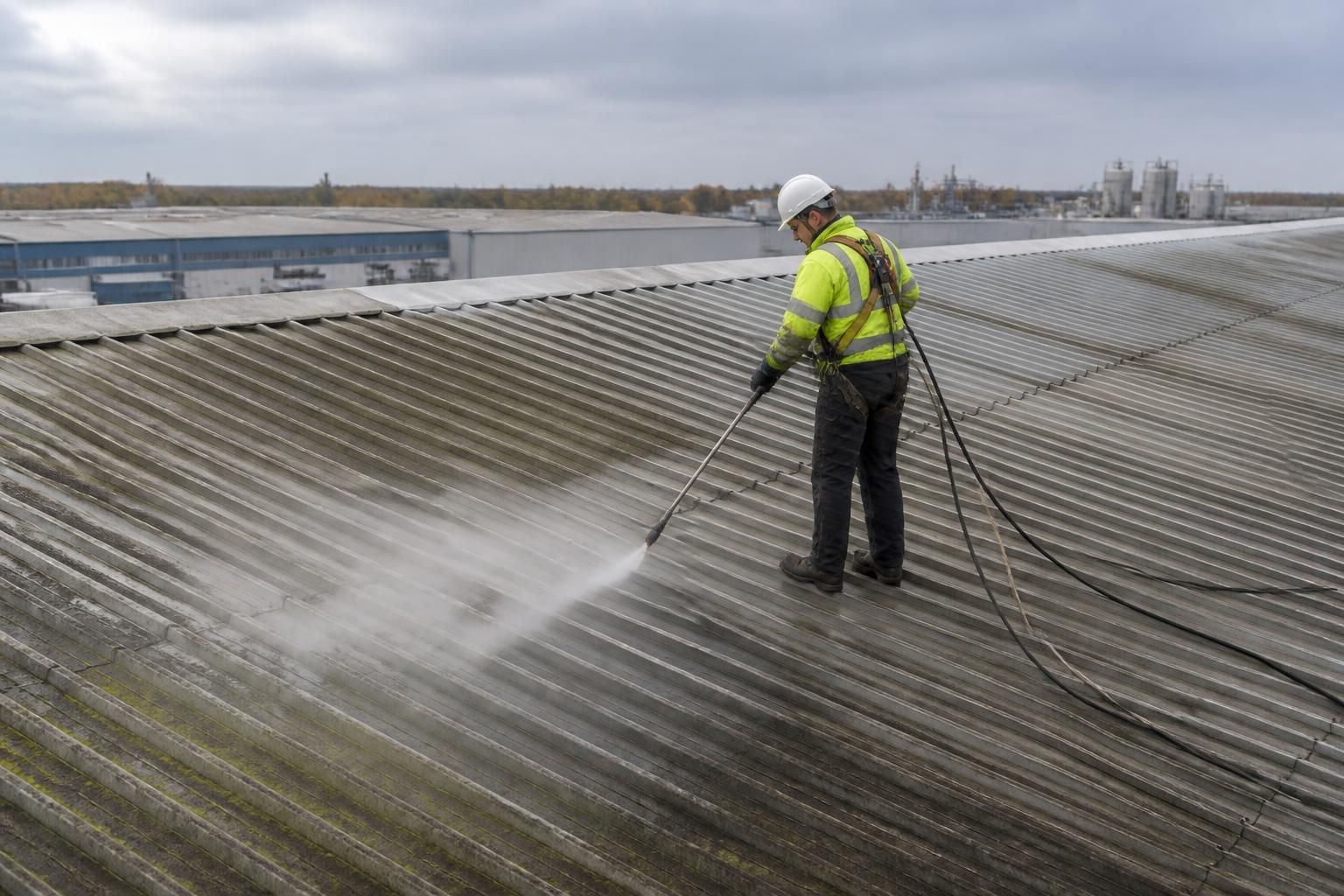
What is the difference between low pressure and steam roof cleaning techniques?
Low pressure roof cleaning uses controlled water pressure, often with a suitable treatment solution, to remove dirt, algae and moss without the force of conventional jet washing. Steam roof cleaning uses heated water vapour at low pressure, providing deeper sanitising action and effective removal of organic growth while minimising water use and the risk of surface damage.
Low pressure and steam roof cleaning both reduce the risk of damage associated with conventional high-pressure jet washing, but they work in different ways. Low pressure cleaning relies on controlled water flow, usually combined with an appropriate cleaning treatment, to loosen and remove dirt, algae, moss and other organic growth. Steam cleaning uses heated water, delivered as low-pressure steam or a closely controlled hot-water vapour, to soften contamination and provide greater sanitising action with less water.
The most suitable method depends on the roof material, the type and depth of contamination, the roof’s condition, access arrangements and the required finish. A professional assessment should be completed before choosing either technique, particularly on commercial roofs with fragile coatings, aged seals, rooflights or areas of previous repair.
How low pressure roof cleaning works
Low pressure cleaning uses significantly less mechanical force than traditional pressure washing. Water is applied at a controlled pressure, often after a specialist biocidal or cleaning solution has been selected for the surface. The solution helps break down organic growth and staining, while gentle rinsing removes loosened material.
This method is particularly useful where moss, algae, lichen, bird deposits and general atmospheric soiling cover a broad roof area. It can be applied to many pitched and flat roof surfaces, subject to a condition survey and confirmation that the materials and coatings can tolerate the selected treatment. On some roofs, the treatment continues working after the initial visit, helping to inhibit the return of biological growth.
Low pressure cleaning normally uses more water than steam cleaning, although the volume varies according to the roof size, surface condition and whether rinsing is required. It may also require careful dwell time for the cleaning solution to work. Runoff must be managed so that loosened debris and treatment residues do not enter unsuitable drainage systems or affect surrounding surfaces.
How steam roof cleaning works
Steam cleaning uses heat as the main part of the cleaning process. Heated water vapour softens grime, organic growth and some residues so they can be removed with controlled agitation or low-pressure rinsing. The heat can also reduce the viability of algae, moss spores and other microorganisms on the treated surface, although it does not prevent future contamination where the underlying causes remain.
Because steam cleaning uses relatively little water, it can be helpful where runoff, water consumption or drying time needs to be limited. It is also useful for localised areas of stubborn contamination, detailed cleaning around roof features and surfaces where a strong mechanical jet would be unsuitable. Steam is not automatically safe for every roof, however. Excessive heat or prolonged application can affect certain membranes, coatings, sealants, plastics, leadwork or weathered materials, so the equipment must be set and operated according to the roof manufacturer’s requirements and the surface condition.
The main differences
- Primary cleaning action: low pressure cleaning depends mainly on controlled water flow and, where appropriate, a cleaning treatment. Steam cleaning depends mainly on heat and vapour to soften and sanitise contamination.
- Water consumption: steam generally uses less water, while low pressure cleaning may require more water for rinsing and removal of loosened debris.
- Surface temperature: low pressure water is normally applied at ambient temperature, whereas steam introduces heat that must be carefully controlled.
- Organic growth: both methods can remove moss, algae and lichen. Steam can provide stronger immediate heat-based treatment, while a suitable low pressure treatment may continue acting on remaining biological contamination after application.
- Risk profile: low pressure reduces the risk of forcing water beneath tiles, laps and flashing compared with high-pressure washing. Steam reduces mechanical impact but introduces a heat-related risk to unsuitable or vulnerable materials.
- Runoff and drying: steam produces less liquid runoff and may leave the surface drier more quickly. Low pressure cleaning requires more attention to collection, drainage and surrounding protection.
- Typical use: low pressure is often practical for broad areas of general soiling and organic growth. Steam is often selected for sensitive, detailed or heavily contaminated areas where low water use and heat-based cleaning are advantageous.
Which method is preferable?
Neither technique is universally better. Low pressure may be the more appropriate option for a sound roof with widespread moss, algae or surface dirt, provided the cleaning solution is compatible with the material and runoff can be controlled. Steam may be preferable where contamination is ingrained, water use must be minimised, or a more targeted cleaning and sanitising process is required.
Roof condition is as important as roof type. Loose or cracked tiles, deteriorated pointing, exposed fixings, failed seals, fragile coatings and defective flashing should be identified before cleaning. Neither low pressure nor steam cleaning should be used to conceal underlying defects. On industrial and commercial premises, the assessment should also consider roof access, walkways, rooflights, plant, drainage, neighbouring elevations and the need to keep business operations safe.
A competent contractor will normally inspect and document the roof, test a discreet area, select compatible equipment and treatments, establish controls for runoff and access, and explain the expected finish. Where asbestos-containing materials or other hazardous substances may be present, the roof requires specialist identification and an appropriate work plan before any cleaning takes place.
In simple terms, low pressure cleaning uses gentle water application and suitable treatment to clean large areas while limiting mechanical damage. Steam cleaning uses controlled heat and vapour to achieve a low-impact, low-water clean with stronger heat-based action. The right choice is determined by the roof’s construction, condition and contamination rather than by pressure level alone.
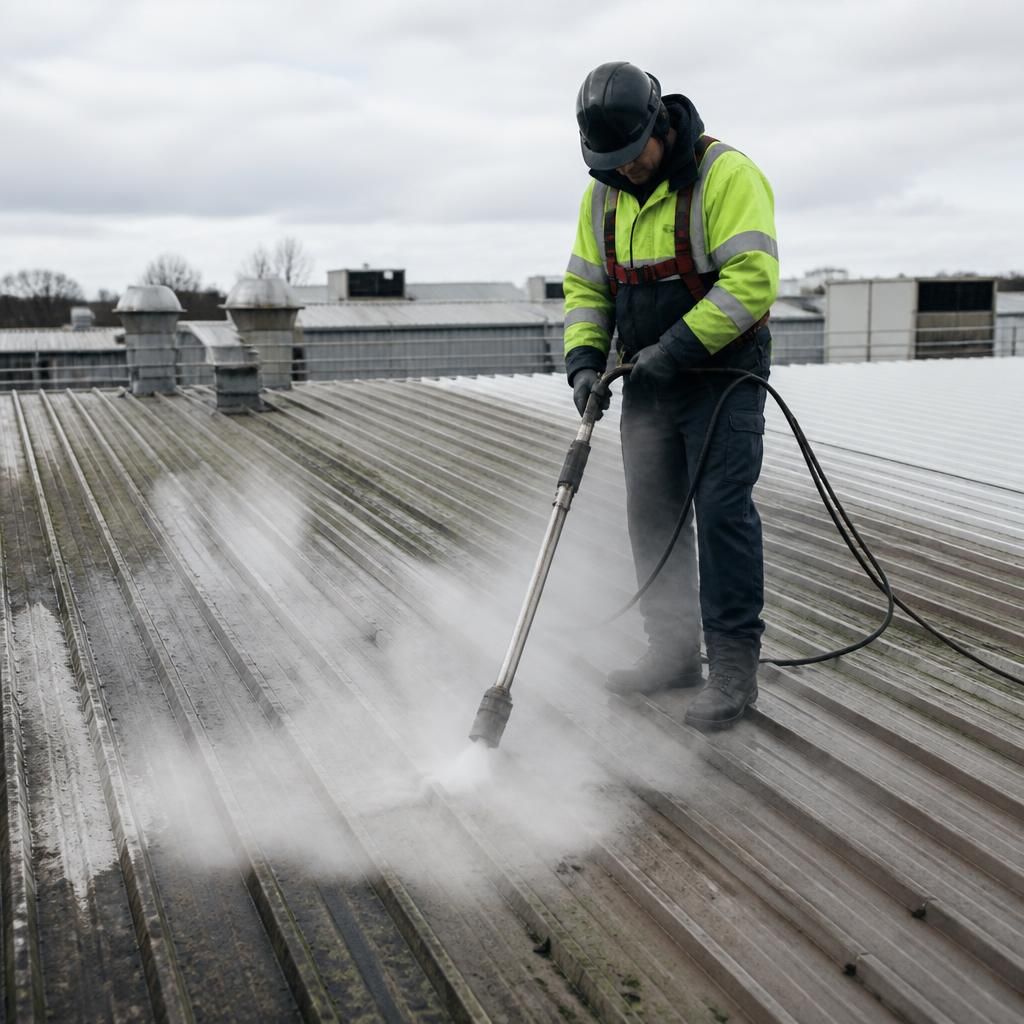
The key difference is how each technique removes contamination: low pressure cleaning uses controlled water flow, usually with a compatible treatment solution, while steam cleaning uses heated vapour to soften and sanitise dirt, algae, moss and lichen. Low pressure is often suited to broad areas of general soiling; steam can be more useful for stubborn or localised contamination where reduced water use is important.
Both methods reduce the mechanical impact associated with high-pressure washing, but they have different precautions. Low pressure requires careful control of treatment runoff, while steam requires accurate temperature and application settings to protect membranes, coatings, sealants and weathered materials. The correct choice should therefore be based on the roof’s construction, condition, contamination and drainage arrangements, following a test clean on an inconspicuous area.