
What factors should be considered when selecting a professional service for low pressure and steam roof cleaning?
When selecting a professional low pressure and steam roof cleaning service, consider its experience with your roof type, method suitability, risk assessment, access and safety procedures, insurance, environmental controls, and the clarity of its quotation. The contractor should inspect the roof first, explain whether low pressure or steam is appropriate, and provide a documented cleaning plan rather than applying a standard process.
Select a professional low pressure and steam roof cleaning service by assessing its experience with your roof type, ability to choose the correct cleaning method, inspection and risk assessment process, access and safety controls, insurance, environmental procedures, and quotation detail. A competent contractor should inspect the roof before proposing work and provide a method statement that explains how the surface, surrounding property and drainage will be protected.
Experience with the roof type
Roof materials vary in their strength, surface finish, water resistance and susceptibility to damage. Clay and concrete tiles, slate, coated metal, membrane roofs and other commercial roofing systems should not automatically be treated in the same way. Ask whether the contractor has relevant experience with the specific roof covering, its age, condition and previous repairs.
The inspection should identify cracked, loose, delaminated or deteriorated areas before cleaning begins. It should also consider vulnerable details such as flashings, rooflights, sealants, ventilation features, gutters, solar equipment and plant supports. Cleaning may expose existing defects, but it should not be presented as a substitute for roof repairs.
Method selection and technical understanding
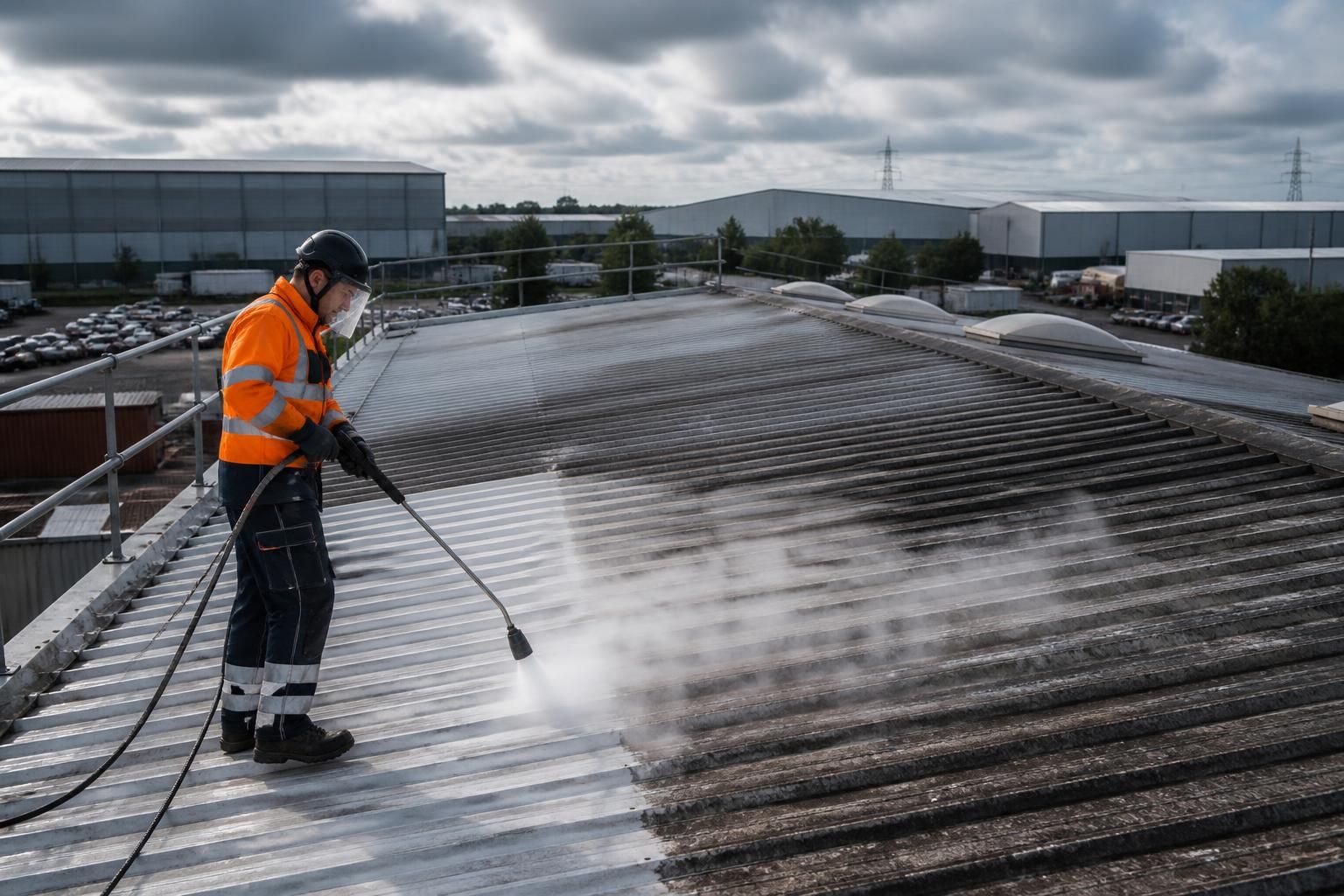
Low pressure cleaning and steam cleaning are not interchangeable processes. Low pressure systems use controlled water application and suitable cleaning products to remove dirt, algae, moss staining and other deposits while reducing the mechanical stress associated with high pressure washing. Steam cleaning uses heated water and carefully controlled delivery to loosen contamination, with the exact temperature and pressure determined by the roof material and condition.
The contractor should explain why a particular method is suitable, whether a combination of methods is required, and what limitations apply. Be cautious of a standard package that is applied to every roof without considering the covering, contamination, weather conditions and drainage arrangements. A professional recommendation should be based on the inspection rather than on the equipment a contractor happens to use.
Pre-cleaning inspection and written plan
Before work starts, the contractor should record the roof’s condition and identify access requirements, fragile areas, contamination, nearby surfaces and possible water-entry points. For a commercial or industrial property, the assessment should also consider tenants, employees, visitors, delivery routes, parked vehicles and the operation of rooftop equipment.
The written cleaning plan should describe the proposed method, areas included, preparation, treatment products, rinsing or residue removal, protection of adjacent surfaces, waste and wastewater handling, and any restrictions caused by weather. It should also state what is excluded, such as repairs, replacement of damaged tiles or removal of hazardous materials.
Access, working-at-height and site safety
Roof cleaning is a work-at-height activity, so the contractor should demonstrate how workers will reach and work on the roof without relying on unsafe access or unsupported movement across fragile coverings. Depending on the site, this may involve scaffold, edge protection, mobile access equipment, roof ladders, crawl boards or other suitable systems. Access equipment should be appropriate for the ground conditions, building layout and roof profile.
Ask for details of the risk assessment and method statement, exclusion zones, pedestrian control, equipment positioning and emergency arrangements. The team should protect entrances, walkways, vehicles and neighbouring property from falling debris, overspray and contaminated runoff. Operatives should have appropriate training for the equipment and tasks involved, and the contractor should be able to provide evidence of suitable public liability and employers’ liability insurance.
Water, chemicals and environmental controls
Low pressure and steam cleaning can reduce the need for aggressive mechanical action, but the environmental impact still depends on how water, cleaning agents and removed contamination are managed. The contractor should explain which products may be used, why they are necessary, and how they will prevent them entering surface-water drains, watercourses, planted areas or neighbouring property.
Suitable controls may include drain protection, collection or diversion of runoff, controlled rinsing, removal of loosened moss and sediment, and responsible disposal of waste. The plan should take account of local drainage arrangements and any site-specific environmental requirements. Chemical treatment should not be described as harmless simply because it is applied at low pressure; safe storage, application and disposal remain important.
Condition, limitations and likely outcome
A professional service should distinguish between removable surface contamination and permanent staining, weathering, lichen attachment or coating failure. Moss may have roots or growth trapped around tiles and joints, while old deposits can reveal pre-existing discolouration once removed. The contractor should explain the expected finish without guaranteeing that every mark or stain will disappear.
They should also discuss the possibility that cleaning may reveal defects requiring a roofer or other specialist. If the roof is too fragile, heavily damaged or unsuitable for the proposed process, postponing the work or recommending repair may be safer than proceeding. This type of honest limitation is an important indicator of competent assessment.
Quotation and scope of work
A useful quotation should be specific enough to compare with other proposals. It should identify the roof areas included, cleaning method, preparation and treatment, access arrangements, protection measures, waste handling, expected timescale and any follow-up visit. Confirm whether gutter clearance, biocide treatment, stain treatment, minor surface preparation and removal of debris are included or charged separately.
The price should not be judged on the cleaning rate alone. Additional access equipment, restricted working areas, fragile roof coverings, water recovery, traffic management and the need to protect sensitive equipment can all affect the scope. A very low quotation may omit essential safety, preparation or environmental controls. Ask the contractor to confirm whether the price is fixed, what could lead to a variation, and whether any deposit or cancellation conditions apply.
Communication, records and aftercare
Choose a contractor that communicates clearly before, during and after the work. You should receive a written confirmation of the agreed method and any preparation required from the property owner or manager. For commercial premises, useful completion records may include photographs, details of products used, areas treated, defects observed, waste arrangements and recommendations for future maintenance.
Aftercare advice should reflect the roof material and surrounding conditions. It may cover keeping gutters and outlets clear, monitoring areas where moisture or organic growth returns, removing overhanging vegetation and arranging periodic inspections. No contractor can guarantee that a roof will remain free from contamination indefinitely, because shade, rainfall, airborne debris and nearby vegetation influence regrowth.
Questions to ask before appointing a contractor
- Have you cleaned this type of roof and material before?
- What did your inspection identify, and are any repairs recommended before cleaning?
- Why is low pressure, steam or a combined approach appropriate for this roof?
- What pressure, temperature and cleaning products will be used, and how will they be controlled?
- How will workers, the public, vehicles, glazing, walls, landscaping and roof equipment be protected?
- What access equipment and working-at-height controls will be used?
- How will contaminated water, moss, sediment and chemical residues be contained and disposed of?
- What insurance, training and site-safety documentation can you provide?
- What exactly is included in the quotation, and what could incur an additional charge?
- What condition will be documented after cleaning, and what maintenance is recommended?
The most suitable professional service is therefore the one that combines roof-specific knowledge with controlled equipment, documented safety procedures, responsible water and waste management, and a clear scope of work. An inspection-led recommendation is more reliable than choosing solely by price or by the promise of a particular cleaning technique.
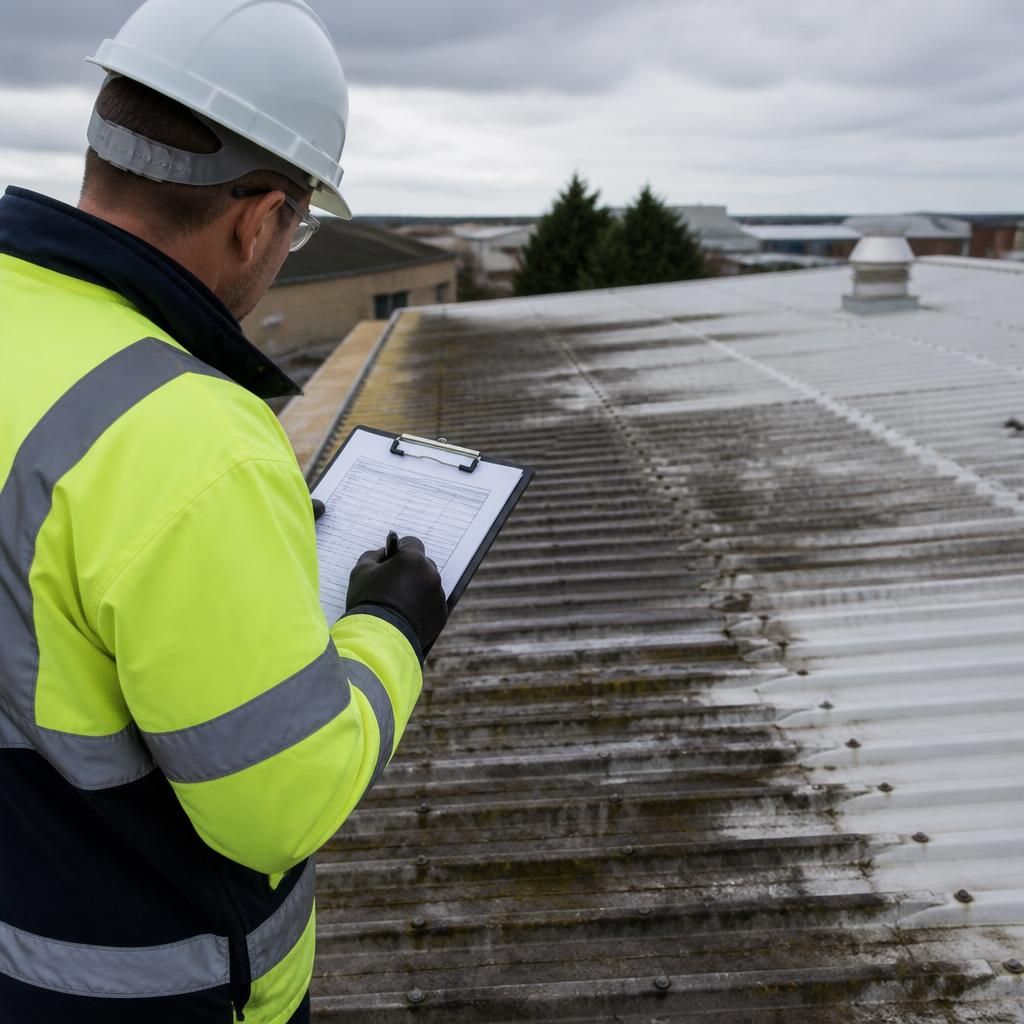
Select a roof cleaning contractor that carries out a documented inspection before recommending low pressure or steam cleaning. The assessment should consider the roof covering, age, condition, access requirements, drainage, nearby surfaces and any vulnerable features such as rooflights, flashings or solar equipment.
The contractor should then explain the proposed pressure, temperature, cleaning products, protection measures and runoff controls in a written method statement. This helps confirm that the service is suitable for the specific roof rather than a standard process applied without regard to existing defects or site risks.