
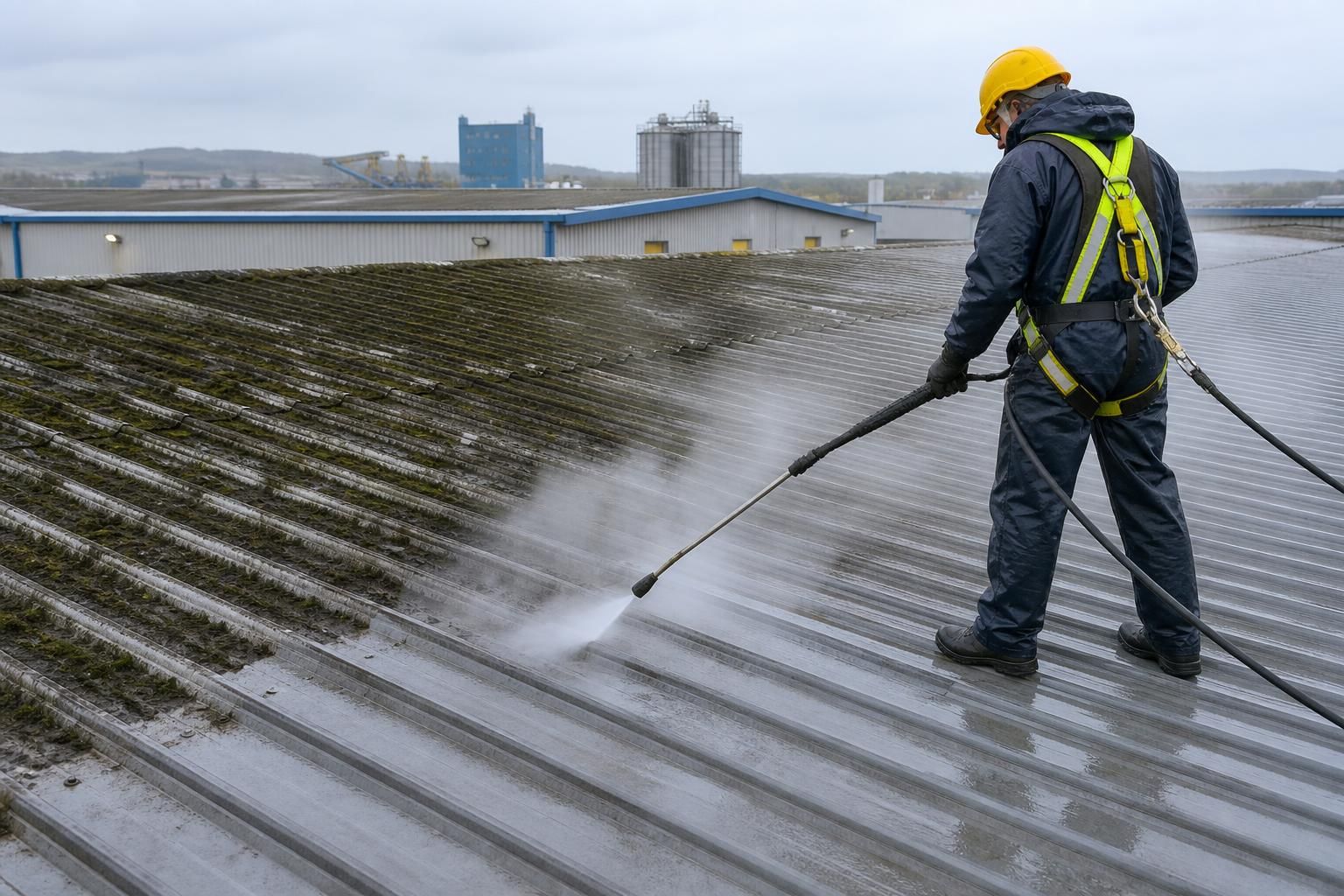
What are the potential risks and benefits of using low pressure and steam cleaning methods on my specific roof type?
Low pressure and steam cleaning can remove moss, algae, dirt and staining while reducing the risk of surface damage compared with high-pressure washing, but suitability depends on the roof material, condition, age and existing defects. Clay and concrete tiles, slate, metal and some membrane roofs each require different pressure, temperature and moisture controls, as incorrect treatment can cause cracking, coating failure, water ingress or damage to seals and fixings.
Low pressure and steam cleaning can provide effective moss, algae, lichen, dirt and staining removal with less mechanical impact than traditional high-pressure washing, but the risks and benefits depend on the roof material, its condition and the way water, pressure and heat are controlled. Clay and concrete tiles, slate, metal roofing and single-ply or liquid-applied membranes do not respond in the same way. A professional assessment should therefore identify the roof type, check for defects and establish suitable pressure, temperature, detergents, drainage and access controls before cleaning begins.
The main benefits across suitable roof types
- Reduced surface stress: Low-pressure application places less force on tiles, slates, coatings, flashings and sealants than high-pressure washing. This can reduce the likelihood of displaced tiles, surface erosion and damage to fragile areas, provided the operator does not compensate with excessive dwell time or aggressive chemicals.
- Controlled removal of organic growth: Steam and carefully managed low-pressure cleaning can loosen moss, algae and lichen without relying solely on force. Removing growth helps prevent blocked gutters, retains better drainage and reduces the moisture held against the roof surface.
- Improved appearance and inspection: Cleaning can make staining, cracked units, failed mortar, corrosion and defective flashings easier to identify. This is particularly useful for commercial properties where roof condition forms part of planned maintenance and compliance inspections.
- Lower risk of forcing water beneath coverings: Compared with high-pressure jets directed into laps and joints, properly controlled low-pressure methods are less likely to drive water beneath tiles, slates, ridges, flashings or cladding interfaces. They do not eliminate the risk, especially where the roof is already defective.
- Potentially lower chemical and water demand: Steam may remove some contamination through heat and agitation, while low-pressure methods can use water more selectively. The environmental outcome still depends on the equipment, detergent selection, run-off controls and disposal arrangements.
- Suitability for planned maintenance: A gentler process can be incorporated into an ongoing maintenance programme, helping to manage recurring moss or algae rather than waiting until growth obstructs drainage or affects the roof’s appearance.
Clay and concrete tiles
Sound clay and concrete tiles are often suitable for low-pressure cleaning, although their condition must be checked first. Clay tiles can be porous, weathered or brittle, and older concrete tiles may have lost their original surface finish. Low pressure reduces the chance of breaking, dislodging or eroding these materials compared with a forceful jet.
The risks include lifting overlapping tiles, washing debris beneath the covering, removing a protective coating or exposing the more porous body of a weathered tile. Steam can be useful for localised organic growth, but excessive heat or prolonged application may affect coatings, sealants or already weakened tiles. Cleaning should follow the tile profile and laps rather than forcing water upwards beneath them. Broken tiles, open joints, defective ridges and fragile mortar should be repaired or recorded before cleaning rather than concealed by it.
Natural slate and fibre-cement slate
Natural slate can respond well to a controlled, low-pressure approach when the slates and fixings are sound. The principal benefit is reduced mechanical impact on a material that may split or delaminate if struck by a high-pressure jet. Gentle cleaning can also avoid disturbing the overlap arrangement.
However, slate roofs can contain slipped, cracked or nail-fatigued slates that are not obvious from ground level. Water directed under the lower edge or side lap can enter the roof build-up, while pressure can break edges or loosen slates. Fibre-cement products require particular caution because older sheets may be brittle. The material should be identified before work, and no cleaning method should disturb suspected asbestos-containing products. If the roof includes asbestos cement, specialist assessment and legally compliant procedures are required; ordinary pressure or steam cleaning is not an appropriate default.
Metal roofs and coated sheet roofing
Low-pressure cleaning is generally preferable for painted, plastisol-coated, galvanised and other metal roof systems because it reduces abrasion and the risk of damaging the finish. Removing algae, bird fouling and accumulated dirt can help reveal corrosion, failed fixings and blocked drainage routes.
The main risks are coating failure, accelerated corrosion and water entering through laps, penetrations or deteriorated seals. Steam may assist with localised contamination, but heat should be controlled around paint finishes, sealants, gaskets, rooflights and insulated panels. Abrasive pads and harsh chemicals can mark or strip the coating. Run-off containing loosened corrosion products or cleaning agents should be managed so that it does not stain façades, contaminate drainage or affect adjacent materials.
Single-ply membranes, liquid-applied systems and other flat roofs
Membrane roofs need a particularly conservative approach. Low-pressure cleaning may be suitable for some systems when the membrane manufacturer’s requirements are known and the surface is intact. It can remove surface dirt and organic growth without the concentrated force associated with high-pressure washing.
Potential damage includes puncturing or tearing the membrane, lifting edges, disturbing welded seams, damaging upstands and loosening protective layers or ballast. Steam can soften, distort or affect certain membranes, adhesives and liquid coatings, so its use must never be assumed to be safe simply because the pressure is low. Standing water, blocked outlets and weak areas can also make cleaning hazardous. The method should be agreed against the roof specification, with particular care around outlets, penetrations, plant bases, rooflights and perimeter details. Where the membrane is aged, blistered, exposed or already failing, repair or replacement advice may be more appropriate than cleaning.
Roof condition is as important as roof material
A suitable material can still be unsuitable for cleaning if it has existing defects. Before work starts, the inspection should consider cracked or missing units, open laps, deteriorated mortar, failed flashing, loose coatings, corrosion, exposed insulation, blocked outlets, previous repairs and signs of internal water ingress. Access arrangements also matter: roof cleaning should not introduce damage through foot traffic, ladders or equipment placed on fragile coverings.
Cleaning can expose defects rather than cause them. For example, removing moss may reveal movement around a tile, while clearing dirt from a metal roof may show corrosion that was already present. Findings should be recorded and reported so that remedial work can be prioritised.
How the risks are controlled
- Identify the roof covering and any coatings, membranes, insulation or asbestos-containing materials before selecting equipment.
- Test the proposed pressure, temperature and cleaning product on an inconspicuous area, checking for colour change, coating loss, surface erosion and water penetration.
- Use the lowest effective pressure and avoid directing water into laps, joints, vents, flashings, seals and defective areas.
- Control steam exposure so that heat does not remain against coatings, membranes, sealants or other heat-sensitive components.
- Protect façades, rooflights, planting, vehicles and drainage systems from dirty run-off and displaced debris.
- Collect or manage moss and silt so that gutters, downpipes and surface-water systems do not become blocked.
- Use suitable access equipment and avoid unnecessary walking on fragile or unsupported roof areas.
- Inspect the roof and drainage after cleaning, recording any defects that require repair or follow-up treatment.
What to expect after cleaning
Low-pressure and steam cleaning remove contamination, but they do not repair a failing roof or permanently prevent regrowth. Some surfaces may need a compatible biocide or follow-up treatment, selected with regard to the roof material and environmental controls. Gutters, outlets and downpipes should be checked after the work, and the roof should be monitored for displaced coverings, recurring growth, coating changes or signs of water ingress.
For a commercial or industrial property, the safest decision is based on a documented roof survey and method statement rather than the roof material alone. Where the covering is sound and the process is matched to its limitations, low pressure or steam can deliver the cleaning benefits with a lower risk of mechanical damage. Where defects, fragile materials, sensitive coatings or uncertain construction are present, the correct outcome may be a restricted clean, a different technique or repairs before any cleaning takes place.
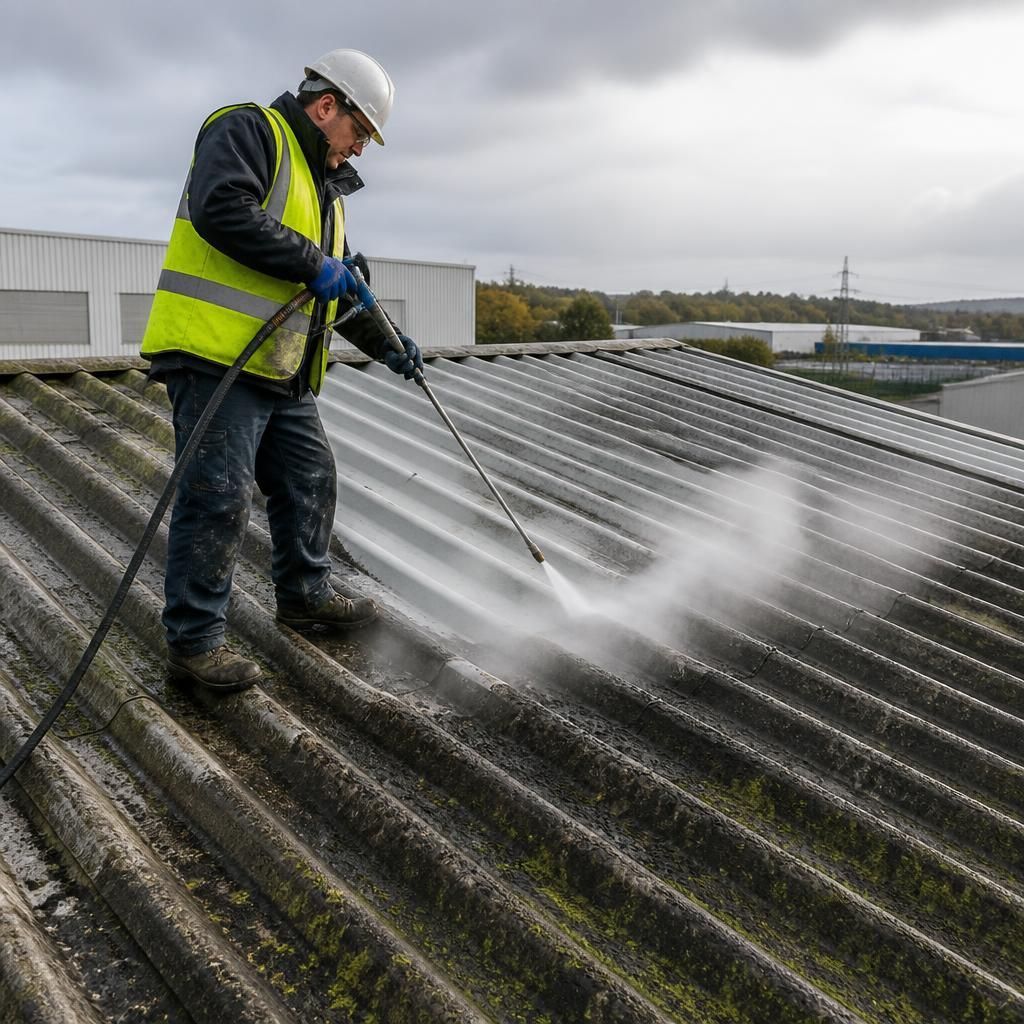
The safety of low-pressure or steam roof cleaning depends on matching the method to the roof covering and its condition, not simply on using less pressure. A sound tiled or slate roof may tolerate carefully controlled cleaning, while an aged membrane, brittle fibre-cement sheet, damaged coating or roof with open laps may require a restricted clean or repairs first.
Before work begins, the roof should be inspected for cracked or missing coverings, loose fixings, failed seals, corrosion, blocked outlets and signs of water ingress. A small test area can then confirm whether the proposed pressure, temperature and cleaning product cause surface erosion, coating loss, colour change or moisture penetration. This assessment helps retain the benefits of gentler cleaning while avoiding damage that could lead to leaks or premature roof repairs.