
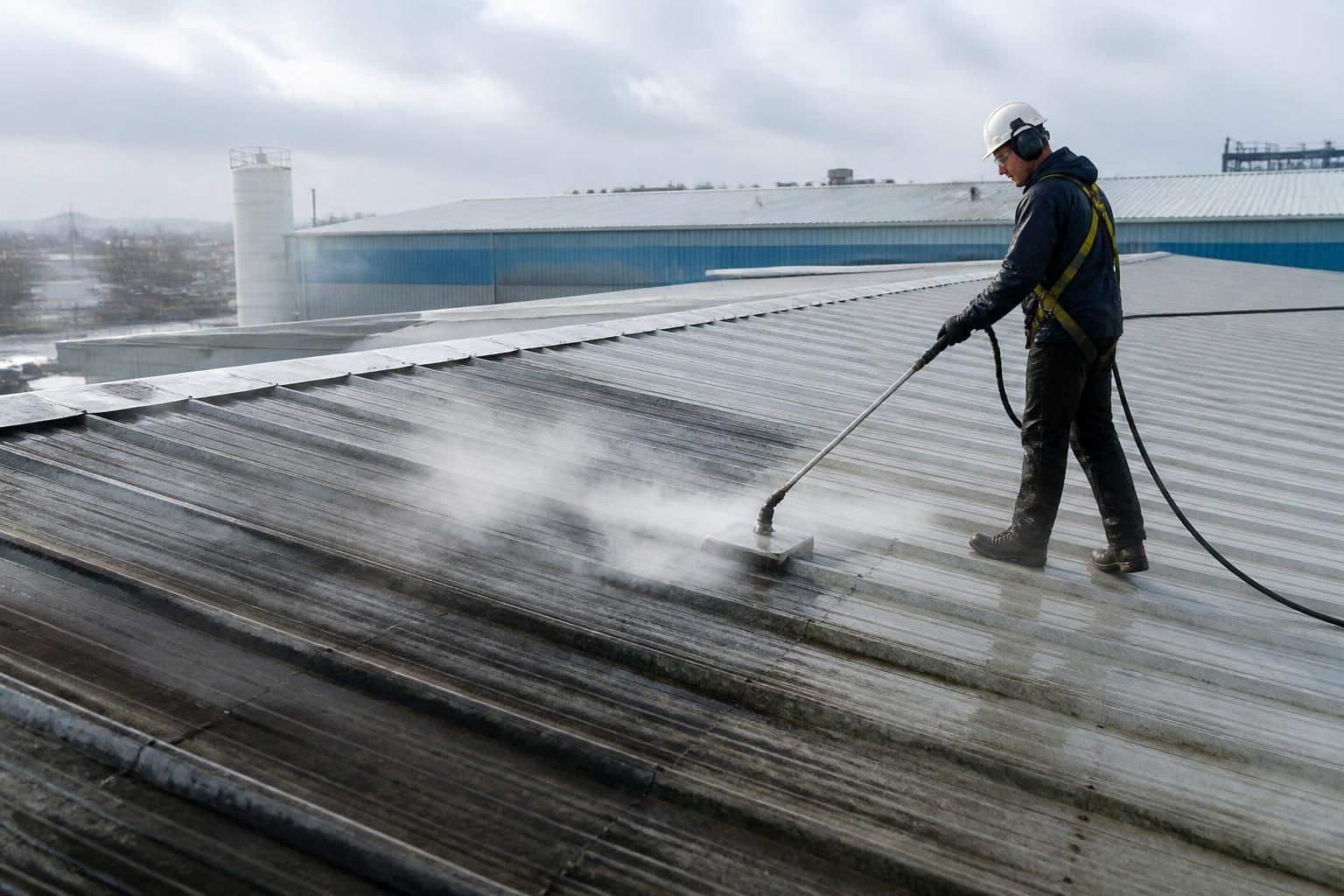
How does the cost of low pressure and steam roof cleaning compare to traditional high pressure methods?
Low pressure and steam roof cleaning can cost more initially than traditional high pressure cleaning because the work is slower and may require specialist equipment, but it often reduces the risk of surface damage, repairs and premature roof replacement. The most cost-effective option depends on the roof material, contamination, access requirements and whether ongoing maintenance is included.
Low pressure and steam roof cleaning can have a higher initial price than traditional high pressure cleaning, but the cheapest quotation is not always the lowest-cost option overall. Low pressure and steam methods usually require more controlled application, specialist equipment and additional time, while high pressure cleaning can appear cheaper because it removes contamination quickly. The appropriate comparison should include the risk of damage, follow-on repairs, re-treatment and the expected service life of the roof surface.
Why traditional high pressure cleaning may cost less initially
High pressure systems can cover large areas quickly and may remove loose dirt, moss, algae and surface deposits without extensive dwell time. This can reduce labour time where the roof material is robust, access is straightforward and the contamination is not strongly bonded. However, a low quotation may not include consequential work such as replacing damaged tiles, repairing displaced coverings, clearing blocked drainage or treating the surface again after cleaning.
High pressure cleaning is also not suitable for every roof. Excessive pressure can force water beneath laps, seals or flashing, remove surface finishes, expose weaker substrates and loosen aged or brittle materials. If the method is used without a proper assessment, the immediate saving may be outweighed by repair costs or a shortened roof lifespan.
Why low pressure cleaning can cost more at the outset
Low pressure cleaning uses a controlled water flow, often alongside an appropriate treatment solution, to loosen and remove contamination while minimising mechanical stress on the roof. It is generally slower than aggressive high pressure cleaning, particularly where moss is thick, growth is established or the roof has delicate coatings and ageing components.
The quotation may therefore reflect:
- Closer inspection and planning for the roof material, condition and contamination;
- Specialist pumps, application equipment and access systems;
- Additional time for applying and allowing treatments to work;
- Careful removal of loosened material from gutters, valleys and surrounding areas;
- Measures to protect façades, windows, landscaping, vehicles and drainage systems; and
- Responsible collection, containment or disposal of contaminated run-off where required.
Low pressure is not automatically risk-free. The treatment must be suitable for the roof covering, applied at the correct concentration and managed so that run-off does not damage adjacent surfaces or enter unsuitable drainage. A competent contractor will also identify whether the roof is too deteriorated for cleaning or whether repairs should be completed first.
How steam cleaning affects the cost
Steam cleaning normally involves specialist equipment, careful control of temperature and slower working speeds than conventional pressure washing. This can make it one of the more resource-intensive options at the quotation stage. It may, however, reduce the need for harsh mechanical action or repeated chemical treatment on suitable roofs and contamination types.
Steam is particularly useful where controlled heat can help break down organic growth, residues or staining while limiting water use. Its suitability depends on the roof material, coatings, condition and the contractor’s ability to manage heat, moisture and run-off safely. Steam should not be selected solely because it is described as gentler; an unsuitable temperature or application technique can still affect membranes, sealants, coatings or older materials.
Initial price versus whole-life cost
A fair comparison should consider the complete scope of work rather than the cleaning method alone. For example, a high pressure quotation may be lower if it covers only the visible cleaning. A low pressure or steam quotation may include a more detailed preparation process, protective measures, biocidal treatment, gutter clearance and post-cleaning inspection. These differences need to be identified before comparing prices.
Whole-life cost can include:
- The initial cleaning and access cost;
- Minor repairs or replacement of damaged roof components;
- Re-treatment or maintenance cleaning;
- Removal of waste and management of contaminated water;
- Making good damage to adjacent surfaces or building elements; and
- The effect of cleaning on future maintenance and roof replacement requirements.
Where a roof is sound and resistant to high pressure, the traditional method may be economically reasonable when carried out within the manufacturer’s limits. Where the roof is coated, aged, fragile or difficult to replace, the damage-reduction benefits of low pressure or steam may justify a higher initial cost.
Factors that make one method more expensive than another
The roof material is a major cost factor. Metal cladding, concrete tiles, slate, coated systems, membranes and heritage materials each require different controls. The roof’s pitch, height, access restrictions and proximity to occupied areas also affect labour and equipment requirements. A large, open industrial roof may be efficient to clean despite its size, whereas a smaller roof with restricted access, fragile coverings or extensive edge protection can require more preparation.
Contamination is equally important. Light atmospheric dirt may be removed relatively efficiently, while heavy moss, lichen, bird fouling, oil residues or ingrained organic staining may require staged treatment and more than one visit. The presence of asbestos-containing materials, suspected hazardous residues or damaged coverings can change the work plan completely and may require specialist assessment before cleaning proceeds.
What should be included in a commercial quotation
Ask for the proposed method, expected outcome and limitations to be stated clearly. The quotation should identify the roof areas included, access equipment, preparation, treatment products, protection of nearby assets, gutter and drainage management, waste handling and any exclusions. It should also explain whether repairs, repainting, sealing or follow-up visits are included or priced separately.
A professional assessment should record the roof condition before work begins and confirm that the selected process is compatible with the substrate. For larger premises, it is sensible to request a planned maintenance recommendation as well as the one-off cleaning price. Scheduled inspections and targeted treatment can prevent contamination becoming established and may reduce the amount of intensive cleaning required later.
How to decide which option offers better value
Choose the method that achieves the required level of cleanliness without creating disproportionate risk to the roof or surrounding property. High pressure may be suitable for some durable, well-maintained surfaces, but it should not be used as the default simply because it is fast. Low pressure is often preferable where preservation of the roof surface is important, and steam may be appropriate where controlled heat offers a practical advantage and the material can tolerate it.
For an accurate comparison, the roof should be inspected rather than priced from area alone. The assessment should consider material, age, condition, contamination, access, drainage, environmental controls and the client’s maintenance objectives. A method that costs more on the first invoice can provide better value if it avoids damage, reduces disruption and supports a longer maintenance cycle. Conversely, a more expensive technique is not automatically better if the roof does not require its additional controls.
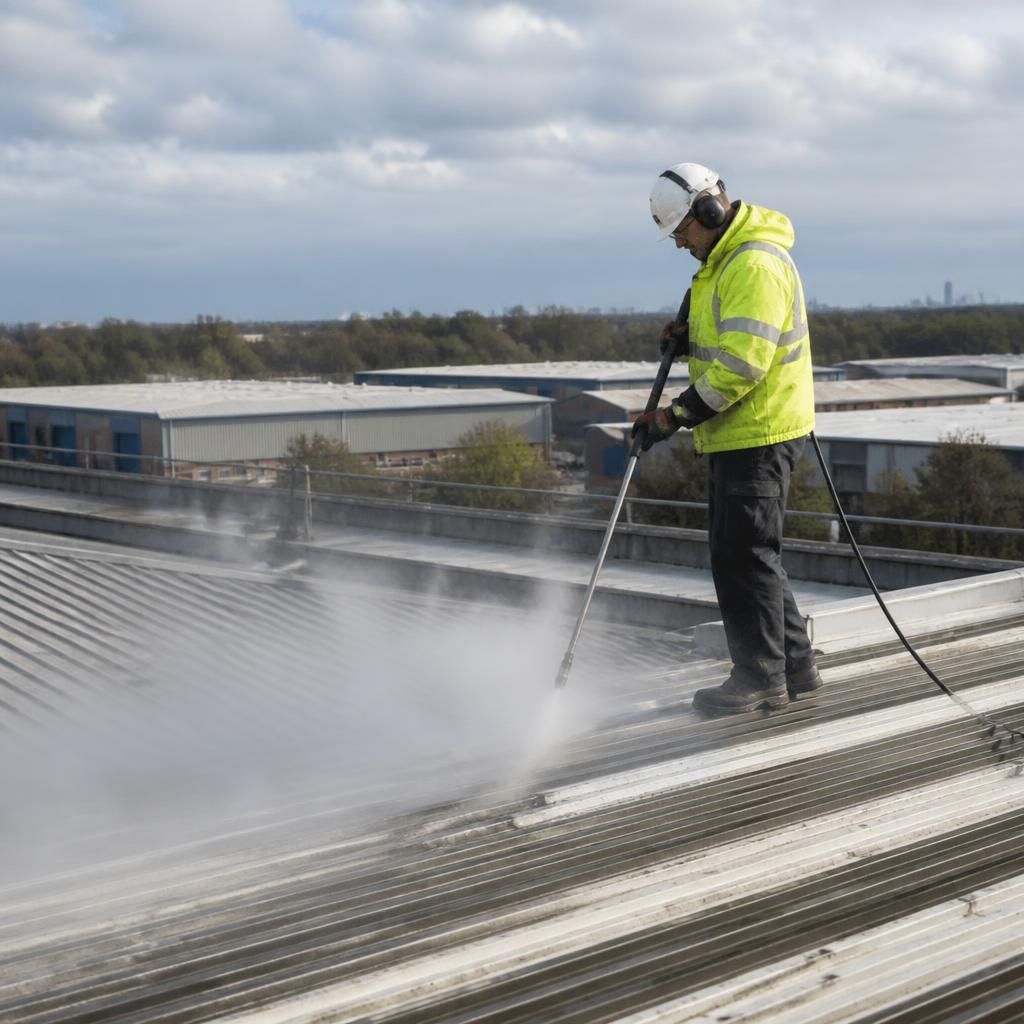
The most useful cost comparison is between the full life-cycle cost of each roof-cleaning method, not just the initial quotation. High pressure cleaning may have a lower starting price, while low pressure or steam cleaning may cost more because it involves slower application, specialist equipment and additional surface protection.
For commercial roofs, value should also account for potential damage, follow-on repairs, blocked drainage, repeat treatments and disruption to the building. A controlled method can be more economical where the roof is aged, coated, fragile or costly to replace, provided it is suitable for the roof material and applied by a competent contractor.
When comparing quotations, check that each includes access, preparation, protection of surrounding areas, treatment products, run-off or waste management, gutter clearance and any follow-up inspection. Comparing the same scope of work gives a more accurate indication of which option offers better long-term value.