

Are there specific maintenance guidelines after completing low pressure and steam roof cleaning to ensure long-lasting results?
Yes. After low-pressure or steam roof cleaning, follow the contractor’s aftercare advice, keep gutters and drainage clear, remove debris and overhanging vegetation, inspect the roof periodically for damage or recurring growth, and arrange prompt repairs without using high-pressure washing that could damage the surface.
After low-pressure or steam roof cleaning, long-lasting results depend on controlled drying, clear drainage, regular inspections and prompt repair of any defects. Follow the cleaning contractor’s aftercare instructions, avoid disturbing the roof surface, and arrange further treatment only when inspection shows that it is necessary.
Allow the roof to dry and settle. Keep people, equipment and unnecessary foot traffic away from the cleaned areas until the roof is fully dry and the contractor confirms that access is safe. Moisture can remain in roof coverings, joints and shaded areas after cleaning, particularly during cool or damp weather. Do not replace fragile items, reposition roof equipment or carry out other maintenance works until the agreed drying and settling period has passed.
Keep gutters and drainage routes clear. Cleaning can release loosened moss, lichen, dirt and other organic material. Although this should be managed during the work, small amounts may continue to move into gutters and outlets afterwards. Inspect and clear gutters, valleys, downpipes, gullies and surface drainage routes so that water does not back up beneath roof coverings or overflow onto walls and façades. On commercial premises, check that discharge points remain unobstructed and that any temporary protection or collection equipment has been removed safely.
Remove new debris promptly. Leaves, twigs and wind-blown material retain moisture and can encourage organic growth to return. Arrange routine clearance where the building is close to trees or where roof areas are surrounded by vegetation. Overhanging branches should be managed by a suitably qualified contractor, taking care not to drag tools or cut material across the roof.
Inspect the roof and associated details. A visual inspection should be carried out once the surface is dry and again as part of the building’s normal planned maintenance. Look for:
- displaced, cracked or broken tiles, slates or panels;
- open joints, failed pointing, damaged flashing or deteriorated sealant;
- blocked gutters, outlets, valleys and downpipes;
- areas where water is ponding or draining incorrectly;
- returning moss, lichen, algae or staining, particularly in shaded locations; and
- damage around rooflights, vents, plant supports, access points and other penetrations.
Cleaning may make previously concealed defects easier to identify, but it does not repair underlying roof problems. Report concerns promptly so that a competent roofing professional can assess them. Do not assume that a recurring mark is simply cosmetic, as it may indicate trapped moisture, defective drainage or a failed detail.
Use the correct approach for future cleaning. Do not use a domestic pressure washer or authorise high-pressure cleaning as a quick way to remove returning growth. Excessive pressure can drive water beneath laps and joints, strip protective finishes, loosen roof coverings and damage pointing or sealants. Any subsequent cleaning should be selected for the roof material and carried out using the agreed low-pressure, steam or other suitable method by trained operatives.
Where a treatment has been applied to help control organic growth, allow it to work according to the contractor’s instructions. Do not scrub, rinse or apply another chemical product over the treated area without professional advice. Different roof materials and coatings can react adversely to incompatible products, and unnecessary re-treatment may affect surface finishes or create avoidable runoff.
Maintain surrounding areas as well as the roof. Keep nearby trees, climbing plants and vegetation under control, and ensure that roof access points remain secure. Check parapets, coping stones, fascias, soffits and wall areas for staining or dampness that could be linked to defective drainage. On industrial or commercial sites, include roof zones within the planned maintenance schedule and make sure access is controlled so that contractors do not walk on fragile coverings or place loads where the roof has not been designed to support them.
The suitable inspection frequency depends on the roof material, exposure, surrounding vegetation, building use and the condition found during cleaning. More frequent checks may be appropriate for roofs beneath trees, shaded elevations, coastal or polluted environments, and premises with complex drainage or extensive rooftop plant. Keep a record of the cleaning date, method used, products applied, defects noted and any repairs completed. This provides a useful reference when planning future maintenance and helps identify whether growth or staining is returning unusually quickly.
Contact the cleaning contractor or a roofing specialist if water enters the building, drainage remains obstructed, roof coverings move, staining returns rapidly, or any coating appears to be lifting or deteriorating. Prompt investigation is usually safer and less disruptive than allowing a minor defect to develop into water ingress or wider structural damage.
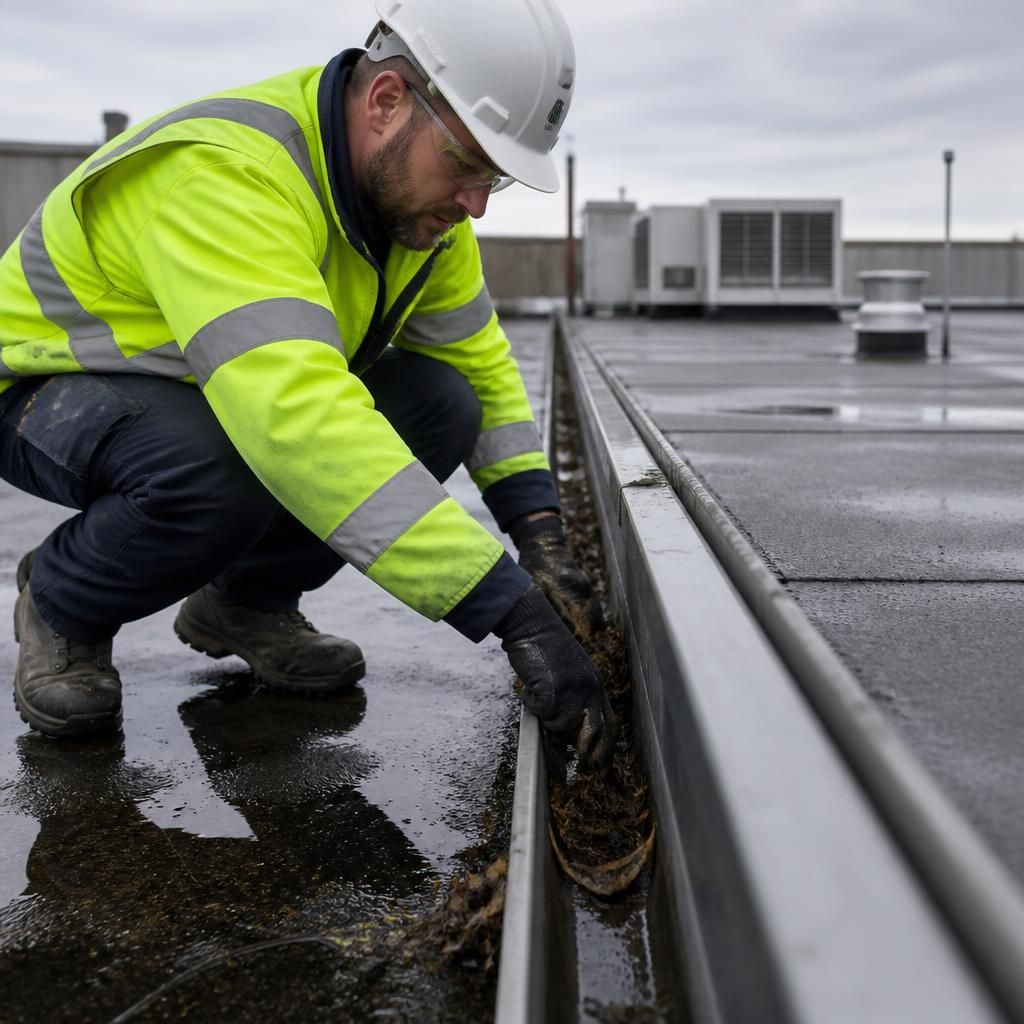
Keeping gutters and drainage routes clear after low-pressure or steam roof cleaning is essential for preserving the result and preventing water-related damage. Loosened moss, lichen and debris can continue moving into gutters, valleys, outlets and downpipes after the work is complete.
Once the roof has dried, check that water can drain freely and arrange removal of any remaining debris. Pay particular attention to roof outlets, gullies, parapets and areas around rooftop plant. Blockages can cause overflow, ponding or water backing beneath roof coverings, potentially leading to damp walls and interior water ingress.
Arrange professional roof cleaning aftercare
Arrange professional roof cleaning aftercare with Encanto Exterior Cleaning to check drainage, identify defects and help preserve the results of your low-pressure or steam clean. Contact our team to discuss an appropriate maintenance plan for your roof and site.